Sushi Zen by LDH Architectural Design Firm in Beijing, China
A Historic Place with Modern Purpose
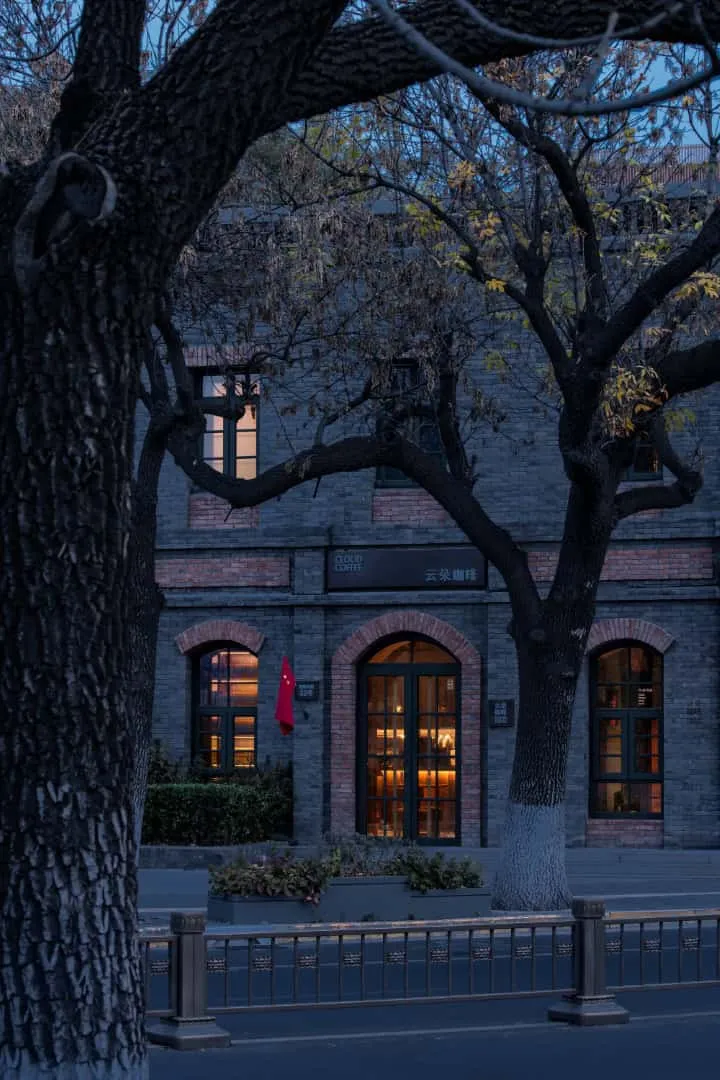
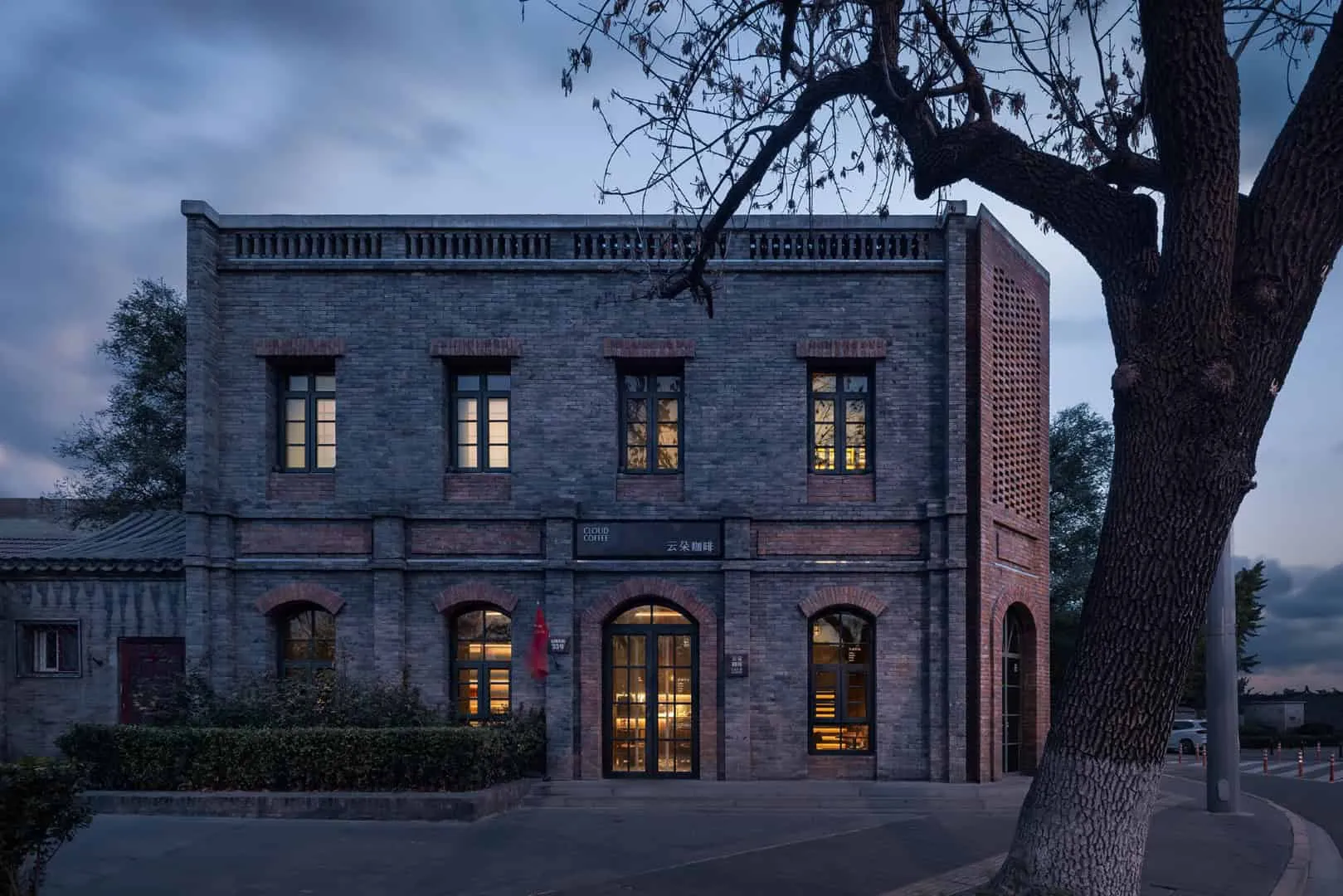
Located just steps away from the Forbidden City, Sushi Zen occupies a house built 200 years ago, originally constructed during the Republic of China era. The restaurant carries the legacy of Japanese banquets with over 300 years of tradition, harmoniously blending cultural heritage with modern design.
Designer Daohua infused the project with Eastern aesthetic principles, combining Eastern and Western influences to create a restaurant that feels ritualistic, intimate, and timeless. Every spatial solution, material choice, and carefully considered detail reflects the restaurant's philosophy: dinner as a cultural immersion and artistic experience.
First Impression: Arrival and Welcome
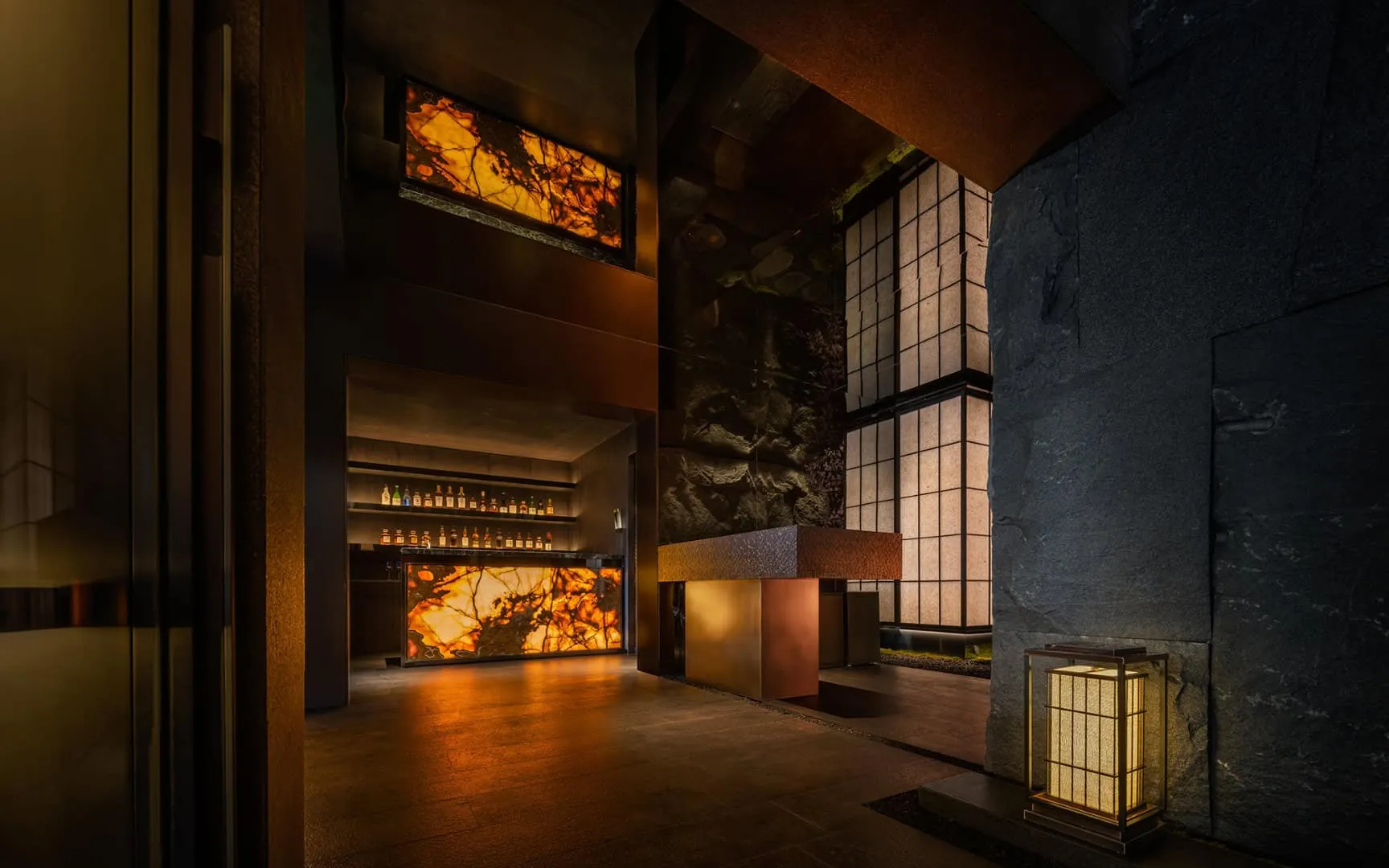
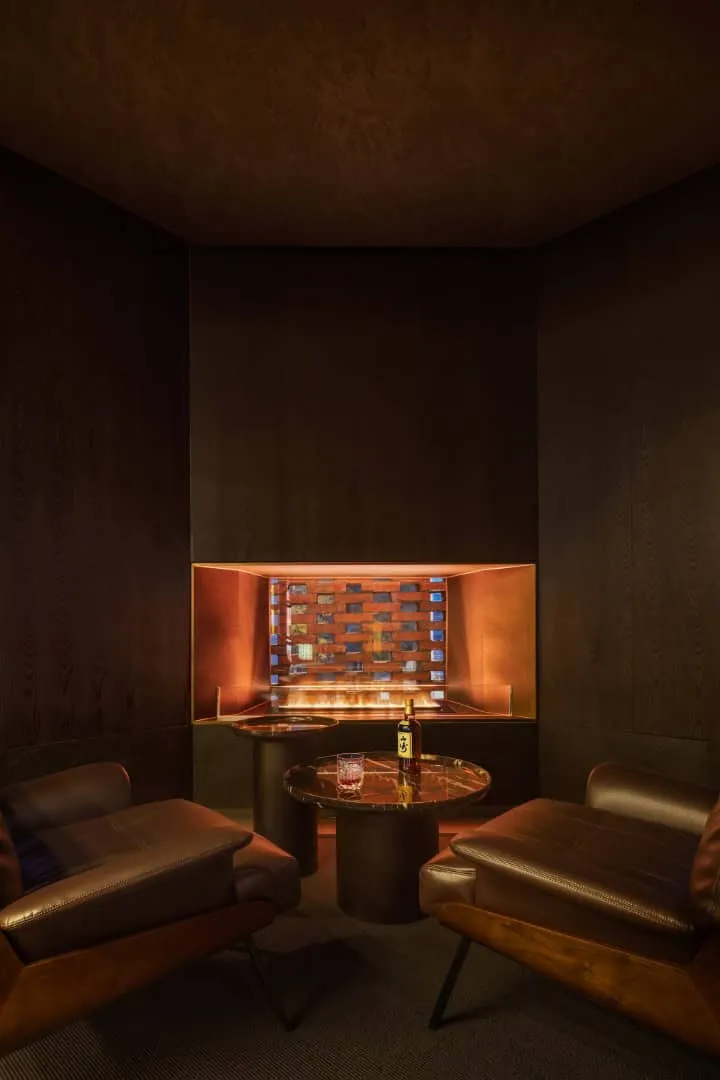
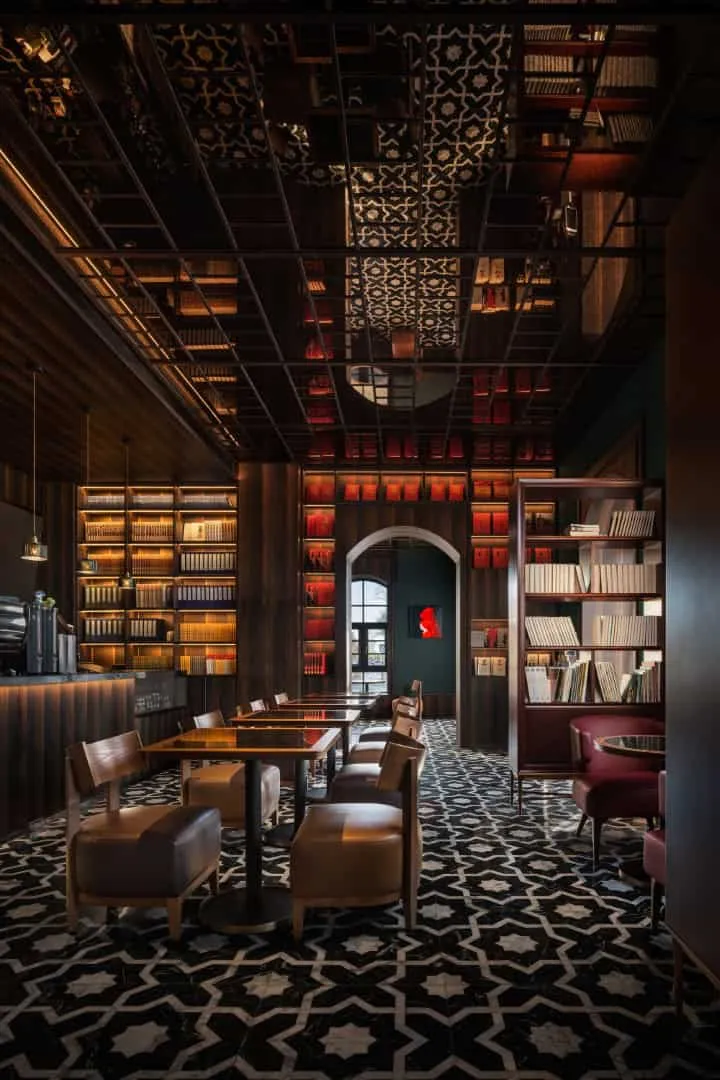
The journey begins with the Cloud Café on the first floor, a lively introduction setting the tone for the refined atmosphere of dinner upstairs. On the second floor, a welcoming bar made from natural marble with fiery veining evokes warmth and hospitality. Behind the bar, a smoking room with brick beams and a glowing fireplace creates an exclusive and secluded feeling.
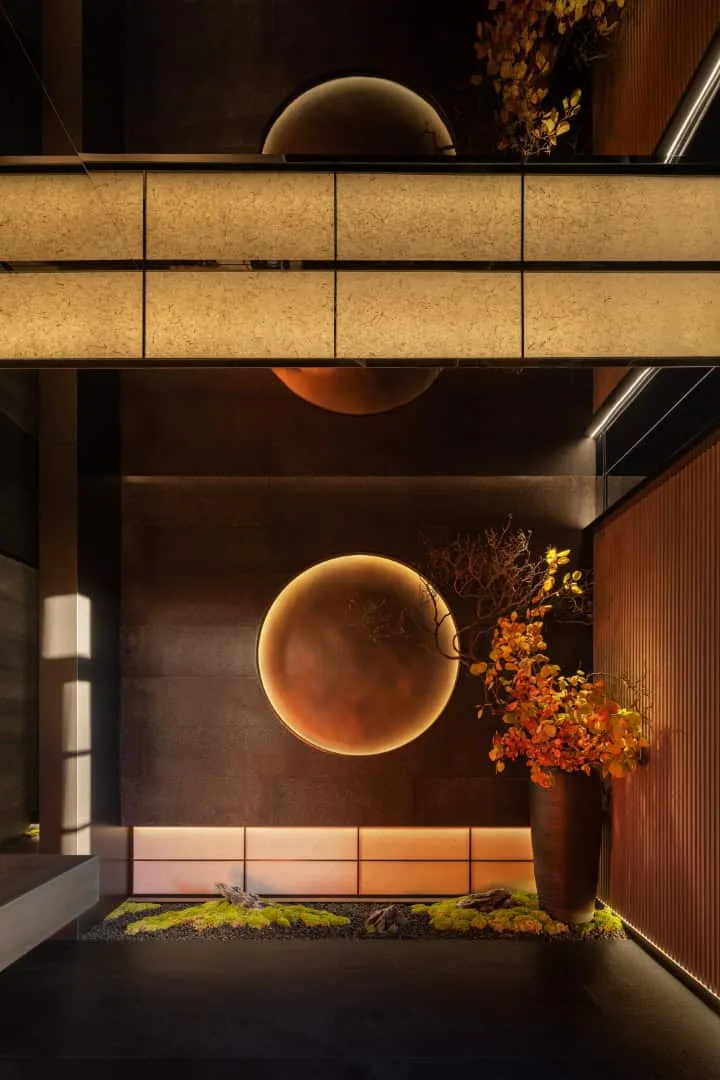
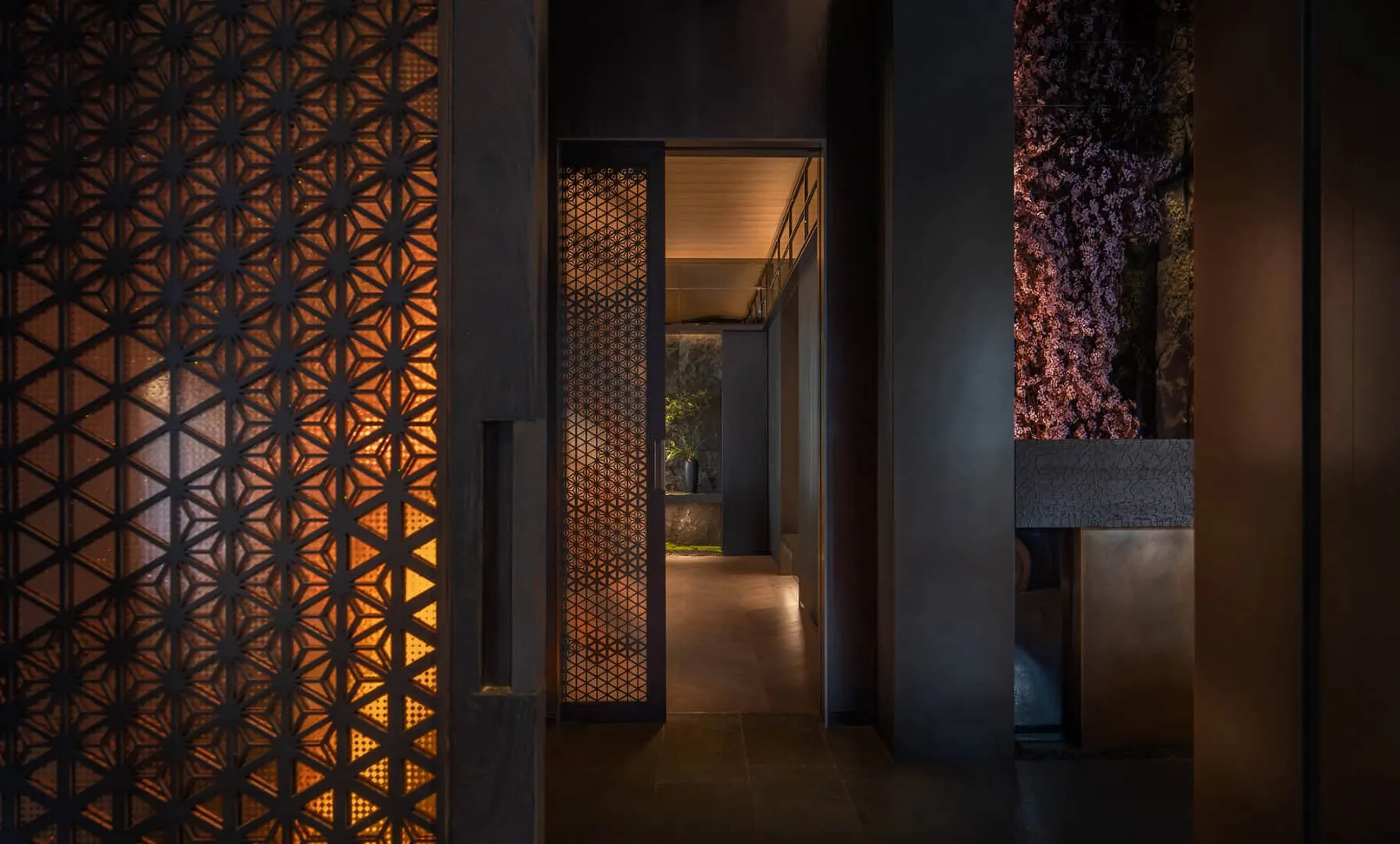
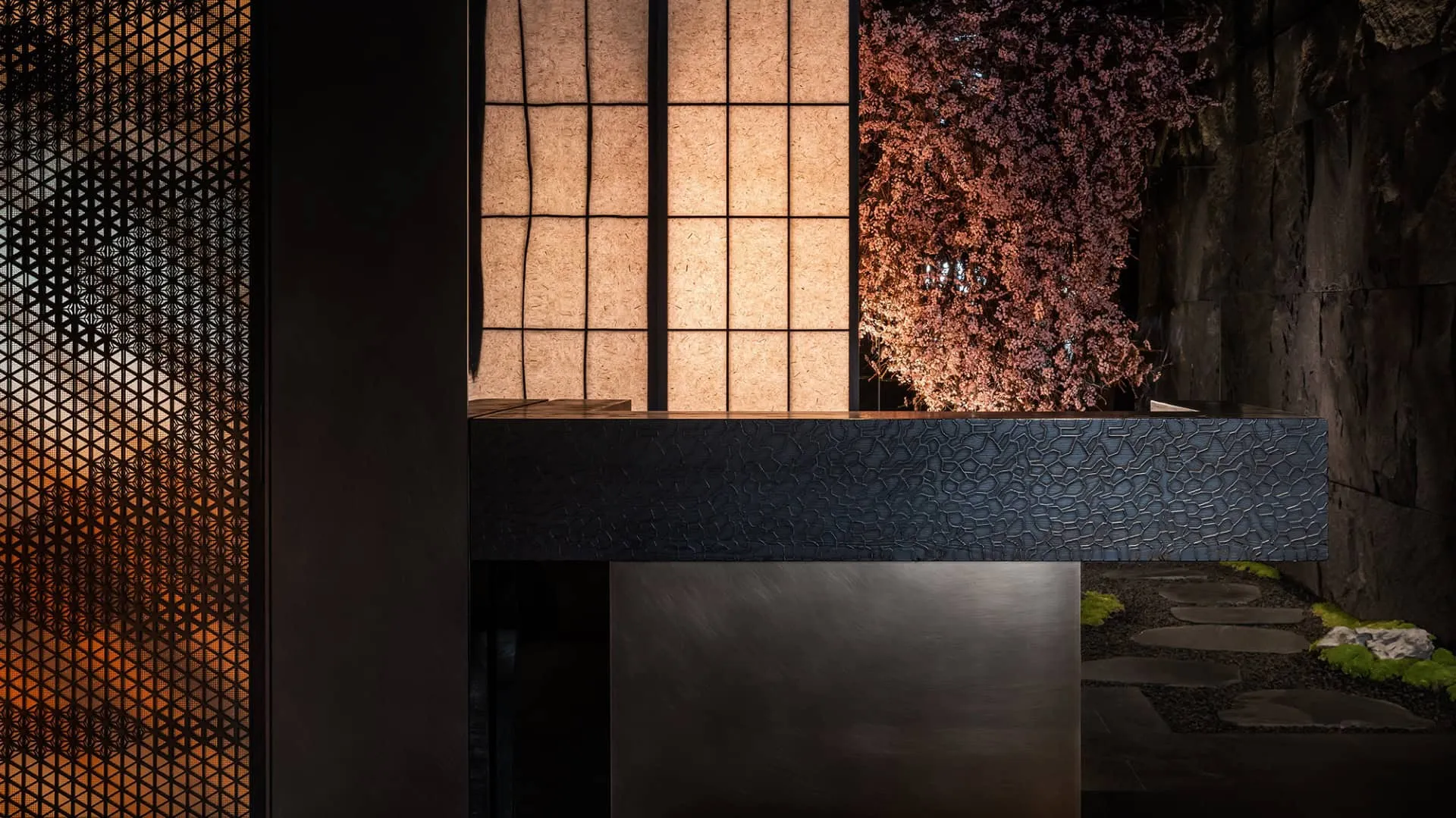
Paper windows, textured stone walls, mosses, and water features lead guests deeper into the restaurant, creating a sense of entering a mountain sanctuary temple.
The Central Dining Space
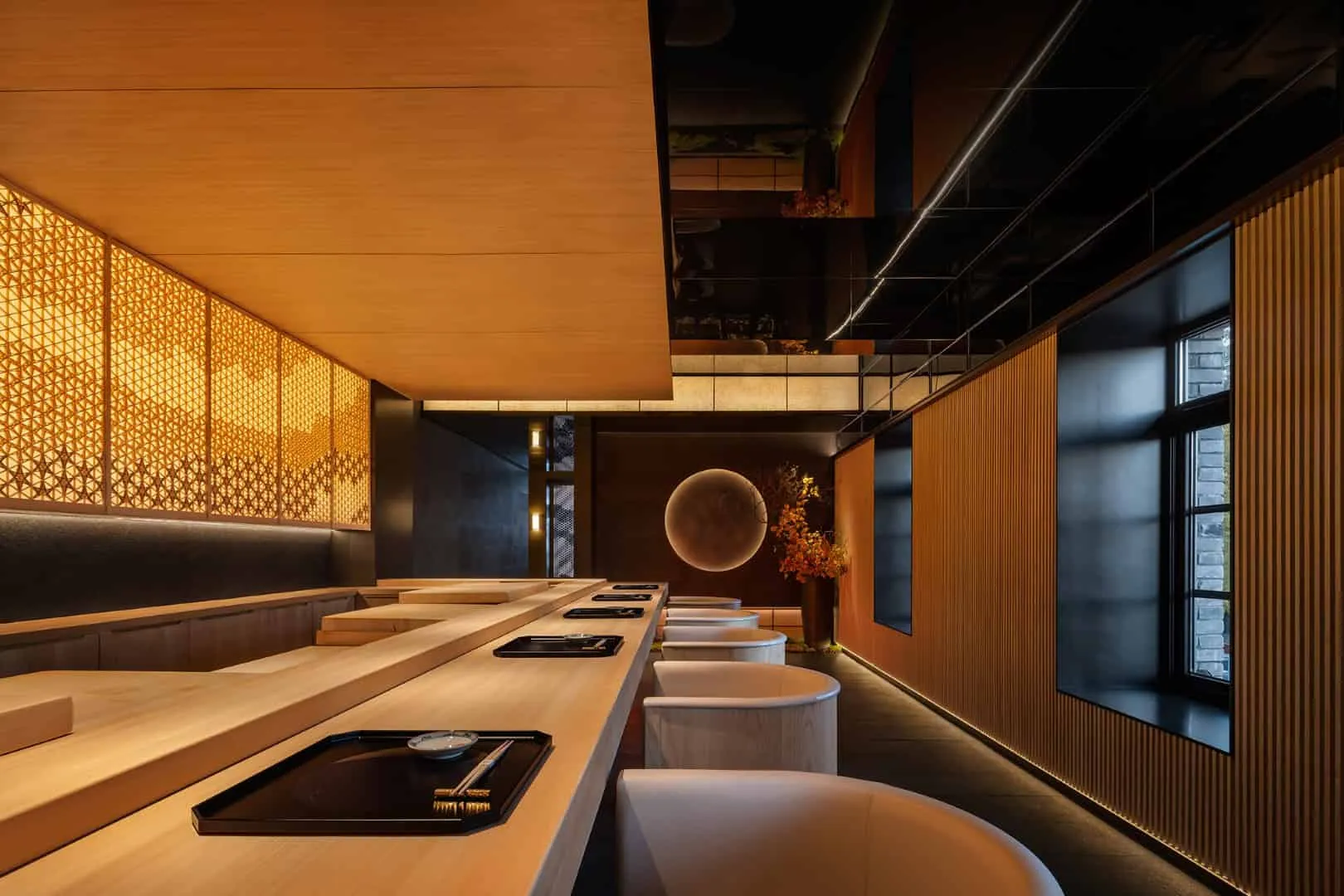
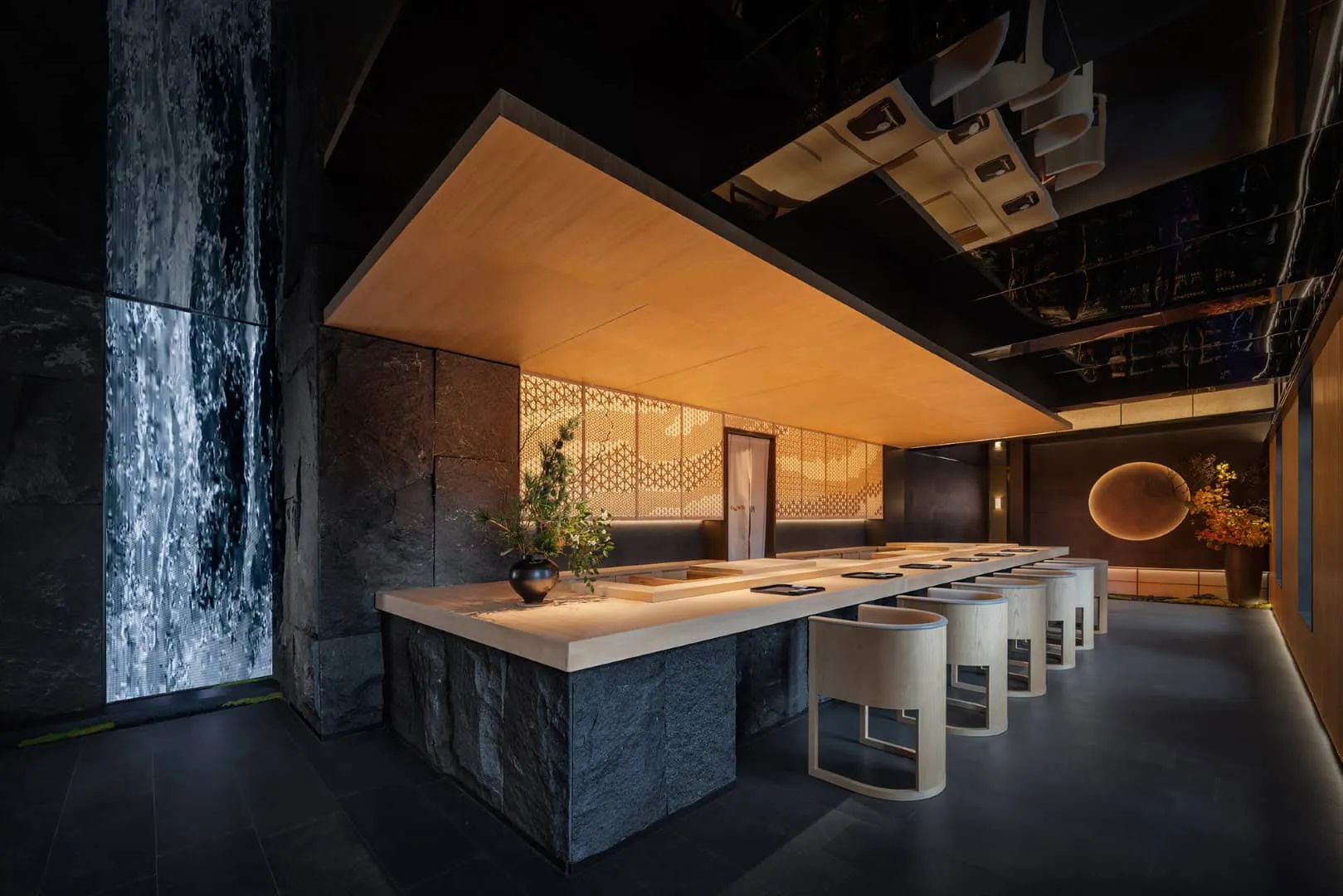
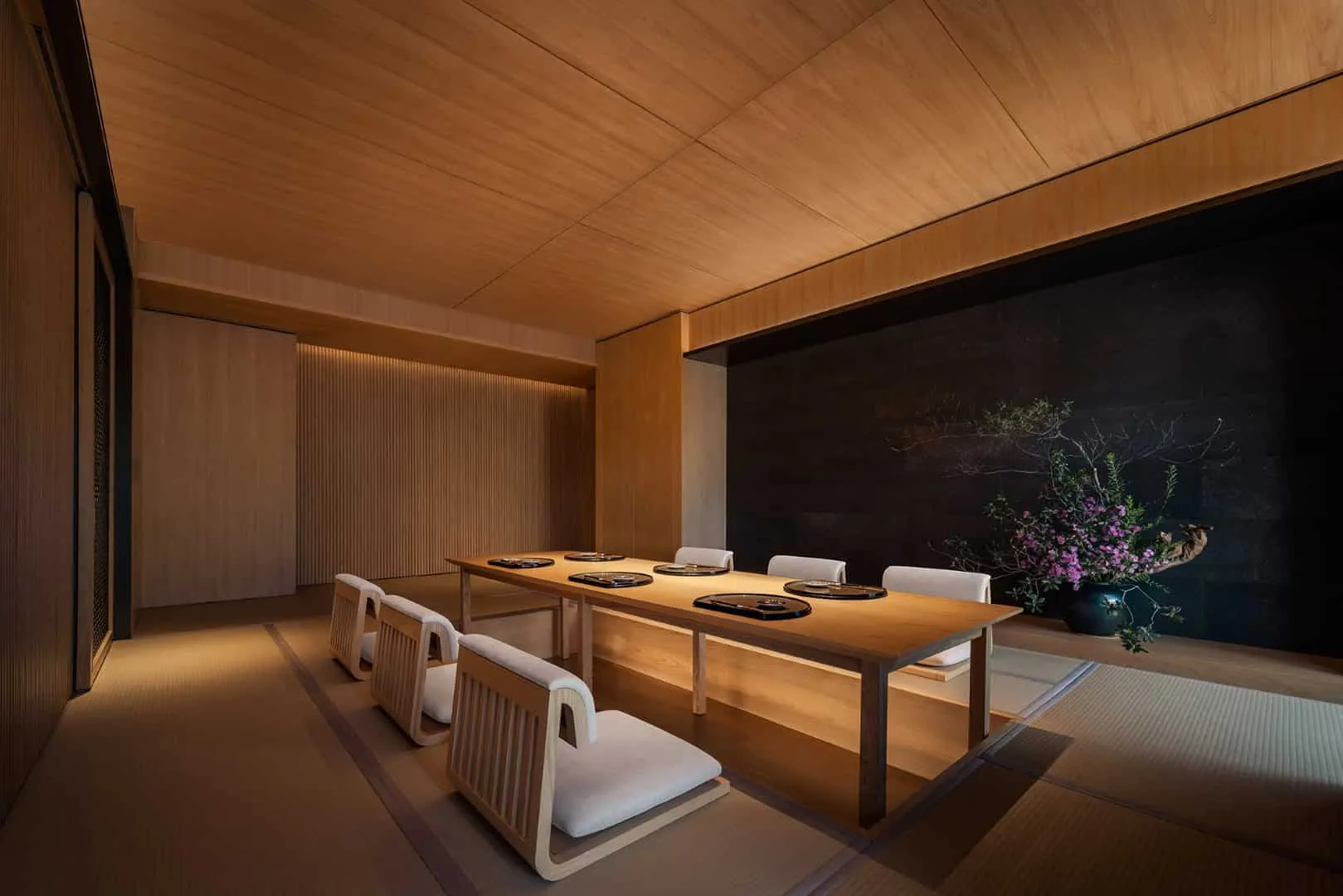
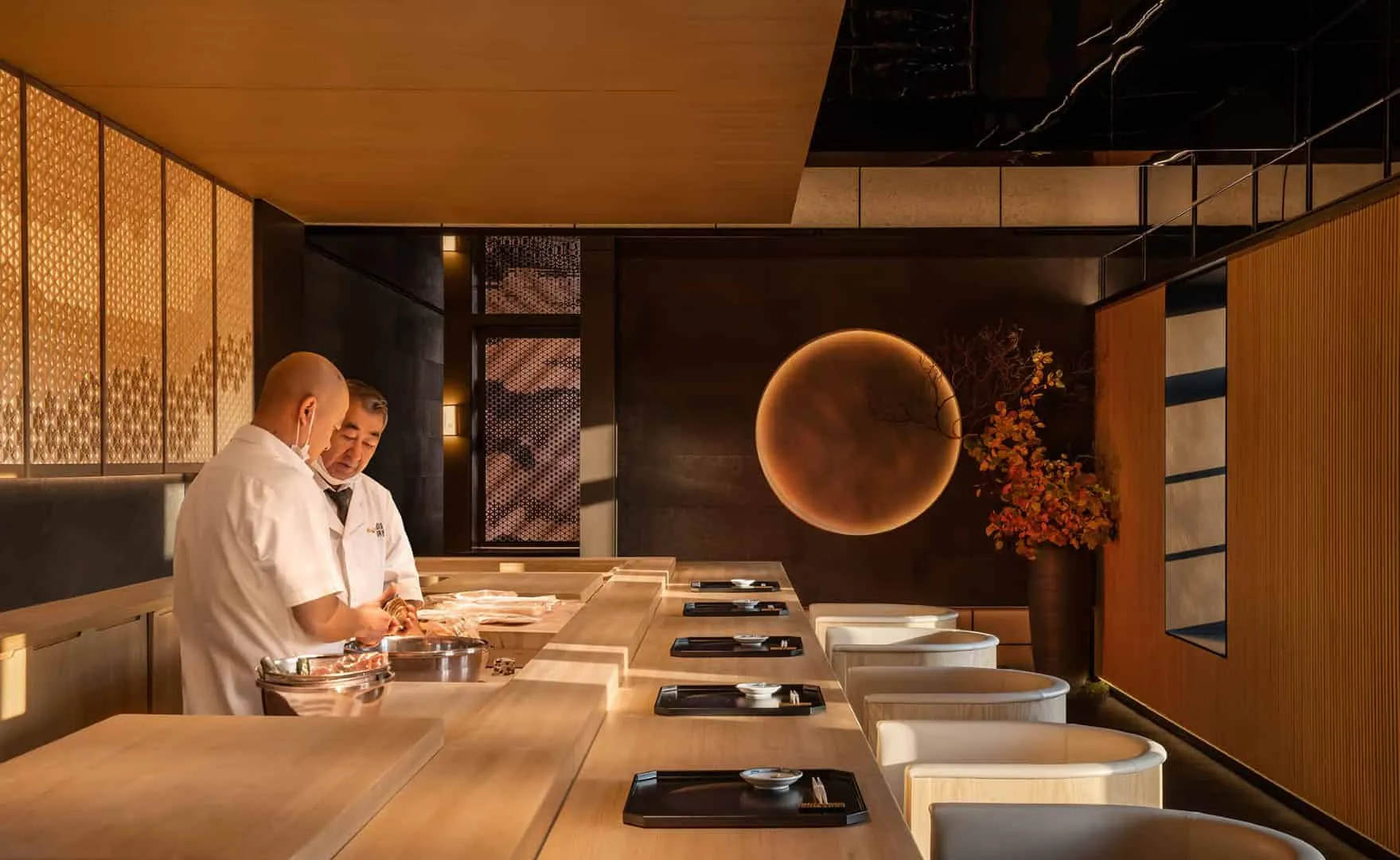
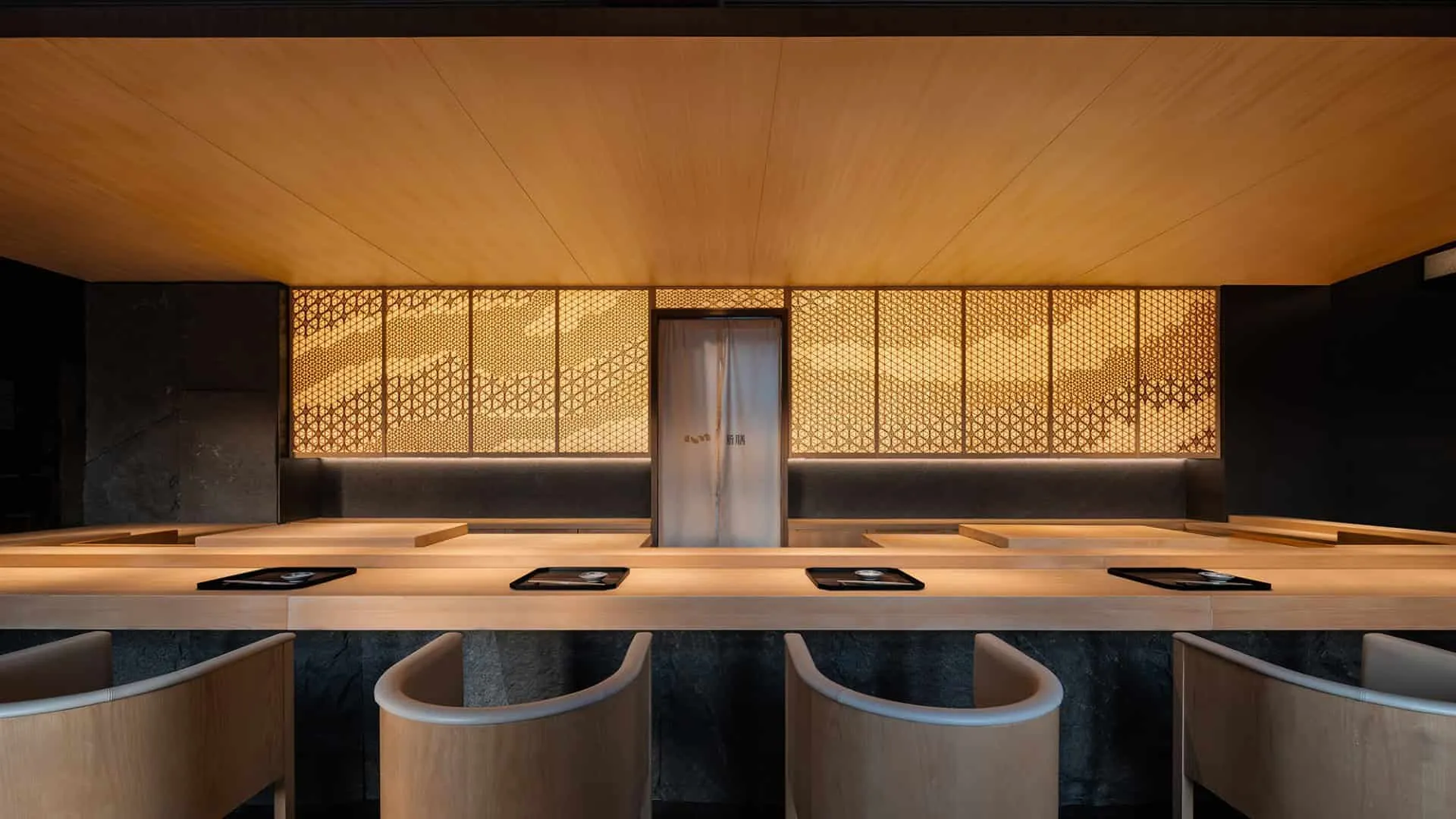
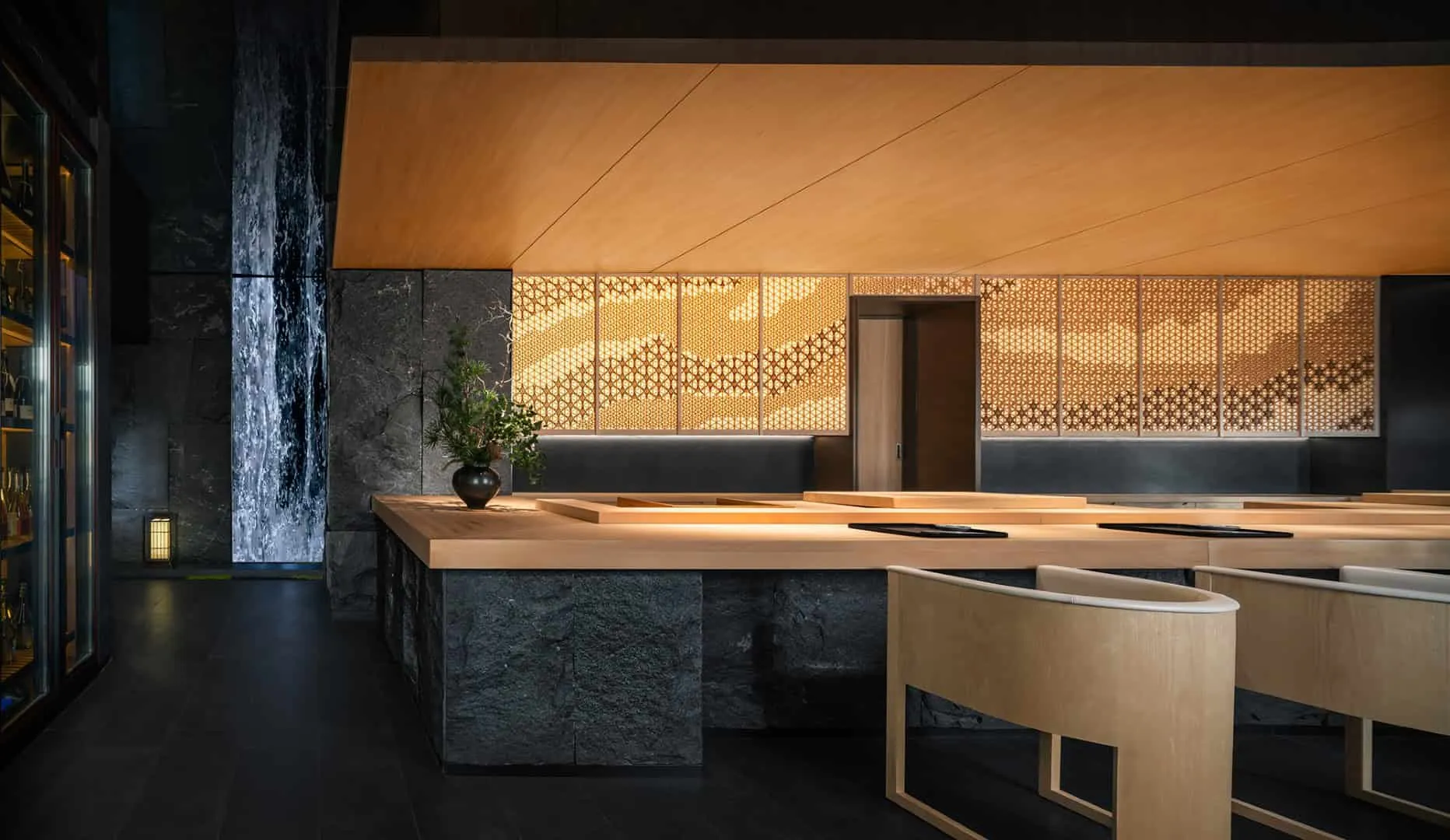
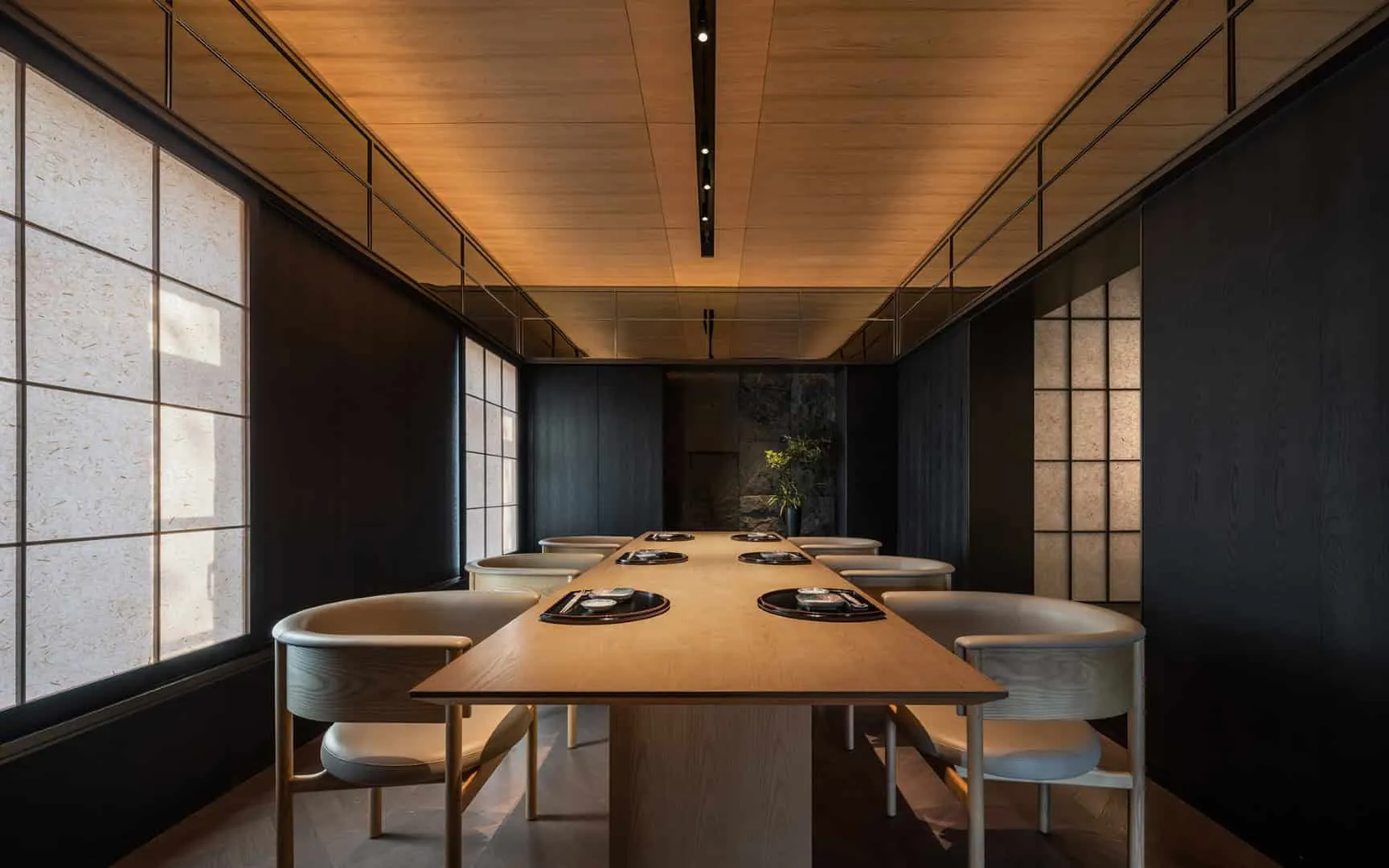
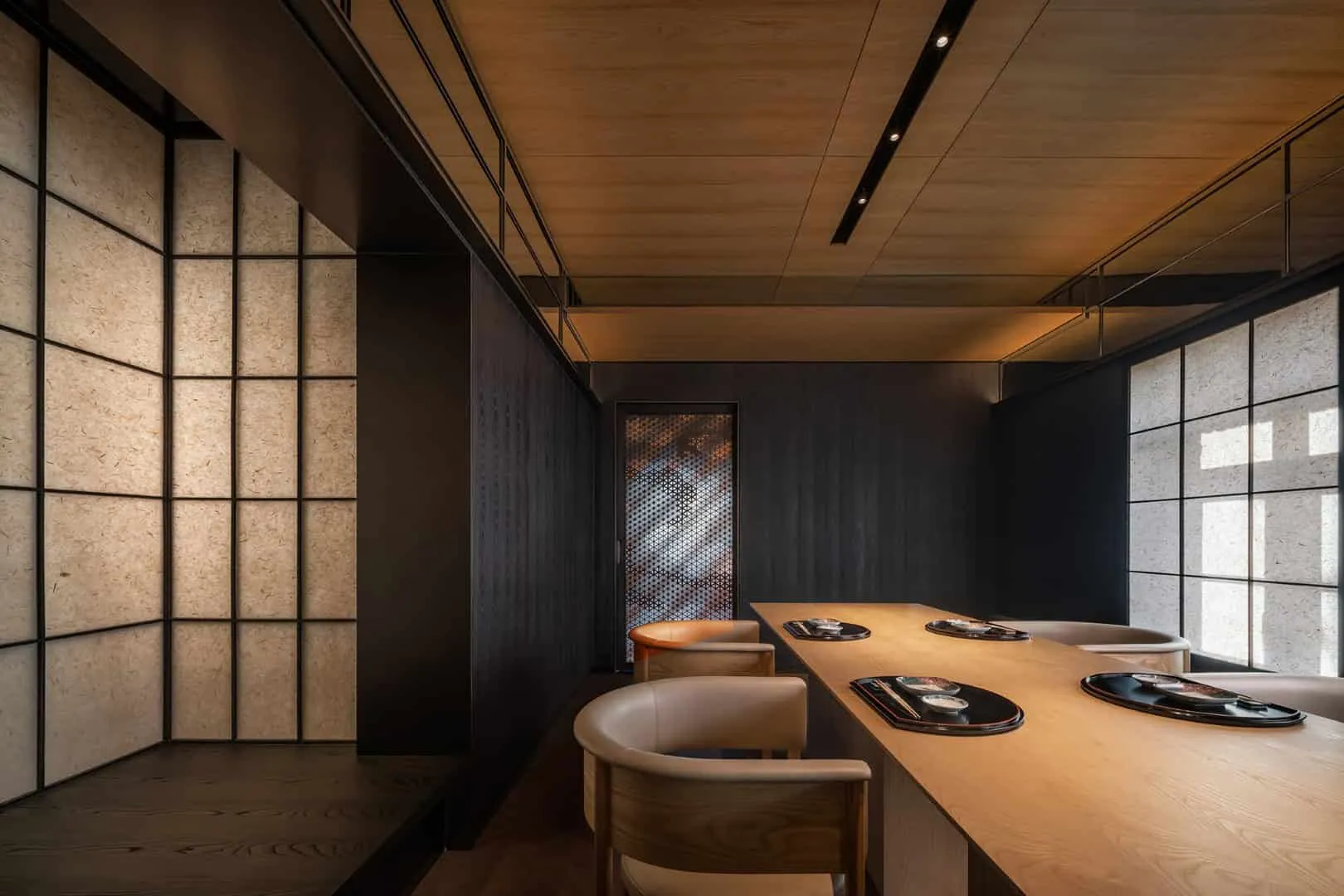
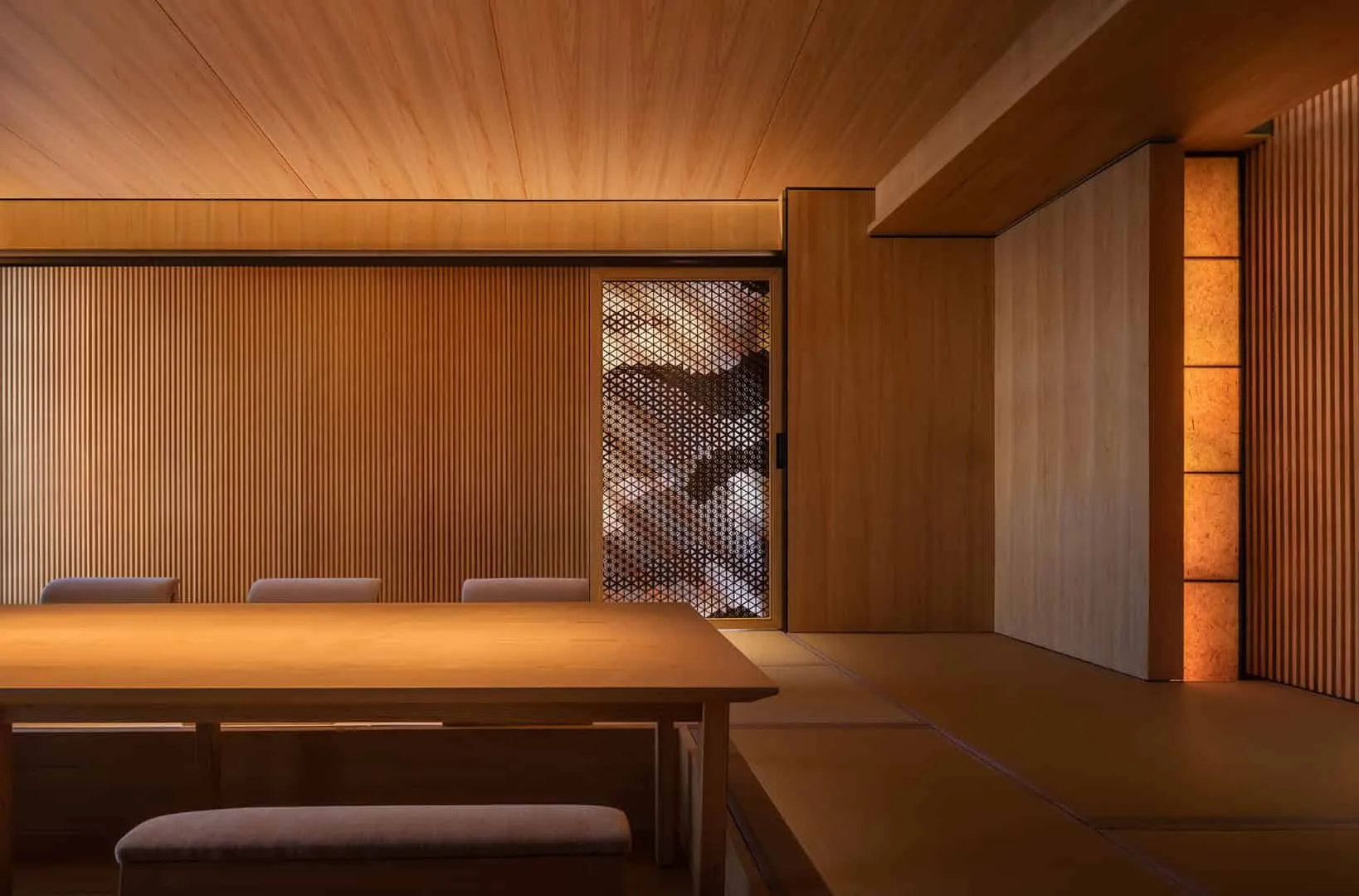
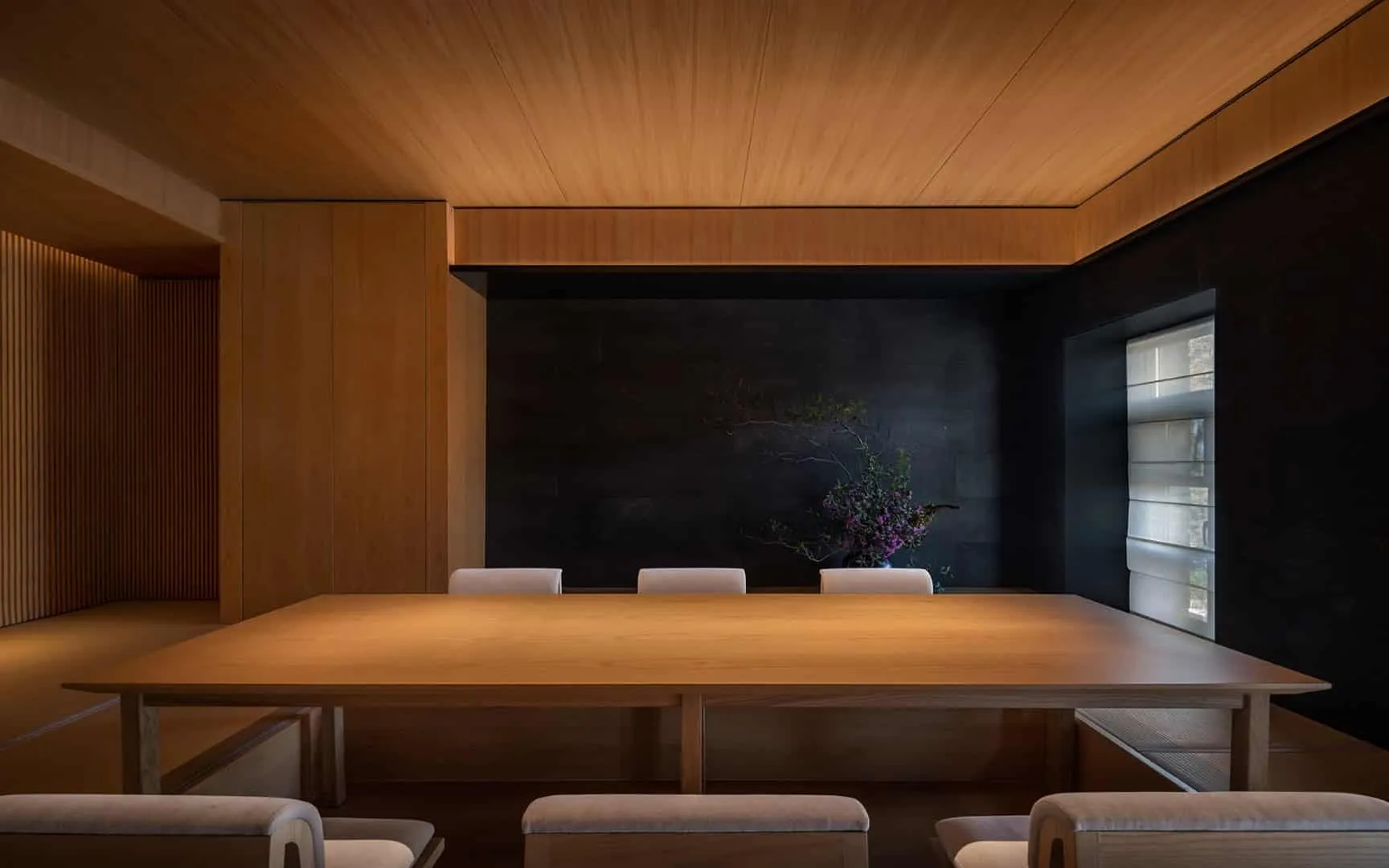
The heart of Sushi Zen is the ritualistic dining space, centered around a large hinoki countertop surrounded by round chairs and fabric partitions. Here, head chef Suzuki Oki, listed among the top ten Asian chefs in 2017, prepares seasonal delicacies with precision.
The interplay of black steel, reflective mirrors, and carefully balanced lighting expands the sense of space, while shadows and warm tones create a theatrical yet intimate atmosphere.
Private Areas and Cultural Symbolism
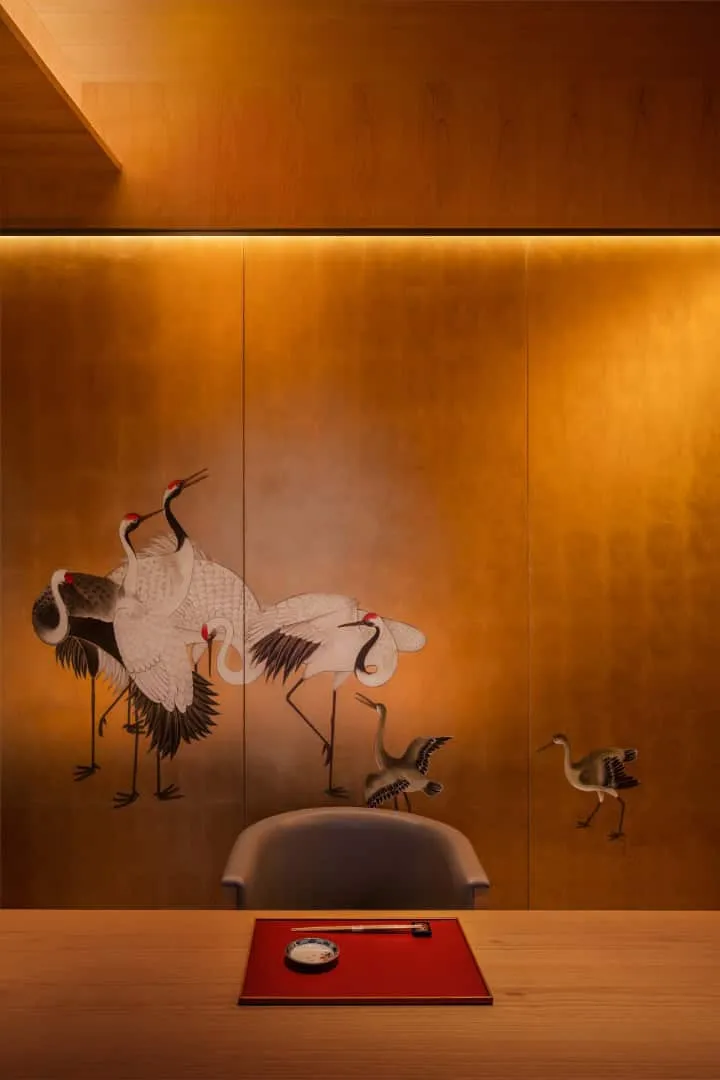
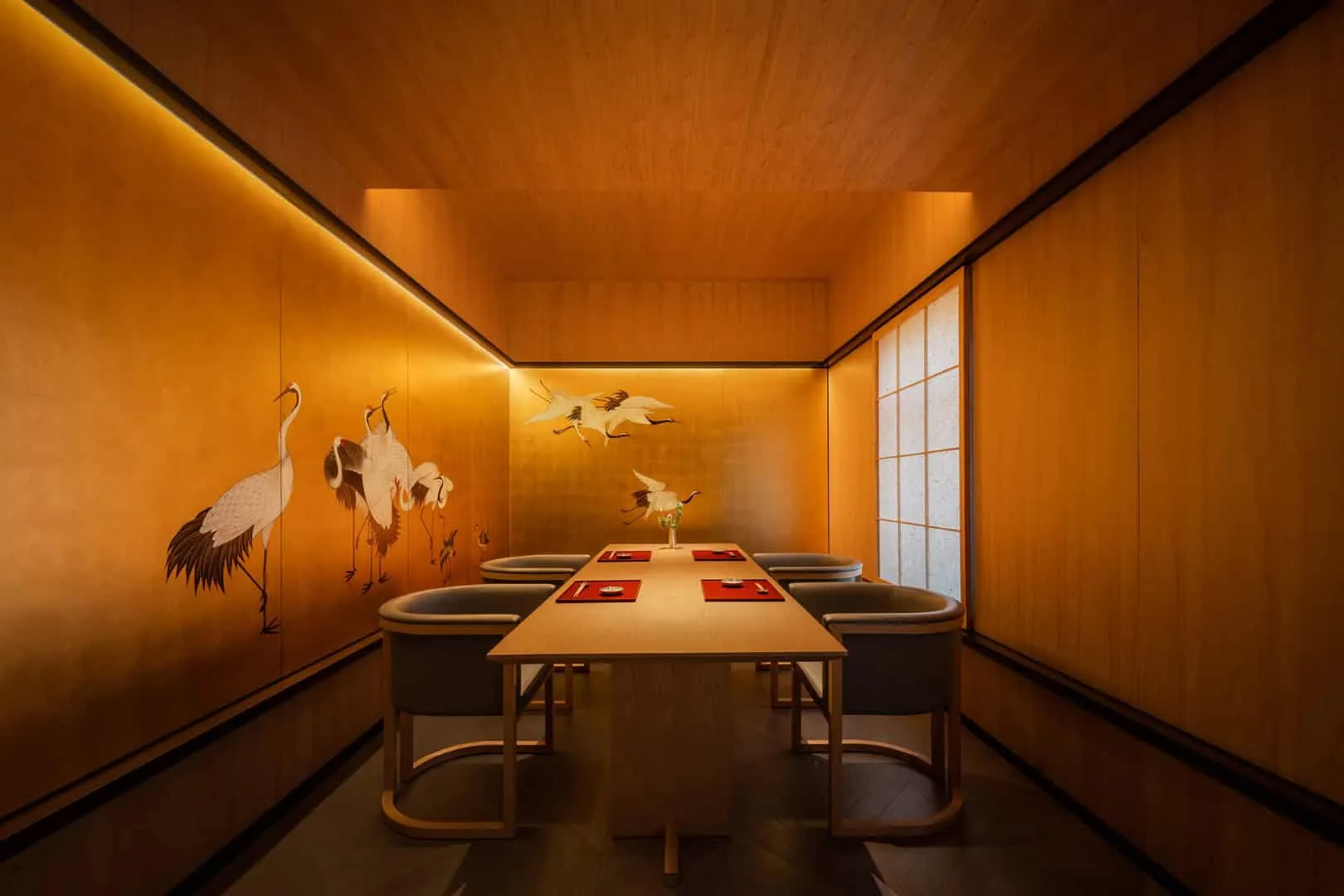
Four private dining rooms—Chuan, Ze, Sun, and He—symbolize mountains, rivers, pine trees, and cypress. Each room features carved motifs of pine and maple, with details such as a herb pathway with flowers and a moon-shaped pattern on the wall, enhancing the theme of nature and continuity.
This layered symbolism and craftsmanship elevate the dining experience, making each room a unique interpretation of cultural memory and landscape.
The Courtyard and Terrace: A Dialogue with Nature
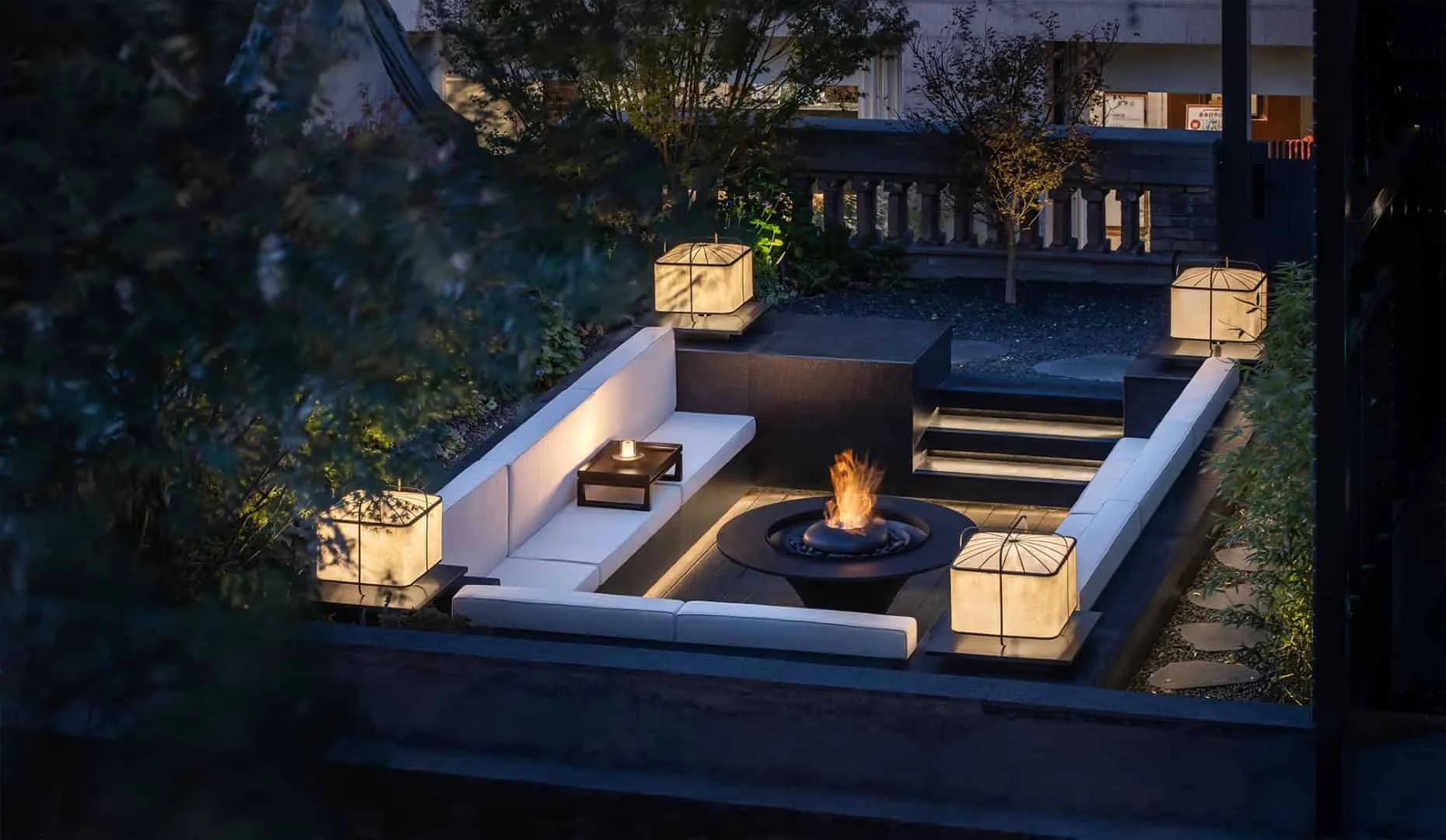
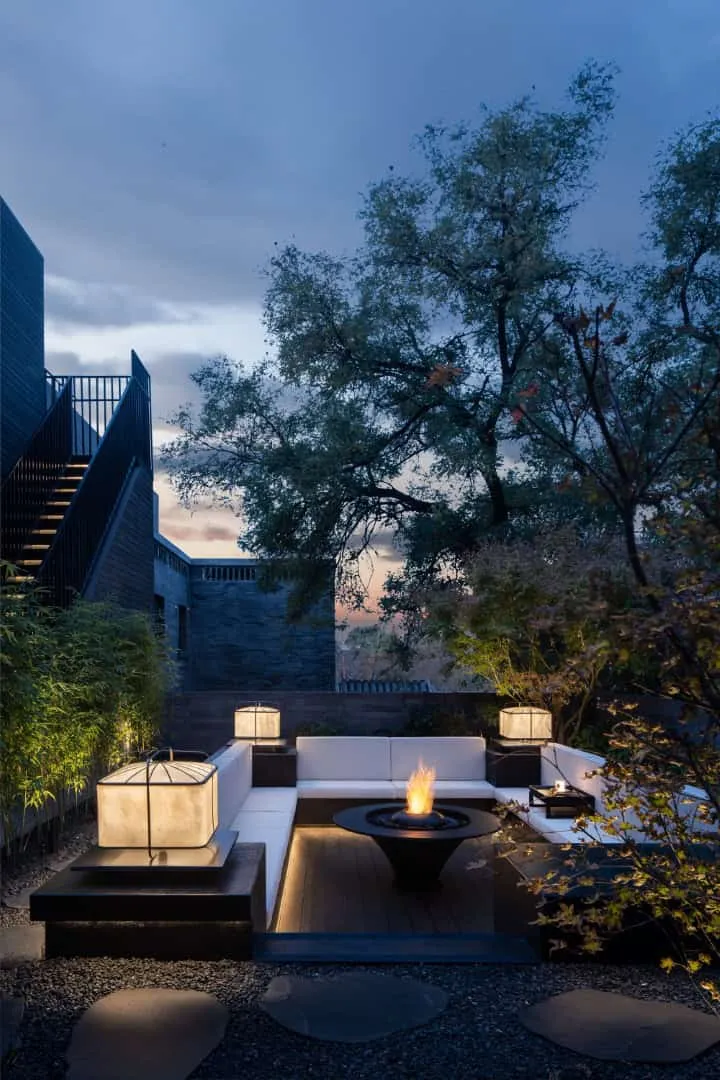
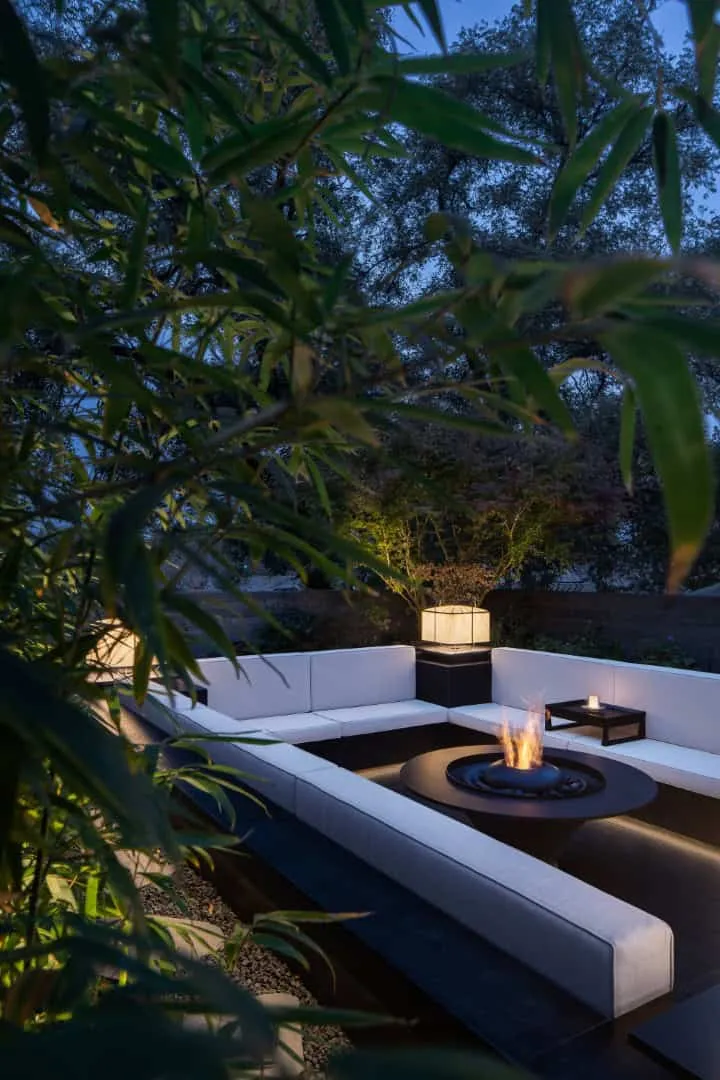
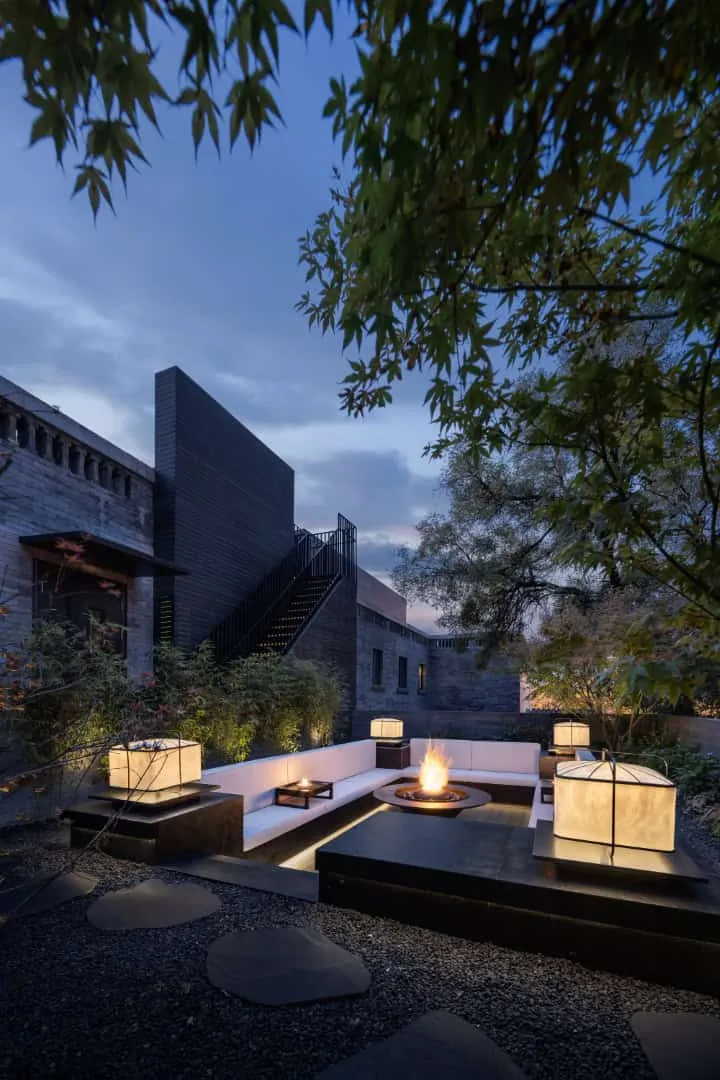
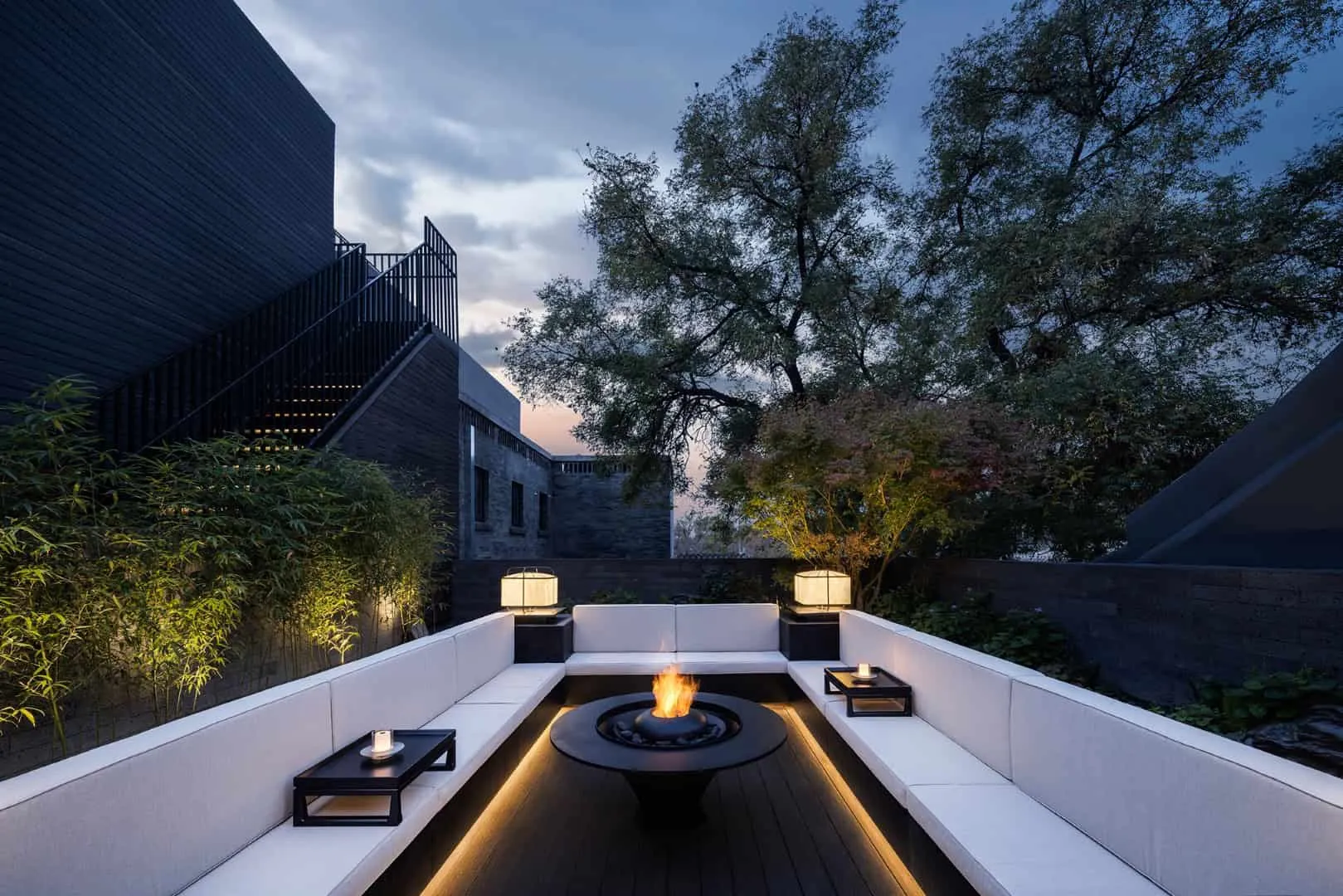
Following Beijing's historical typologies, Sushi Zen includes a courtyard retreat, a quiet microcosm of nature with trees, water, stone, and light. Guests can walk along wooden paths to lowered courtyards surrounded by maple and bamboo, stopping on cobblestone walkways or enjoying drinks under the open sky near a fireplace.
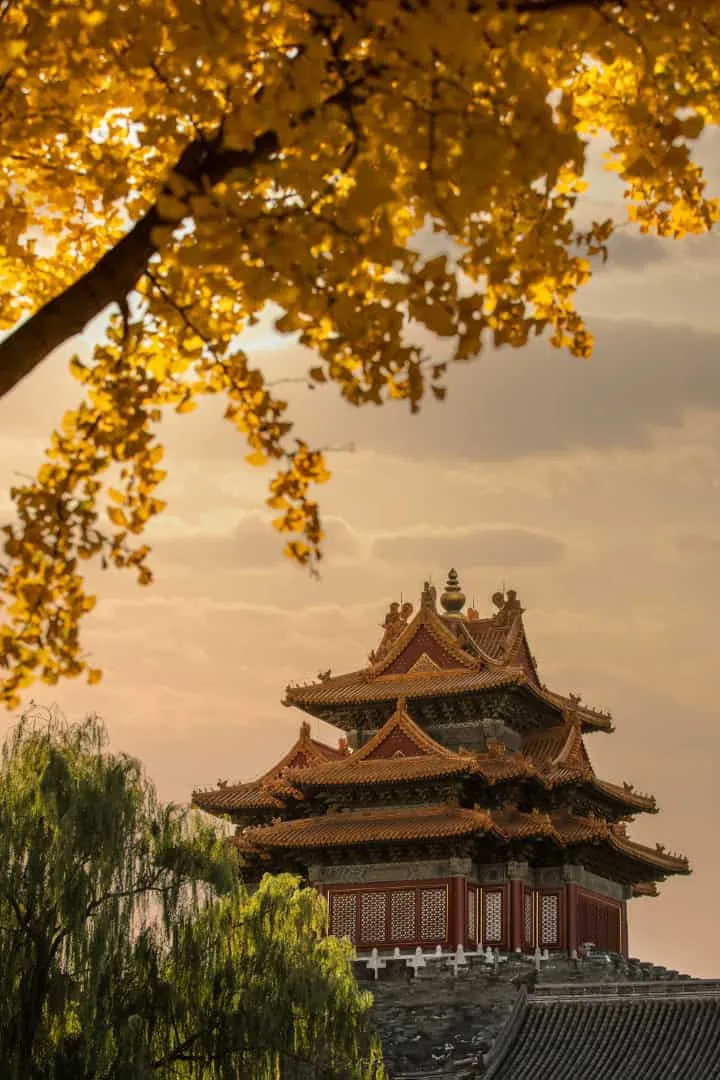
Above, a covered terrace offers a direct view of the Forbidden City icons—Xieshan roof with gabled design, intricate eaves, and majestic presence create a dramatic contrast to the more intimate restaurant design. Sunrise, noon, and sunset become moments of harmony between architecture, nature, and ritual.
Merging Heritage with Modern Design
Reimagining a historic Beijing house, LDH Design created a restaurant that balances the simplicity of wabi-sabi with refined luxury. Sushi Zen is more than just a dining spot—it's an immersive environment where culinary artistry, spatial design, and cultural memory intertwine.
Thus, the project demonstrates how architecture can serve as a vessel for traditions and canvas for new experiences, positioning Sushi Zen as a benchmark of modern restaurant design in Beijing.
 Photos © Wang TingPhotos © Wang Ting
 Photos © Wang Ting
 Photos © Wang Ting
 Photos © Wang Ting
 Photos © Wang Ting
 Photos © Wang Ting
 Photos © Wang Ting
 Photos © Wang Ting
 Photos © Wang Ting
 Photos © Wang Ting
 Photos © Wang Ting
 Photos © Wang Ting
 Photos © Wang Ting
 Photos © Wang Ting
 Photos © Wang Ting
 Photos © Wang Ting
 Photos © Wang Ting
 Photos © Wang Ting
 Photos © Wang Ting
 Photos © Wang Ting
 Photos © Wang Ting
 Photos © Wang Ting
 Photos © Wang Ting
 Photos © Wang Ting
 Photos © Wang Ting
 Photos © Wang Ting