Central Ring Gallery Studio A+ in Hefei, China
Project: Central Ring Gallery
Architects: Studio A+
Location: Hefei City, Anhui Province, China
Area: 177,873 sq ft (building), 323,100 sq ft (site)
Year: 2019
Photography: Chen Su, Fan Chun
Central Ring Gallery Studio A+
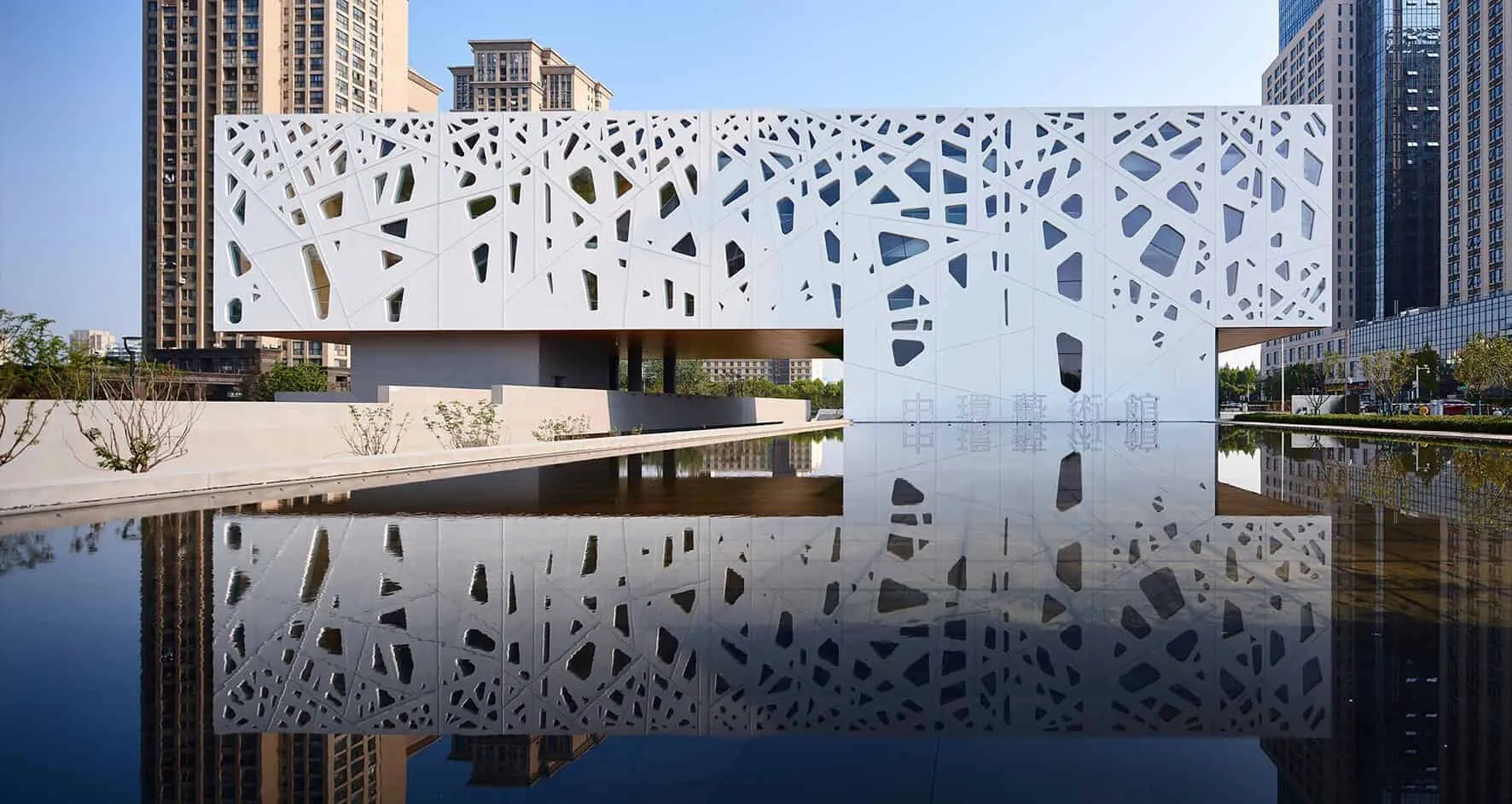
A floating art gallery together with its large 'artificial nature' and surrounding environment creates an urban art utopia where art and artists meet society. The place, created by architecture and landscape, is a highly welcoming and inclusive public space where people can easily access art, experience it, and celebrate it, feeling inspiration and enlightenment.
The project was completed in 2008. Ten years later, construction began and was finished by the end of July 2019.
Twelve years ago, the general director of Central Ring real estate group found us after visiting poor artists in the countryside of Anhui Province. Seeing so many outstanding artworks accumulated in modest homes with no chance to show them to the public, he decided to build an art gallery in a new urban district of the provincial capital.
He envisioned this low-density and single-story art district as a place where art and artists meet society, radiating unique energy to neighboring areas and becoming an essential destination for visits. To make this possible, the site needed to stand out among ordinary urban jungles—skyscrapers.
Concept
How to turn this simple yet idealistic aspiration into reality? After analyzing the site and its surroundings, which were then completely empty, we decided to introduce 'artificial nature' into this new urban district that would typically be densely populated with high-rise buildings and super-wide boulevards according to the plan. We were confident that no one living in the city would refuse a piece of idyllic land—land full of cherry blossoms could be more appealing than a concrete forest. We wanted to create a microclimate characterized by art and nature, or an urban oasis with an art utopia inside.
This valuable natural environment becomes a stage for hosting art and art events. Art and nature, though independent of each other, contrast, flow, connect, and merge simultaneously. In spring during blooming events such as special art festivals, this place can even acquire a unique individuality, attracting people from afar.
The main expected activity on site is walking, allowing people to enjoy and contemplate art and nature at multiple levels. The gallery itself is not an isolated artistic container. Together with the environment, it becomes a welcoming and inclusive public place where people can easily access art, experience it, and celebrate it, feeling inspiration and enlightenment.
Priority of Landscape Design
Art is harmony that runs parallel to nature. — Paul Cézanne
Landscape design was the first phase of planning. A series of parallel lines were used as a matrix for reformatting the site. Colors of various local plants were painted on this configuration to express artificial nature.
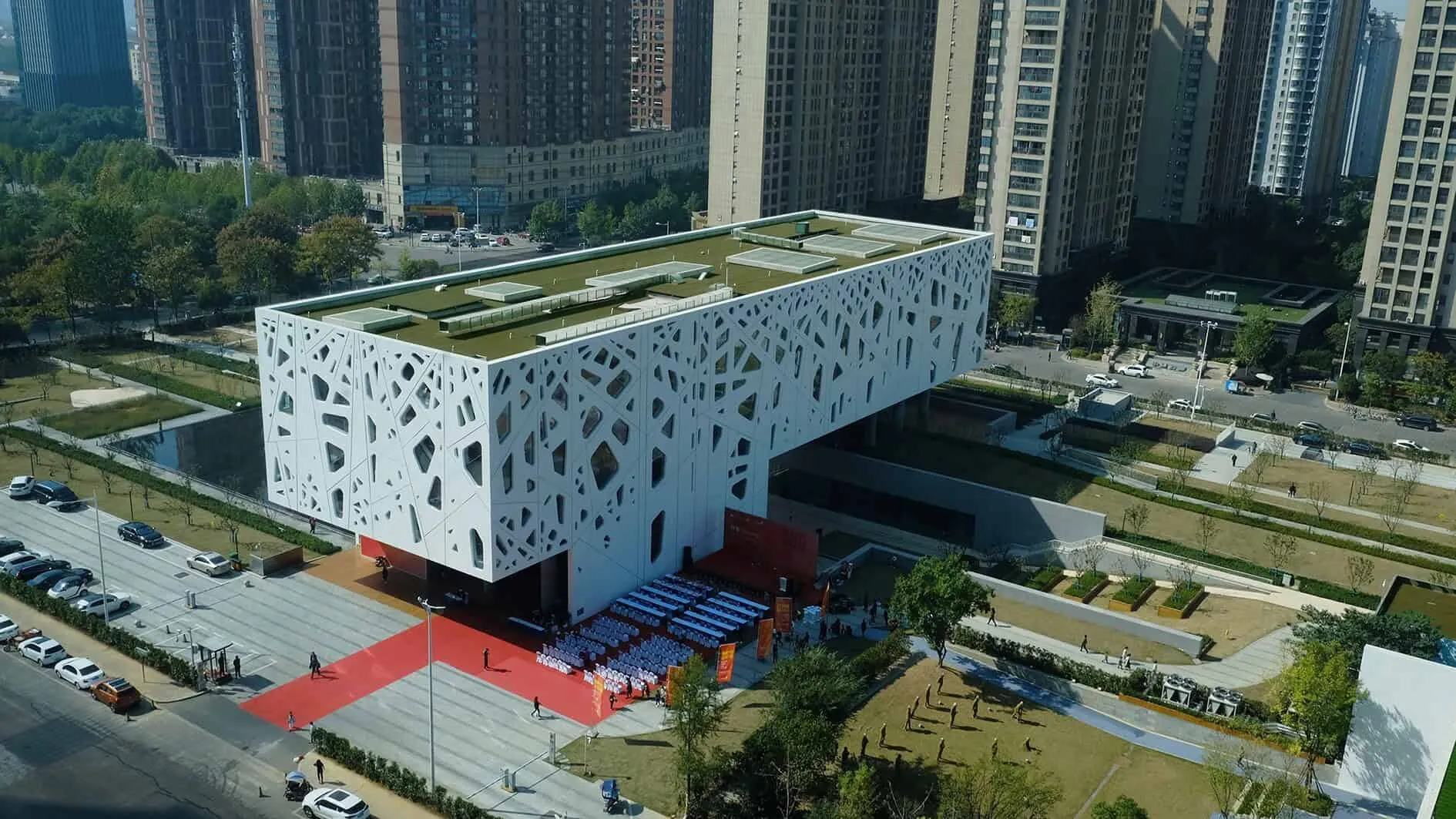
Areas defined by the parallel lines later became a lowered platform, stepped seating, reflecting pool, giant sloping walkway, terraces at different levels, rows of cherry trees and local shrubs with various flowers.
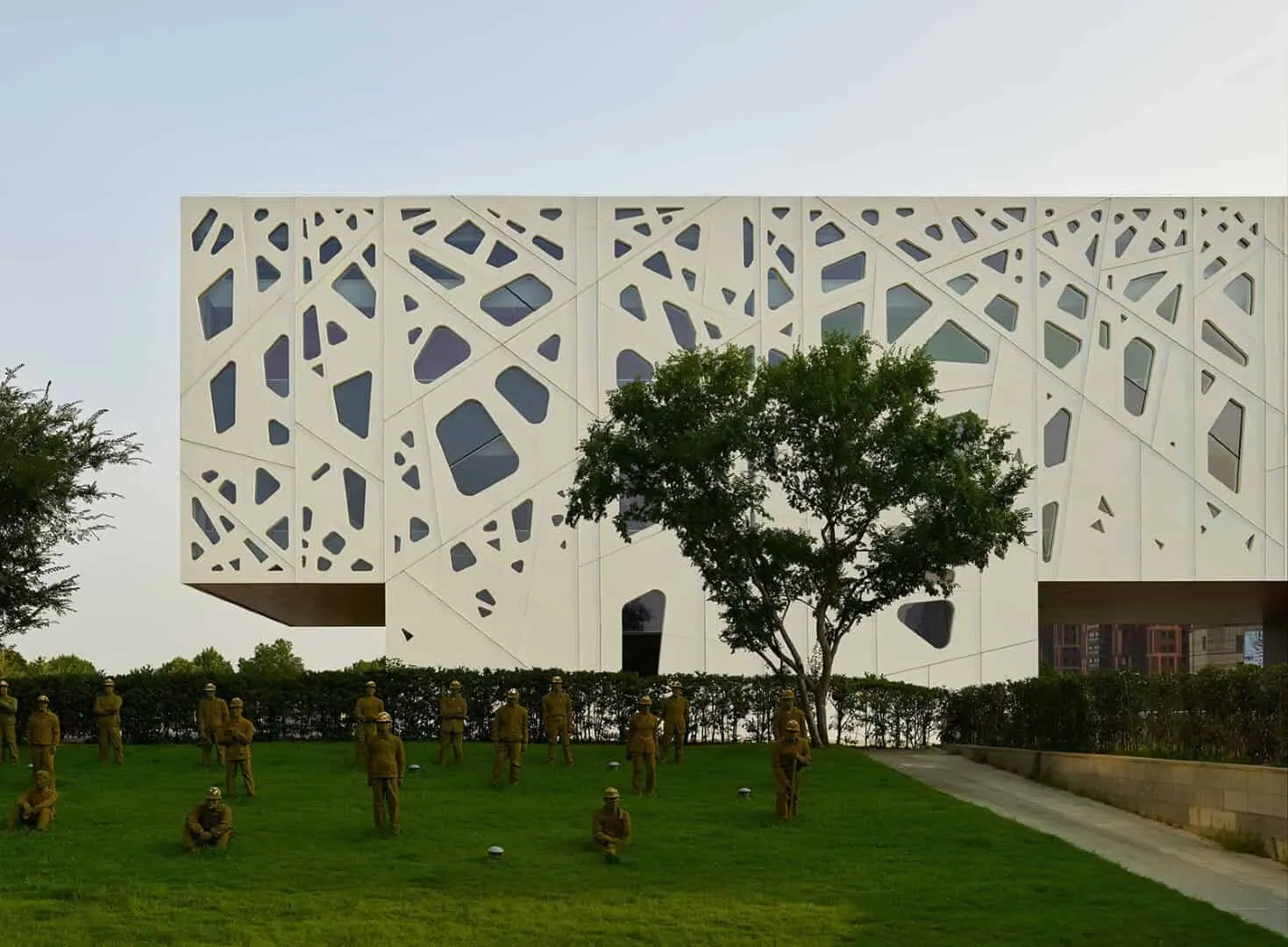
Inside this configuration lies the Central Art Salon of the Central Ring, the first phase of the project completed ten years ago in 2009. A group of human-scale sculptures based on real project builders stands on the sloping grass in the courtyard. With the new art gallery's facade as a backdrop, these sculptures honor ordinary workers with a special artistic language.
Architecture and Interior Spaces
Situated at the point where a pedestrian street ends on the opposite side, the gallery building invites people inside and leads them through an enjoyable journey with art.
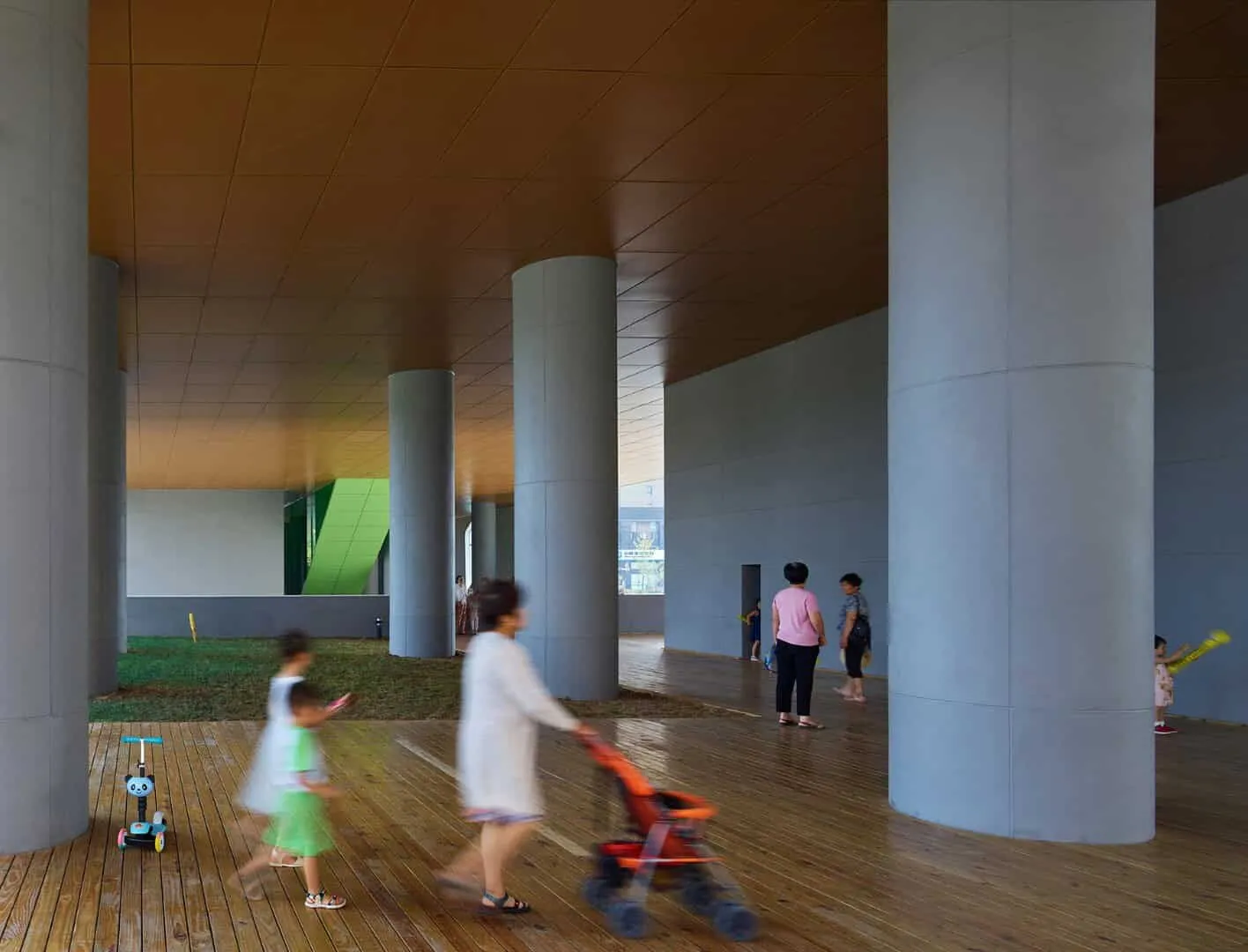
Perpendicular to the landscape's parallel lines, the gallery building floats above the ground and allows the landscape to pass through the site. The building becomes a floating scenario, with a specially designed shell derived from a 'forest' fragment. This floating structure forms a series of semi-open spaces for various art events.
The internal journey begins with a grand staircase leading visitors directly into the hall and an open multi-functional zone on the second floor. The VIP lounge and conference room are located right next to the open area where events like opening ceremonies can take place.
Two exhibition halls—one large and one small—are located on the third floor and are only partially open. The space around these two boxes is left free in such a way that the building's shell is highly permeable, mixing internal and external spaces rather than separating them through this interface. These spaces can accommodate temporary informal art exhibitions. Walking among them, people can enjoy both the internal artistic displays and the nature beyond.
Light and Color
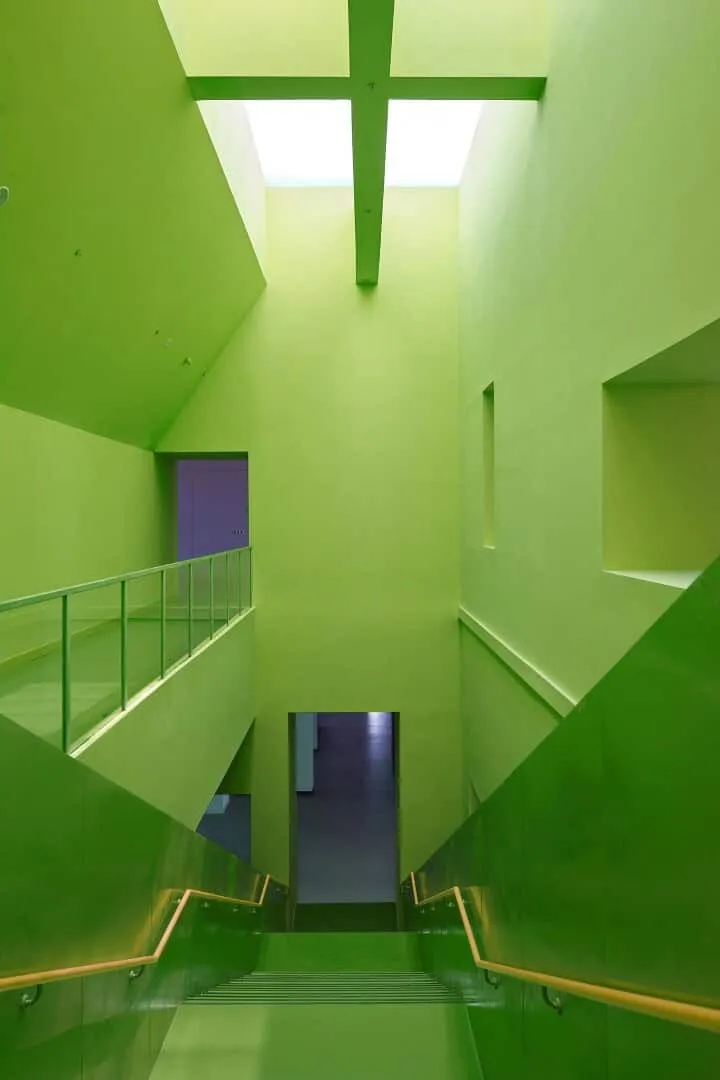
The gallery has three major types of interior spaces: the core, i.e., exhibition halls where daylight comes vertically from above through skylights; spaces outside the core, pedestrian corridors and free zones connected to them, where daylight comes horizontally through side windows; and the grand staircase, somewhere between these two. Inside the grand staircase, daylight mainly comes from above through skylights, while horizontal light and views can also be borrowed via side openings from adjacent areas.
The exterior color is white and dark gray, taken from the local traditional architecture 'Hui' (mainly black-white). Pink (cherry blossoms), yellow (rape flowers), and green (young leaves) are applied to the interior shell to reflect the local landscape in spring. Walls inside exhibition halls are painted white to ensure optimal lighting and best display of artworks. Fresh and bright green is used both inside and outside the grand staircase to give space a deliberate individuality. When people begin their journey with art on the first step, they feel as if they have stepped into a painting and become protagonists of the scene.
- Project description and images provided by Studio A+