A Celestial Show: Why the Northern Lights Suddenly Became Visible in Unusual Places?
And how to increase your chances of seeing it again?
Last week, residents of many countries became witnesses to a rare spectacle — the Northern Lights. This natural phenomenon, usually observed in polar regions, suddenly "descended" further south, surprising and delighting millions of people. What exactly is the Northern Lights, why does it occur, and how can you see it without traveling far to the north?
Dancing Lights in the Sky: What Is the Northern Lights?
The Northern Lights, or Aurora Borealis, is a captivating light show in the night sky. Imagine colorful curtains of light swaying high above your head. They can be green, pink, purple, or even red. These "dancing lights" have fascinated people for thousands of years, inspiring legends and myths among different cultures.
However, science explains this phenomenon differently. The Northern Lights occur when charged particles from the Sun collide with atoms and molecules in the upper layers of Earth's atmosphere. These collisions cause atoms to become excited and emit light in various colors.
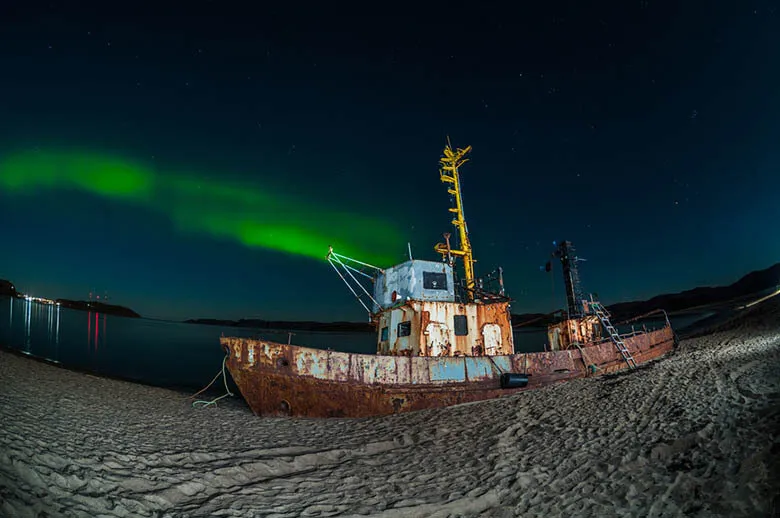 Photo: Lori Photo Bank, murmansk-teriberka.ru
Cosmic Weather: Why Did the Northern Lights Suddenly Become Visible So Far South?
Normally, the Northern Lights can be observed in what is called the "auroral oval" — a region around Earth's magnetic poles. For Russian residents, this usually includes areas beyond the Arctic Circle: Murmansk Oblast, Yamal, Taymyr.
However, sometimes the Northern Lights become visible much further south. This happens during strong geomagnetic storms caused by increased solar activity. That's exactly what happened last week.
According to data from the National Oceanic and Atmospheric Administration (NOAA) of the United States, at the beginning of October 2024, the Sun experienced a series of powerful X-class flares accompanied by coronal mass ejections (CMEs). These events led to a massive influx of charged particles heading toward Earth, causing a strong geomagnetic storm.
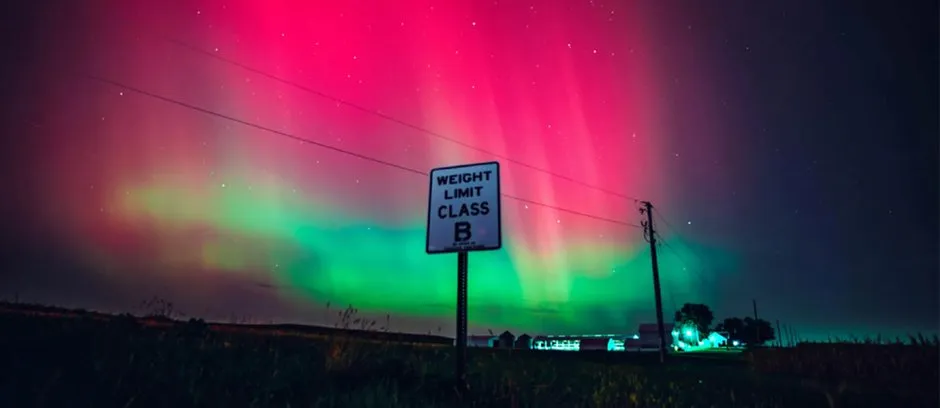 Photo: Ross Harritt, reuters.com, Wisconsin
A Global Phenomenon: Where Was the Northern Lights Observed?
As a result of this geomagnetic storm, the Northern Lights were observed in many countries where they are usually not visible. Here are a few examples:
United Kingdom: Residents of Scotland, Northern England, and even Wales witnessed a bright Northern Lights display.
Germany: Unusually bright aurora was observed in northern federal states, including Schleswig-Holstein and Mecklenburg-Vorpommern.
Poland: The Northern Lights were visible even in the central part of the country, which is rare for these latitudes.
Canada: The lights were seen much further south than usual, all the way to Ontario province.
United States: Residents of northern states like Michigan, Wisconsin, and even New York were able to enjoy this rare spectacle.
In Russia, the Northern Lights were also visible further south than usual, although exact data on the southernmost observation points are not yet available.
From Murmansk to Karelia: Where in Russia Can You See the Northern Lights?
Traditionally, the best places to observe the Northern Lights in Russia are:
Murmansk Oblast (especially the area around Teryberka)
Arkhangelsk Oblast
Yamalo-Nenets Autonomous Okrug
Republic of Karelia
During strong geomagnetic storms, such as the one that occurred last week, the Northern Lights can be visible much further south. However, it is important to remember that the chance of seeing this phenomenon depends not only on geomagnetic activity but also on weather conditions.
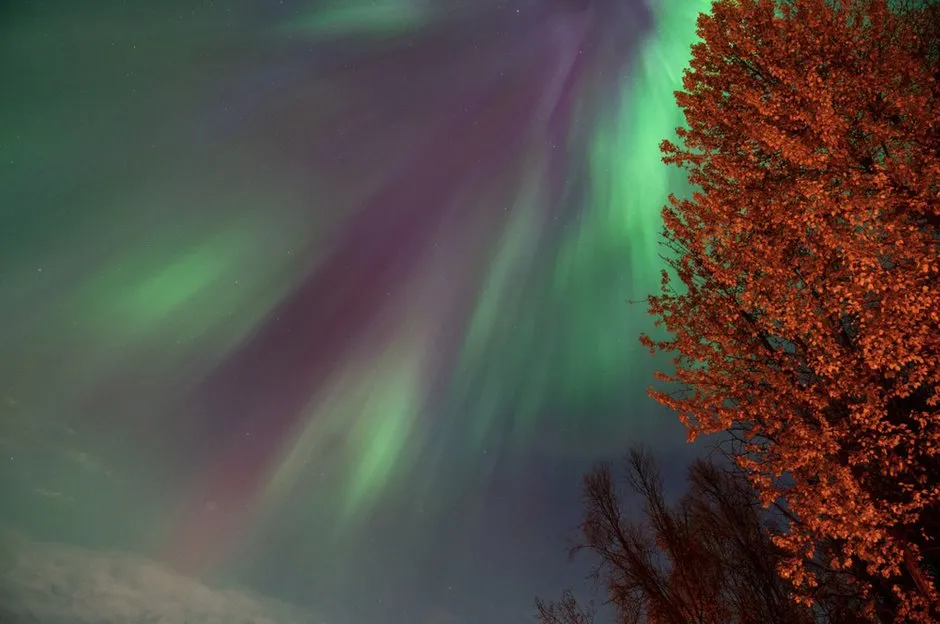 Photo: Hassan Akbas, nbcnewyork.com
Hunters of the Lights: How to Increase Your Chances of Seeing the Northern Lights?
If you want to become a witness to this amazing natural phenomenon, here are some tips:
Follow cosmic weather forecasts. There are special services and apps that predict the likelihood of seeing the Northern Lights.
Choose dark places away from urban light pollution. Even if the lights are visible in the city, they will be much brighter and more colorful outside the urban area.
Give your eyes time to adjust to darkness. This can take up to 30 minutes.
Be patient. The Northern Lights may appear and disappear, intensify and fade throughout the night.
The best time for observation is usually between 10:00 PM and 2:00 AM.
More Than Beautiful: What Effects Do Geomagnetic Storms Have?
Although the Northern Lights is a captivating spectacle, the geomagnetic storms that cause it can also have negative consequences. Strong storms can disrupt satellite operations, affect navigation systems, and influence power grids.
For example, during the recent storm, several airlines reported GPS navigation issues on polar routes. Additionally, satellite communication providers noted temporary degradation of signal quality in some regions.
The impact of geomagnetic storms on human health remains a subject of scientific debate. Some studies suggest a possible link between geomagnetic disturbances and exacerbation of cardiovascular diseases, although these findings require further confirmation.
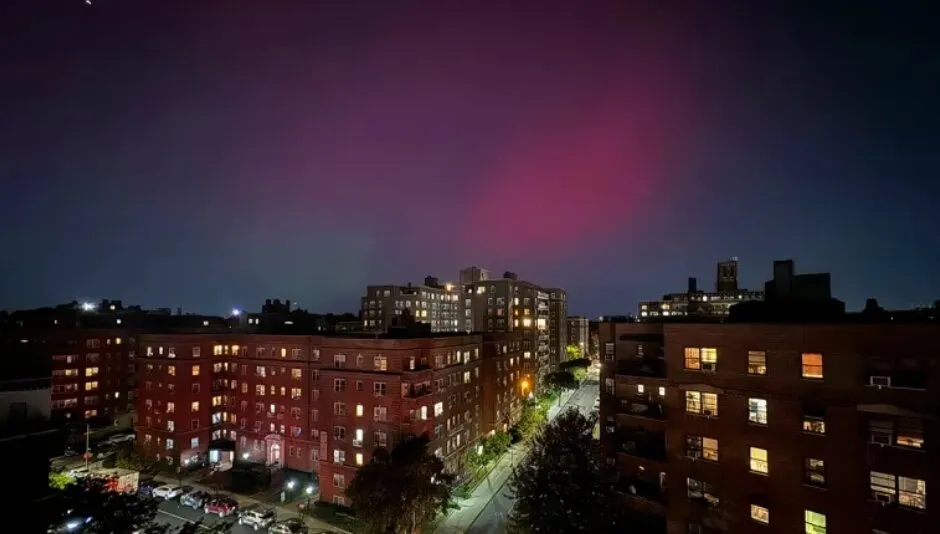 Photo: Daniel P. Derella, nbcnewyork.com, lights over New York
The Future of the Northern Lights: What to Expect?
According to forecasts from NASA and other space agencies, the current solar cycle (the 25th in sequence) is approaching its peak, expected in 2025. This means that in the coming months we can expect an increase in the frequency and intensity of geomagnetic storms, and thus more frequent and vibrant Northern Lights.
However, it is important to remember that each solar cycle is unique, and it's impossible to predict its development with complete accuracy. Therefore, scientists continue to closely monitor our star using both ground-based and space-based observatories.
Science and Beauty: Why the Northern Lights Continue to Amaze Us?
Despite our understanding of the physics behind the Northern Lights, it still continues to amaze us. This phenomenon reminds us how closely our planet is connected to space, and how fragile and vulnerable Earth is in the face of cosmic forces.
The Northern Lights are not only a subject of scientific research but also an inspiration for artists, photographers, and poets. It attracts tourists to northern regions, supporting local economies.
In an age when we are increasingly immersed in the digital world, the Northern Lights remain one of those rare phenomena that make us step away from our screens and look up at the sky in awe and wonder.
So next time you hear about an approaching geomagnetic storm, don't miss the chance to become a witness to one of the most beautiful natural shows on Earth. Who knows, maybe you'll be lucky enough to see the dancing lights right above your city?
Cover: Canada, Todd Corolew, reuters.com