Ceiling sound insulation in apartments
Ceiling Sound Insulation
Sound insulation of ceilings is a task that requires serious and responsible approach, as there are many ways to install ceiling sound insulation, not to mention the various materials available. Therefore, before starting such a responsible task, it’s advisable to read reviews from those who have already implemented this method.
You can either hire a specialized team to carry out the work or do it yourself. It’s better for beginners not to attempt complex installations on their own, so as not to waste all the effort.
If there shouldn’t be any problems with installing basalt wool, then it’s up to professionals to handle calculating the thickness of the sound insulation layer and selecting appropriate materials.
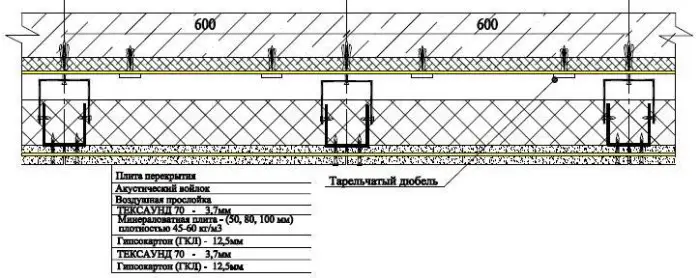
Diagram 1 – This shows how ceiling sound insulation is typically installed
There are several challenges involved in installing sound insulation materials independently:
- The optimal thickness for sound insulation should be at least 50 mm, as thin layers of insulation don’t always guarantee satisfactory results. Moreover, not everyone likes the first option, as it “cuts down” on the ceiling height;
- It’s not recommended to use plywood as a ceiling covering, as it conducts vibration noise effectively and essentially ruins all previous work;
- Separate sound insulation for ceilings won’t provide the desired silence, especially in nine-story buildings, where sound travels through both walls and floors. In such cases, it’s better to install full-room sound insulation.
The most common materials for ceiling sound insulation include polyurethane foam, basalt wool, coconut fibers, and cork. Also popular are sound insulation panels and tiles.
Ceiling Sound Insulation: Video
Sound insulation panels and tiles can be:A good option for ceiling sound insulation is to use mineral wool panels. It’s claimed to be the best noise reduction method in residential spaces. When installed, their noise absorption coefficient reaches 90%. Moreover, they’re easy to install: a special frame structure is attached to the ceiling, and then filled with mineral wool.
Next, you can install ceiling coverings. In this case, plywood ceilings might be used. But there’s one downside—the design parameters of such ceilings reduce the room height by about 15-17 cm.
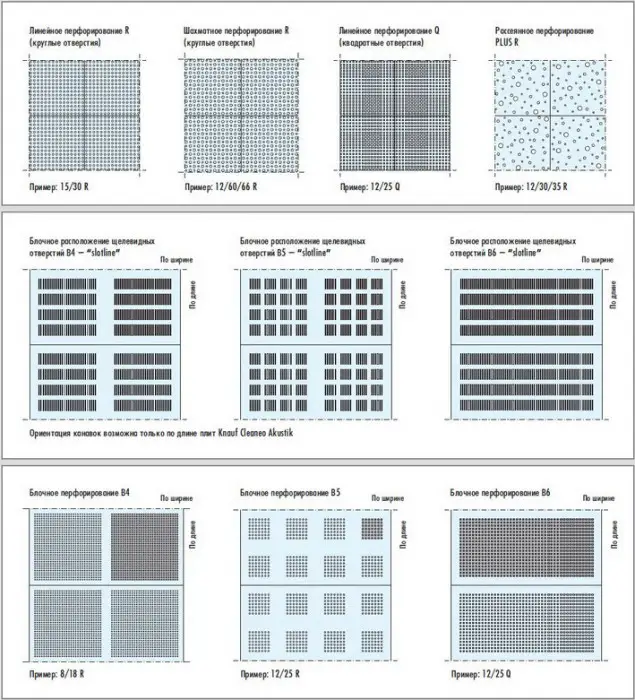
Diagram 2 – Knauf Cleaneo Acoustic sound insulation panels: types
Knauf offers perforated plaster or ceramtic sound insulation materials. These are installed together with special mineral acoustic wool.
Ceramic panels also reduce harmful substances in the air due to their high absorption and filtration capabilities.
This is an effective way to protect large spaces from noise.
Such panels are ideal for concert halls, recording studios, offices, and theaters. They have sufficient strength and resistance to aggressive environments like mine shafts and pumping stations. Installation requires specialized skills.
Cork is also a popular choice for sound insulation. It’s an excellent insulator due to its porosity and molecular structure.
You can also use the “old-fashioned” method—using compressed cardboard boxes from egg cartons as sound insulation. This is cheap but not very effective with modern materials.
A new product in the field of sound insulation is liquid sound insulation. These are special adhesive compounds for insulating any surface by hand. They’re easy to use and affordable. Available on the market are products from companies “Green Glue” and “Quiet Glue Pro”.
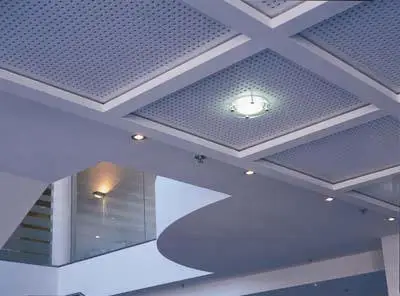
Photo 2 – Knauf Cleaneo Acoustic sound insulation panels in an office space
Sound Insulation Materials
Topsilent Bitex is a sound insulation membrane for walls and ceilings that doesn’t have a so-called “critical frequency” in the audible range.
Noise reduction: up to 24 dB.
Thickness: 4 mm.
Roll width: 0.6 m, roll length: 11.5 or 23 m.
Tecsound is a high-density sound insulation material for ceilings and walls.
Noise reduction: up to 28 dB.
Thickness: 3.7 mm.
Roll width: 1.22 m, roll length: 5 m.
Zvukonet Ekotishina is a sound and thermal insulation non-woven material made from polyether fibers.
Thickness: 40 mm.
Roll width: 0.6 m, roll length: 10 m.
Akustik-Metal Slik is a sound and thermal insulation material for floors, walls, and ceilings. It’s a two-layer sound insulation membrane (polyethylene with a lead sheet).
Noise reduction: up to 27.5 dB.
Layer thickness: 3 mm – 0.5 mm – 3 mm.
Size: width 1 m, roll length 3 m.
Comfort sound insulation panels are materials used for insulating floors and ceilings from shock noise and air noise.
Thickness: from 10 to 100 mm.
Panel size: 2.5 by 0.6 m or 3 by 1.2 m.
Noise reduction: up to 45 dB.
Eco-Akustik is a material based on polyether fibers, bonded thermally without using any adhesives.
Thickness: 50 mm.
Dimensions: 600 mm by 1,250 mm (width/length).
Packaging size: 7.5 m².
Phone Star is a multi-layer material for insulating floors and ceilings.
Thickness: 12 mm.
Panel size: 1,195 by 795 mm.
Noise reduction: up to 36 dB.
Innovative materials
Green Glue is an anti-vibration and sound insulation material that absorbs sound waves and vibrations. It’s used in thin framing systems. Should be applied between plywood sheets.
Consumption: 1 tube per 1.5 m².
Tube capacity: 828 ml.
Sound insulation prices
There are many materials available for sound insulation, so you can choose the one that suits both quality and price requirements.
Today, many construction companies offer services related to ceiling sound insulation. The cost ranges from 1.7 to 8 USD per m² for roll materials; from 21.5 to 42 USD per panel for panel-based insulation.
Green Glue costs around 35 USD per package.
Ceiling Sound Insulation: Video
Installation of Sound Insulation
Before starting the installation, prepare the ceiling surface by removing old coatings, cleaning concrete of dirt and dust.
The following steps are illustrated.
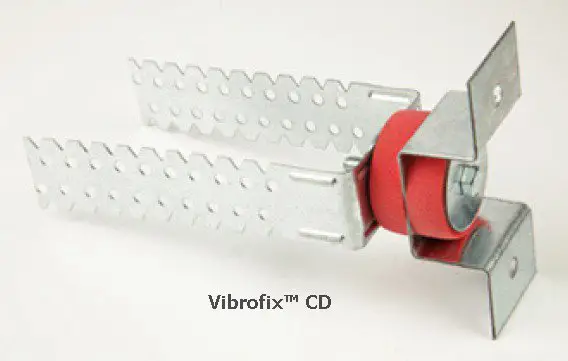
Photo 3 – The Vibrofix hanger is used to attach the future sound insulation
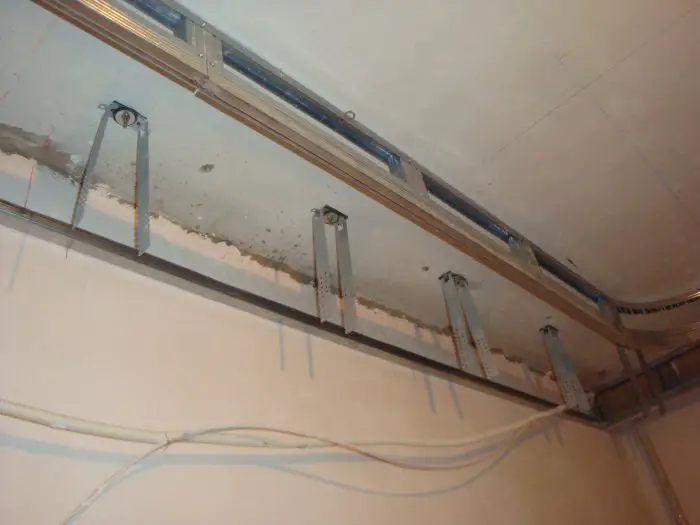
Photo 4 – The hanger is attached to the ceiling base
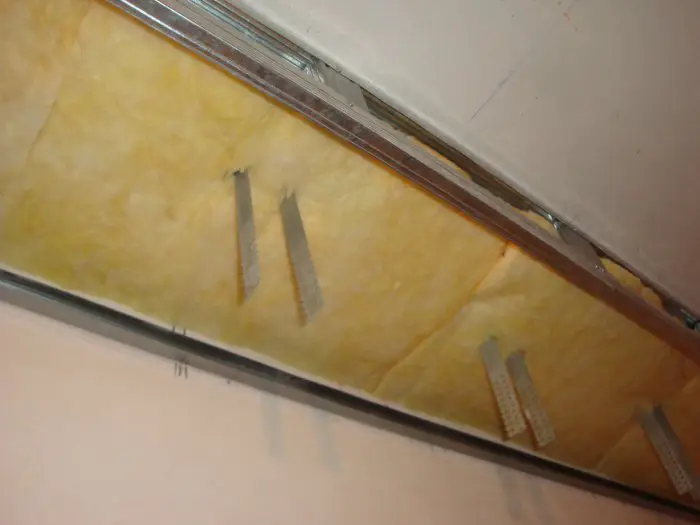
Photo 5 – Next, thermal insulation material (basalt wool) is installed through the hangers
Ceiling vapor barrier
Vapor barriers for ceilings are installed for several reasons. Mainly because it’s the last floor in an old house, where there’s a high chance of mold growth on the ceiling or in corners. Also, vapor barriers are often needed when installing an attic, as moisture accumulates under the roof. Vapor barriers are also commonly used by apartment owners in lower floors, fearing that neighbors might cause flooding.
Vapor barriers are also installed on balconies and verandas, especially if these spaces will be used as living areas. We won’t mention bathrooms, toilets, and kitchens—these are the first rooms in an apartment that need moisture and steam protection.
With vapor barriers, the room becomes less humid, warmer, and more comfortable.
Car owners also install vapor barriers in garages, but in that case, walls and floors must also be insulated.
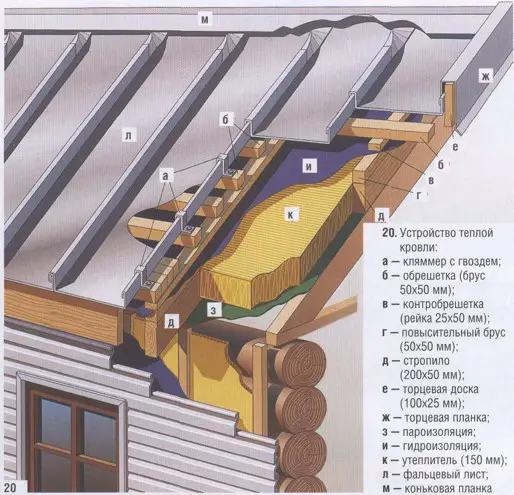
Diagram 3 – Insulation of the attic, including vapor barrier installation (schematic)
Ceiling vapor barriers can be installed by oneself. The steps are:
BE AWARE! Pay attention to the rules for insulating concrete with vapor barriers.
Insulation with penetrating material
Material calculation: 0.8 kg/m² for smooth surfaces, 1.0 kg/m² for rough surfaces. After moistening the ceiling, prepare the insulation solution.
The solution is applied in two layers using a synthetic brush. Before applying the next layer, moisten the surface again. Apply the layers perpendicular to each other.
Insulation with coating or elastic material
The principle is the same. First, moisten the concrete thoroughly, then apply the first layer. After 4-6 hours, apply the second layer (no further moistening required).
How to install vapor barriers?
For vapor insulation, polyethylene film is commonly used for ceilings. It’s important to lay the film correctly, as failing to bond the layers will significantly reduce the quality of the coating.
- Before installing the vapor barrier, apply thermal insulation material first;
- The vapor barrier is installed from the inside, slightly tensioned. Each subsequent layer should be laid 5 cm away from the previous one and sealed with self-adhesive tape;
- For protruding structures, the film is secured with mechanical staples or nails with wide heads;
- Areas where the film overlaps and where layers meet are sealed with tape;
- If the room is covered with decorative boards or plywood, the vapor barrier is attached to the wooden framework using wooden beams (to allow natural expansion and contraction of wood);
- If later, walls will be covered with plywood, the film is attached to galvanized profiles;
After all these steps are completed, you can proceed to covering the ceiling with plywood, boards, or other materials.
BE AWARE! During the installation of vapor barriers, cracks must be avoided at all costs.