How to Install Eccentric Fastener
Eccentric fasteners, depending on the manufacturer, are divided into: mini-fix;
rondo-fix;
rafix.
Figure 1 — Drawing of an eccentric fastener
How does an eccentric fastener work?
An eccentric fastener (drawing shown above) is a rod with a T-shaped head and a fastener (eccentric). The main difference between the types of fasteners listed above is the size of the eccentric: there are fasteners with a 12 mm, 15 mm or 25 mm diameter fastener.
IMPORTANT! When using 25 mm eccentric fasteners, the instructions require the use of plastic plugs.
The only disadvantage of this fastening system is that the fastener can loosen during operation. To prevent this defect from occurring, manufacturers offer various solutions, including installing a concave or stepped working surface.
Eccentric fastener: types
Eccentric fasteners, depending on the manufacturer, are divided into:
- mini-fix;
- rondo-fix;
- rafix.
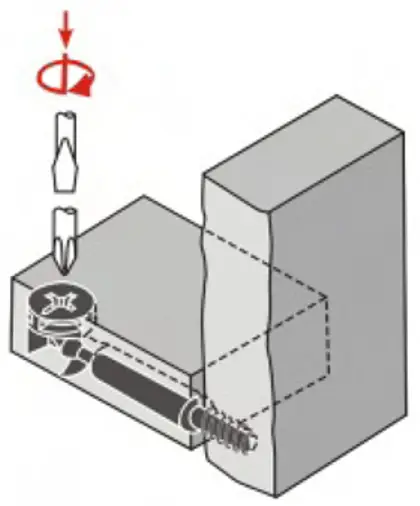
Figure 1 — Drawing of an eccentric fastener
How does an eccentric fastener work?
An eccentric fastener (drawing shown above) is a rod with a T-shaped head and a fastener (eccentric). The main difference between the types of fasteners listed above is the size of the eccentric: there are fasteners with a 12 mm, 15 mm or 25 mm diameter fastener.
IMPORTANT! When using 25 mm eccentric fasteners, the instructions require the use of plastic plugs.
The only disadvantage of this fastening system is that the fastener can loosen during operation. To prevent this defect from occurring, manufacturers offer various solutions, including installing a concave or stepped working surface.
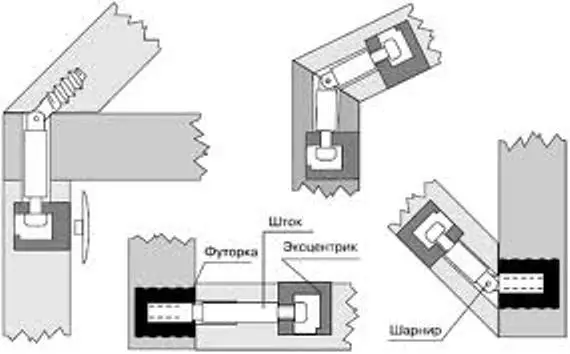
Figure 2 — Example of eccentric fastener setup
How to use the fastener: fixing
An eccentric fastener is used for connecting two parts of an item. Let's look at how it works using a table leg attachment as an example: how to install the fastener in the desk drawer?
Two holes must be drilled in the top part of the table leg for the metal fastener.
Two similar holes must also be drilled in the end face of the table (above the newly made holes). As a result, we get a through hole.
Two more holes (blind holes) are drilled on the tabletop with the same positioning relative to each other.
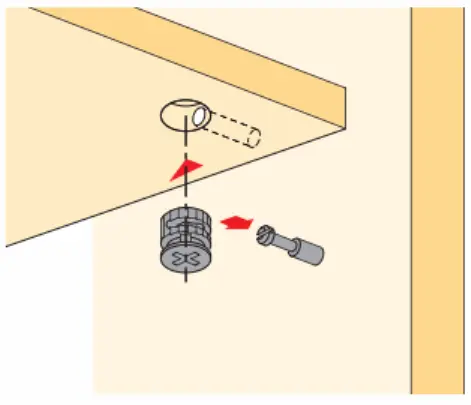
Figure 3 — Rastex 15 element from Hettich (less than 10 cents per piece)
The rod with the T-shaped head is screwed into the holes.
The table leg is aligned with the tabletop so that the rod can pass through the prepared through hole, end up in the center of the fastener hole and enter the fastener itself.
After that, the eccentric must be turned clockwise to the stop. This fixes the rod in place.
Installation of furniture fasteners is now complete.
IMPORTANT! An eccentric fastener is the best way to attach furniture. However, this type of attachment requires extremely accurate placement of holes in the parts for the eccentric and the fastener rod. Otherwise, a double loss occurs: there is a risk of damaging both the lock itself and the parts of the item.
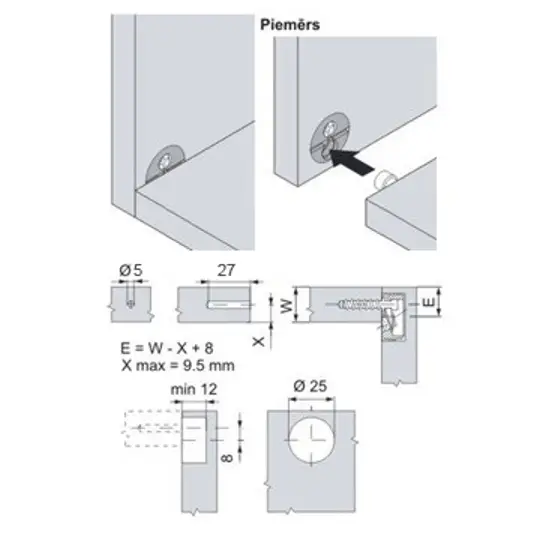
Figure 4 — BLUM (eccentric fastener)
Eccentric fastener: VIDEO (corner fastener)
$ Eccentric fastener: buy
- In Moscow, you can buy furniture eccentric fastener parts for as low as 2 rubles;
- In Kyiv – from 0.40 hryvnia.