Washable Wallpapers: Answers to Key Questions
What are the advantages of washable wallpapers?
First, lower cost: both installation fees and material expenses are significantly reduced.
Second, ceramic tiles are often cold, while washable wallpapers create a much more pleasant atmosphere in interiors.
Third, wallpaper is easier to install than tiles: less work is involved, and there's less dust.
Finally, wallpaper is easier to replace than tile.
Washable vs. moisture-resistant wallpapers: what's the difference?
Not all wallpaper types are water-resistant, and not all moisture-resistant wallpapers are washable. When choosing washable wallpaper for walls, consider the room’s characteristics, such as:
- room size;
- ventilation;
- air humidity;
- frequency of use, etc.
These factors affect the degree of soiling and cleaning frequency.
Washable wallpapers can withstand wet cleaning with cleaning agents. Moisture-resistant wallpapers can only withstand light spraying with water and wiping with a damp sponge.
How to clean washable wallpapers?
Wallpapers are categorized by moisture resistance and mechanical durability into:
- standard;
This type is not treated further, so it’s not moisture-resistant. Cleaning must be done with a dry cloth or vacuum cleaner.
- moisture-resistant;
These wallpapers have a special polyvinyl chloride (PVC) coating, enabling them to withstand wiping with a damp sponge. They can only be cleaned from light stains and without using cleaning agents.
- washable;
These can only remove light stains, but using cleaning agents.
- super-washable.
This is the most durable type: stains of any kind can be removed not only by wiping but also by scrubbing with a brush and using cleaning agents.
How to identify washable wallpaper for the kitchen?
The type and characteristics of wallpaper can be determined by its labeling. Each roll should have one of the pictograms shown in the image:
- one wave – moisture-resistant wallpaper;
- two waves – washable wallpaper;
- three waves – super-washable wallpaper;
- one wave with a brush – resistant to abrasion and mechanical stress; stains can be removed with a brush and cleaning agents;
- three waves with a brush – highly resistant to mechanical stress.
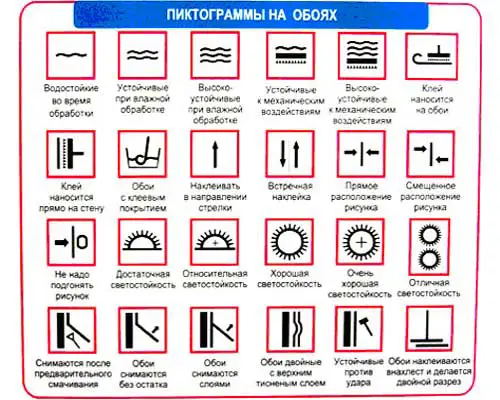
Figure 1 – Wallpaper symbols
Which washable wallpapers for the kitchen to choose?
Acrylic or foam wallpapersThis type is similar to duplex wallpapers (two-layer). Standard duplex is made from paper, while acrylic wallpaper has polymer foam applied at high temperature. After thermal treatment, a textured pattern forms on the surface, making it resistant to moisture and mechanical damage.
Thanks to their soft, textured surface, acrylic wallpapers add warmth and coziness to a kitchen, and their high density helps hide wall imperfections. Modern acrylic wallpapers, unlike older models, "breathe": the polymer is applied not as a solid layer but in dots, leaving micro-pores for air exchange. Foam wallpapers may lose appearance quickly with frequent wet cleaning, so it's best to clean them with a damp sponge, avoiding brushes and especially abrasive cleaners.
Manufacturers: Chesapeake (USA), Gomeloboi (Belarus).
Prices: from $3 per roll.
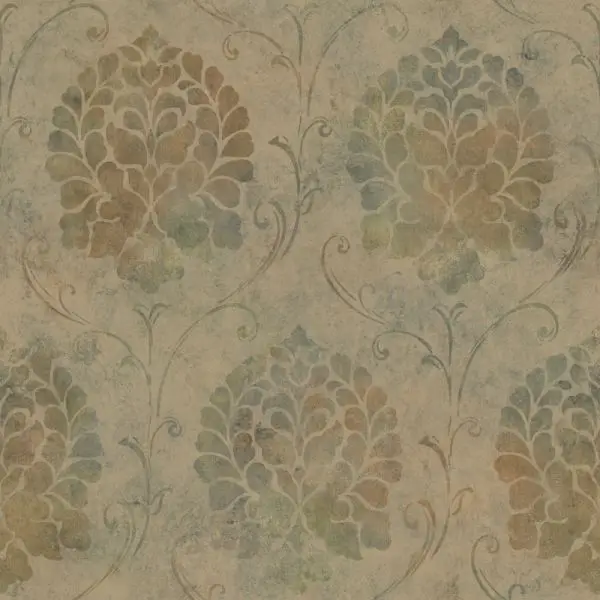
Photo 1 – Acrylic wallpaper on paper base by Chesapeake, Modern Living collection (MLV34063), $92 per roll
Vinyl wallpapersVinyl wallpapers are the most universal, durable, and UV-resistant. Cleaning won’t damage the pattern or fade the color.
Often, vinyl wallpapers have a strong paper or non-woven base, with a layer of polyvinyl chloride (PVC) applied. This layer makes them especially strong. Vinyl is excellent because it allows nearly unlimited decorative options, and can mimic any texture—from plaster and stone to fabric or leather.
Vinyl wallpapers come in smooth and textured finishes.
Manufacturers: Sirpi (Italy), Rasch (Germany), AS Creation (Germany), Parato (Italy).
Prices: from $25 per roll.
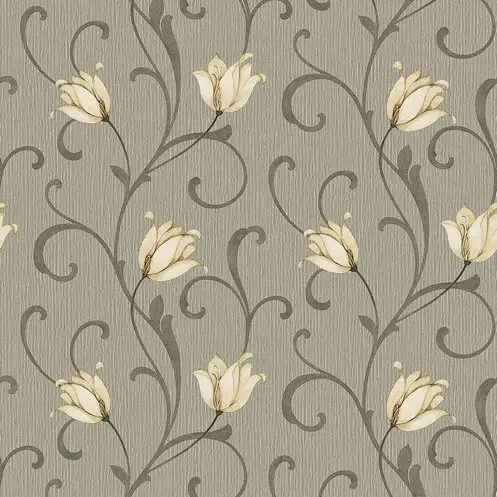
Photo 2 – Parato vinyl wallpaper, Eleganza collection, $25 per roll
Glass fiber wallpapersThe base of glass fiber wallpapers is glass fibers made from limestone, quartz sand, soda, or dolomite. Available as single-layer or double-layer (glass fiber pressed with paper backing).
Advantages include breathability, resistance to acids, alkalis, and abrasives in cleaning agents. No nutrients for microorganisms, so they are hygienic and hypoallergenic. They don’t absorb moisture, so they clean easily, don’t scratch, and crucially, don’t tear. They are the most fire-resistant wall covering. Their structure creates a perfectly flat surface, hiding wall cracks and defects.
Glass fiber wallpapers can be repainted up to 10 times!
Manufacturers: Caparol (Germany), Colorit (Sweden), Nortex (China).
Prices: from $2 per linear meter.
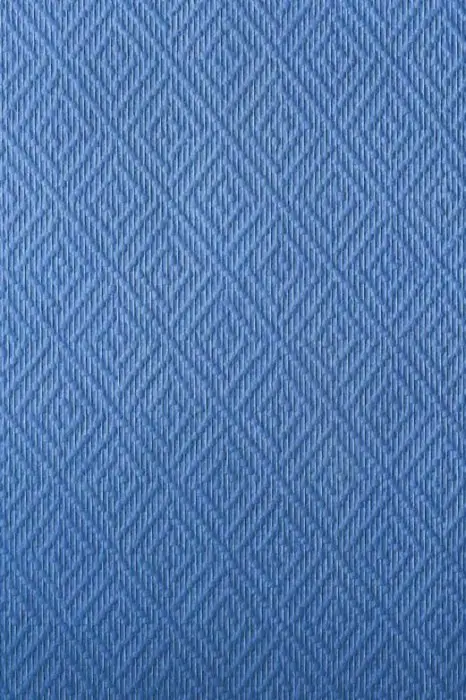
Photo 3 – Nortex premium glass fiber wallpaper, $25 per roll (25 m)
Metallic wallpapersThis type is the most complex in structure: a porous paper layer is coated with thin aluminum foil, followed by a non-conductive paint layer and a decorative layer with pattern or embossing.
Metallic wallpapers can feature silver, gold, or bronze finishes.
The most expensive option: hand-painted wallpapers.
They require a perfectly flat wall surface and special dispersion adhesive.
Key advantage: exceptional resistance to moisture.
Main drawback: non-breathable. Unlike modern vinyl, which can now "breathe," metallic wallpapers still do not allow air passage, so rooms with these walls must be ventilated regularly.
Manufacturers: Arte (Belgium), Tekko (Germany).
Prices: from $56 per m².

Photo 4 – Arte metallic wallpaper, Metal X collection, $82.42 per linear meter
Cork wallpapers with wax coatingThe base is cork oak bark. One of the most eco-friendly wallpaper types. Cork wallpapers provide excellent sound insulation, high thermal insulation, and are hypoallergenic. With proper care, they can last over 20 years!
Thanks to the protective wax coating, cork wallpapers can be used in humid areas. Color range is limited to natural tones: from beige to brown.
Manufacturers: Articor (Spain), Corksribas (Portugal), Wicanders (Portugal), Egen (Portugal).
Prices: from $15 per m².

Washable wallpapers for the bathroom
When choosing washable wallpapers for the bathroom, consider high humidity and frequent use. The best choice for bathrooms is dense vinyl wallpaper.
IMPORTANT! In small bathrooms, wallpaper may degrade faster due to higher moisture exposure.
How to install washable wallpapers?
Installation process is similar to standard wallpapering. The main difference: pay more attention to adhesive choice and wall leveling. Some DIY experts recommend pre-pasting walls with newspaper or adding PVA glue to improve adhesion.
Adhesives for washable wallpapers: QUELYD (5$/300g, coverage up to 5–6 rolls), Pufas (3$/200g, coverage 25–32 m²), and Metylan (4$/300g, coverage 32–50 m²).
How to remove washable wallpapers?
The removal method may be indicated on the roll’s label (if still available). Look for a removal symbol (see image above). If the label is missing, the most common method is: peel off the top waterproof layer (easily removed from the corner), then soak the lower layer with a spray bottle and scrape it off with a putty knife.
Washable wallpapers for kitchen: price overview
- Kyiv – from 32 UAH per roll;
- Moscow – from 169 RUB per roll.