How to Insulate a Ceiling: What Materials to Use and Why
Why is ceiling insulation necessary?
Thermal insulation of the ceiling is not a luxury or a whim, but a necessity. A ceiling without insulation allows warm air to escape. This means heating a room becomes harder, and part of the energy resources spent are wasted. Moreover, lack of insulation or improperly chosen insulation leads to condensation buildup on the ceiling, which in turn causes mold and fungi to grow.
If put simply, without ceiling insulation, a home is cold, damp, and poor; with insulated ceilings, a home is warm, dry, and saves money.
Insulation for the ceiling is a key factor in maintaining a comfortable indoor climate.
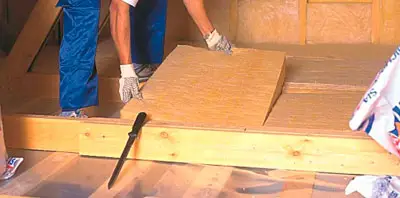
Photo 1 — Insulating the ceiling with mineral wool from the attic side
Types of thermal insulation materials commonly used for ceilings
- Mineral wool – offers excellent thermal and sound insulation, resists high temperatures, but absorbs moisture easily.
- Polyurethane foam (foam board) – has low water absorption, low hygroscopicity, and good vapor and air permeability. Main drawback: low fire resistance.
- Expanded clay (keramzit) – a bulk insulation made from fired clay or slate, produced in the form of gravel, crushed stone, or sand granules. Easily absorbs moisture but poorly releases it; otherwise excellent for thermal insulation.
- Wood shavings – a low-cost, natural insulator, ideal for hard-to-reach areas.
- Porous glass (foam glass) – a universal insulator made from foamed glass. Eco-friendly, non-flammable, frost-resistant, vapor- and water-tight, and immune to rodent damage.
- Ecowool – a cellulose-based insulation made from recycled paper with special additives. Safe for human health, has moderate flammability, does not rot: dries quickly when wet.
- Warm plaster – a helpful solution for your home, helps reduce heat loss.
- Polyurethane foam (Penoizol) – a liquid foam similar to plastic.
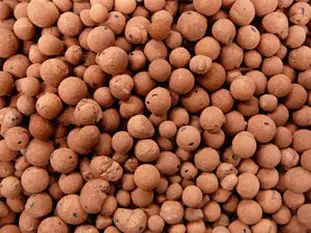
Photo 2 — Bulk ceiling insulation – expanded clay (keramzit)
How to insulate a ceiling from outside in a private house
There are two main approaches to ceiling insulation: external and internal. The correct method is to use both, or only external, but not internal only. Internal-only insulation will not achieve the desired effect. Proper insulation schemes rely on using vapor-barrier materials on the outside and breathable materials on the inside.
For effective thermal insulation, external insulation thickness should be at least 100 mm.
- When insulating from the attic side using mineral wool, ensure vapor barrier integrity. Lay vapor barrier sheets (e.g., parchment paper) between the ceiling joists, then install mineral wool on top. Seal joints of vapor barrier sheets with adhesive tape.
- External insulation with polystyrene foam uses construction adhesive: the ceiling (attic floor) is laid with polystyrene sheets, and joints are sealed with expanding foam. Vapor barrier must be installed beforehand.
- A common combination uses both polystyrene and mineral wool, installed in this order: vapor barrier (parchment), two layers of polystyrene, vapor barrier, two layers of mineral wool.
- Insulating with expanded clay begins with a vapor barrier layer – foil or film attached to ceiling joists. Then apply soft clay, followed by spreading expanded clay on top.
- Insulating with wood shavings requires treating joists with anti-insect and fire-retardant agents first. Then lay a vapor barrier film. Wood shavings are spread on the base as a mixture, either with lime, cement, or clay.
- After insulation, you can install floorboards or pour a concrete screed (depending on the insulation type), or leave as-is if the attic is not used.
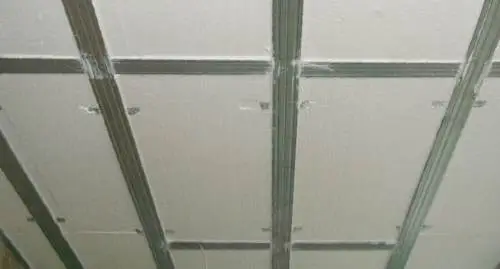
Photo 3 — Insulating the ceiling with polystyrene foam from inside
Best materials for internal ceiling insulation in homes or apartments
Internal ceiling insulation commonly uses mineral wool, polystyrene, or foam glass. Mineral wool and polystyrene are installed in a suspended ceiling frame and additionally glued to the base. Polystyrene and foam glass are applied directly with adhesive, without a frame.
Securing insulation to a concrete ceiling is achieved using anchor dowels.
The safest and most versatile material for health and any further finishing is foam glass. Its universal properties make it suitable for damp and cold spaces such as garages, balconies, or loggias, for insulating unheated attic spaces on a country house, basements, cellars, etc. (Although for most of these areas it’s expensive, mineral wool can be a more cost-effective alternative.)
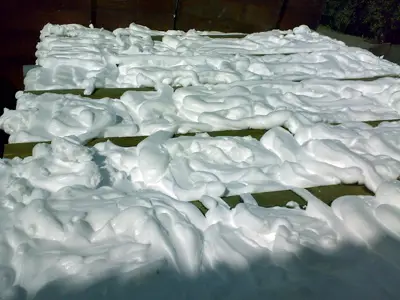
Photo 4 — Insulating the ceiling using Penoizol
Cost of ceiling insulation materials
- Mineral wool ROCKWOOL Light Batts – 500 RUB per pack.
- Polystyrene foam – from 1400 RUB per m³.
- Expanded clay (keramzit) – from 1000 RUB per m³.
- Wood shavings – from 2000 RUB per ton.
- Foam glass – from 4000 RUB per m³.