Log Cabins from Timber. Types of Timber Processing
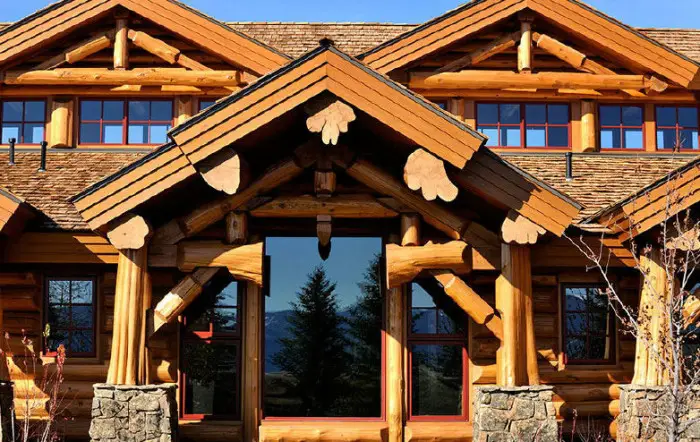
Photo 1 – Log cabin
Types of Timber Processing
Rounded timberKey feature of this processing type – preservation of the resinous layer. Timber is cleaned of bark mechanically using a convenient tool for the craftsman.
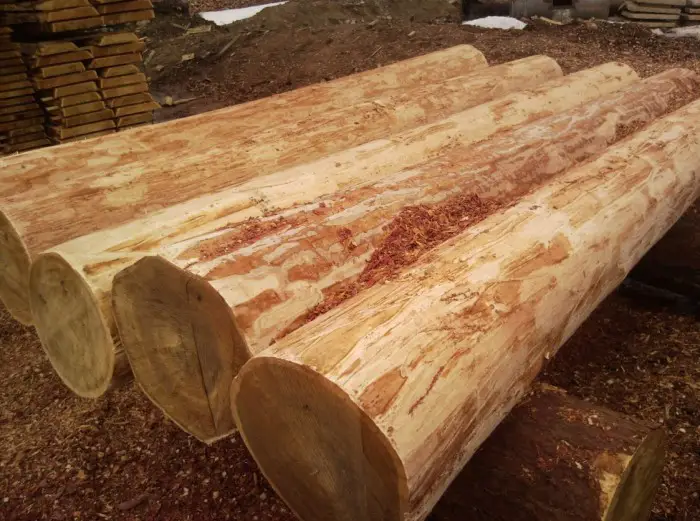
Photo 2 – Processed timber
Due to preserved resin content, the timber’s ability to withstand moisture and resist rot is significantly increased. Therefore, this material is often used to build saunas. Softwood is used for harvesting. Over time, the facade of homes built from rounded timber darkens.
Cost of this timber type starts from $240–300 per 1m³. Building an 8×8m house with settling allowance will cost from $12,000.
Cylindrical timberCylindrical timber is processed in a workshop under special conditions:
- calibration;
- bark removal;
- finishing sanding.
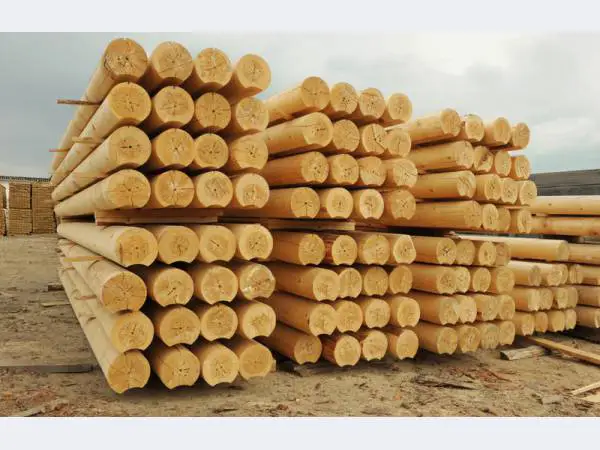
Photo 3 – Cylindrical timber
Softwood is used for manufacturing. Smooth surface ensures attractive appearance. Uniform diameter along the entire length allows building houses with even walls and minimal gaps between logs.
Cost of this timber type starts from $130–150 per 1m³.
Non-cylindrical timberThis timber does not undergo calibration, treatment, or drying. Construction using non-cylindrical timber is less material-intensive but requires more time for log laying. Craftsmen must manually select logs of equal thickness and properly lay them to minimize inter-log gaps.
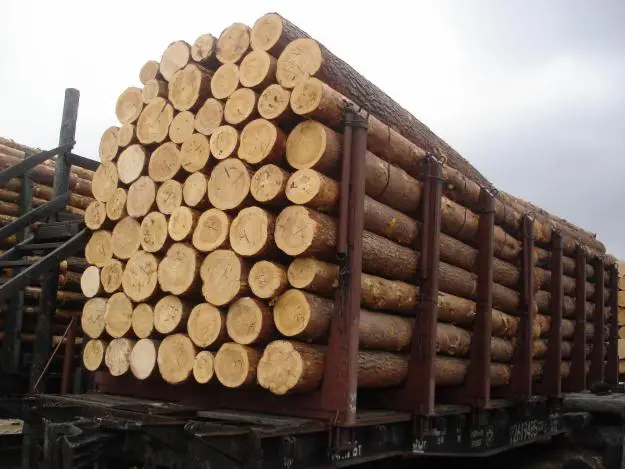
Photo 4 – Non-cylindrical timber
This material is most susceptible to shrinkage. The settling process of a built log cabin lasts 3–5 years.
Round timber has the most affordable price. Cost of non-cylindrical pine timber starts from $90–100 per 1m³.
Planed timberProcessing of planed timber is similar to preparation of rounded timber. A planer removes the outer bark layer, smooths irregularities, and removes knots.
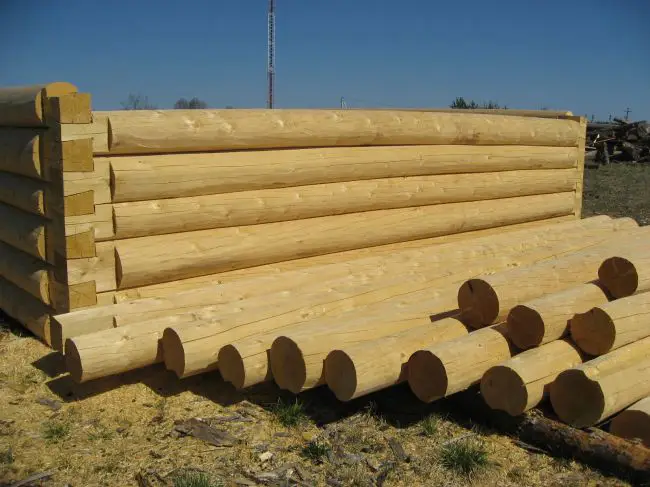
Photo 5 – Planed timber
Planing allows preservation of the sapwood. Therefore, wood processed this way is resistant to heart rot and stable under temperature fluctuations.
Cost of planed timber starts from $250 per 1m³. Building a 7×8m cabin without finishing costs $11,000. Turnkey price ranges from $16,000.
Traditional hand-joined log cabins are characterized by:
- ecological safety;
- longevity;
- resistance to temperature fluctuations;
- efficient heat retention;
- ability to self-ventilate;
- long-term maintenance of microclimate;
- flexibility in finishing styles.
Assess the attractiveness of hand-joined log cabins through photos.
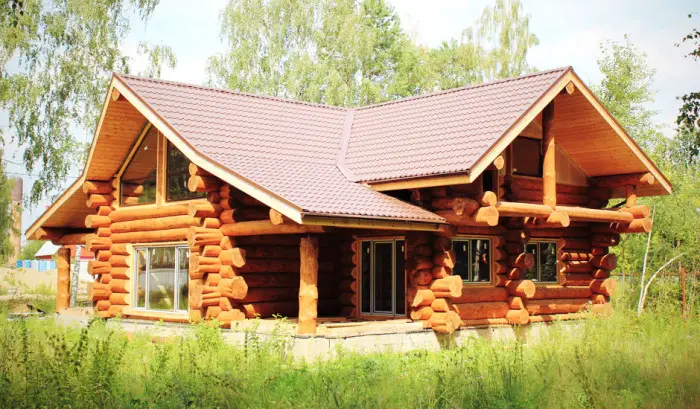
Photo 6 – House built using traditional hand-joining
Price
Log cabin prices are determined by major cost factors:
- project: development and approval;
- material procurement;
- assembly of the log wall;
- finishing works;
- utility connections and installation;
- landscaping and site preparation.
For example, a 10×10m cabin built with 24cm diameter planed timber, excluding finishing, will cost from $17,000. Adding approximately 50% for finishing gives a total price of $25,500.
Recommended reading: how to order a 10×10m sauna log cabin.
Log Cabins from Cylindrical Timber
Various joining techniques can be used to build homes with cylindrical timber. The methods differ by types of end and connecting joints. We’ll discuss the most popular joint types.
Interlocking (“Bird’s Tail”)
The interlocking method (also known as “bird’s tail”) features log assembly without protruding ends. This technique allows efficient use of timber length.
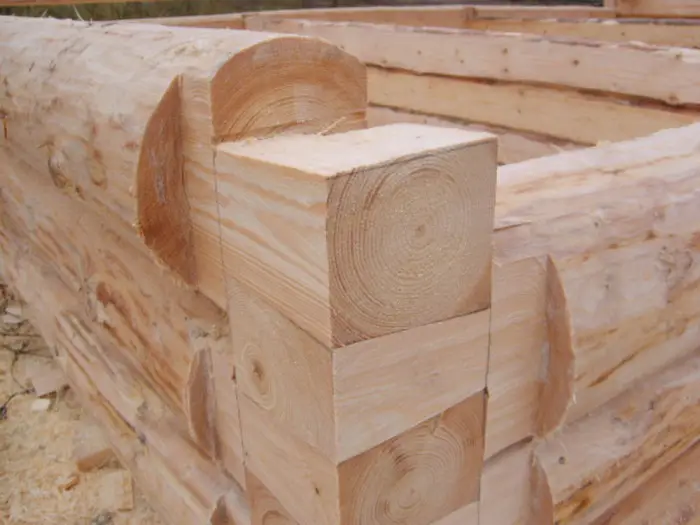
Photo 7 – Joining “in interlock”
IMPORTANT! This method allows easy cladding of the facade later. The difficulty lies in precise joint fabrication. Accurate marking is essential. Craftsmen often use cardboard templates.
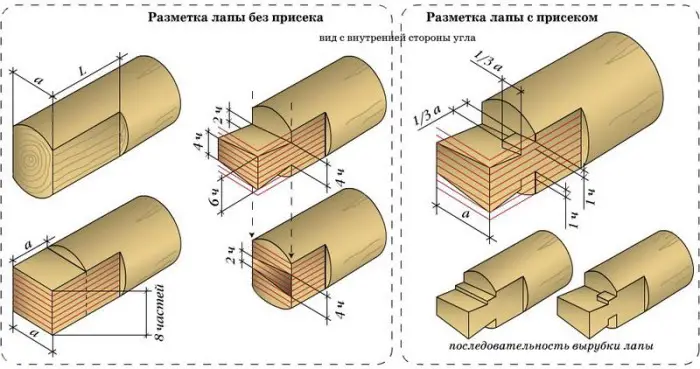
Figure 1 – Timber marking
In addition to cutting the correct joint, a fixing key groove must be made.
Moreover, log assembly requires a longitudinal groove. A special recess on the lower side of the log ensures a tight fit.
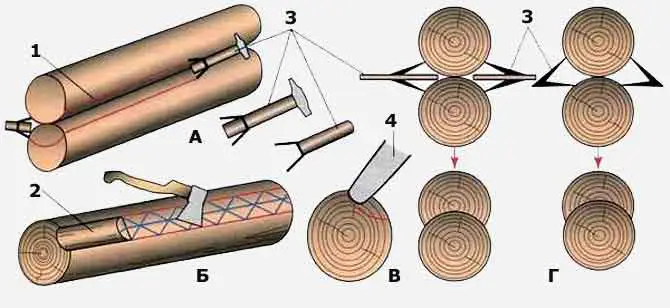
Figure 2 – Longitudinal groove
Insulation is inserted into the grooves between logs:
- natural moss;
- hemp fiber;
- linen jute.
Into a Mortise (Chamfered)
This method has three main variations:
- Canadian;
- Russian;
- Norwegian.
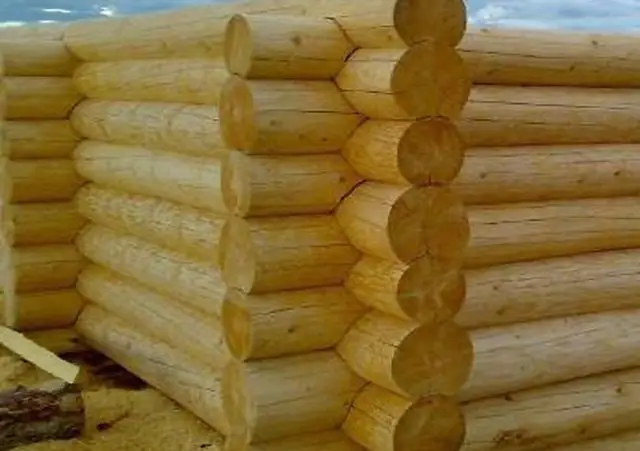
Photo 8 – Joining “into a mortise”
It is characterized by protruding parts at the ends of logs. Construction requires more timber volume. Protruding parts cannot be used efficiently.
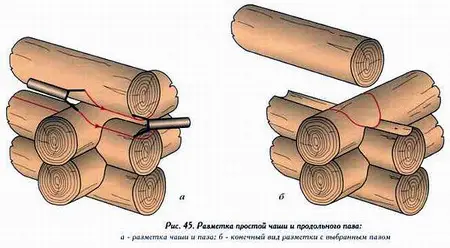
Figure 3 – Mortise marking
Advantage of the “into a mortise” method is the simplicity of joint cutting.
Price of Log Cabin from Cylindrical Timber
Price of a log cabin built from prepared, cylindrical timber starts from $170–180 per 1m² “for settling.” Turnkey price ranges from $250–300 per 1m².