Kitchen Design with Dining Room and Living Room in a Private House with Photos
The desire of a homeowner to make their living space comfortable and functional is quite natural: everyone wants to organize a stylish and at the same time convenient layout
Fortunately, a private cottage does not limit the imagination of its owner. The topic will be about combining the dining room, kitchen and living room in a private house as one of the options for organizing space. How to properly combine these rooms without violating the overall harmony of the interior and preserving the functionality of each room?
First, you need to decide in which zone there will be the maximum number of furniture items, which sector will be the largest and how to implement zoning. You should also consider the shape of the room, the location of door and window openings. When planning the space, attention should be paid to:
- furniture: it should correspond to the overall style or at least have the same tone that dominates in the room's design;
- adequate free space near the kitchen cabinet;
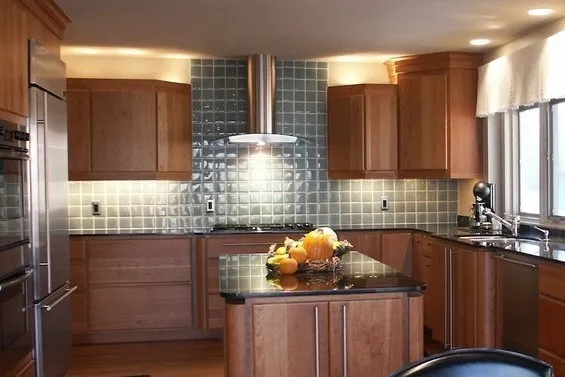
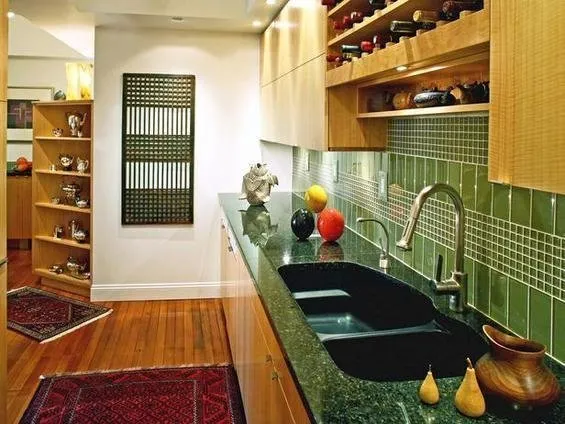
- functionality of the work zone: the stove, sink and refrigerator placed first should form a triangle to make cooking convenient.
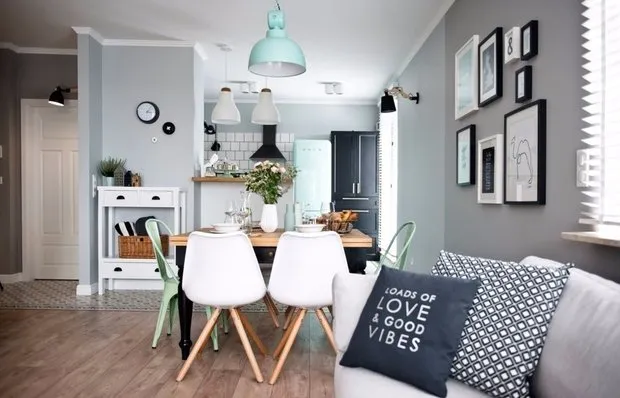
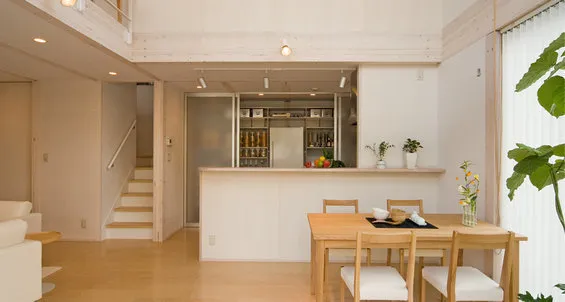
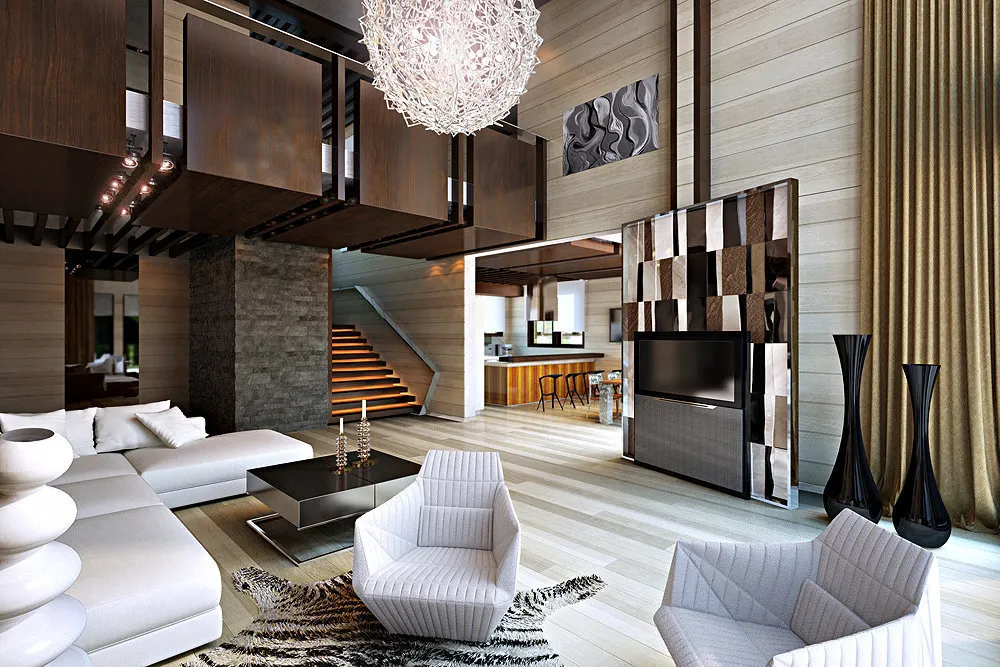
You can also note some additional points. If you do not plan to sharply separate the zones, the dining room can be organized between the living room and the kitchen. In this case, the table becomes an element of the interior in both sectors.
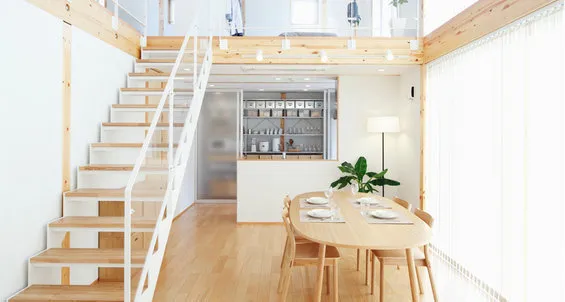
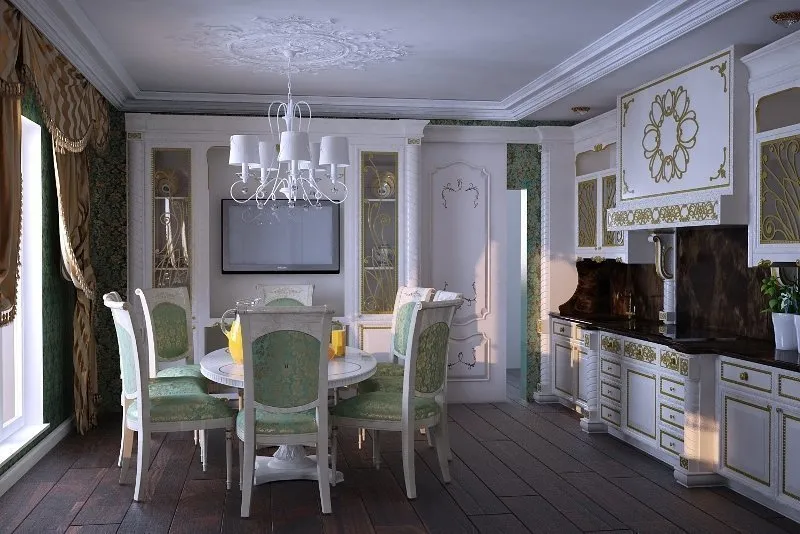
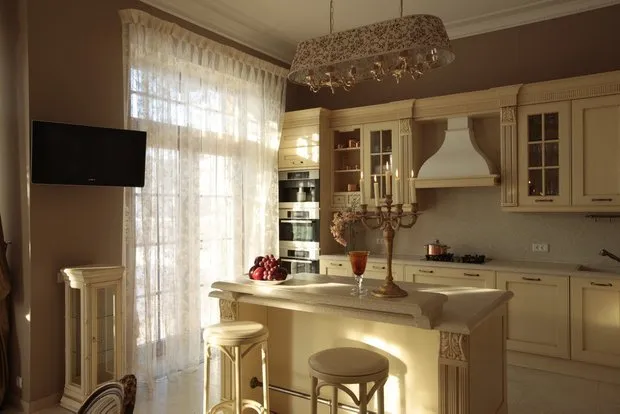
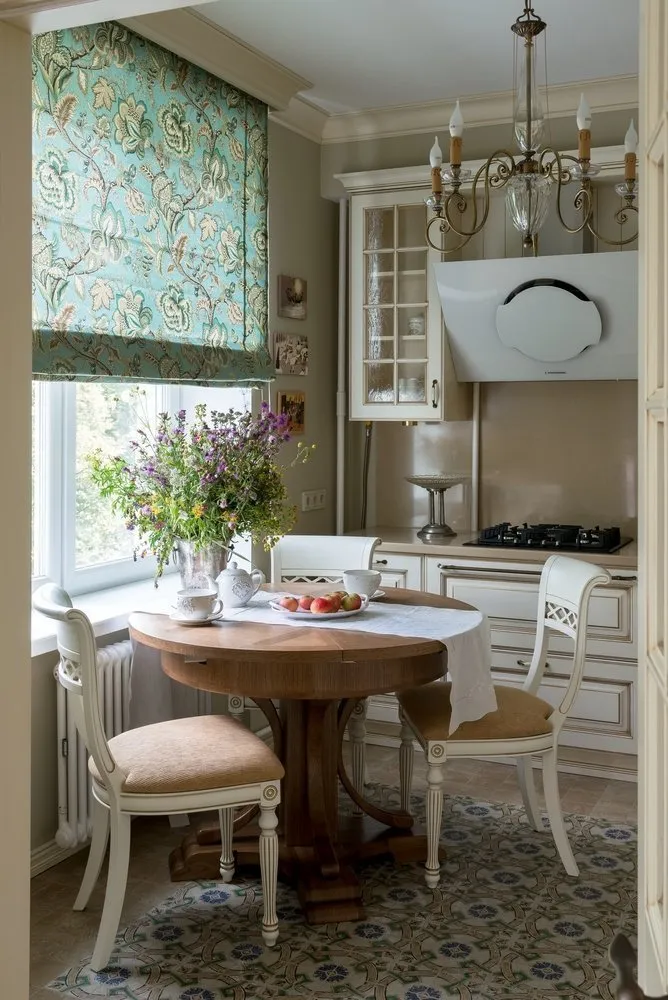
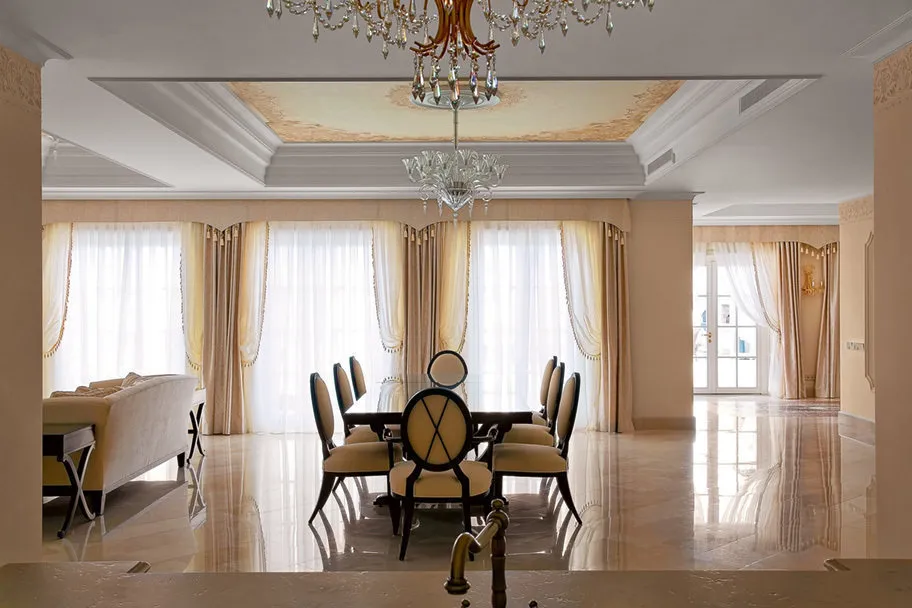
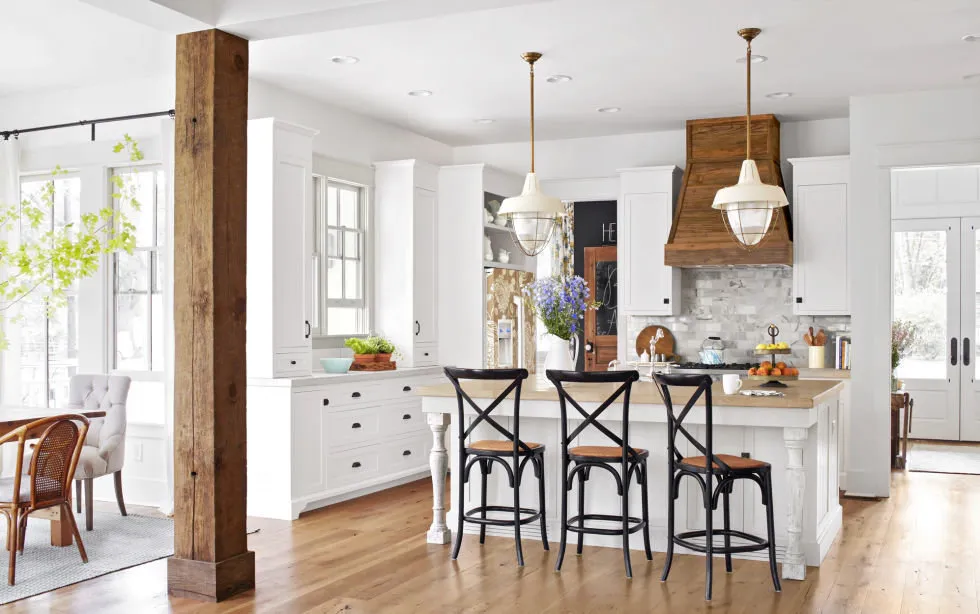
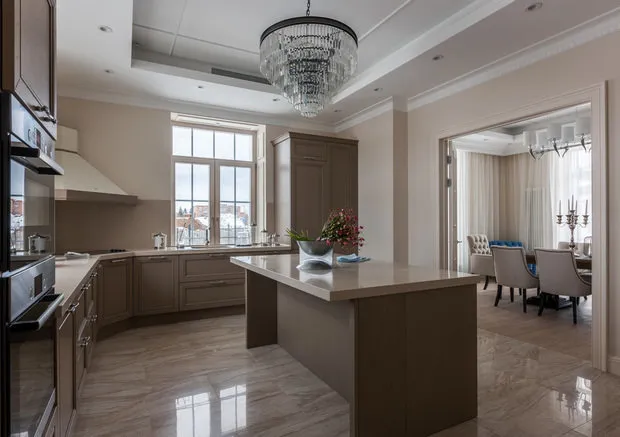
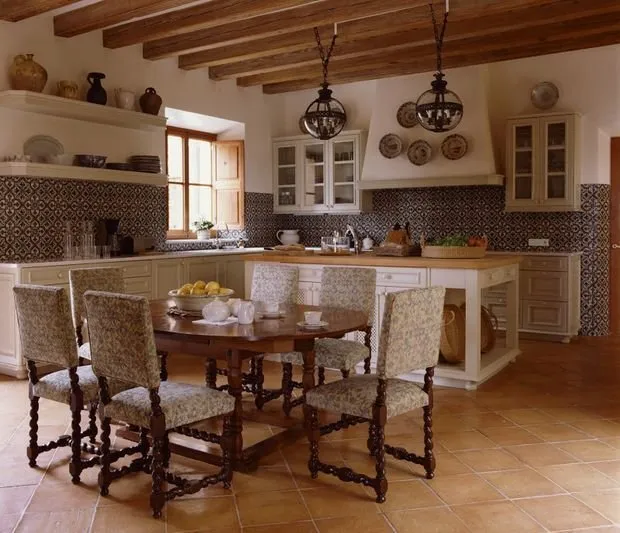
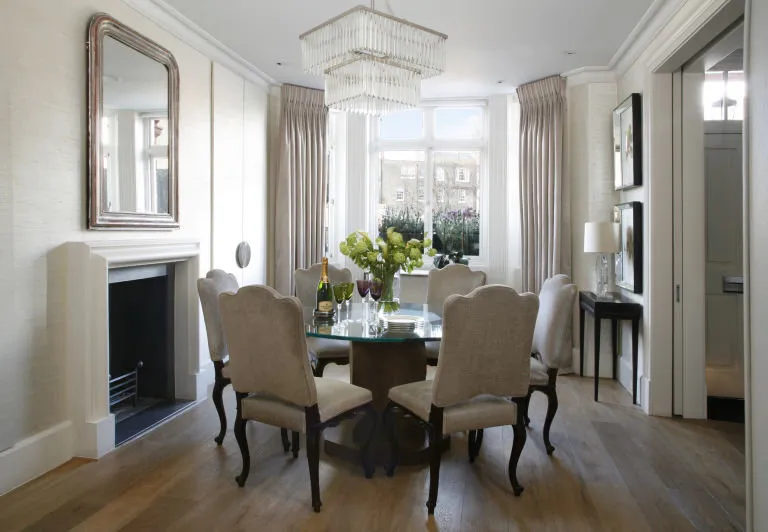
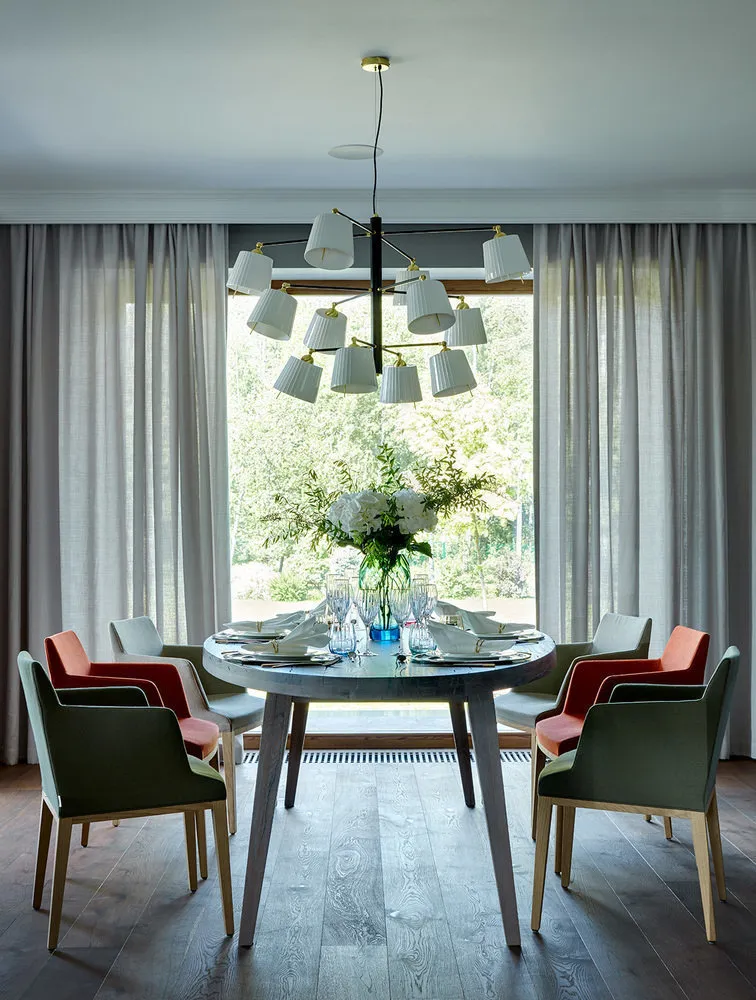
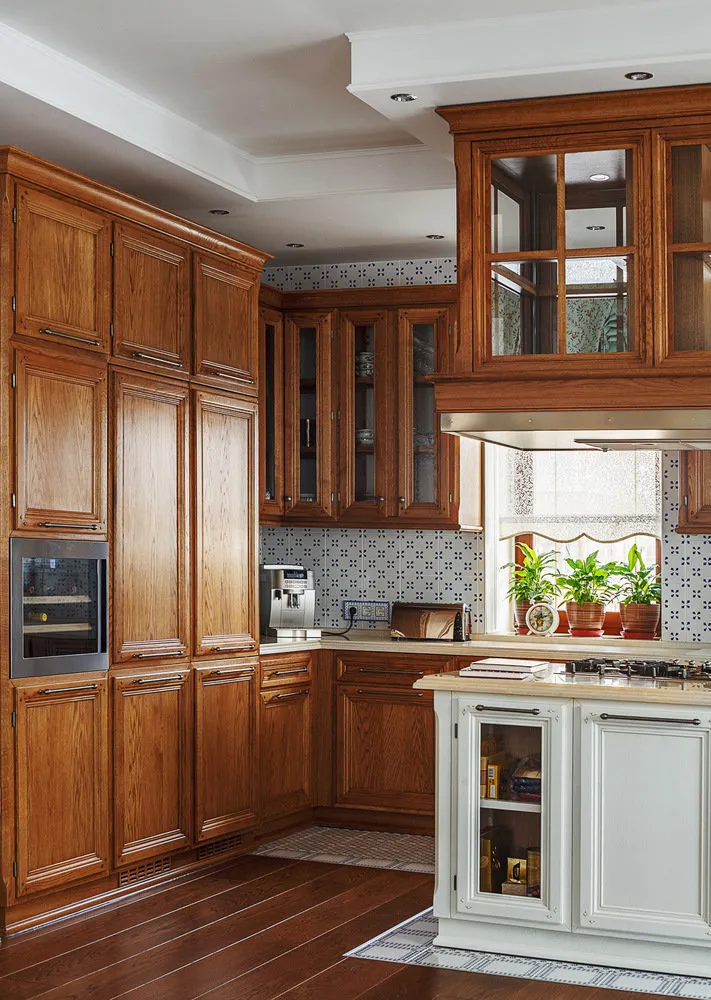
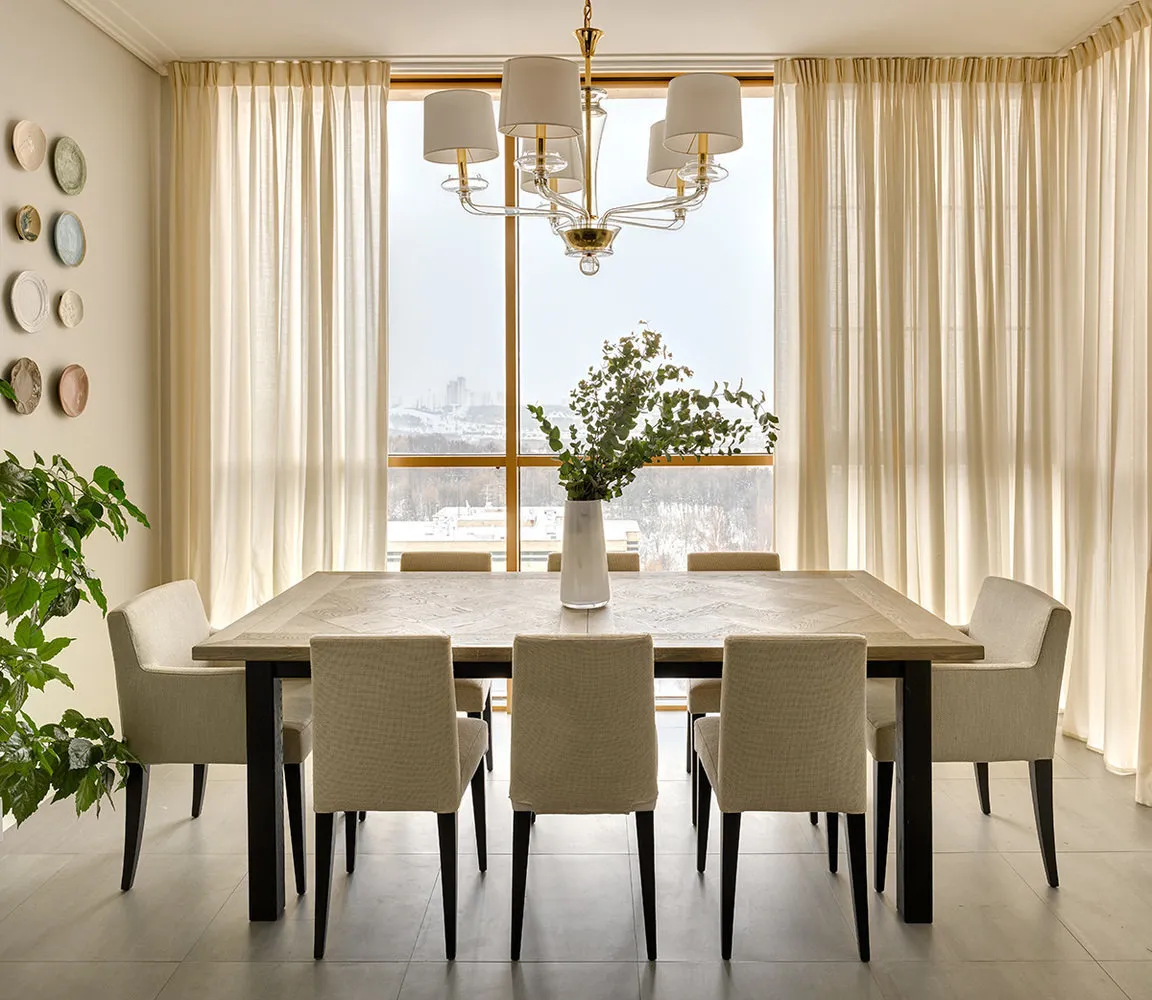
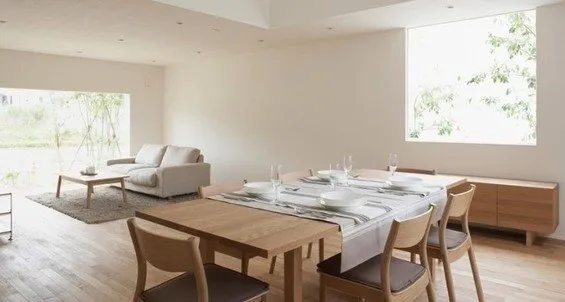 Work of architectural firms "Muji" and "Eight design"
Advantages and Disadvantages of Combining
By combining the kitchen and living room in a private house, you can significantly increase the total area and get a quite functional space divided into several zones. But this is not the only advantage, there are other benefits:
- possibility of placing bulky furniture, which implies a free choice of interior style;
- organization of a comfortable zone for receiving guests: you won't have to constantly run to the kitchen to bring snacks from there – everything is within reach in the combined space;
- possibility of implementing any layout, including L-shaped in the working zone;
- you can cook and at the same time work at the computer or watch over children playing in the living room.
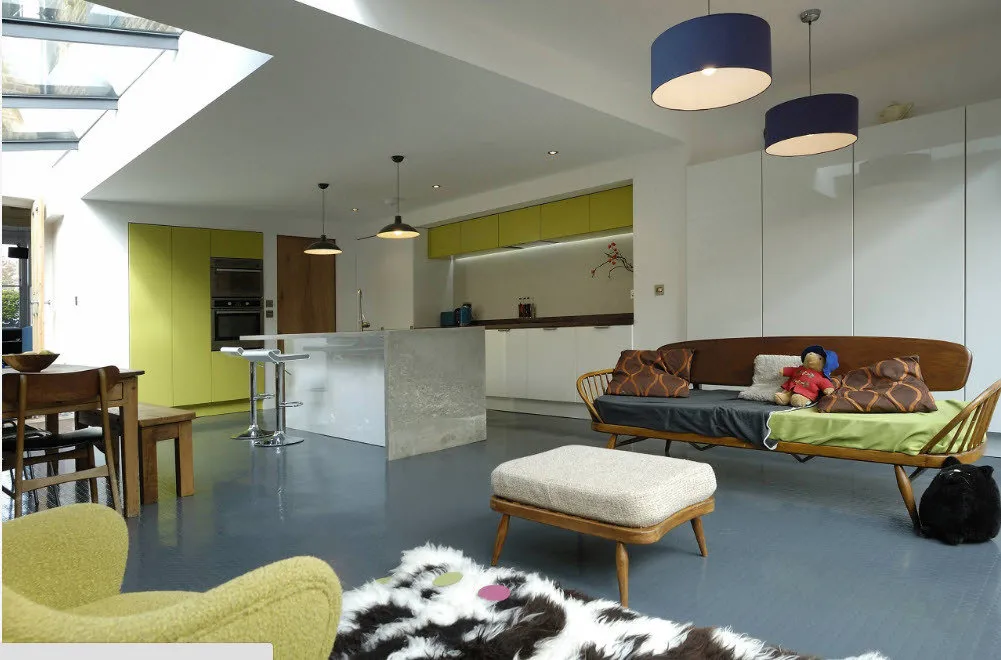 Disadvantages of Combining
Their drawbacks should also be noted, although most disadvantages can be partially eliminated. Negative aspects of combining the kitchen and living room in a private house:
- odors and condensation: they will spread throughout the living room, moisture will settle on furniture if a powerful exhaust fan is not installed;
- noise: operating household appliances in the cooking zone can partially muffle the TV;
- frequent cleaning: you will have to constantly keep the kitchen clean – unwashed dishes or a dirty floor somehow don't 'harmonize' with the living room.
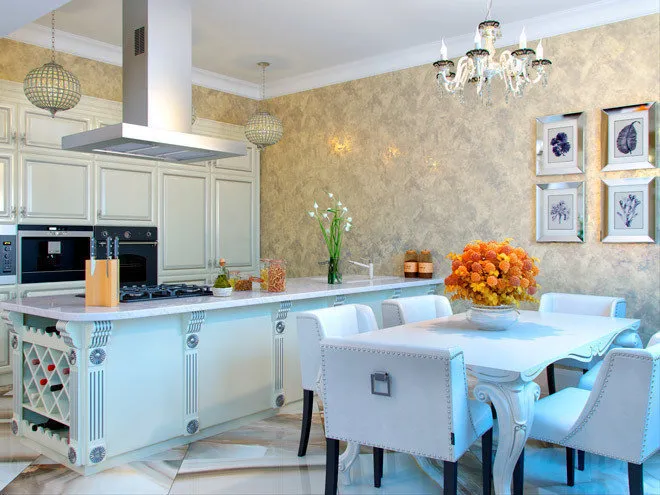 Space Zoning
Separating the combined room will ensure a harmonious perception of the setting. There are many zoning options, let's note the most popular ones.
- By Color
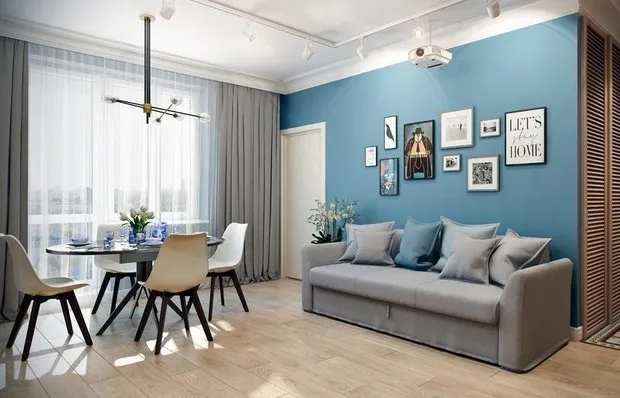
To achieve separation, the most common approach is to use shades of the same color. There is another option that occurs less frequently: using contrasting solutions when one zone is deliberately highlighted. When choosing the main color, avoid overly saturated and sharp tones. It's better to use calm colors: beige, milk, pale pink or light gray. Remember that such shades visually expand the space.
- By Finish Material
Using surfaces to separate zones in the room also gives a certain effect. How to achieve this?
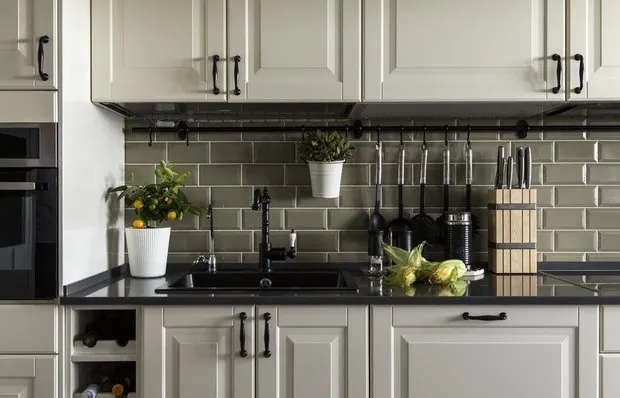
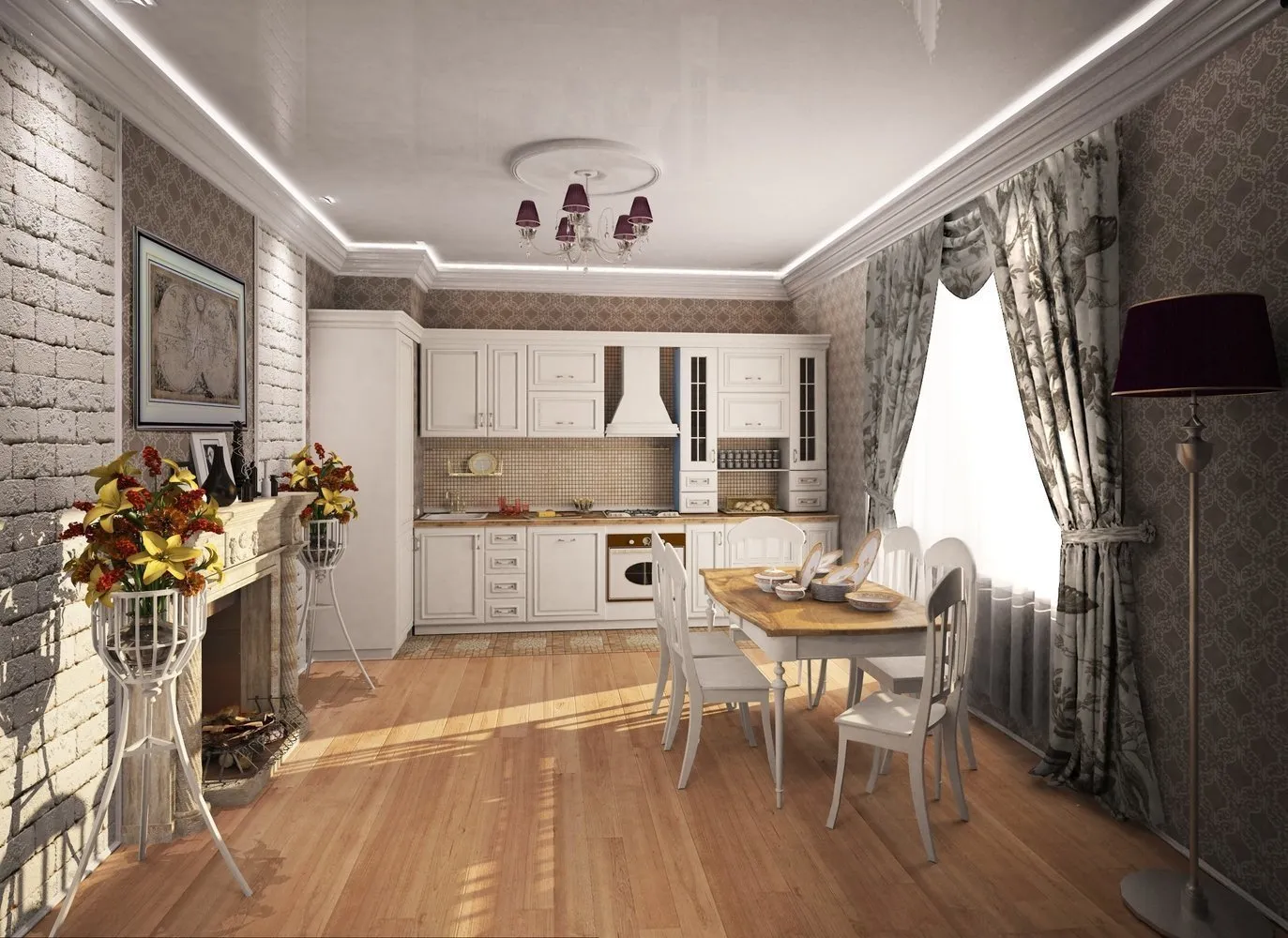
- Walls. One of the options is decorative wallpaper in the dining zone and tiles in the working area. It is recommended to choose finishing materials that differ in color by no more than 1-2 tones. If only wallpaper is used, zoning can be achieved through decorative moldings. Winning combinations include decorative stucco with stone masonry or MDF panels and wallpaper.
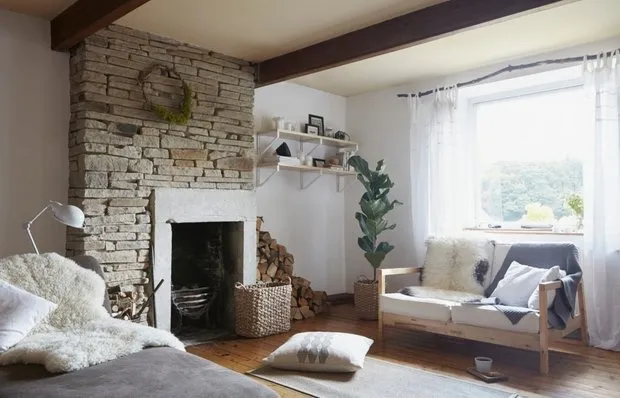
- Ceiling. The kitchen can have a flat surface, while in the living room the ceiling can be decorated with decorative wooden beams. This solution suits the country or modern style well.
- Floor. Here you can use a combination of ceramic tiles in the kitchen zone with laminate or parquet in the living room. As an alternative, the coating can be made from the same material but with a different texture. For example, in the working zone you can lay light water-resistant laminate imitating ash. In the living room, use the same material but in a 'gold pine' finish. Another way to separate space is a carpet in the living room.
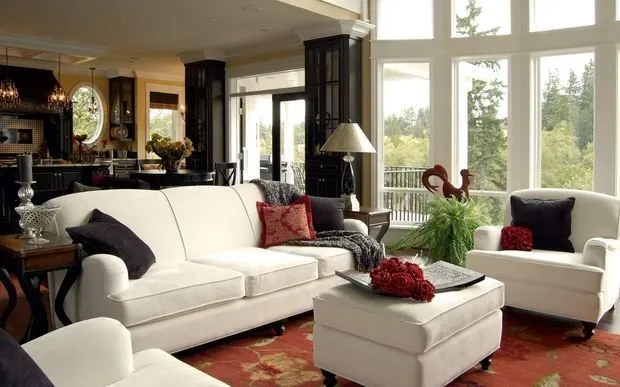 Zoning Using Uneven Floors and Ceilings
The most common way to apply uneven constructions is to create a platform on the kitchen. It should be low (no more than 15 cm) to easily step onto it. The platform will look stylish if the threshold is wavy and differs in color from the overall interior tone.
Multi-level ceilings can only be made if they are tall enough. When creating the structure, gypsum board is used to cover a pre-assembled frame. Pointed lights are better used in the resulting panel for lighting, appropriate for the working zone. When zoning by ceiling, you can use a beam that serves as a boundary between sectors, each with its own shade.
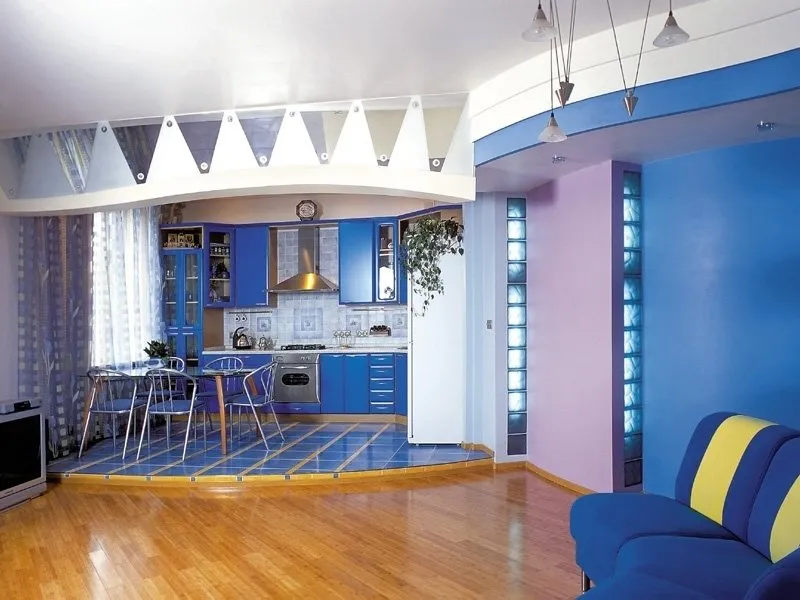 Zoning Using Furniture
This is also a popular way to separate space. What furniture is usually used for this purpose?
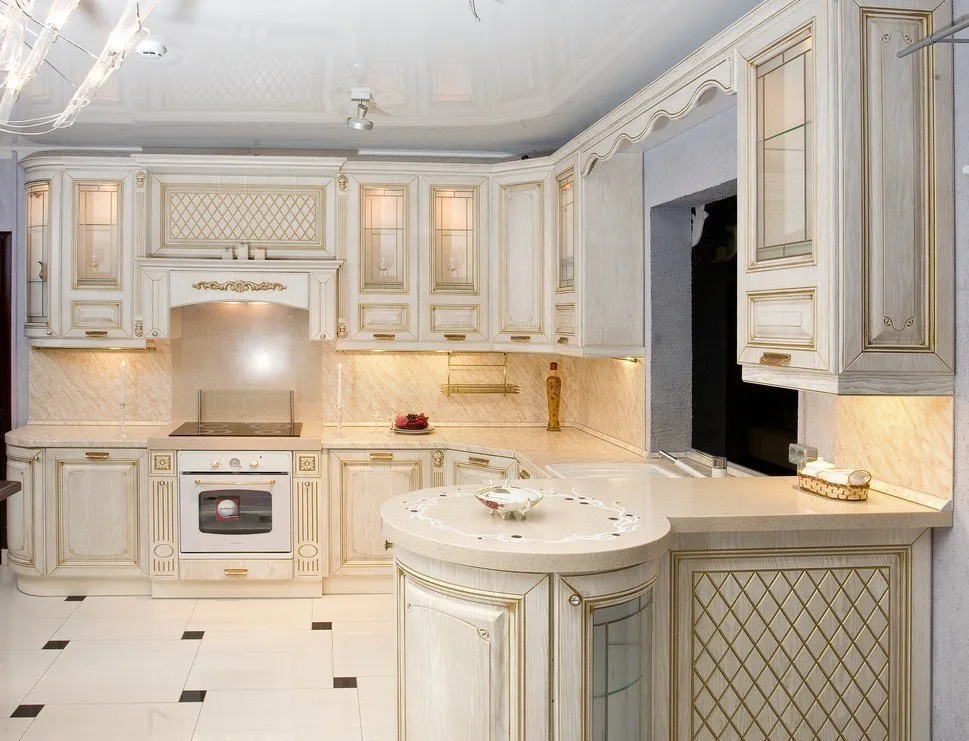
- Bar Counter. A favorite method of zoning among young people. Bar counters have their own requirements: they should be open (closed models are less commonly used because it's inconvenient to sit near them – legs will bump) and have a height of at least one meter. The shape of the construction can be any: rectangular, oval, with rounded edges.
- Shelving (Console). Usually they serve as a support for soft furniture located in the living room.
- Sofas and Corners. They are installed with their back to the working zone. It's important to choose the right distance so that splashes from cooking food don't reach furniture items.
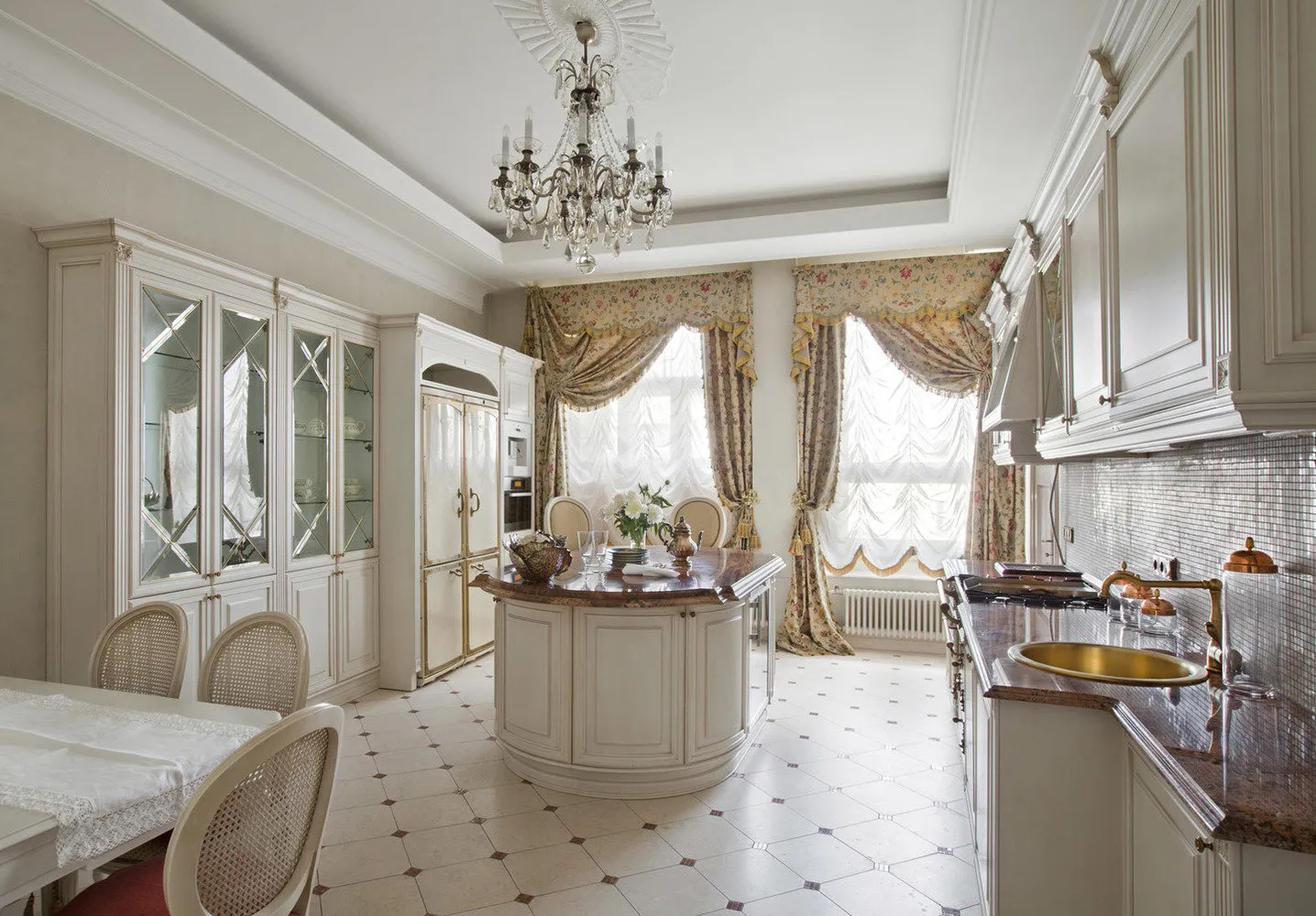
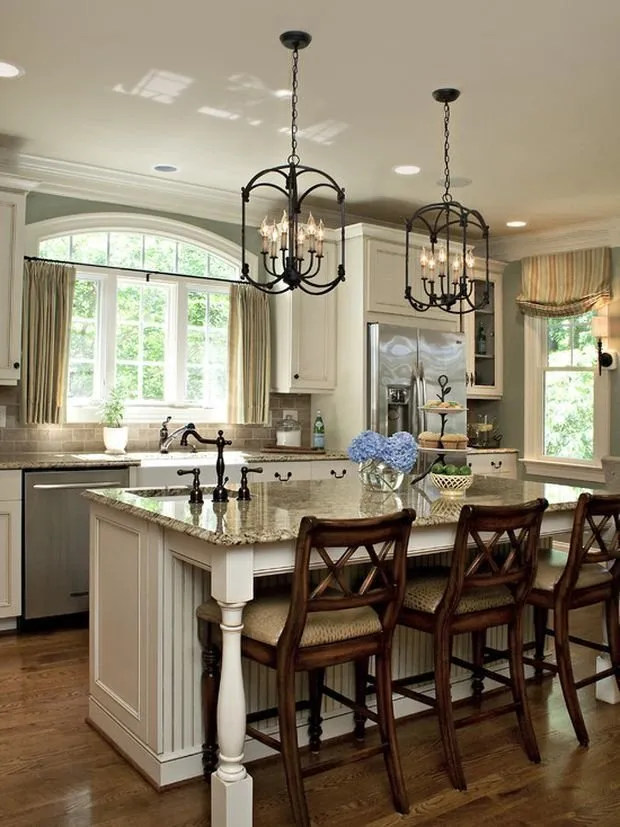
- Island and Peninsula Methods. In the first case, the work table with the sink is placed in the center, creating a functional triangle convenient for the housewife. The second option assumes that the work console is attached to one wall on one side.
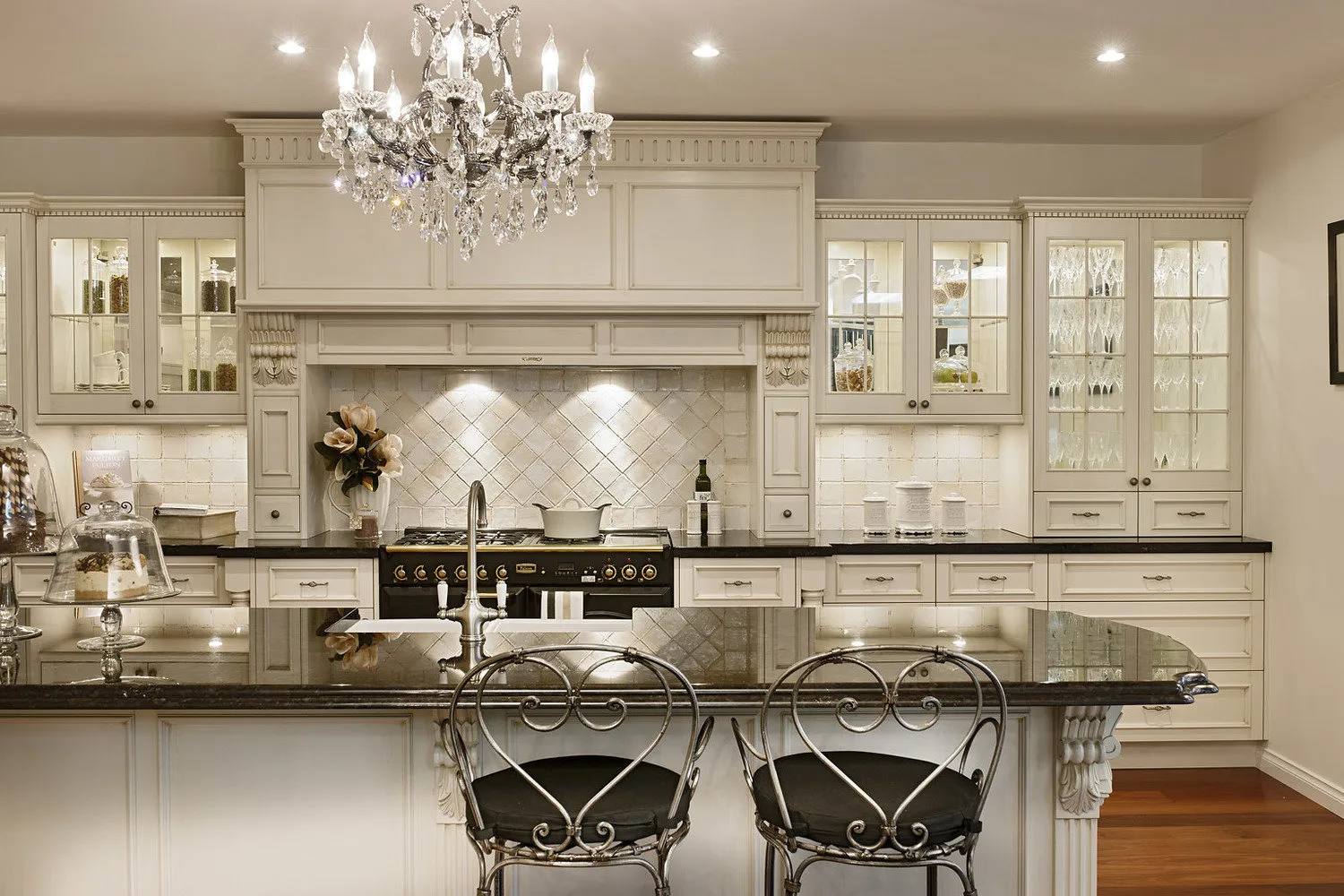 Features of Zoning in a Brick House
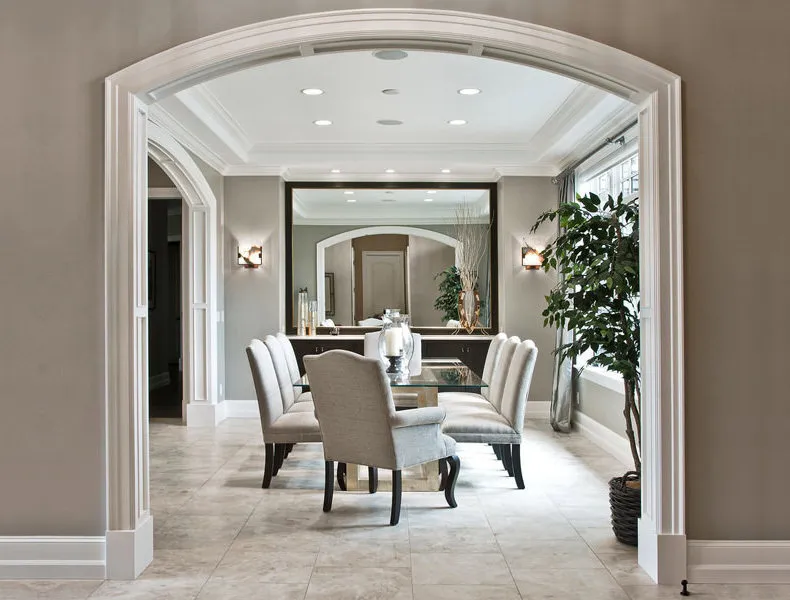
In a cottage built from brick, arches are usually used for space separation. This is due to the presence of many load-bearing structures inside (in a spacious room). Arches are especially appropriate for classical interior design.
 Zoning in a Wooden House
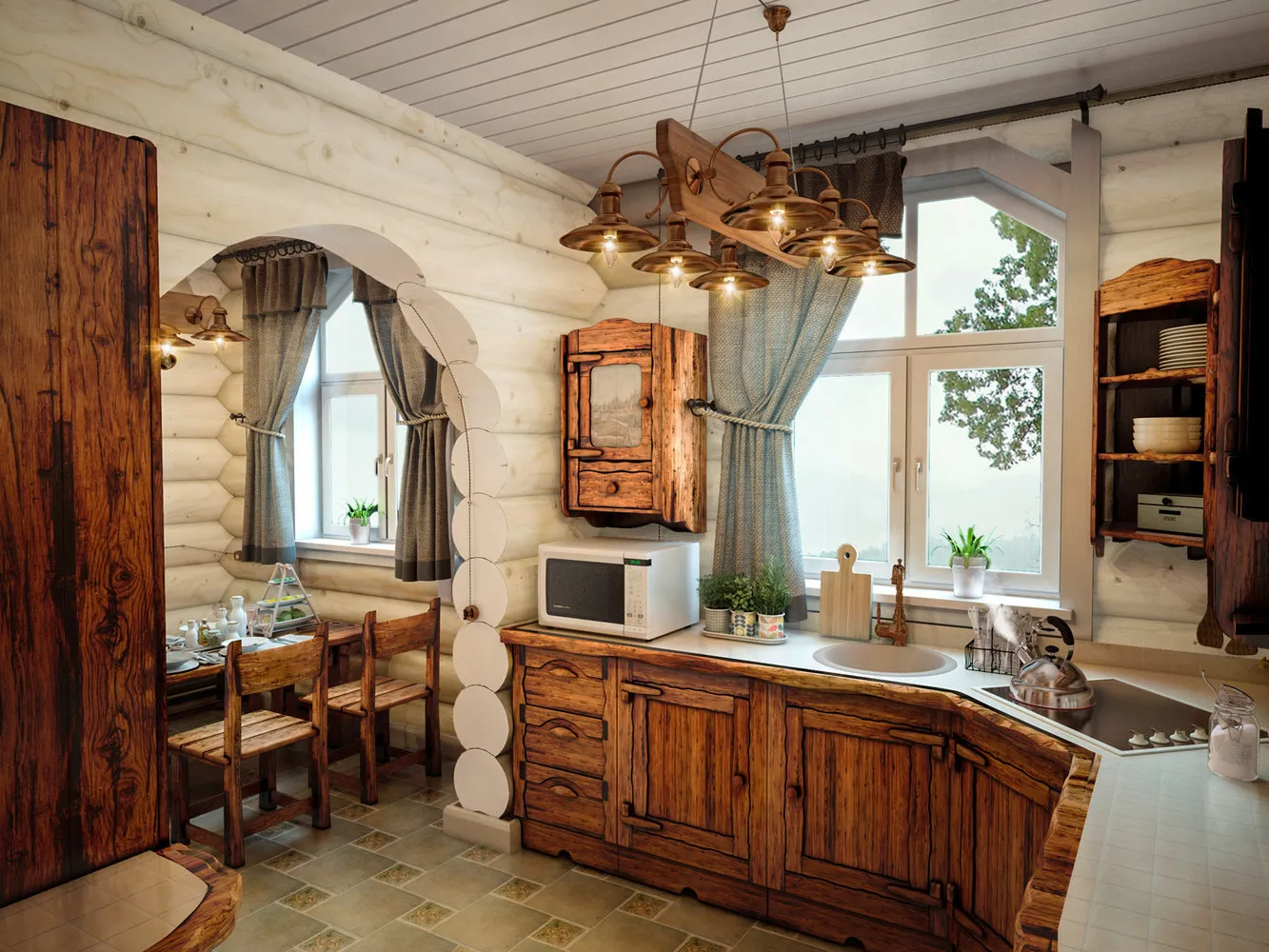
Here columns in the form of processed logs can be used, which will highlight styles like Provence, Contemporary or Country. A platform that highlights the working zone or vice versa the living room will look good.
 Zoning Using Sliding Doors and Partial Partitions
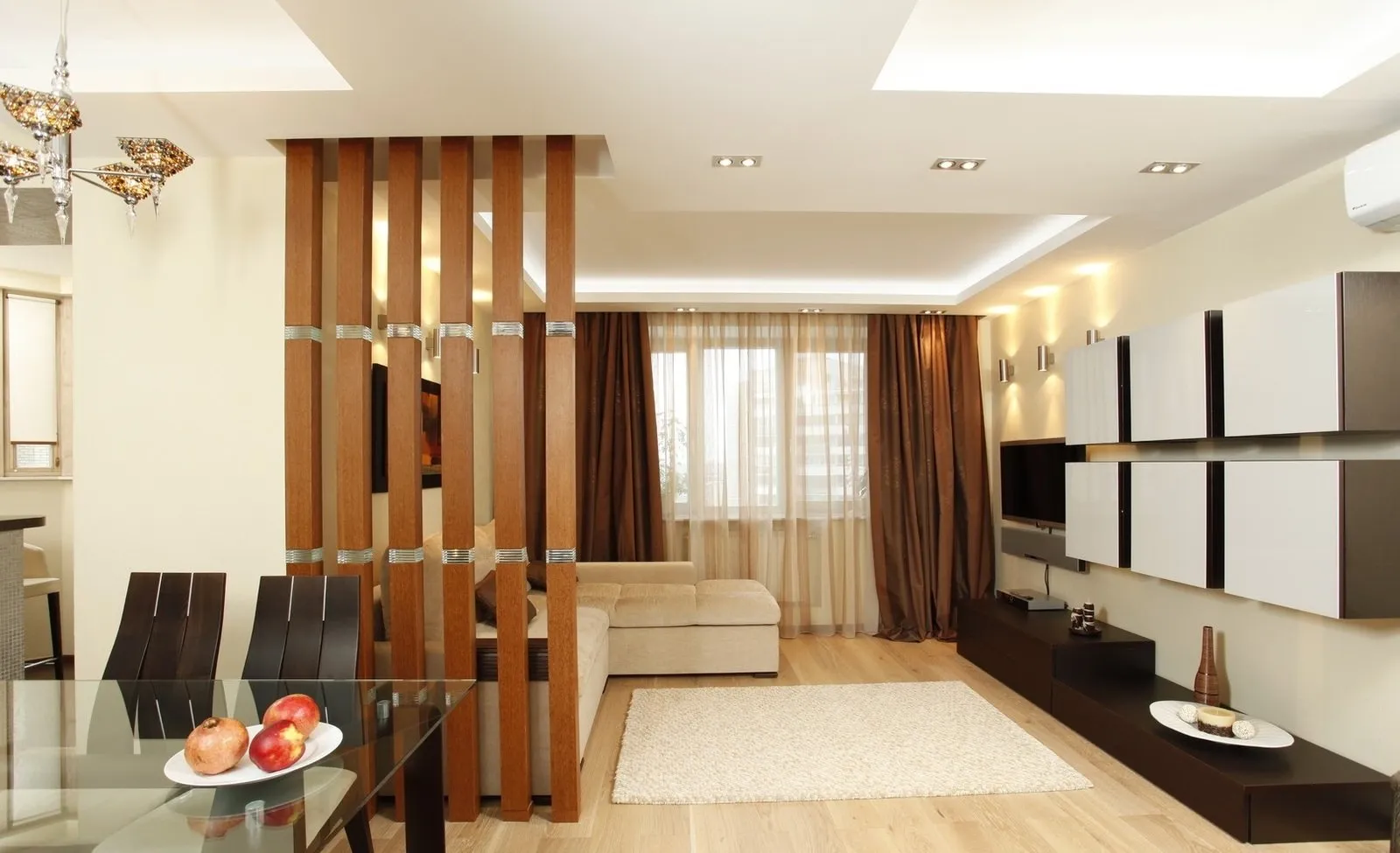
In the latter case, the construction can be made by yourself using gypsum board sheets and metal profiles. The most popular partition is one that adjoins one wall and has an arc-shaped end. It also makes sense to apply sliding doors that can be solid or mesh. The materials used for their manufacture are:
- particle board or MDF;
- gypsum board;
- natural wood;
- plastic;
- glass (smooth, ribbed, frosted or with sandblasted image).
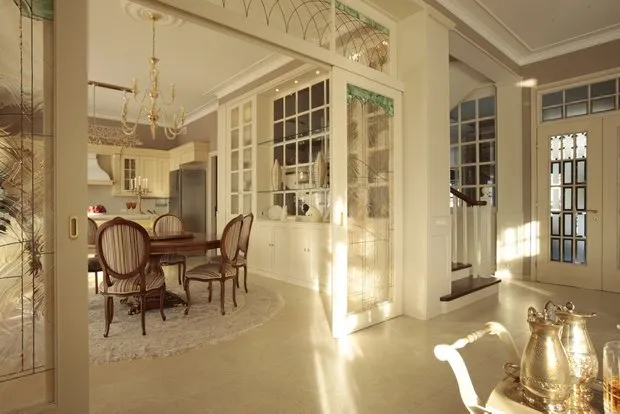
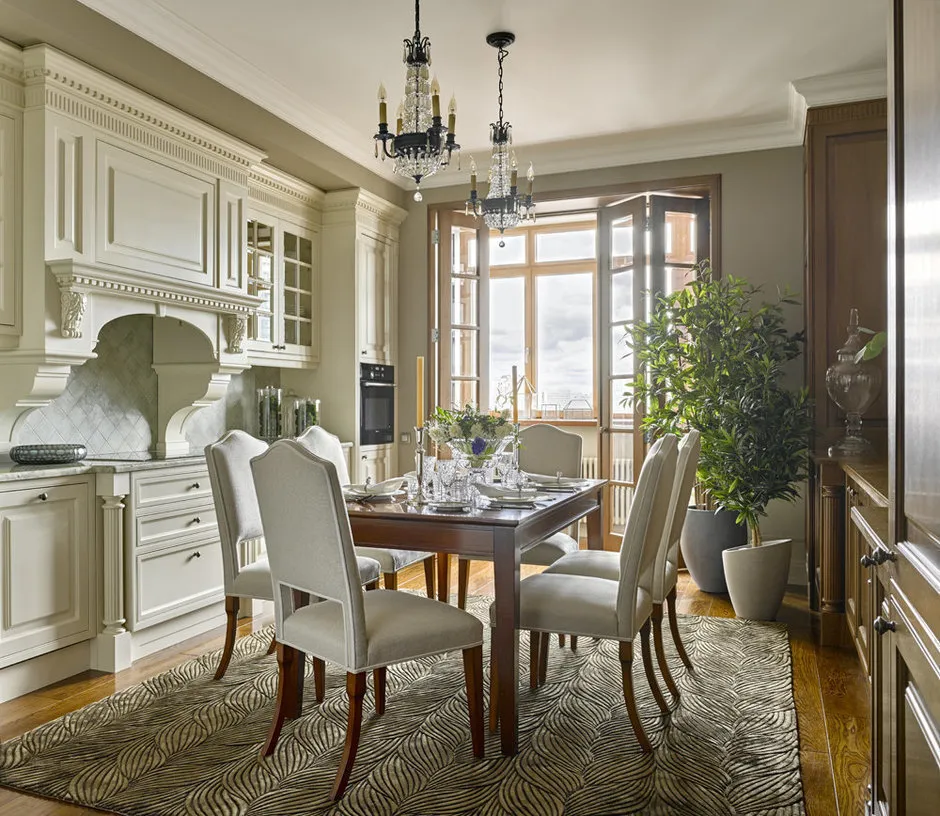
 Design: BeInDesign Studio
Space Separation Through a Niche
An interesting option that suits buildings with limited space and those who rarely cook at home, preferring to eat in cafes or order food for delivery. If there is no ready-made niche, it can be created using moisture-resistant (GKLV) green gypsum board sheets. For this purpose, you need to set aside an angle in the living room and build a partial partition where the work table and sink will be embedded. You can also do it differently: place the kitchen directly in the partition, one side facing the living room and another facing the dining room. In such a layout, there is a special advantage: if you use sliding doors, the kitchen can simply be closed after finishing cooking.
 Zoning Using Lighting
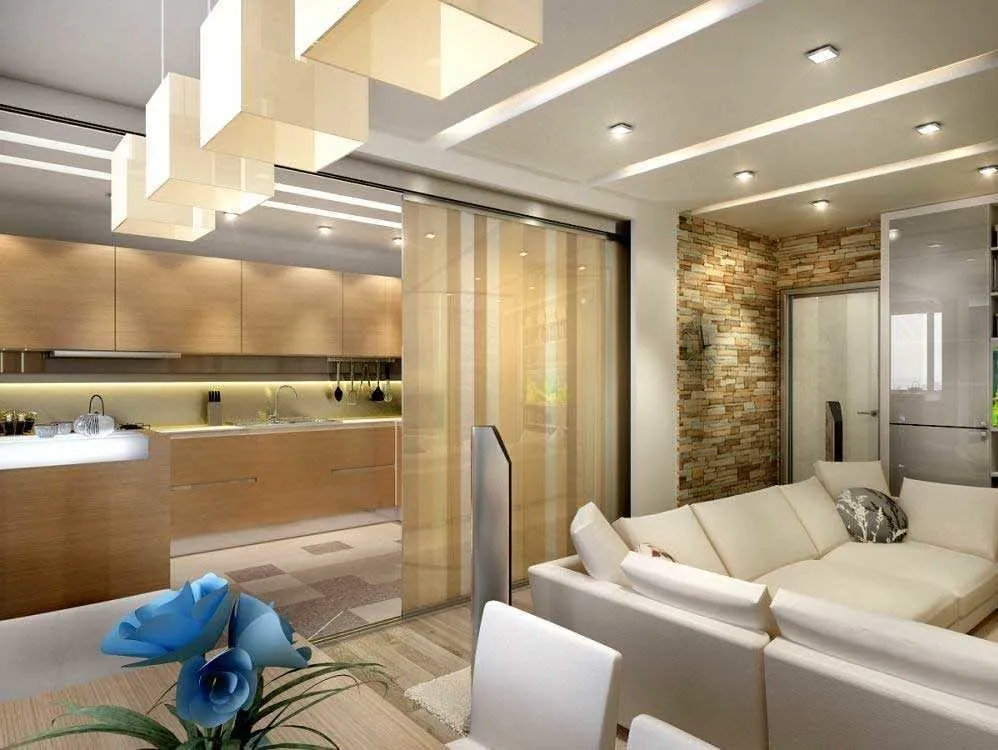
This refers to using various types of light fixtures. If they are located in the living room, it's preferable to have brightness regulation capability (special devices called dimmers are used for this). This will allow you to make lighting bright or dim, depending on how the zone is used. If you are resting, soft and not intense light is needed, but when guests come, bright lighting is required.
For the living room, it's best to use one large or several small pendant lights, in combination with wall sconces. In the working zone, point lighting that can change tilt angle is appropriate. This design will allow maximum efficiency in illuminating the necessary area. For the dining sector, a small chandelier placed above the center of the table is suitable.
 Style Choice
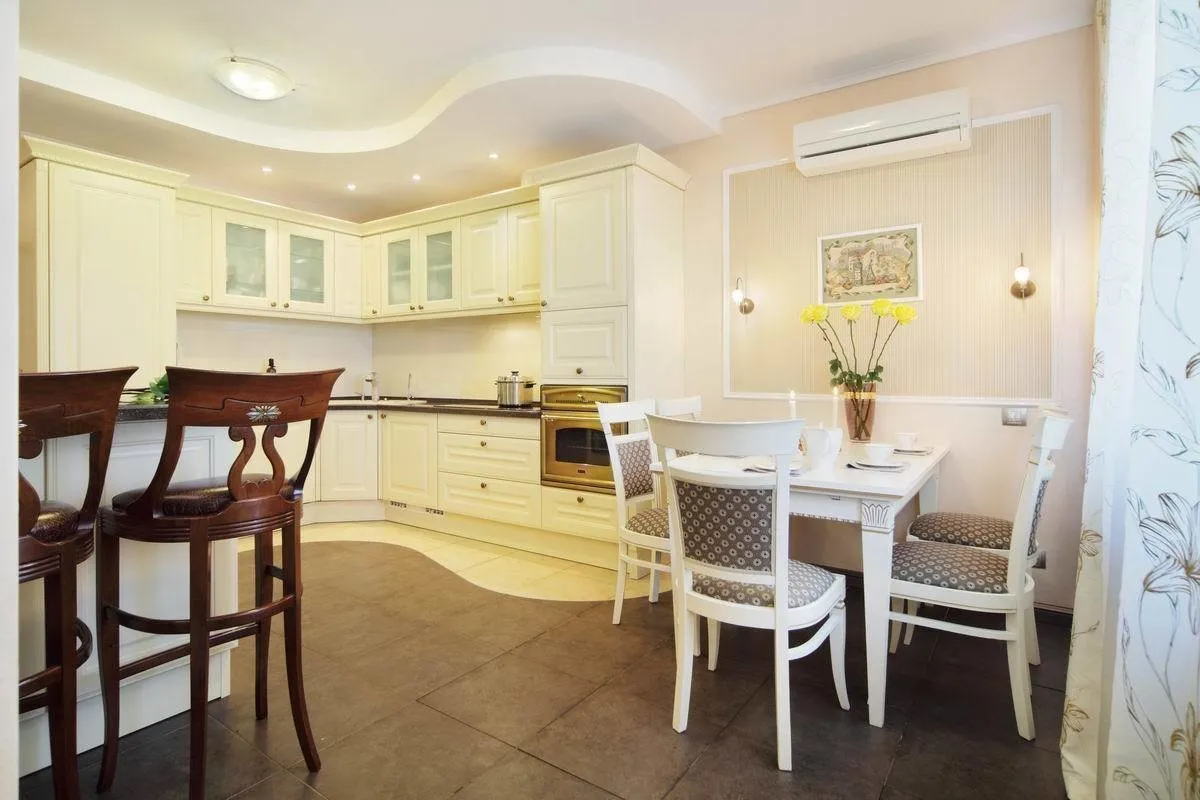
Design in this case is a combination of finishing materials, color, furniture and various accessories that harmonize with each other and create a coherent picture perceived by humans. The basis of any composition is a certain style. For a kitchen with a living room in a private house, any design directions are acceptable if the room area is large enough. What styles are currently most in demand?
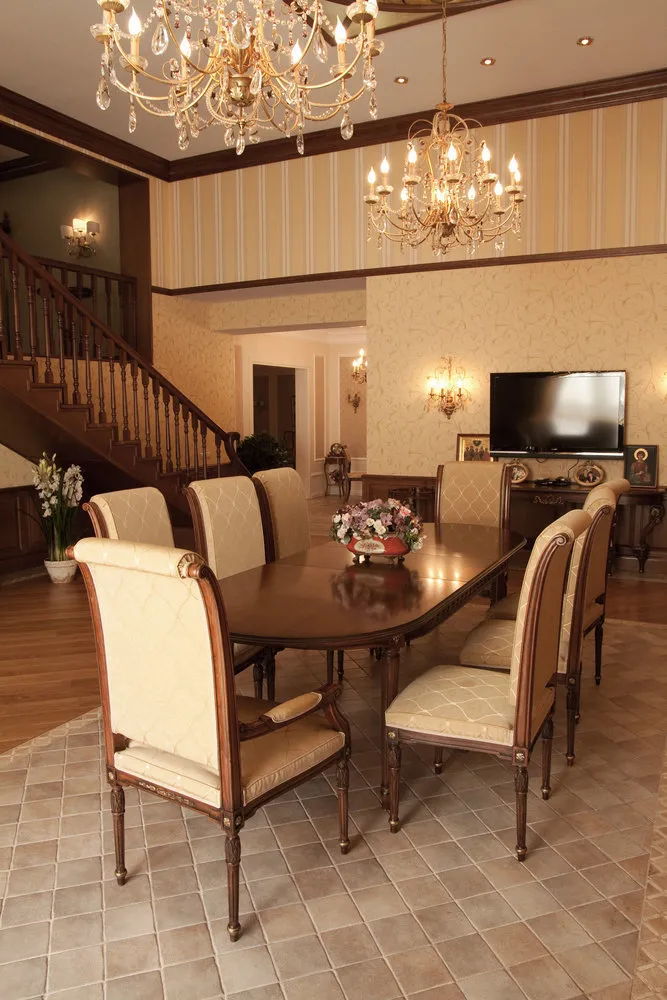 Classical Direction
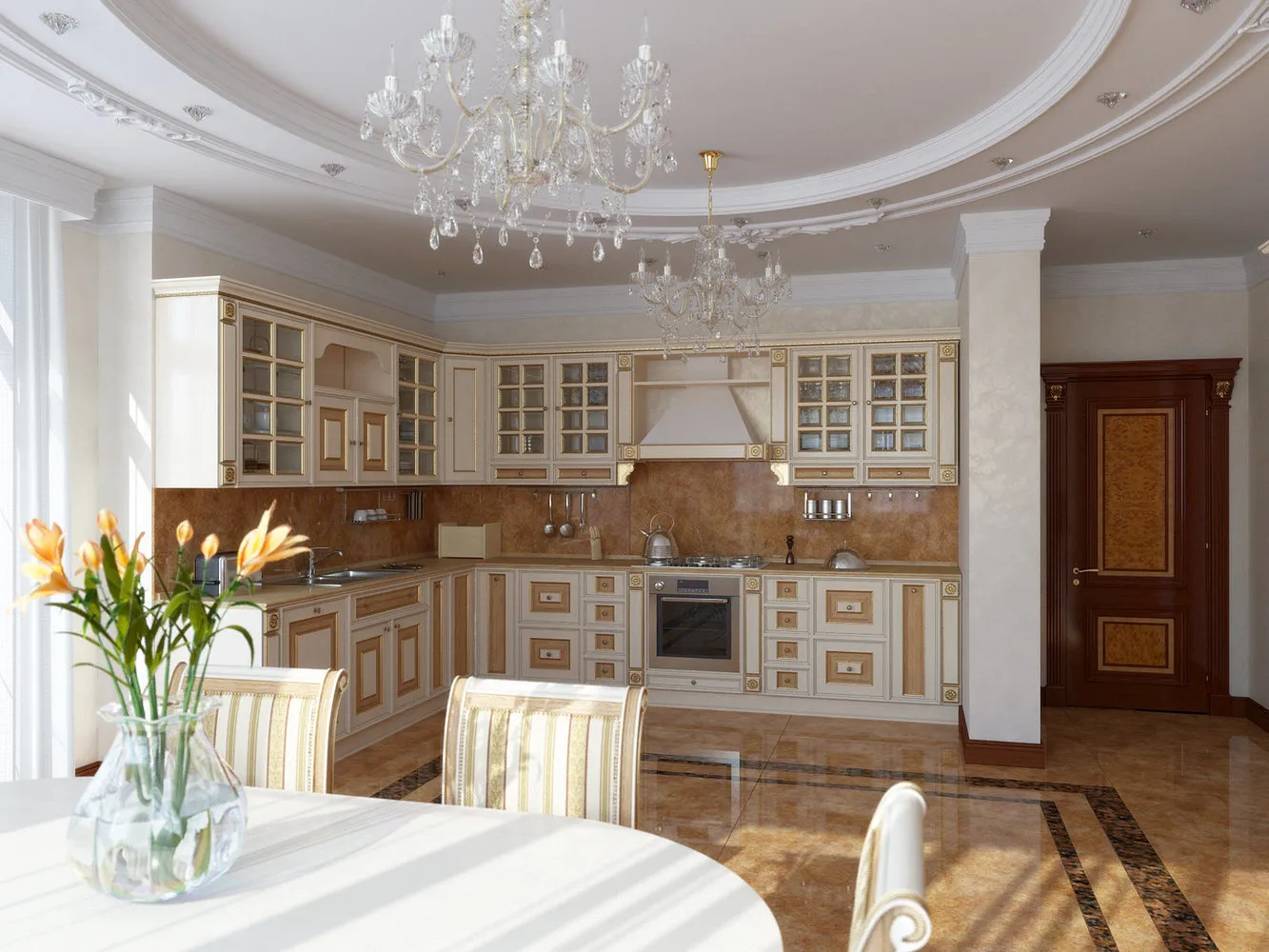
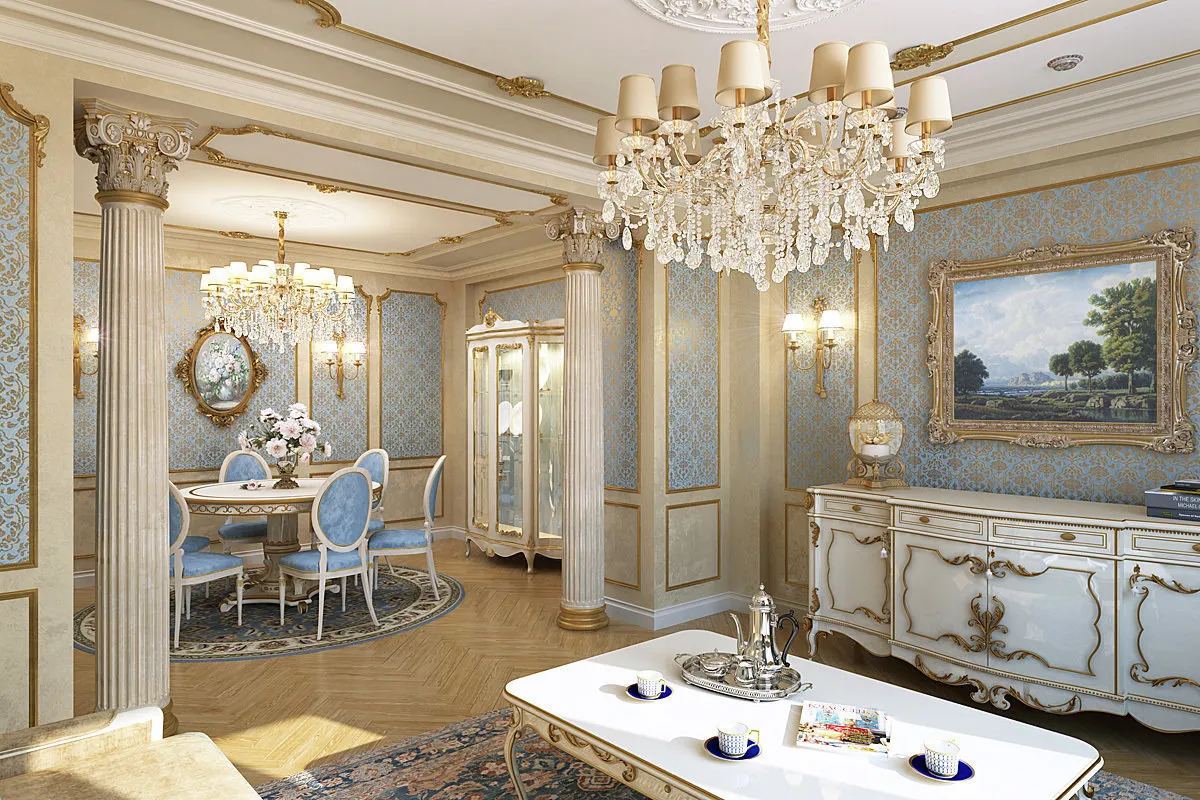
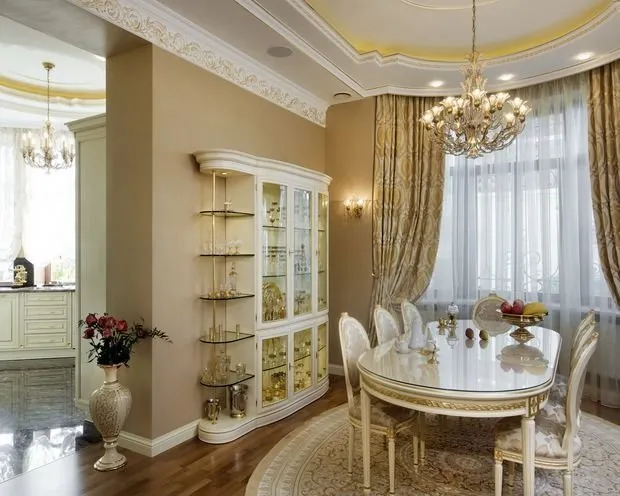
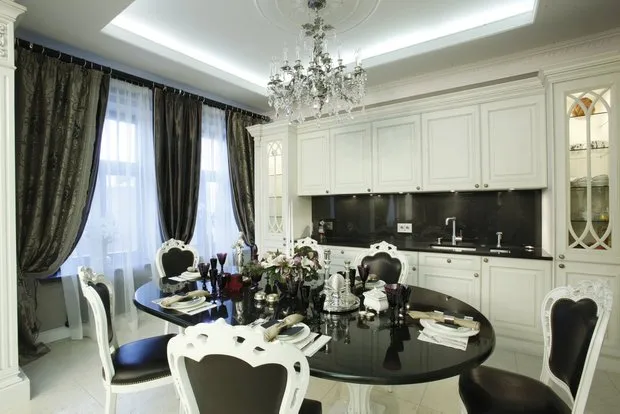
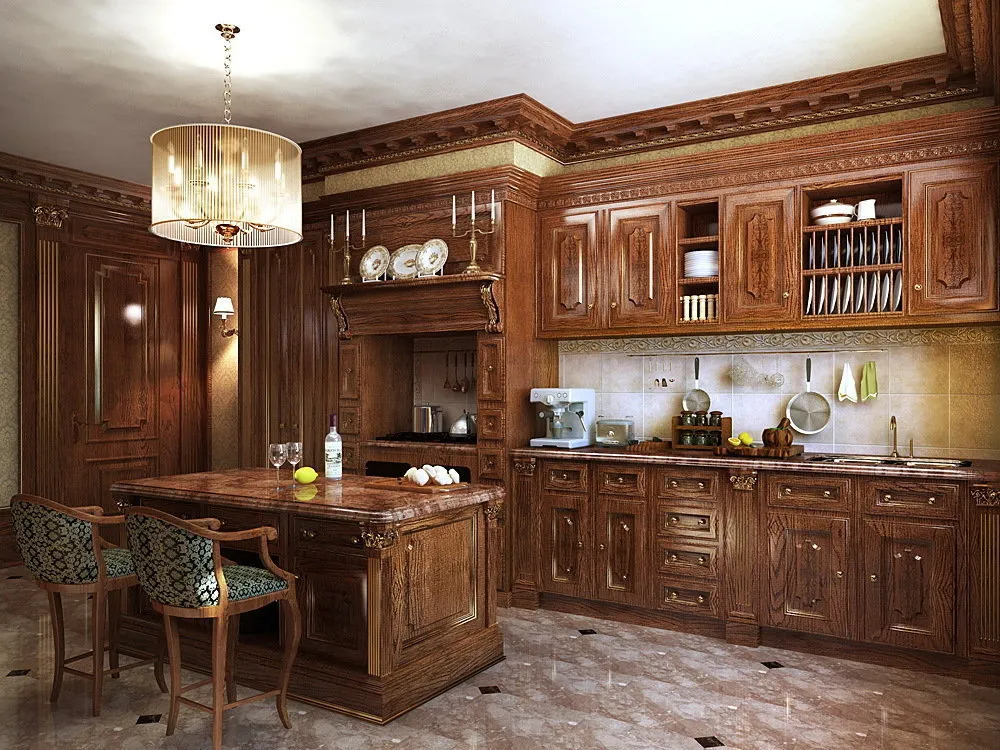
You can highlight several styles here. The most pompous and elaborate are Rococo and Baroque. While the former is characterized by refinement and sophistication, the latter is distinguished by bulkiness and royal all-encompassing luxury. Both Rococo and Baroque seem to aim to show opulence in an overly rich setting. The Empire style also belongs to the classical direction. The style is characterized by strict geometric shapes, with a sense of nobility and aristocracy.
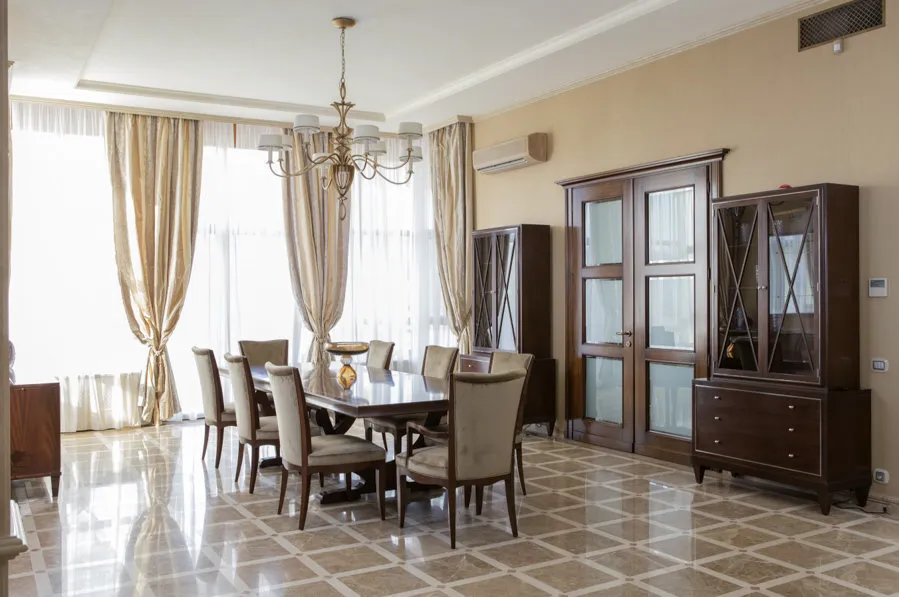
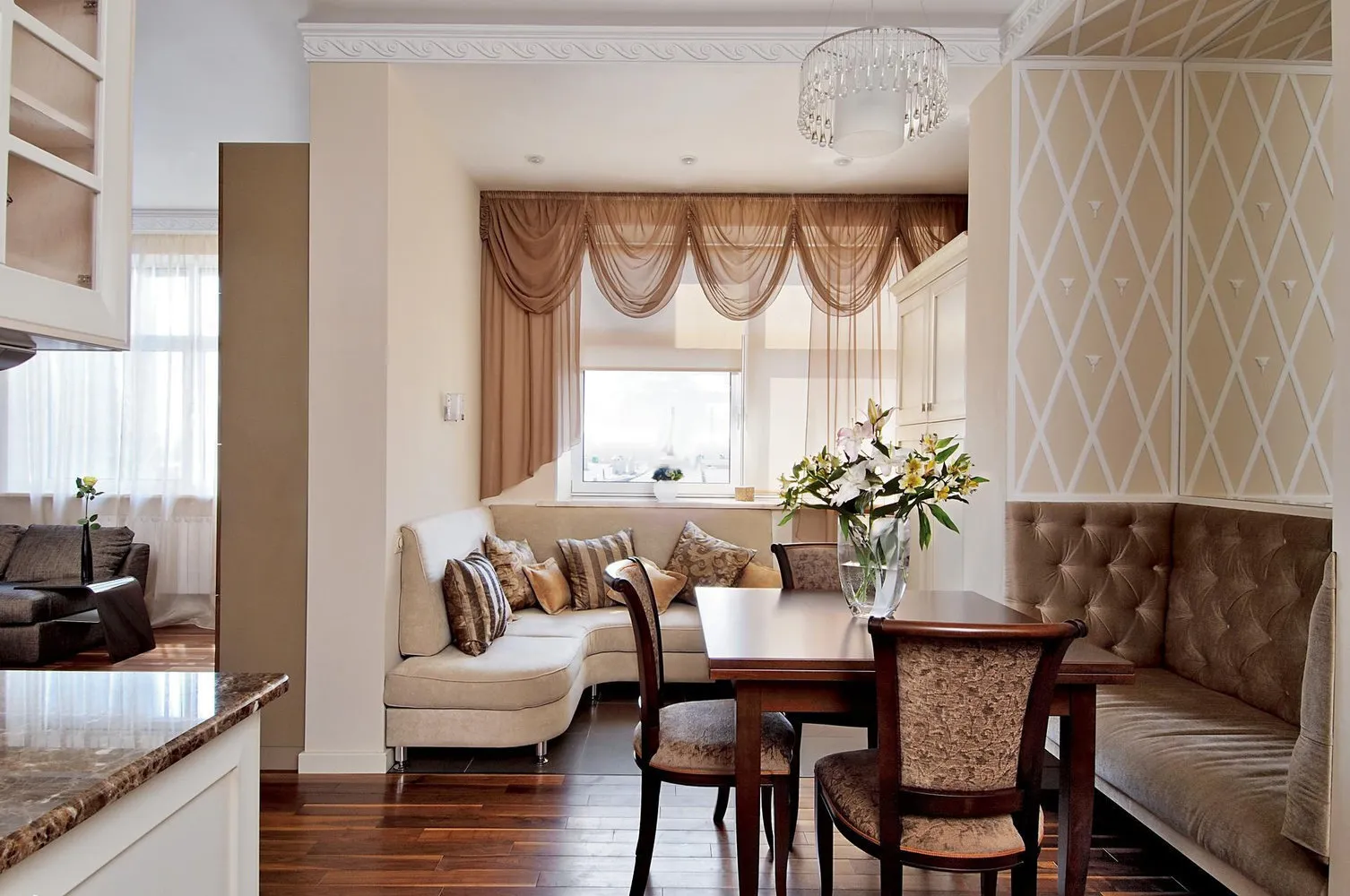
Another matter is modern classic. Furniture is also substantial, but it must also be functional. All items are arranged symmetrically and parallel to each other. The color palette is dominated by neutral tones: coffee, beige, pale chocolate and other calm hues.
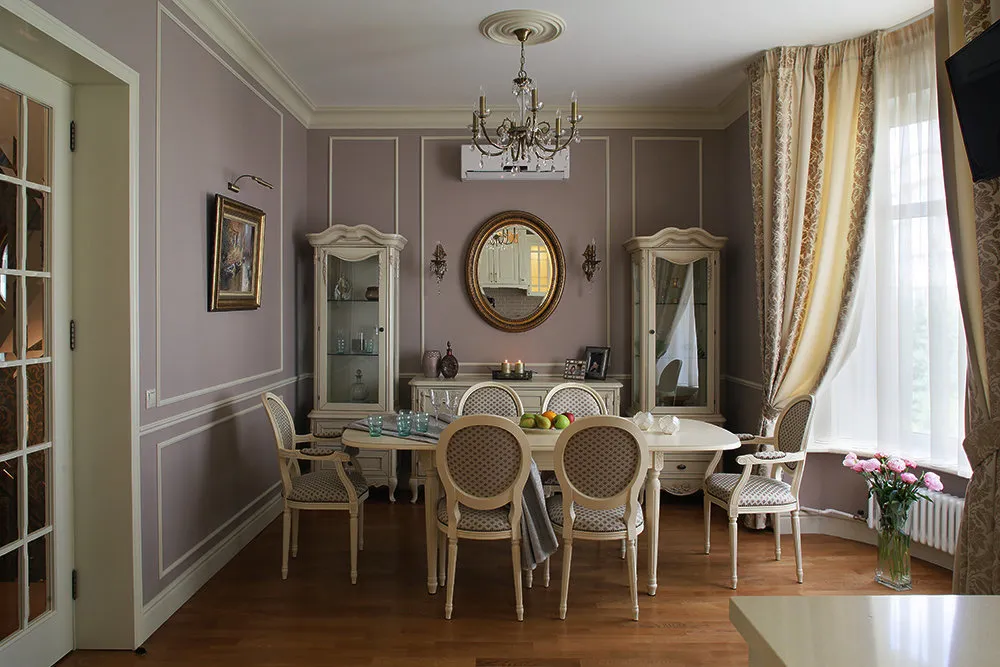 Minimalism
Primarily, this is extreme simplicity and functionality. The style is characterized by straight lines, minimal use of colors (usually no more than 2), absence of decoration and various small kitchen accessories that need to be kept away using closed shelves, cabinets, and drawers. All of this makes cleaning quick and easy, ensuring constant order on the kitchen.
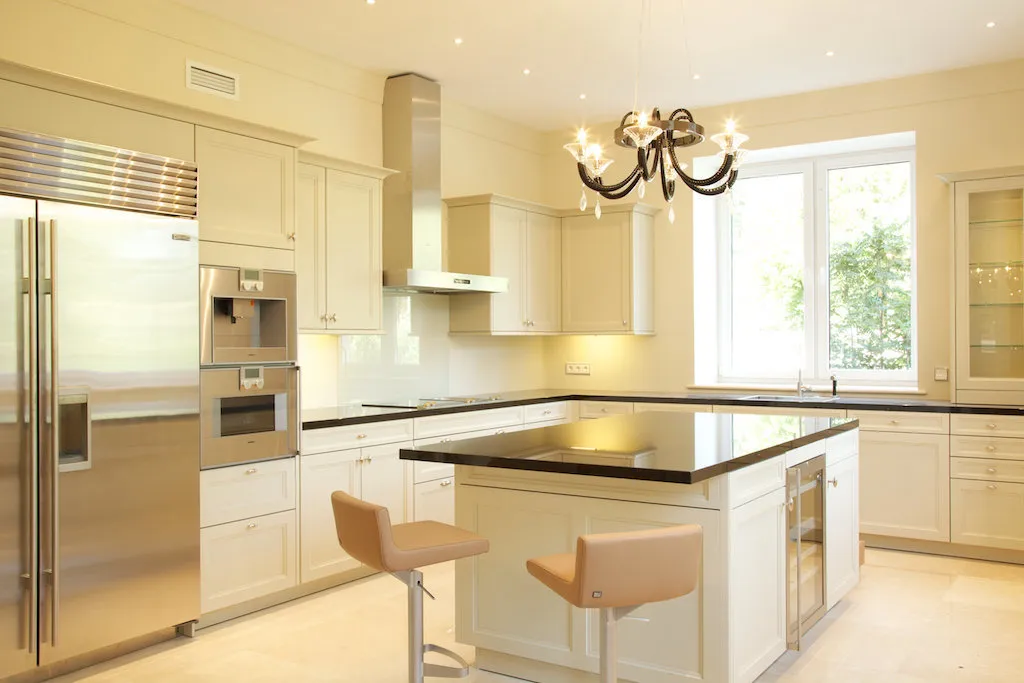 Art Deco
The distinctive feature of this style is a bright accent in the center of the working or dining zone. In the first case, it can be a stove in an island layout, in the second - the dining table. Separation is done using a multi-level ceiling or by applying different finishing materials. For Art Deco, marble tiles are used. The style is characterized by black and white color schemes, tables and chairs that resemble geometric figures.
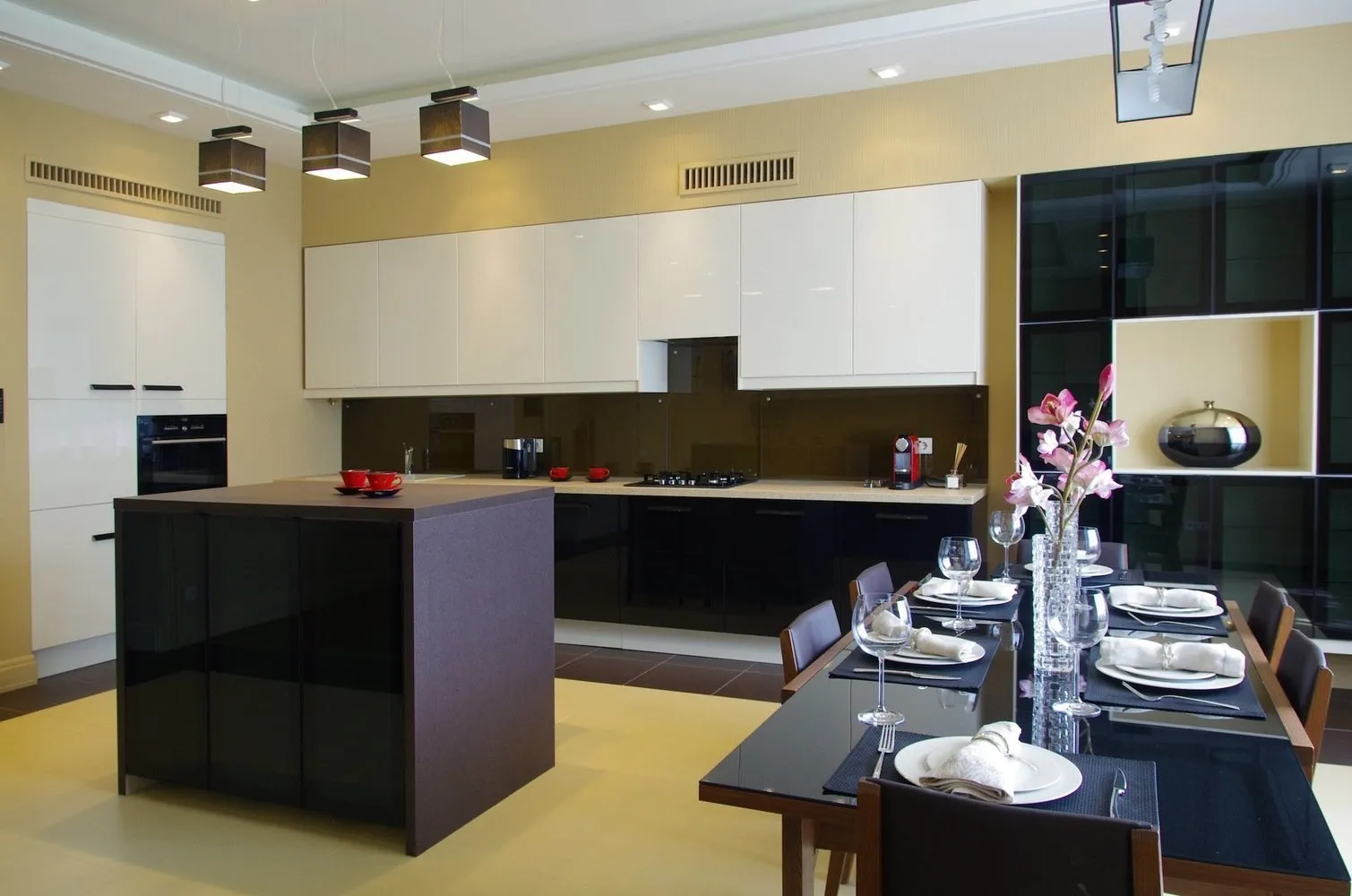 Modern
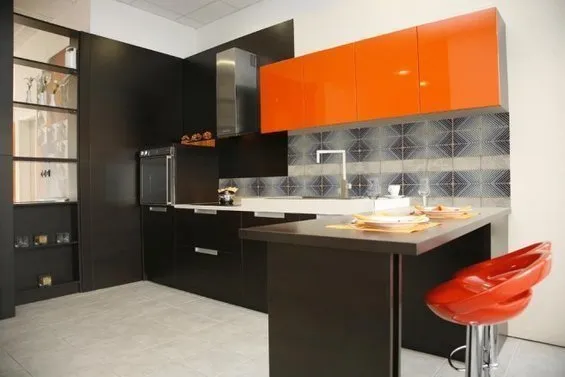
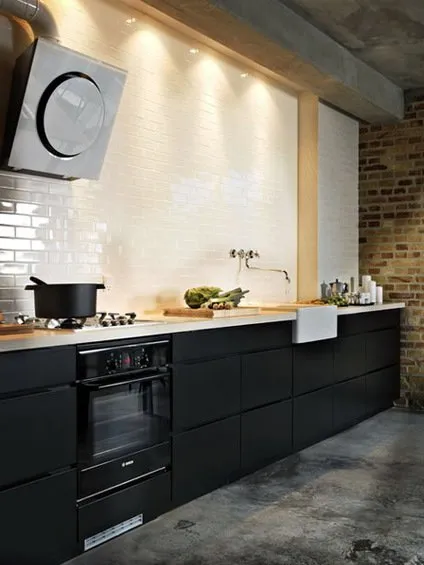
Primarily, this is affordable but modern finishing materials: MDF, plastic, laminate, ceramic tiles, etc. The ceiling structure can be any – suspended or stretched; the main thing is that the surface has a white color. Modern style is characterized by smooth lines, rounded furniture items and their multi-functionality. Household appliances do not need to be masked: on the contrary, they should be visible. Work surfaces are made of metal or have a metal edging. The dining table is made of glass. It's preferable to have a bar counter.
 Mediterranean Style
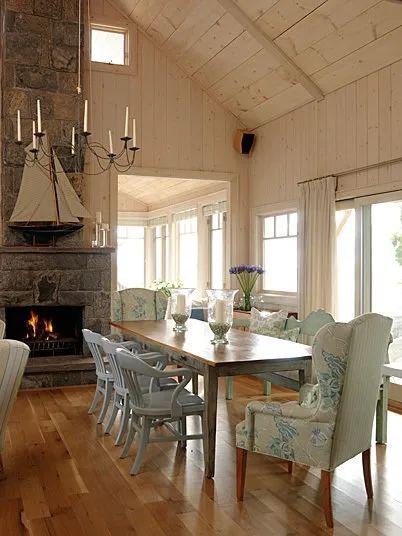
If talking about walls, the preferred shade is light blue. The floor should be tiled or made wooden to resemble a ship's deck. The table in the dining zone is placed in the center, and above it there must be a chandelier. On numerous shelves – coffee, fresh and dried fruits, spices – a typical set for Mediterranean kitchens. Sofas and armchairs have monochrome or striped, plaid upholstery. For the living room, decorative elements include vases with fresh flowers. Also, a display cabinet can be placed in the hall.
As you can see, arranging a kitchen with a living room in a private house by combining it with the dining room is not such a difficult task as it might seem at first glance. The main advantage here is that you are not constrained by any limitations typical of urban apartments: large area and the ability to independently re-planning the space without permits give free rein to imagination and the opportunity to build a comfortable, functional space.
 Work of architectural firms "Muji" and "Eight design"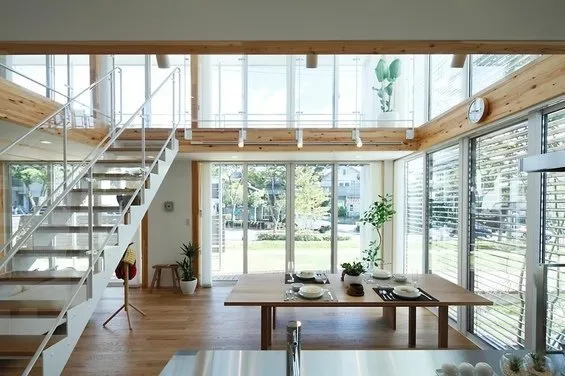
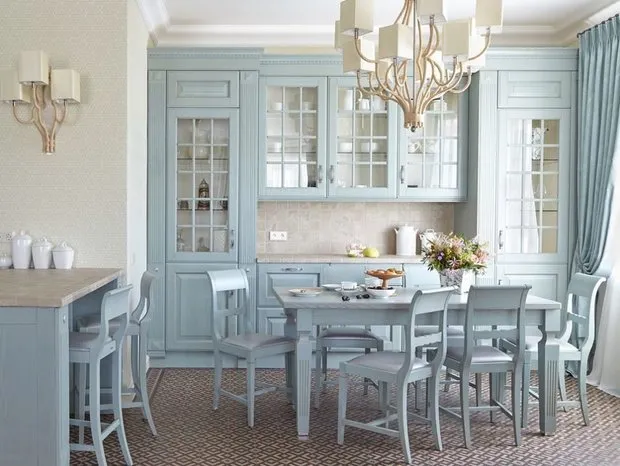
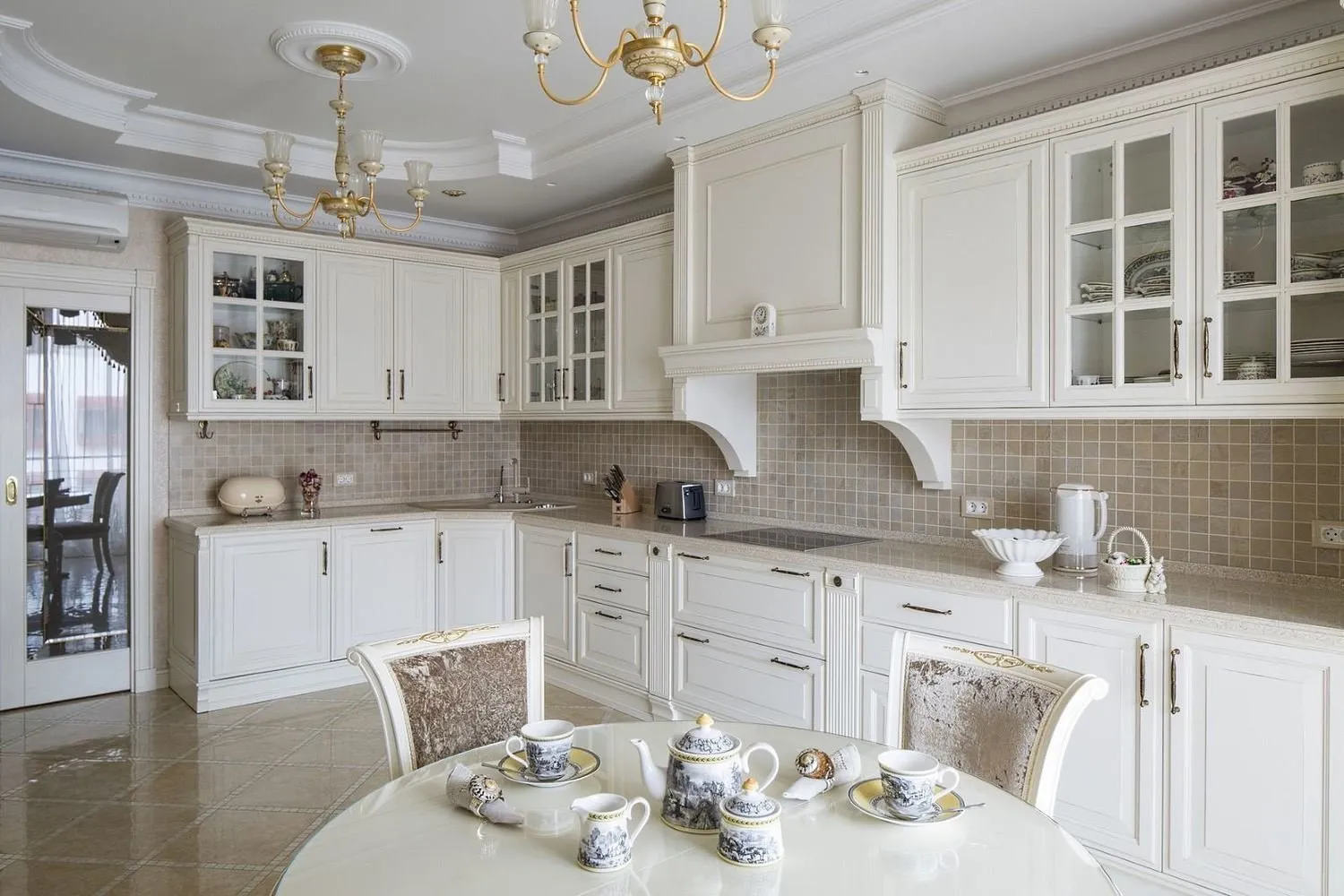
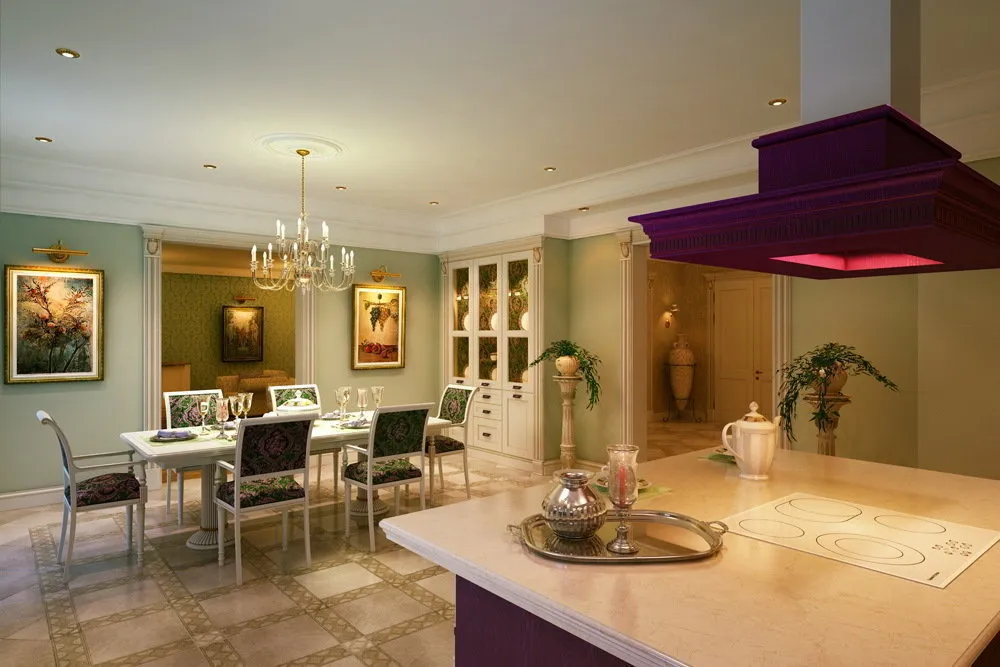
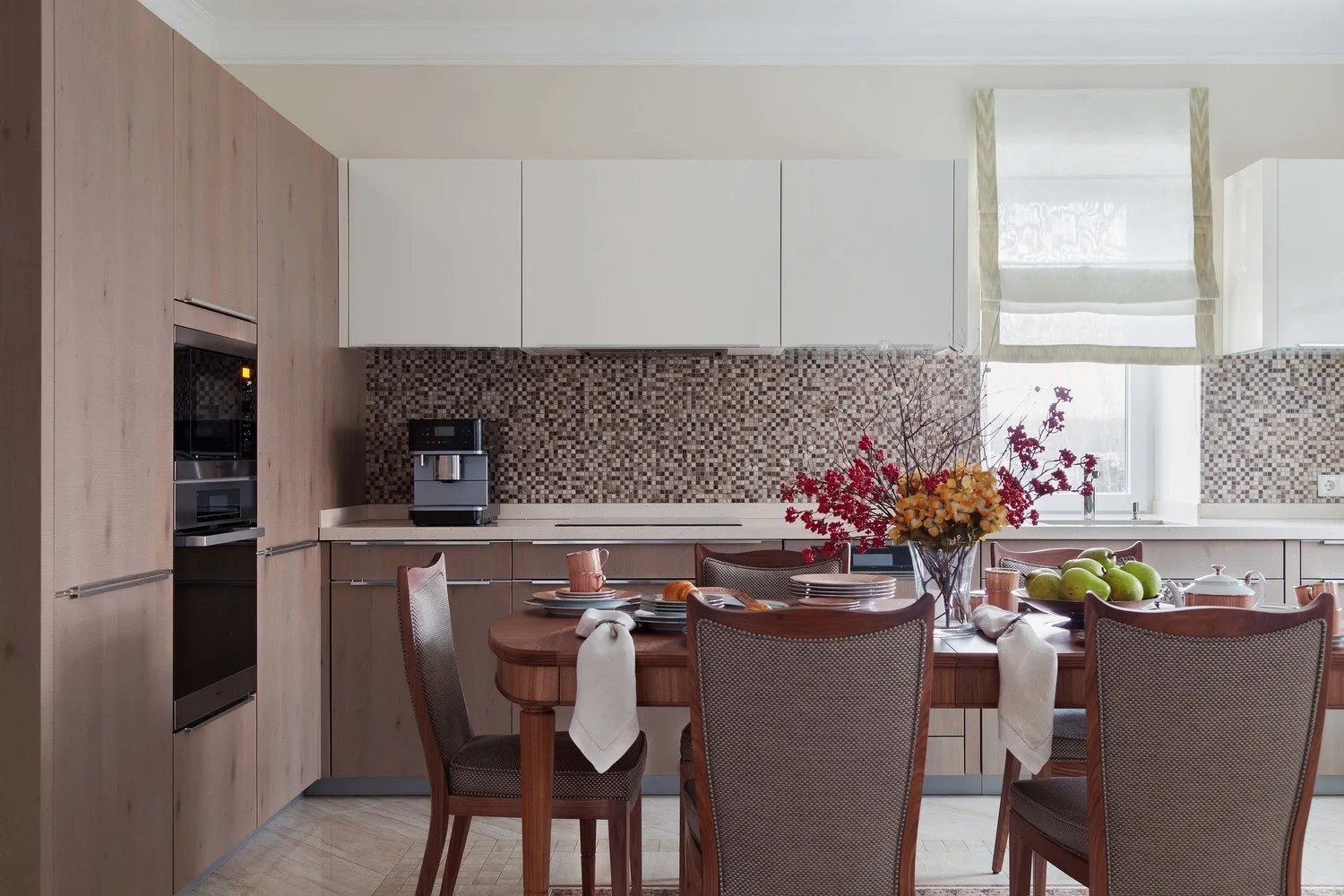

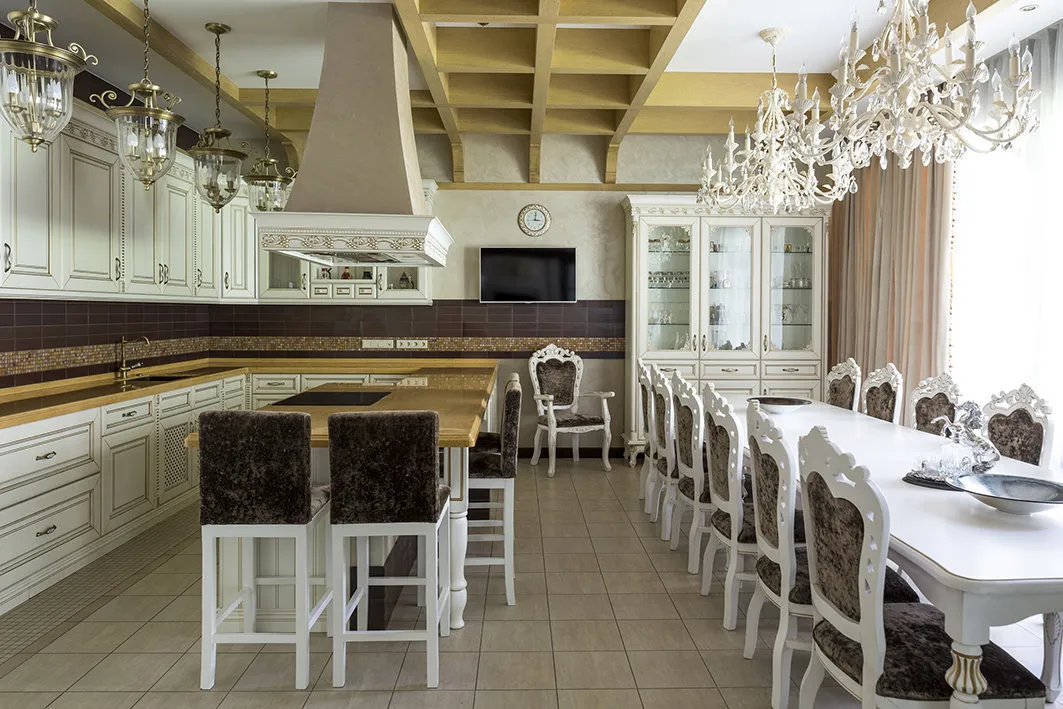
Kitchen Plus Dining Room and Living Room: Design Options
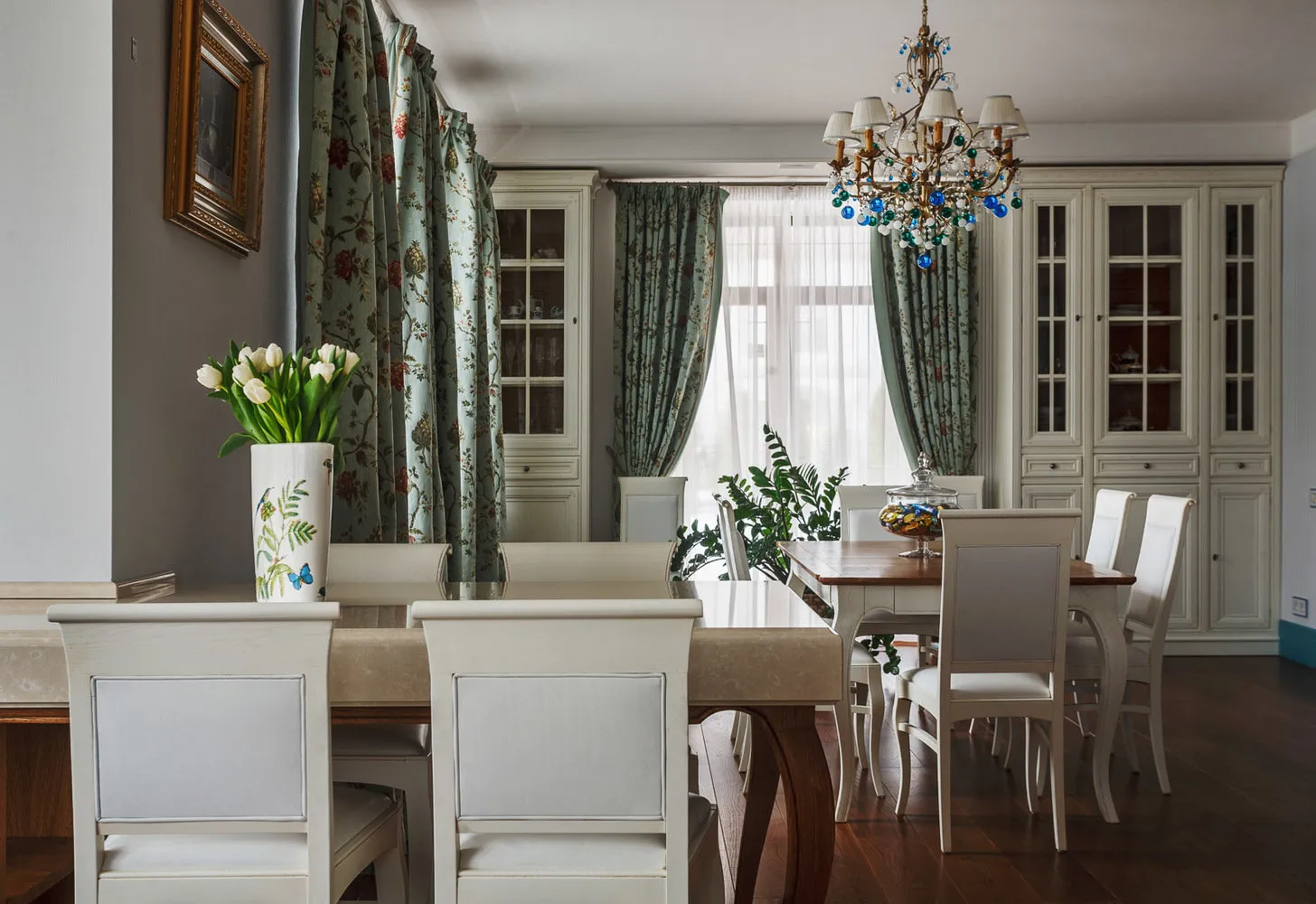
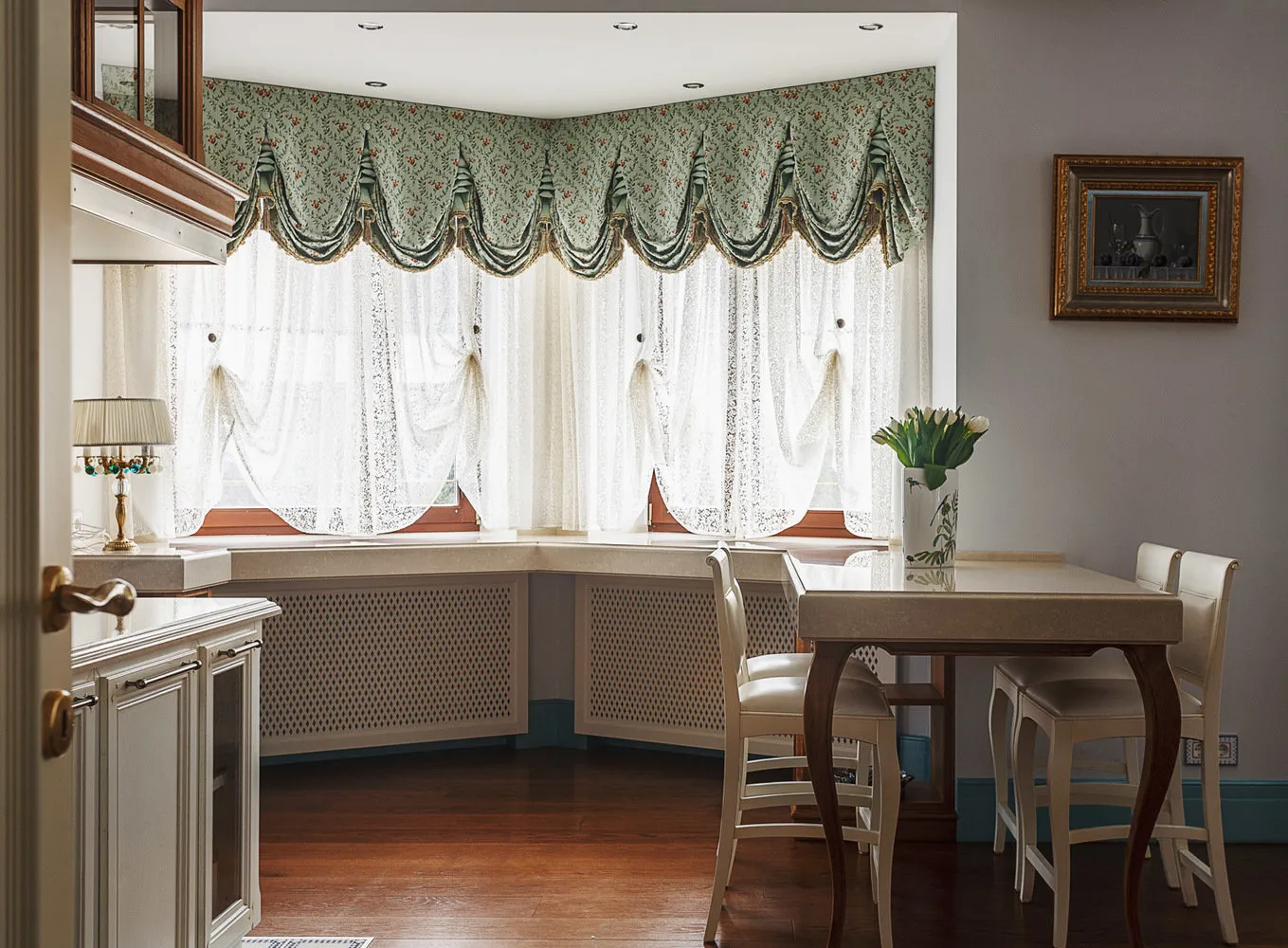
On the cover of the design project by Irina Bronnikova.