There can be your advertisement
300x150
Childroom DIY: Main Design Rules
A special place in the house is occupied by a child's room. You can decorate it yourself, the main thing is to follow the basic design rules for a child's room. Let's see what a professional has to say.
Childroom DIY: Main Design Rules. A special place in the house is occupied by a child's room. You can decorate it yourself, the main thing is to follow the basic design rules for a child's room. Let's see what a professional has to say.
Olga Kondratova, Childroom Designer
Start planning a child's room not just by sketching a draft, but with a more ambitious project—revisiting the layout of the entire apartment!
Even in a one-room apartment, you can find a way to change the space for the better, make it more spacious or, conversely, divide it so that you don't lose the total living area but still provide each resident with a cozy corner.
A child's room should be well-lit, so place it on the sunny side of the house.
It is preferable that the child's room does not adjoin the living room and kitchen, as such noisy neighbors can significantly disturb both the child and adults.
If there are two small children in the house, they can live in one room until 4 years old (a mini-room of at least 5 m² will suffice), but older children must have separate bedrooms.
When planning a child's room, it should be divided into zones, the main ones being:
- bed area;
- wardrobe;
- play area;
- work zone (for preschoolers and older);
- storage zone (toys, books, school supplies).
It is better to use light, eco-friendly finishing materials (E1 grade particle board or a more expensive option—oak solid wood), and the same applies to furniture for children's rooms.
When choosing each interior element, remember: these should be functional and practical items at 110%! For example, a carpet is better replaced with laminate, or one of the walls can be covered with a school board for the child's overall development.
For lighting in a child's room, only two requirements are usually imposed: a central pendant light must be installed, and a nightlight near the child's bed. For school-age children, it is also important to properly illuminate the workspace: success depends not only on lamp choice but also on the positioning of the desk relative to the natural light source in the room.
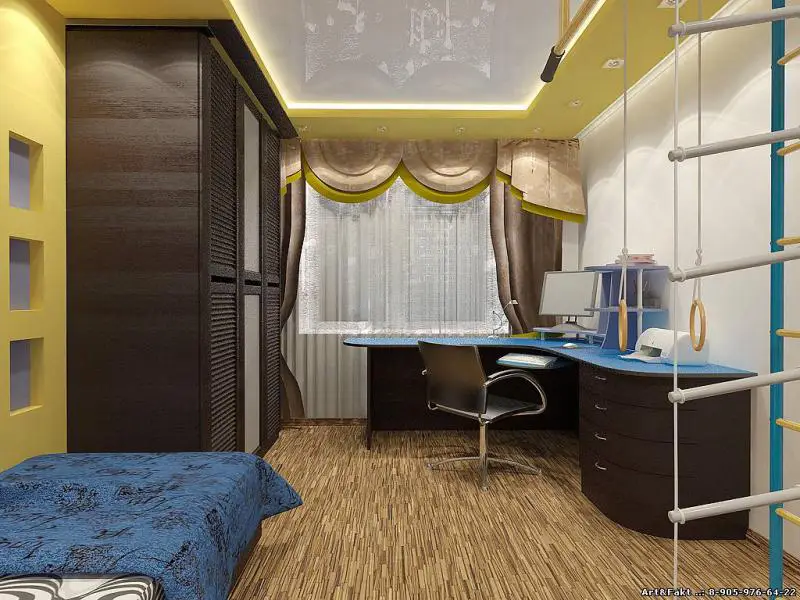
The right option: light from the window falls on the child's right hand or the desk is positioned directly facing the window.
Childroom Design by Olga
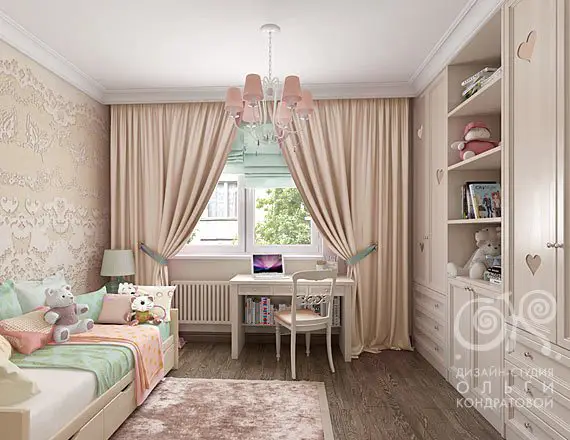
Photo 1 — Project by Olga Kondratova's Design Studio. A room for a girl
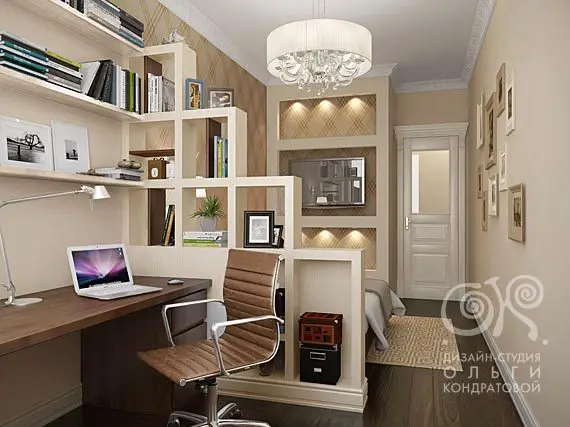
Photo 2 — Project by Olga Kondratova's Design Studio. A room for a school-age child
Childroom Modular Units
The interior design of a child's room should be adaptable: as the child grows, so should their room. Most families don't have the time, energy, or funds to completely change the child's setup every 4–5 years, changing everything from wall color to furniture arrangement.
Solution: purchase durable and attractive modular furniture that won't look outdated or boring to the child even after 10 years.
By the way, you can also consult a designer in this case. Designer childrooms aren't only meant for a full
More articles:
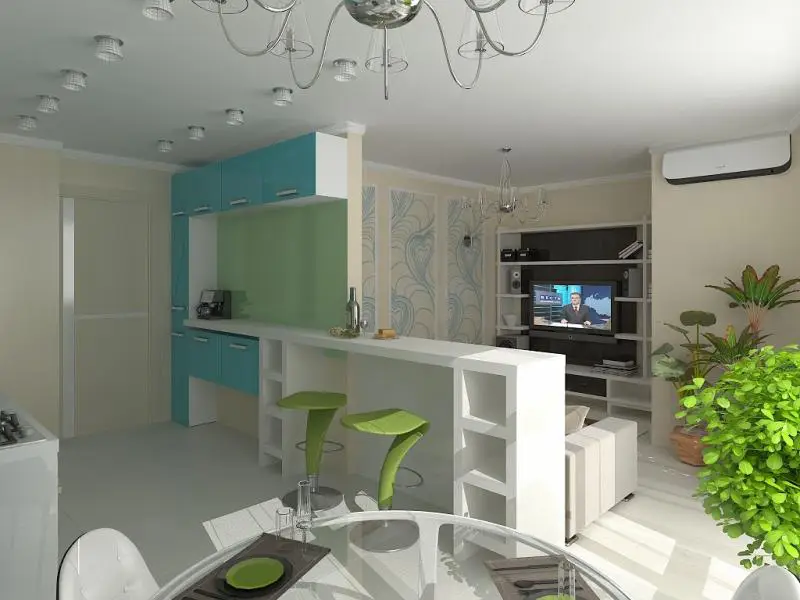 Eco-Style Design of a One-Room Apartment-Studio
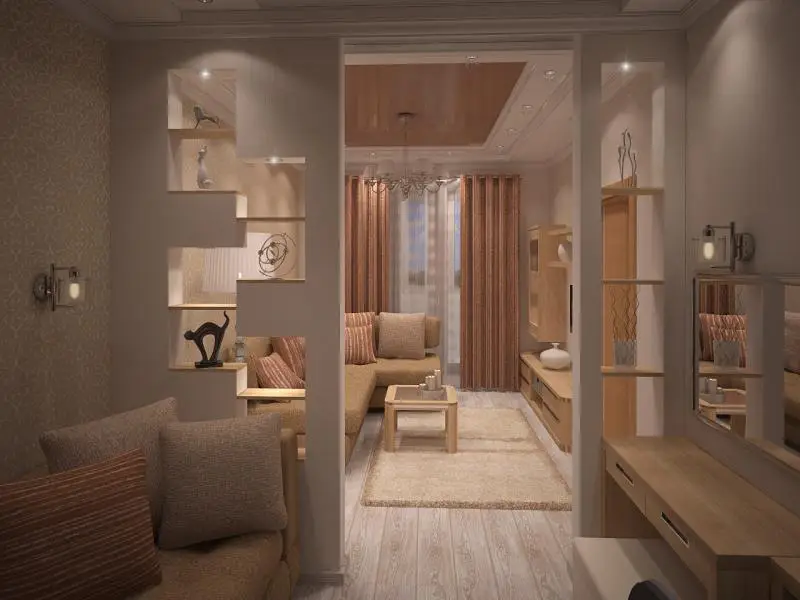 Design of a One-Room Apartment with a Niche. What Can Be Placed There?
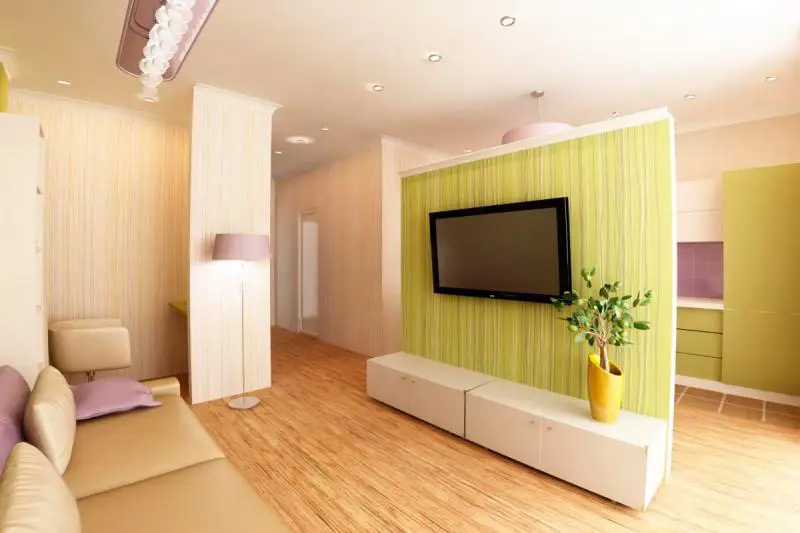 Design of a One-Room Apartment with a Child's Room
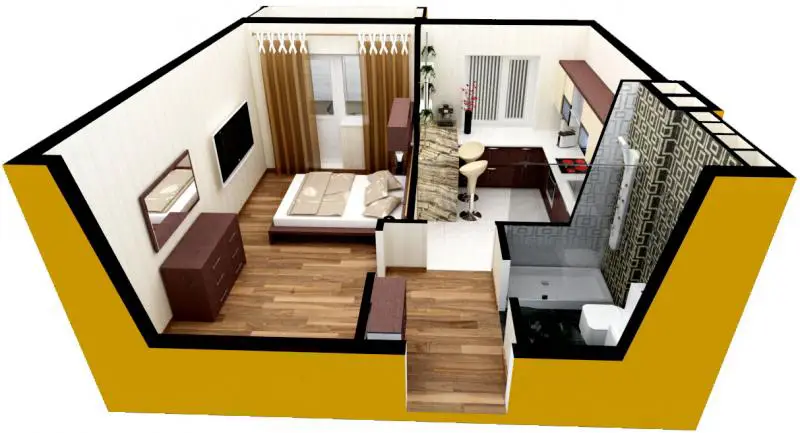 Design of a Small Studio Apartment for Newlyweds
 Design Project of a Three-Room Apartment with Bedroom on Terrace
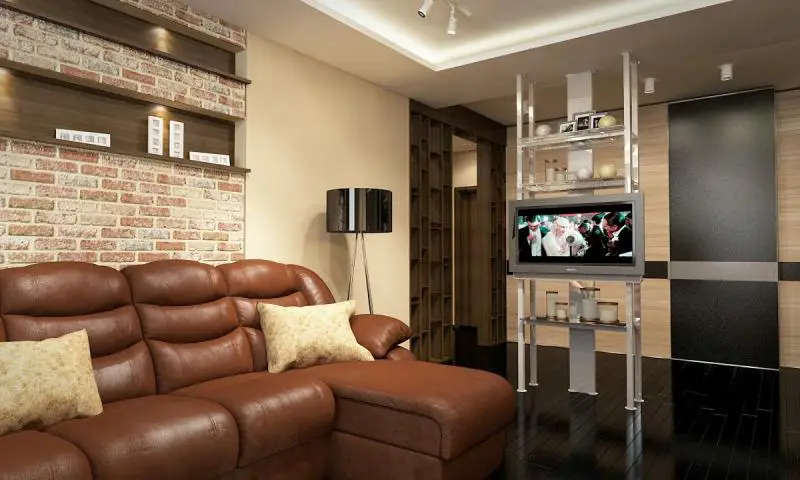 Design of a Three-Room Apartment P-44T: Converting a "Two-Room" into a "Three-Room" Apartment
 Design of a Three-Room Khrushchyovka: Relocation Plans vs Reality
 Design of Three-Room Apartments. How to Properly Arrange the Interior?