Tai Bin House by Chu Ngoc An Architecture in Dong Huang, Vietnam
Project: Tai Bin House
Architects: Chu Ngoc An Architecture
Location: Dong Huang, Vietnam
Area: 6458 sq ft
Year: 2020
Photography: Hoan Le
Tai Bin House by Chu Ngoc An Architecture
Designed by Chu Ngoc An Architecture, the Tai Bin House is a modern rural residence in Dong Huang, Vietnam. It offers just under 6500 square feet of spacious living areas connected to a green outdoor courtyard.
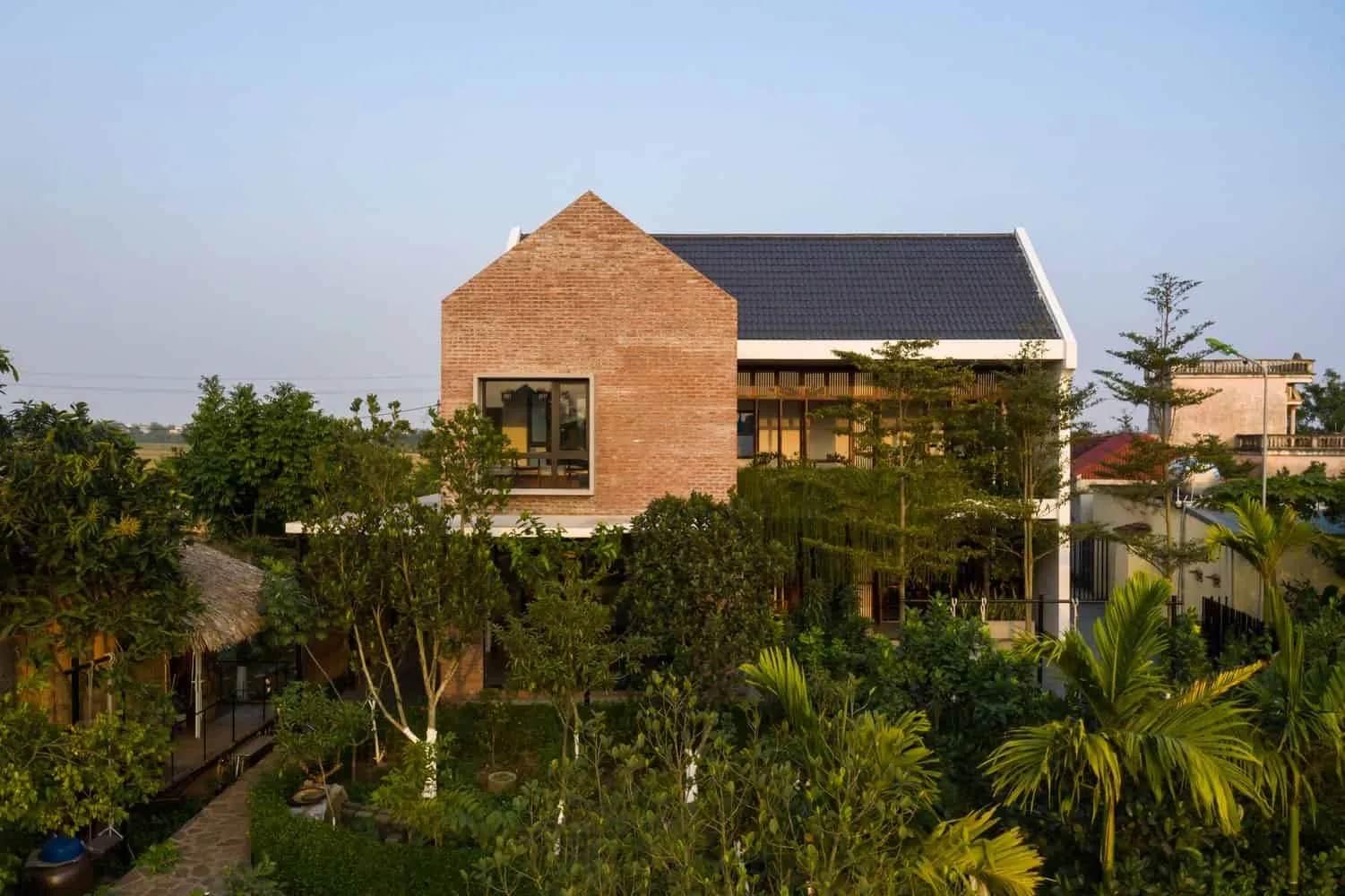
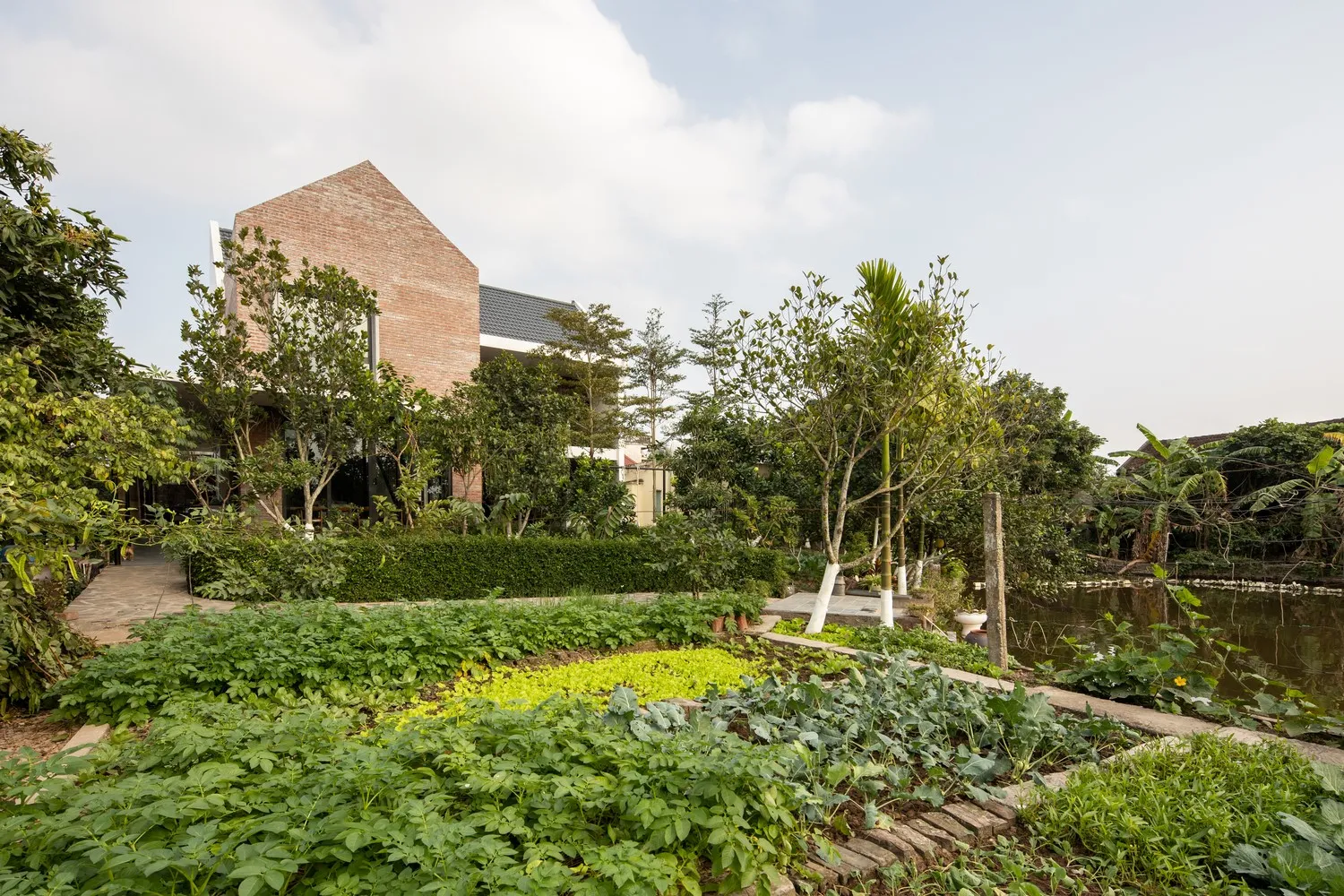
The project is located in an agricultural area adjacent to the town of Tai Bin. Most residents are engaged in farming and rice cultivation. The current village architecture mainly consists of single-family and two-story houses, with very few traditional one-story rural homes with gabled roofs.
The house is designed for grandparents to live in, while their grandchildren visit every weekend. The current land is used by the grandparents under a "subsistence farming" model, including vegetable gardens, fruit orchards, fish ponds, chicken coops, and a combination of field rice cultivation. Thus, the project was developed with the main criterion being alignment with the lifestyle and daily habits of the owners. Other criteria include natural ventilation, good lighting, low energy consumption, and using rainwater for daily needs. The house's location with three open sides provides a wide view of the garden and pond, as well as a good southern breeze. The main facade faces west.
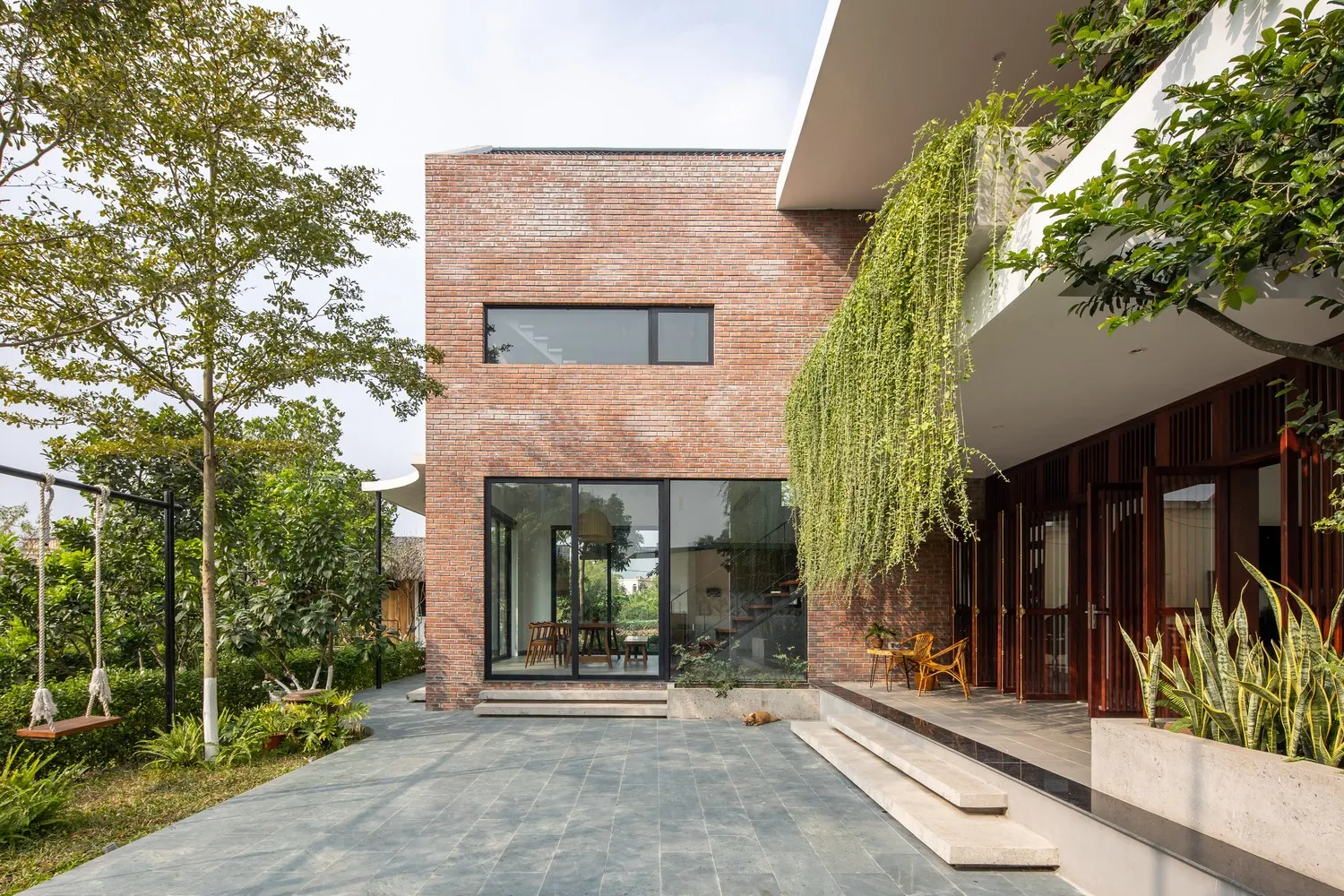
The design style aims to create familiarity and comfort for elderly residents (who prefer not to change). The architectural team chose the form and language of the house in a direction toward "traditional northern home," but with a modern accent. The main white block is placed in the same location as the old house (which was gradually deteriorating). The red brick block is unique with vertical rotation. Using the block's rotation on the main facade allows for wind flow, increases views of the garden and pond. It also creates a contrast in form and materials between the two blocks.
Most villagers grow, harvest, and dry rice, so a large multi-functional courtyard is an indispensable feature of rural homes. The rice-drying area transforms into a children's play area or gathering and pancake-making spot during Tet holidays. This space connects people with nature, families with villages, and local communities.
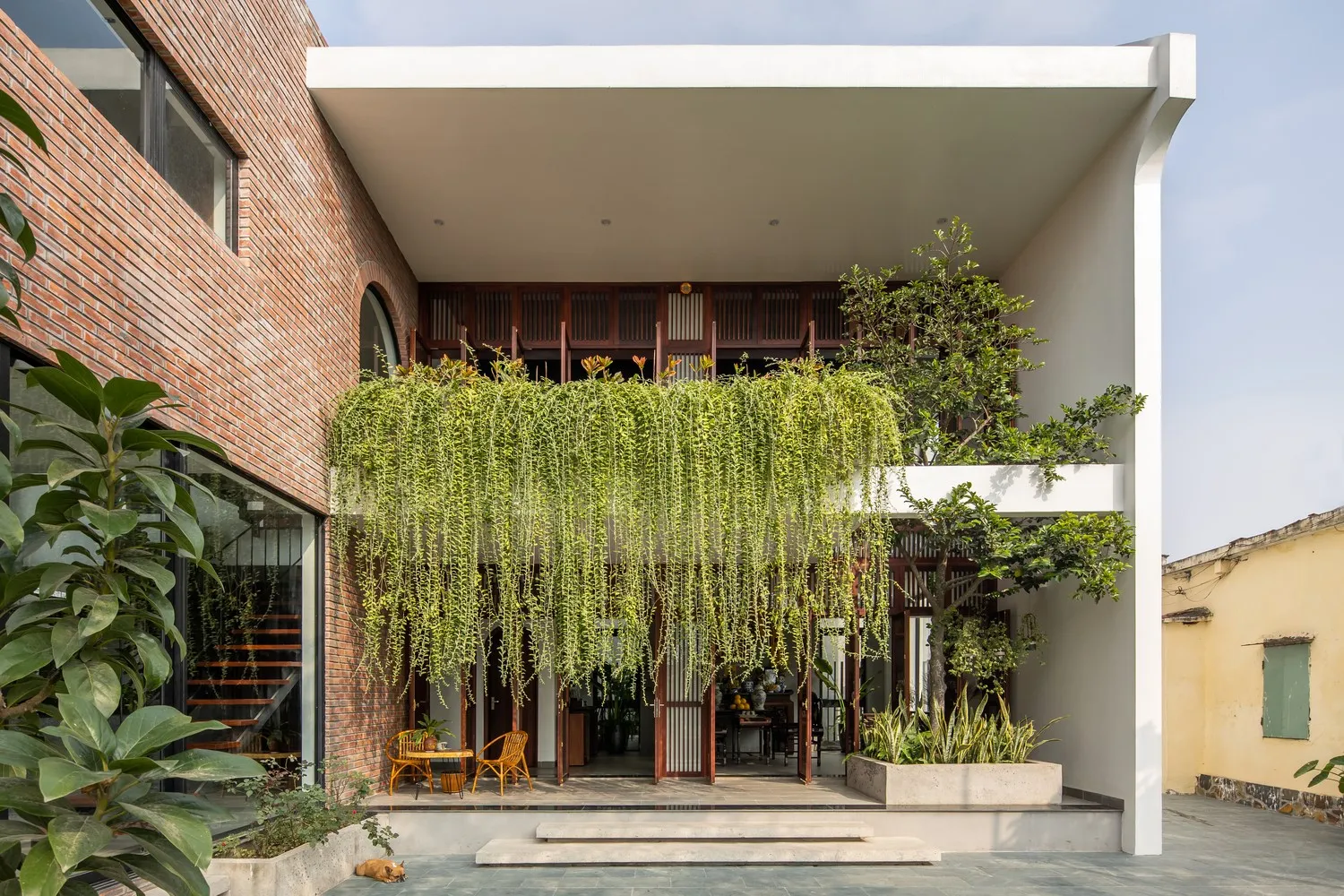
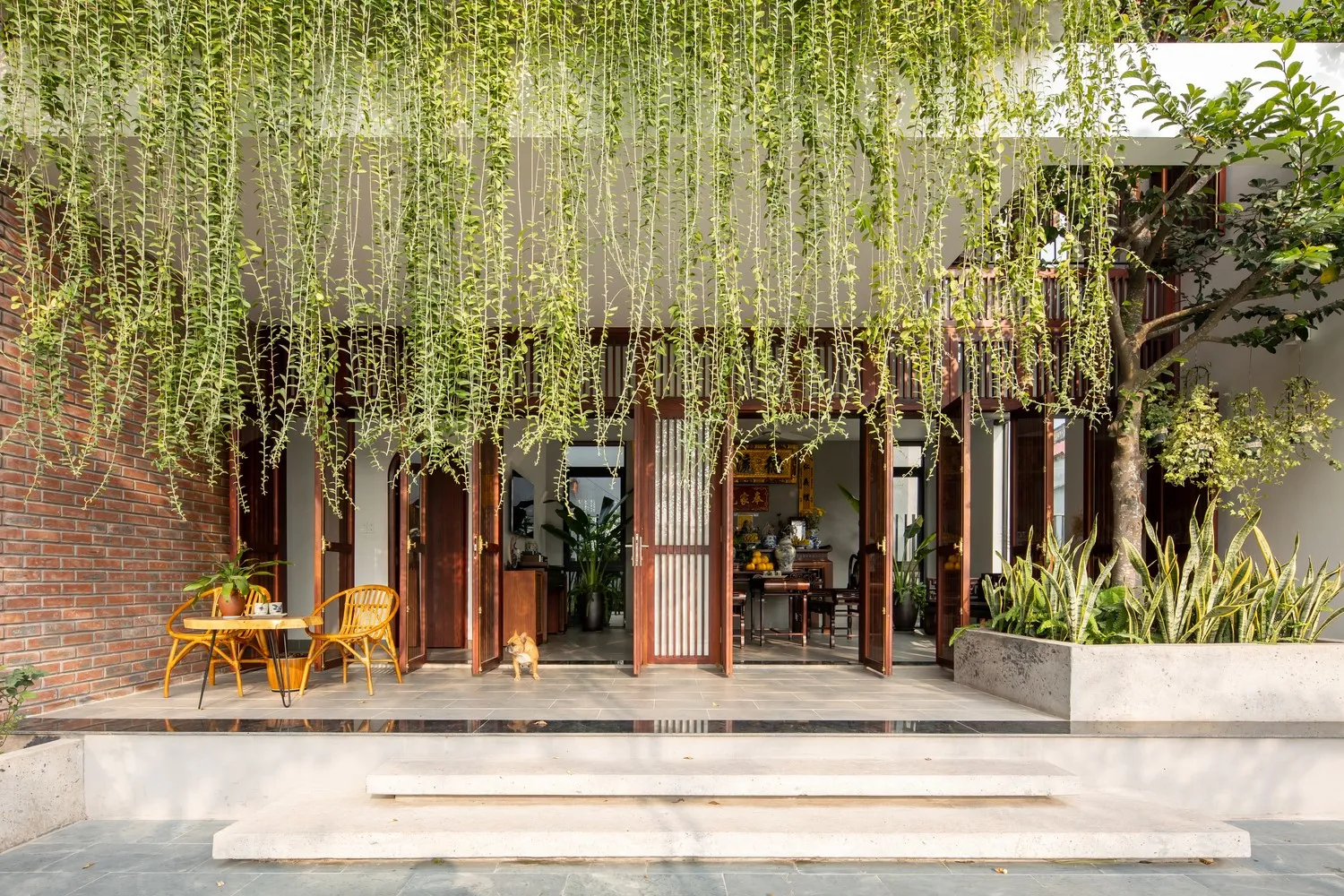
Since the front of the house faces westward, the architects placed a veranda as a transitional space between indoor and outdoor areas of the house, and also as a cooling spot in the living room using tree shade. The use of "wooden louvers" to block sunlight and radiation helps regulate temperature better while maintaining ventilation, views, and a soft architectural space that promotes close contact with nature. To connect the house to the large terrace courtyard and yard while maintaining a wide view, the architects used a system of rotating wooden doors imitating traditional "pillar doors" with maximum opening width for all doors.
The door with vertical wooden rails helps regulate lighting and reduce direct solar radiation in the living room. The door system opens and closes easily, changing its state to create a stronger connection with the terrace while forming a strong material mass on the main facade. The red brick block is exposed to the strongest solar impact. Therefore, it is reinforced with heat protection using double-brick construction (110 mm wall thickness) to cover the walls. Between the two brick layers is a 50 mm air gap that helps airflow and slows heat transfer. The outer wall surface is covered with an additional layer of solid red brick to prevent mold, protect against heat, and increase wall strength.
Aligned with the traditional layout of northern Vietnamese homes (three-room houses with two wings), the main axis runs from the courtyard through the veranda into the living room, and then to a prayer room. The auxiliary functional axis, located nearby and serving as a "wing," consists of the dining room, kitchen, main bedroom, and bathroom. To ensure easy access to the garden without disturbing other spaces, a covered path for grandparents is placed on the side of the house. Pre-set tables are also installed along this route. After harvesting vegetables in the garden, grandparents will prepare them here before bringing them into the house.
To enhance family connection and interaction, the kitchen is placed at the center of the secondary functional axis near a group of trees. Including the kitchen in the atrium also creates vertical connectivity with two bedrooms on the second floor.
The second floor is designed for sons to play on weekends and a family table tennis room. We used the space under the gabled roof to create a small attic suitable for bedrooms or children's play areas. This small bedroom is located next to the parents' bedroom, so parents can easily monitor and interact with their children.
The roof has a steep slope, allowing easy collection of rainwater for reuse. Rainwater is collected in a reservoir and part is used for bathing and laundry, while the rest serves irrigation of the garden.
The house embodies the spirit of modern rural architecture while preserving traditional spaces and culture. We hope this project will contribute to creating a sense of identity for modern rural architecture.
– Chu Ngoc An Architecture