Installation of Suspended Ceilings. Installation Technology
A suspended ceiling can be matte, glossy, satin, seamless, styled, fabric, feature any pattern or even be semi-transparent!
When choosing companies that provide services for installing suspended ceilings, pay attention to those who work with materials from the following manufacturers:
- TM C-Light (Russia);
- TM De Miel (France);
- TM L'ete (France);
- TM Azalee (Germany);
- TM Clipso (Switzerland, fabric ceilings);
- TM MonLange (Belgium, seamless ceilings).
Also consider customer reviews of the company.
Most consumers prefer seamless suspended ceilings from French and Belgian production. The warranty period for such suspended ceilings is up to 15 years.
Installation of Suspended Ceilings. Details of the Preparation Stage
After all measurements have been completed and the installation plan has been drawn up, the room parameters must not change.
The client must provide the crew with free access to the walls of the room, i.e., clear the room of furniture or, if the room area allows, move furniture to the center of the room.
Before beginning work, the client must indicate the locations of intended lighting fixture installations and mark these points on the ceiling installation plan. The client must pre-install electrical wiring for lighting fixtures.
The installation plan of the suspended ceiling must also indicate the lines of concealed wiring at the attachment points of the batten to the room walls.
The air temperature in the room must not exceed 60 degrees Celsius. The room must also be well-heated.
The walls of the room at the attachment points for the suspended ceiling system must be straight, solid, and undamaged.
The installation process of the suspended ceiling requires leveling the ceiling plane according to a level.
The structure for mounting complex ceiling types (e.g., multi-level ceilings) must be manufactured by the client according to drawings previously coordinated with the contractor.
The power of light fixtures built into the suspended ceiling must not exceed 40 W (35 W for halogen lamps).
Installation Technology of Suspended Ceilings: Work Stages
Room Preparation. The room is cleared of construction debris and furniture.
Installation of the Load-Bearing Frame. Aluminum profile (in some cases, plastic profile) is mounted 2.5 cm below the ceiling slab perimeter around the entire working area. Fastening spacing is 20-25 cm.
Preparatory Work. The fabric, previously rolled for transportation, is heated with warm air, unrolled, and secured to the elements of the installed frame around the perimeter at several points.
Ceiling Tensioning. Using a heat gun, the master heats the room to 60 degrees Celsius over an hour and installs the suspended ceiling. Installation time for a ceiling area of 18 m² is 2-3 hours.
Drilling holes for wiring output in the suspended ceiling and installing light fixtures.
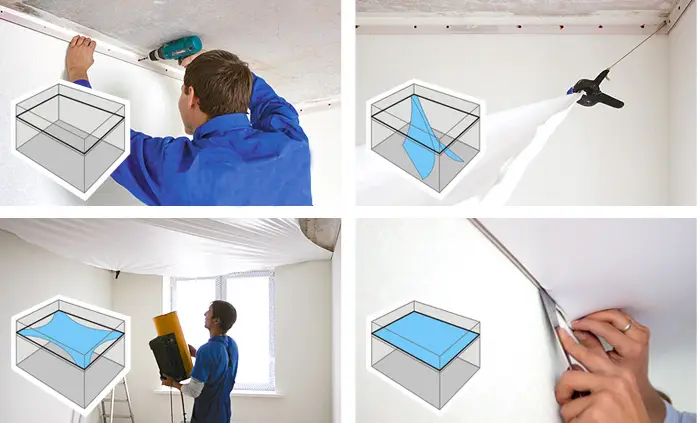
Photo 1 — Sequence of Work for Installing Suspended Ceilings
Methods of Installing Suspended Ceilings
Today, the most common installation systems are:
Hook SystemThis principle of installation is suitable only for PVC film.
The advantage of this system is the simplicity of removing the suspended ceiling if necessary, and ease of reinstallation of the fabric. With this mounting system, the fabric must be manufactured precisely to the shape of the room.
The hook system requires precise cutting of the suspended fabric, welding of the film during installation, and welding of the soft PVC profile around the perimeter of the fabric in a production workshop.
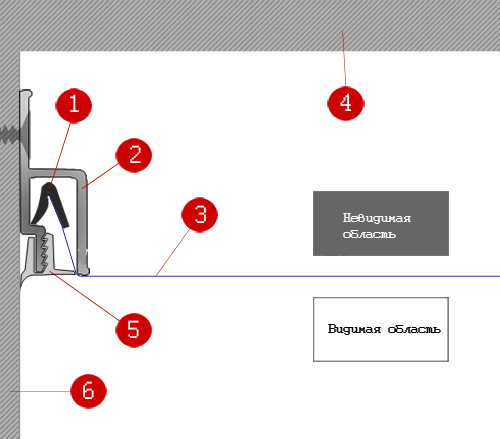
Diagram 1 — Construction of the Hook Mounting System for Suspended Ceilings in Cross-Section: 1 − hook (holds the fabric tension); 2 − batten (profile); 3 − fabric (visible part of ceiling); 4 − base ceiling; 5 − plug; 6 − wall
Clinch SystemThe fabric is manufactured to fully cover the room. After installation, excess material is removed. The suspended ceiling installed in this way cannot be dismantled without damaging the fabric.
This method of installation is applicable to both film and fabric ceilings.
The clinch system is a reliable installation of suspended ceilings. The installation technology in this method allows for minor measurement inaccuracies in the ceiling area. This method also helps save slightly on material costs.
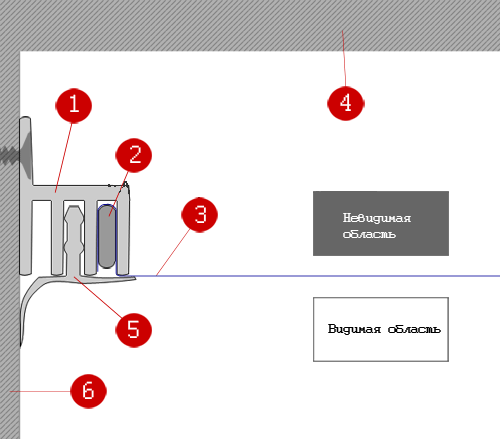
Diagram 2 — Clinch System in Cross-Section: 1 − batten; 2 − wedge tightly clamps the material in the batten grooves; 3 − fabric of suspended ceiling (visible part); 4 − base ceiling; 5 − ceiling trim is inserted into the central groove of the batten, thus isolating the internal space; 6 − wall to which the ceiling is mounted
Staple SystemThis system results in a height loss of only 1.5 cm. The mounting system is suitable with several types of trim:
This mounting system is intended for installing seamless ceilings (e.g., DESCOR ceilings).
Among the listed mounting systems, this is the cheapest. When installing a ceiling on a staple system, part of the ceiling can be removed in case of flooding for water drainage.
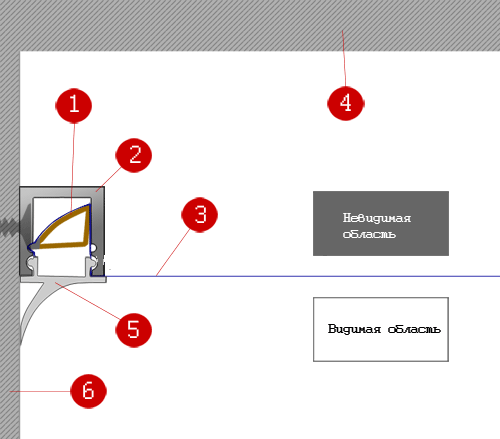
Diagram 3 — Mounting Construction of a Suspended Ceiling in Cross-Section (Staple System): 1 − staple (clamps the fabric in the profile, holds the tension); 2 − batten (profile) is mounted to the wall with screws, holds the suspended ceiling structure; 3 − fabric of suspended ceiling (visible plane); 4 − base ceiling (covered by the suspended one); 5 − specialized trim (plug) snaps into the profile groove; 6 − wall
System for Mounting Fabric CeilingsFor fabric ceilings (e.g., TM CLIPSO fabric), a visible plastic batten is used.
Plastic battens are mounted on the walls around the working perimeter, which are then sanded and cleaned at the cuts. The fabric allowances for mounting are typically 5-10 cm on the edges. From the center of the walls, using a special spatula, the fabric is secured in the batten, moving towards the room corners. The fabric is gradually pulled tight. The work is completed by fixing the fabric at the room corners.
This mounting system for suspended ceilings does not require heating the room or using a heat gun.
Brief Instruction for Installing Fabric Suspended Ceilings
Items Needed:- fabric;
- batten;
- spatula (semi-circular, straight);
- construction knife;
- mineral wool board;
- adhesive;
- saw;
- measuring tape;
- bolts;
- expansion anchors;
- level;
- drill;
- ladder (a good and stable choice is the Krause ladder);
- construction hair dryer.
Measure the room.
Cut the profile at a 45° angle with a saw.
Cut the sound-insulating board. Secure the thermal insulation board to expansion anchors.
Mark the boundaries of the suspended ceiling on the room walls using a level below the sound-insulation layer. Typically, the suspended ceiling takes up to 10 cm in height.
Fix the profiles: apply adhesive to the batten, securing it to the wall along the drawn level line.
Drill holes in the profile every 10 cm. From the room corners and at the junction of the profiles, holes must be no more than 3 cm from the corner. Insert bolts into the holes.
Secure the fabric from the center of the room with a spatula every 50 cm, ensuring that the edges of the fabric remain outside the batten.
Pull the fabric edges from the center toward the corners, distributing it evenly. Fix the fabric in the corners last.
The sequence of installing a fabric suspended ceiling does not require heating the room or using a heat gun. However, if wrinkles appear on the fabric, they can be smoothed out with a construction hair dryer.
Holding the hair dryer 15 cm from the fabric, distribute hot air in circular motions.
Using a straight spatula against the edge of the fabric, cut off the excess fabric.
If installing a suspended ceiling with attachment to gypsum board, reinforce the wall structure beforehand by placing wooden inserts in the wall for stability.
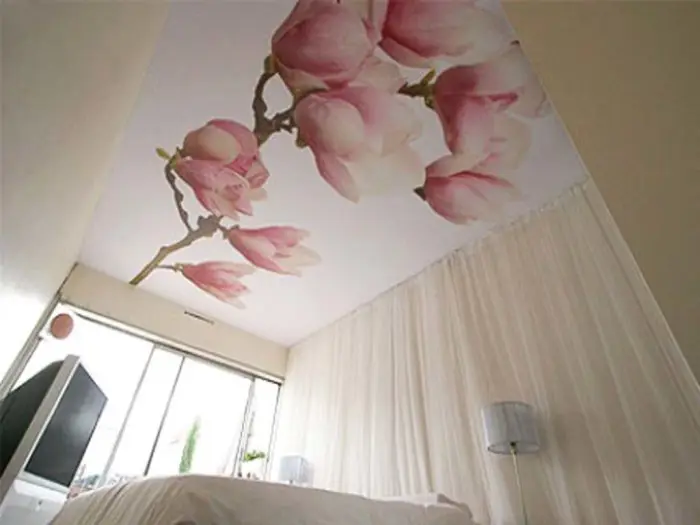
Photo 2 — "Gentle" Solution for a Suspended Ceiling in a Bedroom
Rules for installing suspended ceilings in different types of rooms differ mainly in recommendations regarding the material choice. There are no special differences in the procedural aspect.
The only clarification required is for preparing suspended ceiling installations in a bathroom: the bathroom walls must be tiled, not reaching the ceiling by 10-15 cm. The batten is mounted above the top row of tiles, and then the fabric is stretched over it.
Another option is tiling the entire wall surface in the bathroom and mounting the batten over the tile row. However, this method is inefficient and costly: the installation contract for a suspended ceiling will necessarily include clauses about possible tile damage, and the organization performing the installation work will not be held responsible for such damage.
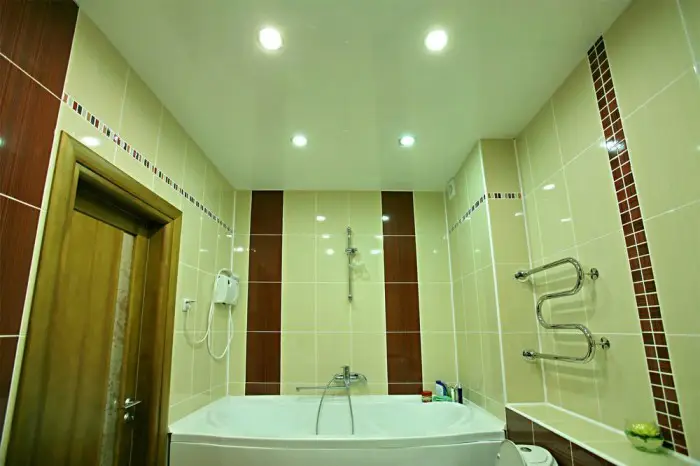
Photo 3 — Example of Using a Suspended Ceiling in a Bathroom
Installation of Suspended Ceilings. Price Considerations
The cost of work and materials will depend mostly on two factors: the room area and the type of material. The cheapest material is a matte suspended ceiling, which costs 330 rub./m² (Moscow) or 96 UAH/m² (Kiev). If it's a fabric ceiling, the cost can reach up to 2,250 rub./m².
However, materials are rarely sold separately.
The cost of material + installation is as follows:Kiev: depending on the material and contractor, the price ranges from 150 to 400 UAH per m².
Moscow: from 250 rub. to 3,000 rub. and higher.