Replacing Electrical Wiring in an Apartment
Partial Replacement of Electrical Wiring
Partial replacement of electrical wiring is performed with the power source disconnected (which is self-evident, during any intervention in electrical wiring). Wiring in a room can be repaired in two ways:
- If the wire is laid loosely enough to pull it, you can simply strip off the insulation, twist and solder the damaged section, then thoroughly protect it with tape.
- If a large section is damaged or there is no way to connect the wire, remove the defective piece and insert a new one made of the same material and cross-section. Remember general recommendations: connections should preferably be done by soldering or using terminals, and they should be located in junction boxes so that access is possible. That means replacing the section from one connection to another: from a distribution box, for example, to a socket or similar.
Manipulations with replacing phone wiring are similar to those described above.
A common case is when wires in a chandelier need to be replaced. If the wire in the chandelier's stem is damaged, you must disconnect its wires from the wiring while the electricity is off. If necessary, mark the corresponding wires so that they can be correctly reinstalled later.
Then the chandelier is disassembled, the damaged wire is detached from the lamp holder – loosen the screw – and pulled out. A new one is fed in its place and connected to the holder, the wires are joined, and the chandelier is installed back in its position.
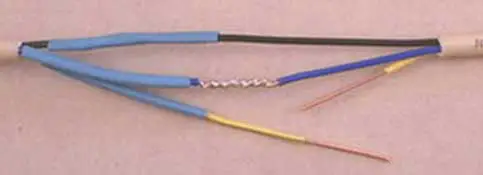
Photo 3 — Soldering Damaged Wires
How to Replace Wiring in an Apartment
Full replacement of old wiring by yourself in a wooden house, panel house, or Khrushchyovka may differ in methods of laying the new wire. The new wiring can be laid using the same method along the path of the old one or with a different approach.
Replacing wiring on a dacha is, as a rule, replacing open wiring. In older apartments with brick walls or in panel houses, replacement requires hidden wiring under plaster. As mentioned earlier, in such cases, the route is located and the plaster is cut out at points where the wiring passes.
The apartment is de-energized, and work on replacing starts with the furthest room so that electricity can still be used in the rest of the apartment (wires entering the room are cut at connection points and insulated). Work on replacing cable in the hallway leading from the distribution panel to the apartment meter should be performed by an electrician from the relevant service.
How to Calculate Wiring
Old wiring should not be replaced with the same wires as before.
It's better to replace aluminum wiring with copper.
The cross-section should be chosen larger, as loads on the network have increased many times, especially in kitchens.
Different cross-sections are needed for different consumer groups. The amount of material required for replacing wiring in a one-bedroom or two-bedroom apartment will vary. Based on this, it's necessary to know how to calculate wiring in a house or apartment.
- To do this, you need to create a schematic of the electrical wiring with clearly defined consumer groups. These can include socket lines, lighting, powerful household appliances, bathroom, utility rooms, garage, or other structures.
- Creating a plan schematic with sockets, switches, light fixtures, and distribution boxes placed on it will not only help plan the quantity needed but also determine the required length of wires.
- To choose the necessary wire cross-section, you need to determine the method of laying and calculate the power of all light bulbs and appliances connected to each group. The total power of devices and lights that can be turned on simultaneously determines the cross-section of the main cable. Similarly, circuit breakers are selected based on power for each group and a general circuit breaker at the input.
- The minimum cross-section of wire leading to lighting elements is 1.5 mm, and for sockets it's 2.5 mm. The cross-section is always chosen larger than the calculated one – with a margin for potential increase in load. The calculated cross-section can be chosen from the table below.
- The cross-section for concealed wiring and three-phase networks should be 1.5–2 times larger than that for open wiring and single-phase networks.
- The wire type is selected depending on the metal of the core (copper or aluminum) and the insulation, which can be rated for different voltages and various environments. The most fire-resistant wires and cables are those that do not support combustion, do not spread smoke, have double insulation, and contain self-extinguishing fillers.
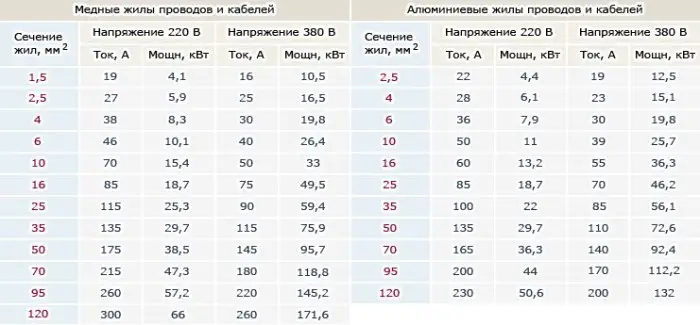
Table 1 — Calculating Wire Cross-Section by Power and Other Parameters
Cost – Replacing Wiring in an Apartment
Costs for full replacement of wiring in an apartment are considerable – this work will cost several thousand hryvnia or dozens of thousands of rubles. In Moscow, the average cost for such work, including materials, in a one-bedroom apartment is about 700 rubles/sqm, and in Kiev it's from 4000 hryvnia for the entire project.
The specific cost of a project is determined on-site, as all firms separately indicate an estimated price for each type of work, such as wall grooving, installing switches and sockets, laying power cables, installing a distribution board, etc.