How to Visually Increase Ceiling Height
Share on Twitter
Post to Blog
Many apartment dwellers, when starting a renovation, often wonder how to visually increase ceiling height. This desire is especially common among those living in apartments with low ceilings.
Depending on the layout and construction year, ceiling height can vary from 2.5 to 3.2 meters (according to GOST and SNIP standards, the ceiling height in residential buildings should be no less than 2.5 meters).
The minimum ceiling height at which you don't feel like the ceiling is pressing down on your head is 2.4–2.5 meters. This is typically the ceiling height in Khrushchyovka, Brezhnev-era buildings, and older residential buildings. In modern new constructions, the standard ceiling height ranges from 2.6 to 2.8 meters.
For example, in the series of standard panel buildings P-44T, construction began in 1997, ceiling heights reach 2.7 meters. Or in residential buildings of the KOPE series with 2.64-meter ceilings. This is already quite comfortable and can be considered optimal.
If you're lucky enough to have a flat from the old era, such as a 'Stalinist' apartment, or if you simply had enough money for luxury housing, the ceiling height can reach up to 3.2 or even 3.5 meters (this is more common in Stalinist buildings).
It's clear that for the latter, visual ceiling height effects are not very important. However, if you have a typical apartment with low ceilings, this article will definitely come in handy. Although, if you love spaciousness and four walls always press down on you, a standard height of 2.8 meters might still feel small.
Let's now explore methods that can help your apartment overcome the limitations of ceiling height.
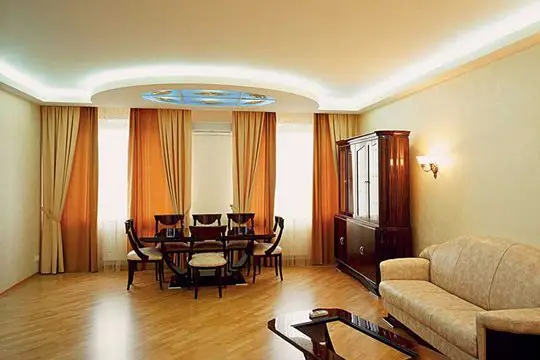
Photo 1 — Increasing Height Using Light
The first method is the simplest. Remember how your acquaintance tried to look slimmer and taller by wearing a dress with vertical stripes? The same principle applies here – vertical stripes on wallpaper will make your room seem slightly taller. However, don't go overboard with bright colors, or you'll achieve the exact opposite effect. If you want something vibrant, try incorporating it as an accent or a small detail in the right places.
By the way, pasting wallpaper or painting walls directly up to the ceiling can also help solve this problem. Also, either avoid using baseboards altogether or use thinner ones and paint them to match the walls. Wide moldings will steal a few precious centimeters from your ceiling.
Regarding color schemes, it's better to choose cool and light tones. Warm colors have the ability to shrink space and make it cozier, while cool colors expand the space. As one of the options, you can paint the ceiling the same color as the walls (or choose a shade slightly lighter).
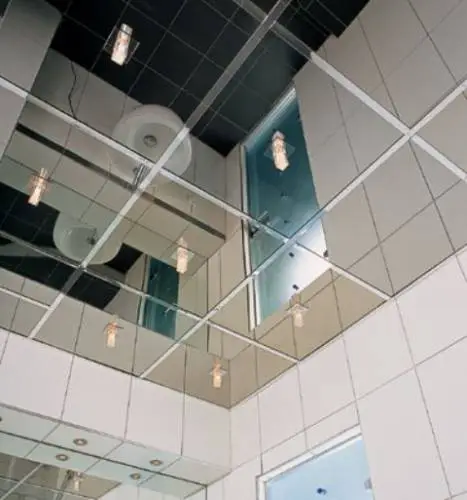
Photo 2 — Mirrored Ceiling
A variant for adventurous and bold souls – a mirrored ceiling. Or at least mirror inserts on it, or a mirrored baseboard. This technique adds volume to the room and won't overly glare in the eyes since they are located on the ceiling.
Another clever trick – low furniture. Try to choose furniture of minimal height, so the ceiling will appear higher.
Aside from vertical stripes on wallpaper, another way to visually stretch the room upward is with narrow tall shelves, vertical paintings, tall potted flowers, and other elements.
Light long curtains to the floor, decorative beams on the ceiling, tall doors (almost to the ceiling) with long vertical handles... all of these will also add height to the room. Returning to the wallpaper theme, note that not only striped patterns but also perspective-style prints can help.
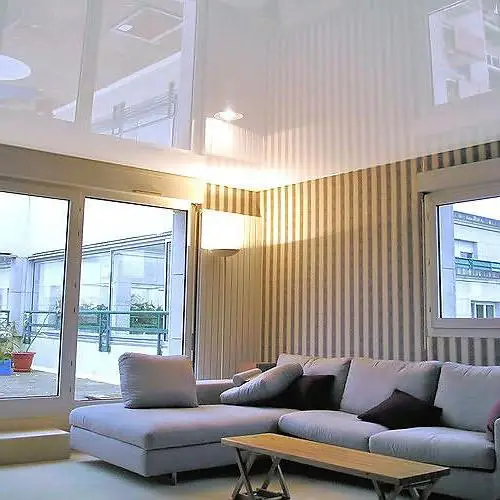
Photo 3 — Increasing Height Using Wallpaper Patterns
You can also shift the focus to the floor. Use unusual materials for flooring and make it glossy. By the way, this technique also works to visually raise the ceiling of a mansard.
Add height to the walls by pushing them slightly onto the ceiling. Either paint the ceiling at the wall edge in the same color, or paste wallpaper starting from the ceiling. However, the ceiling strip you give to the wallpaper should not exceed 30 cm. This depends on the size of the room. The smaller it is, the narrower the occupied strip will be. However, designers don't recommend using this technique in very small rooms.
Regardless of everything, suspended two-level or stretched ceilings can also help add height. On one hand, they will steal a few centimeters from the room's height. But with properly chosen design, attention will be diverted from the ceiling height. By slightly lowering the ceiling around the perimeter and adding gloss to the main part, you will achieve the desired effect.
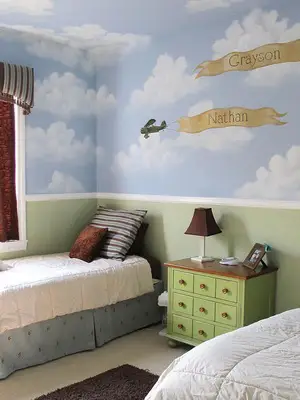
Photo 4 — Pushing Walls onto the Ceiling
Another way to create an illusion of height is decorative ceiling and wall painting using a cleverly named technique called "deception"NaN