Types of External Rendering
Rendering for External Work and Other Types of Cladding
A little about the general. At least six types of materials are distinguished, designed for facade finishing:
- cladding brick (due to high-temperature firing, a durable material for centuries is obtained with the possibility of choosing color);
- natural stone (expensive for you and heavy for the house structure, yet the service life and appearance of such finishing justify any cost);
- ceramic tiles (for external finishing, ceramic granite or clinker is often used);
- panel finishing (vinyl siding, polypropylene panels);
- fibro-cement boards (non-flammable material, not subject to mold formation and chemical influence, frost-resistant);
- rendering.
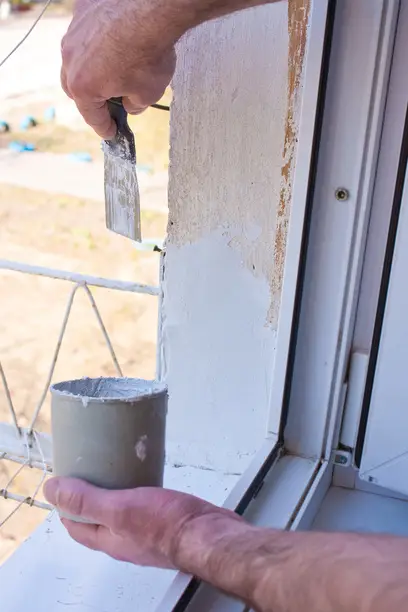
Photo 1 — External Rendering of Corners — Time-Consuming but Affordable Way to Finish
External Wall Rendering
Instead of standard facade rendering, most repair teams offer organizing an insulating facade system: insulation (made of mineral wool or another insulator) is fixed to the house walls with adhesive, then a reinforcing mesh, and finally the finishing is done with rendering. Additionally, there is also so-called "warm" rendering: a breathable material with improved thermal protection.
Advantages of rendering:
- protection from moisture;
- breathability;
- depending on the mixture composition, there is an opportunity to improve sound and thermal insulation (some types of rendering protect the house structure from radiation penetration);
- ability to create textured surfaces in any color or shade;
- easy replacement of facade finishing in the future;
- relatively low cost of finishing works.
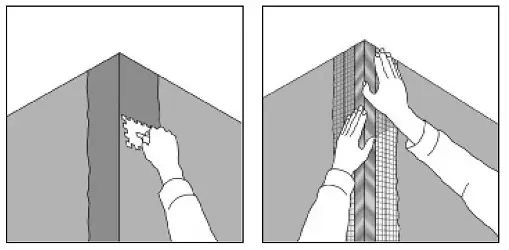
Photo 2 — External Corner Rendering Done by Reinforcement
Types of Rendering
Depending on the base, the following types of facade rendering are distinguished:
- polymer (acrylic);
- mineral (lime-based);
- silicate;
- silicone (liquid potassium glass and silicon-organic resin).
Mineral renderings are considered the strongest and most affordable among thin-layer renderings. Mineral renderings are materials based on cement binding agents. These are dry cement mixes with various additives to reduce water absorption. The color choice for such renderings is often limited. You can buy white mineral rendering and then paint it with silicate paint after application.
The advantage of acrylic renderings is that the mixture is ready for application: no need to prepare a solution, rendering is sold pre-made. This eliminates differences in consistency between different batches and color variations during self-coloring (acrylic mixes are colored rendering with a wide color palette).
Water-resistant dispersion of synthetic resins in the base guarantees breathability. Acrylic renderings are elastic, making them easy to work with on any surface. Polymer facade renderings are also resistant to mold formation on the facade surface.
Silicate renderings are materials based on liquid potassium glass. Silicate renderings are also sold pre-made, but in contrast to acrylics, this type of material has high breathability, which allows rendering such surfaces as walls made from cellular concrete.
Silicone renderings are the most expensive type of rendering for external finishing. The price is due to unlimited color selection, higher elasticity of the material, and high breathability.
Besides that, you can distinguish base rendering and finishing rendering, which creates a decorative coating. External decorative rendering can either complete facade finishing or be the only material used. Decorative rendering has all necessary properties to ensure thermal and sound insulation of the facade, and it differs from regular rendering either by granules included in its composition to create a textured surface or by color.
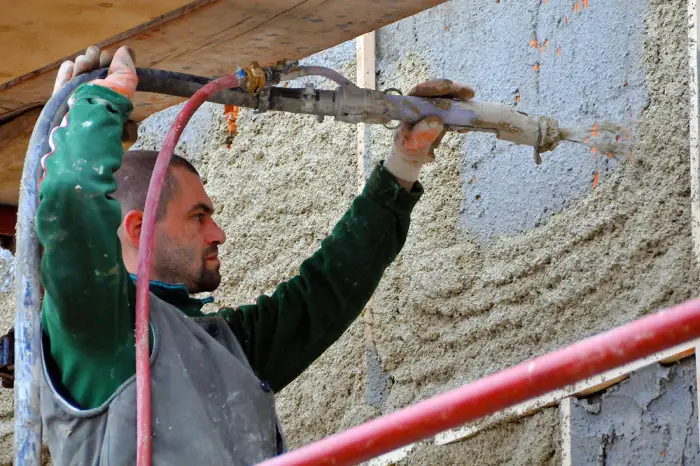
Photo 3 — Facade Rendering by Mechanized Method
Wall Rendering: Recommendations for Work on Different Types of Base
External Rendering: Cost of Work
If it's about rendering small areas, you can manage without professionals: facade rendering is possible with your own hands (instructions for working with specific materials are available on manufacturers' websites or in paper inserts included with most rendering products sold on the market).
When calling professionals, you will pay an average of $5.6/m² (when calculating the price, consider the thickness of the rendering layer; this is the price for a 10 mm thick layer).
Rendering for External Work: Material Price
- Knauf Unterputz — cement facade rendering — $6.4/30 kg;
- Bolars — cement-sand based rendering — $8.9/25 kg;
- Knauf Diamond — cement decorative rendering — $10.9/25 kg;
- Vetonit — ready-made decorative acrylic rendering — $60/25 kg;
- LAES Fine Fix — warm finishing for rendered (with cement solution), stone, concrete facades, OSB, CSP — $73.2/25 kg.
Facade Rendering: Cost of Work (Full Cycle)
- in Moscow — 220 rubles/m²;
- in Kiev — from 65 UAH/m².