New Technology for Using Glass Fiber
Glass-fiber wallpapers (photo of standard packaging at the top) are used for several reasons, but in modern construction, their reinforcing properties are frequently emphasized — glass-fiber coatings can strengthen walls several times over on their surface. This is especially relevant in new homes, where walls settle, causing internal finishes to suffer first.
New Technology for Using Glass Fiber
Glass-fiber wallpapers (photo of standard packaging at the top) are used for several reasons, but in modern construction, their reinforcing properties are frequently emphasized — glass-fiber coatings can strengthen walls several times over on their surface. This is especially relevant in new homes, where walls settle, causing internal finishes to suffer first.
Besides this, glass-fiber materials have high resistance to fire and high temperatures, making them ideal candidates for finishing spaces with strict fire safety requirements.
The complete list of advantages of glass-fiber wallpapers can be summarized as follows:
- Completely safe in terms of fire risk;
- Non-toxic, as they do not contain diluents, formaldehyde, chlorine, etc.;
- Sufficiently hygienic and do not collect dust; they can be cleaned and washed;
- Durable, flexible, and resistant to mechanical stress;
- Can be repainted multiple times;
- The structure of glass fiber offers extensive possibilities for texture selection and combination with patterns (over a dozen types of weaves).
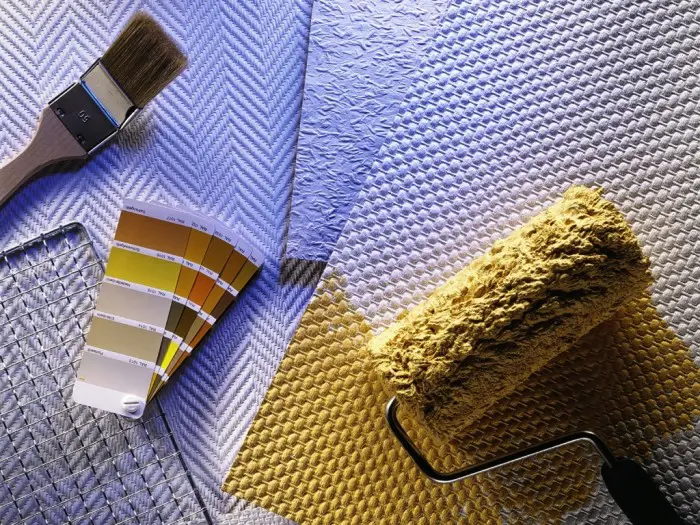
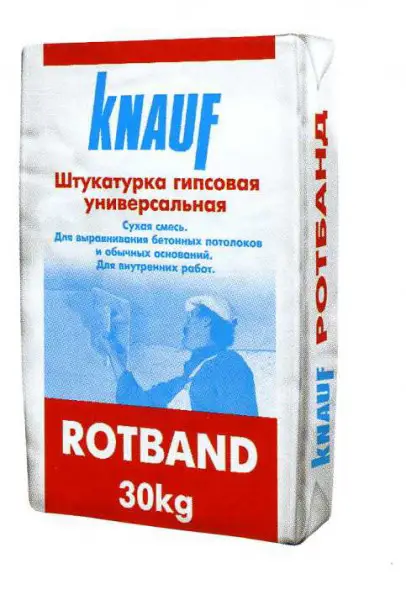
Photo 2 — Materials for applying glass-fiber wallpapers
Application of Glass-Fiber Wallpapers
It is recommended to perform wallpaper installation work wearing long-sleeved clothing and gloves. The quality of applying glass-fiber backing largely depends on proper surface preparation.
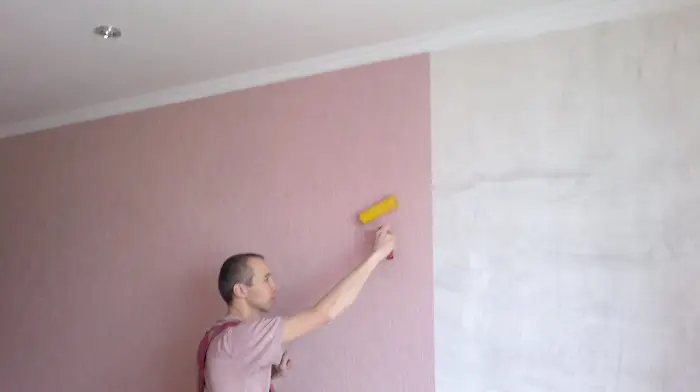
Photo 3 — Applying glass-fiber wallpapers
Therefore, the process of applying wallpapers before painting and the painting itself generally follows this sequence:
- Remove old wallpapers or any other wall covering.
- Fill large cracks, while small ones may be left untreated.
- After crack filling, it is advisable to sand the surface.
- If the surface is highly absorbent, apply a primer or use a sealing adhesive.
- Before applying adhesive to the wall, cut the wallpaper to size with a 5–10 cm allowance at the top and bottom (some experienced installers simply apply the sheet from the top and then trim the bottom); also, remember to align the pattern and texture of the wallpaper.
- When using PVA glue, prepare the surface for two to three sheets at once. In this case, adhesive consumption should not exceed 300 grams per square meter.
- Begin application from the top, using a roller or squeegee to smooth out all unevenness along the wallpaper.
- Priming of the wallpaper can begin only after the adhesive has dried, i.e., not earlier than 12 hours after installation. In most cases, latex-based paints diluted with 10% water are used for priming.
- Subsequent paint applications should use undiluted paints, which may be latex, acrylic, or acrylic-binding. Regardless of the number of coats, the paint tone must always remain consistent. Only then can an even finish be achieved.
- After completion, clean the room and air using a water filter to remove the finest glass-fiber particles.
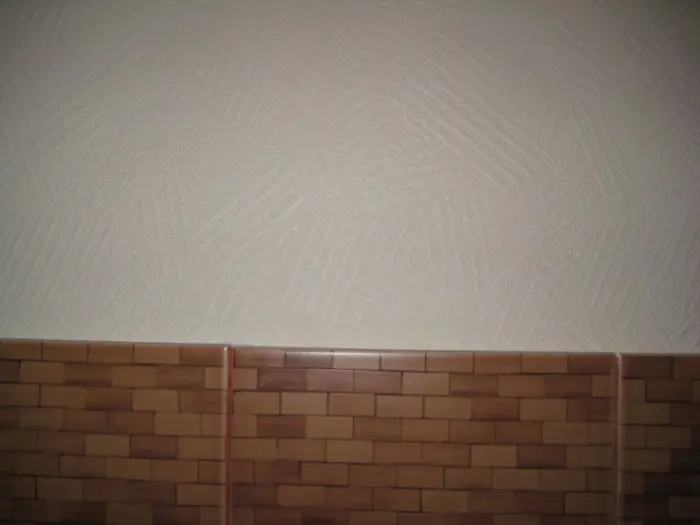
Photo 4 — Example of glass-fiber wallpapers
In addition to the traditional method of applying glass-fiber wallpapers, there are some technological innovations that significantly speed up the application process without compromising quality. For example, self-adhesive wallpapers are available; the benefits are especially evident when working in hard-to-reach areas.
From a decorative standpoint, the entire process can be accelerated by using wallpapers that have already been pre-primed (photo at the top). In this case, priming is no longer required, and you can proceed directly to final painting.
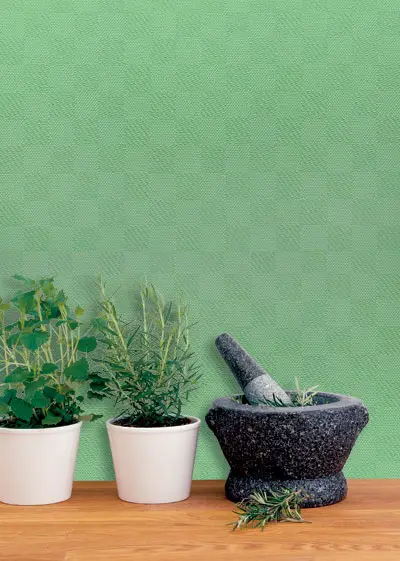
Photo 5 — Glass-fiber wallpapers for painting
Applying Glass-Fiber Wallpapers: Video Review of the VELTON Brand
The video below provides an overview of products from the VELTON brand, currently a market leader in glass-fiber wallpapers, with only positive customer feedback.
http://www.youtube.com/watch?feature=player_embedded&v=k1xNrTy2cjc
Glass-Fiber Wallpapers: Prices and Brands
The current market offers a sufficient selection of competitive materials: WELLTON, EVROLUXE, FINTEX, PINTEX, and others. However, both the relatively high cost of glass-fiber wallpapers and the associated consumables (in some cases, latex paints and moisture-resistant adhesives are used, not just PVA) remain the main factors limiting their widespread use in residential applications.
To get an idea of the availability and cost of glass-fiber wallpapers in Kyiv and Moscow, compare the minimum prices (typically for products manufactured in China):
- Moscow: installation — from 140 RUB/m², wallpapers — from 100 RUB/m²;
- Kyiv: installation — from 20 UAH/m², wallpapers — from 30 UAH/m².