The Main Household Item: How the Washing Machine Has Evolved Over 100 Years
Today, you just toss your laundry, add detergent, press the right buttons — and get on with your day. In the past, you had to manually operate and maintain the machine, and also protect your hair — it could easily get caught in the spin cycle! We explain how this common household appliance evolved over more than a hundred years.
1900s
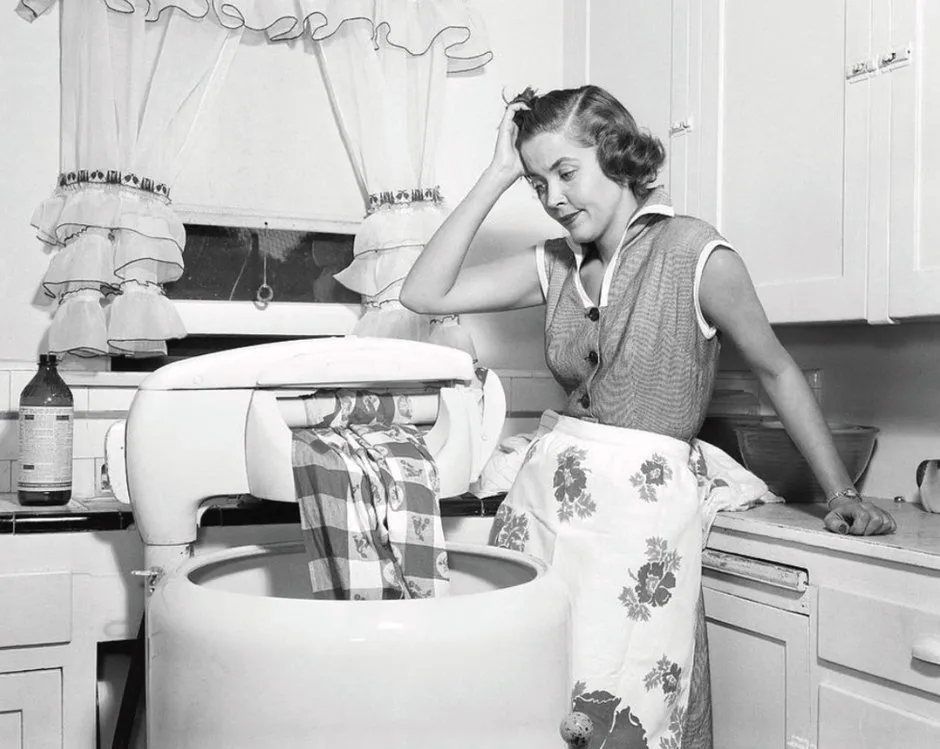
The first prototypes of modern washing machines appeared in America. Simple devices in the form of wooden tubs with cylindrical drums were filled with laundry and clothes, then soaked in soapy water and manually rotated. Excess water was wrung out using manual rollers — this also had to be done by hand.
To wash all the clothes in a house with such a machine, it took enormous effort and nerves, so at that time housewives often used public laundromats or hired laundry workers if they could afford it.
1910s
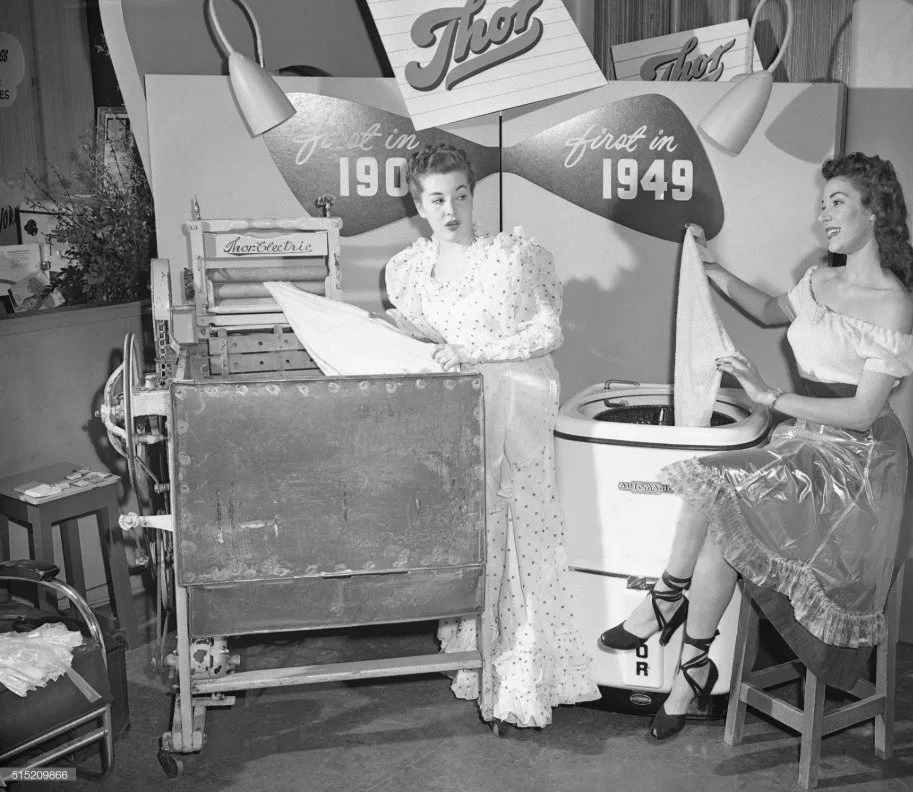
In 1908, an engineer from Chicago, Alva Fisher, invented a washing machine with an electric motor. Two years later, Hurley Machine Co. began mass production under the ambitious name Thor.
The wooden drum inside the machine rotated eight times in each direction, and no longer required manual turning — just pull the lever at the bottom of the washing machine like in a car.
Unfortunately, all mechanisms were exposed — imagine how much noise such a machine made. Plus, it was also unsafe: manual rollers often injured fingers, and once hair from a girl helping her mother with laundry got caught (fortunately, she only suffered a scar on her head).
Still, Fisher's invention became part of history as a new class of electrical household appliances because it made the laundry process easier for housewives, which previously required colossal effort and significant time investment.
1920s
By this time, the number of companies manufacturing washing machines in the U.S. had exceeded a thousand — new appliances were in demand. Within ten years of the release of Thor, the number of laundry workers and domestic servants in American homes significantly decreased, and according to sociologists, laundry returned from public laundromats to households.
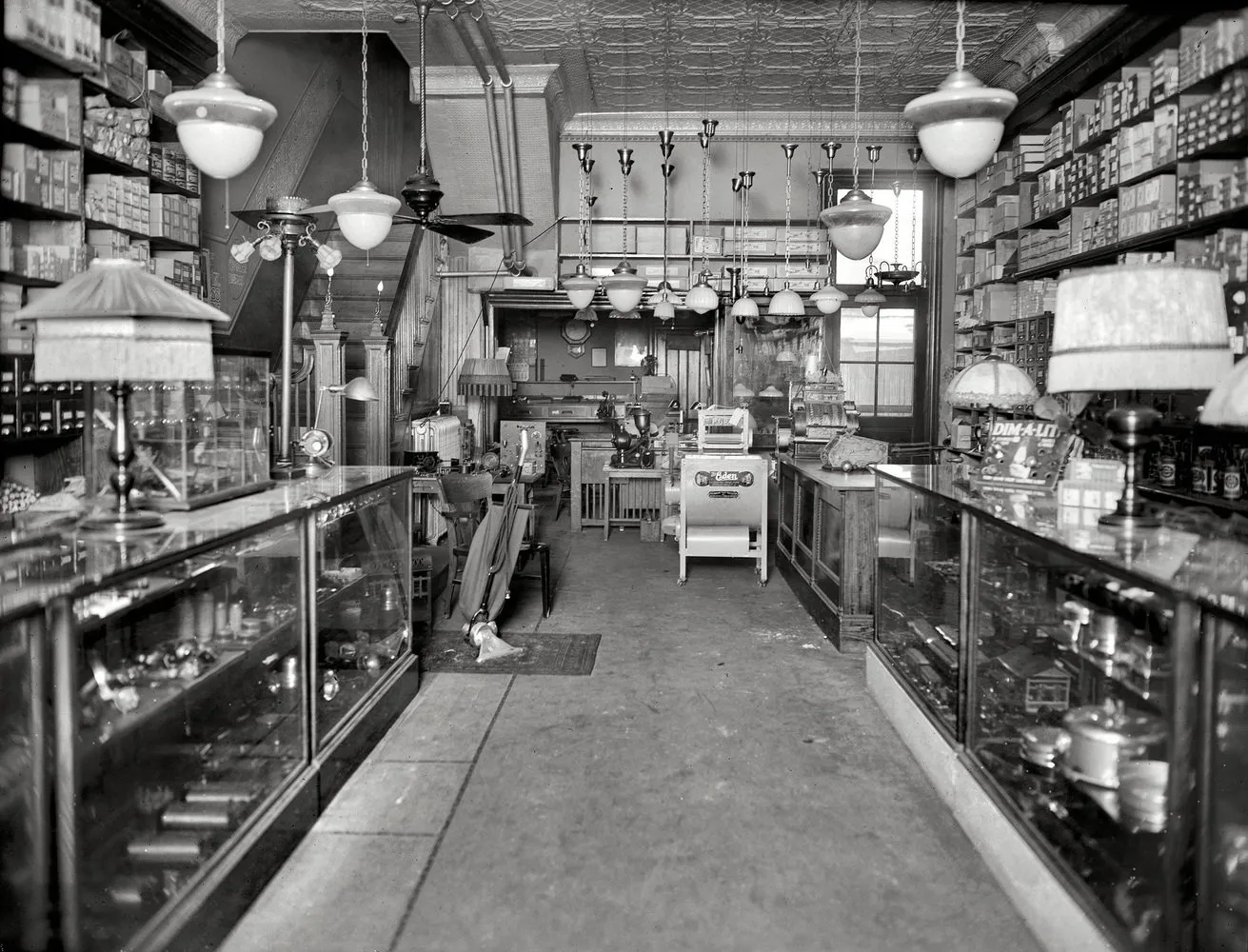
1923 Year. Appliance Store, USA. Center of the Image — Washing Machine
Washing machine construction became more advanced: wooden tubs lined with sheet copper went into the past and were replaced by enamel-coated steel tanks. However, safety was still little considered — the internal parts of washing machines remained exposed.
Whirlpool was among the first to enclose these in plastic casings. They also ensured that spin rollers only rotated in one direction to prevent injuries.
1930s
Washing machines became cheaper and more accessible, and started selling in Europe as well as the U.S. These machines began to be equipped with electric motor-driven drain pumps and mechanical timers — for the first time, housewives could set a wash cycle. The first drying machines appeared, but they were still extremely expensive.
The Great Depression reduced demand for simple American appliances, and housewives once again started visiting public laundromats. In 1937, the first laundromat or self-service laundry opened, where each stage from washing to drying was performed independently by the customer.
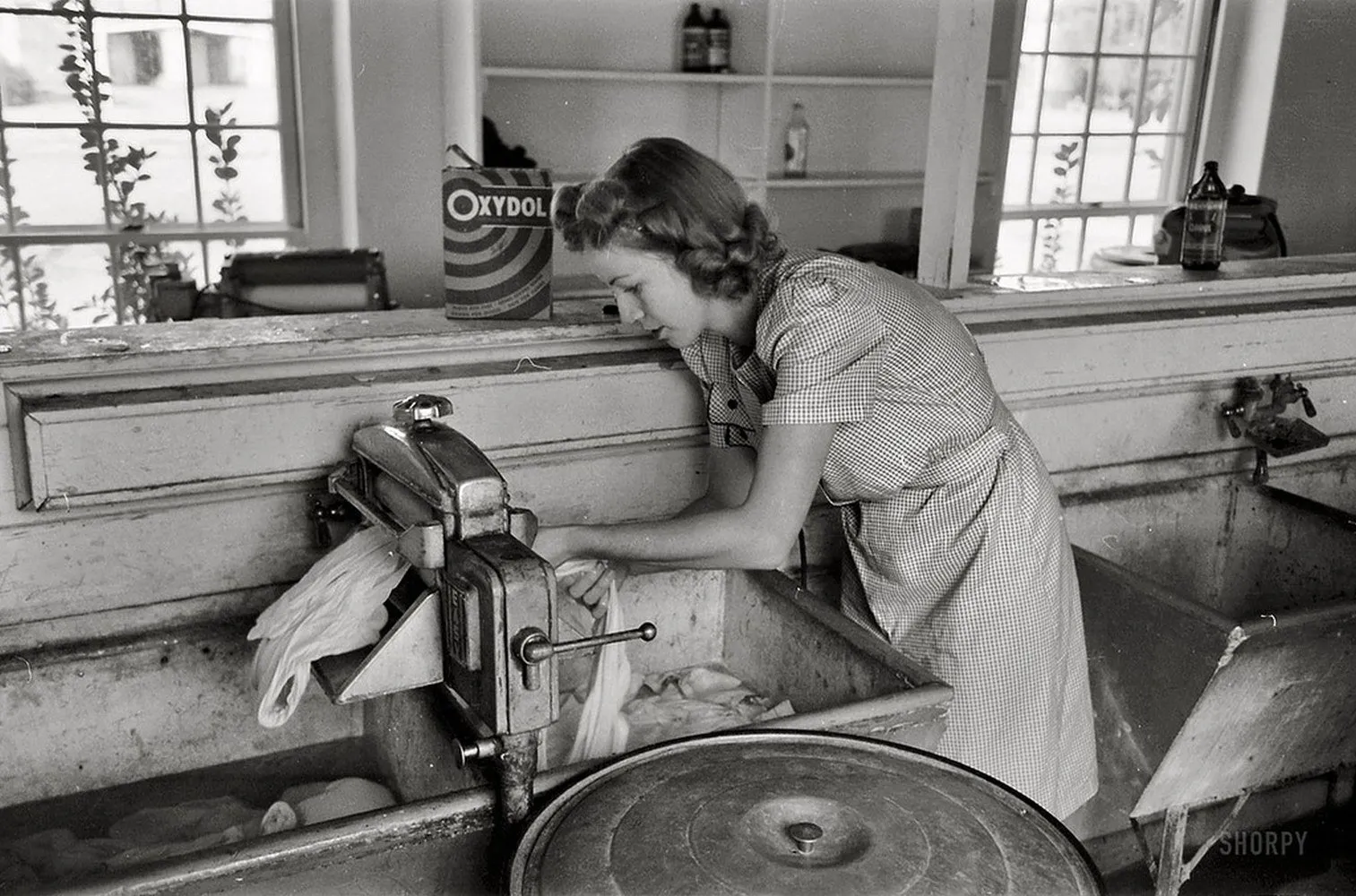
1930s. In a Public Laundry
1940s
At the end of the 1940s, two American companies, Bendix Corporation and General Electric, simultaneously announced the launch of the first fully automatic washing machine that washes, rinses, and wrings out water in one cycle.
No more human effort required: the program starts the machine, pressure relays and electromagnetic valves shut off water supply after filling the tub, a thermostat controls water temperature, and a timer controls operation time.
1950s
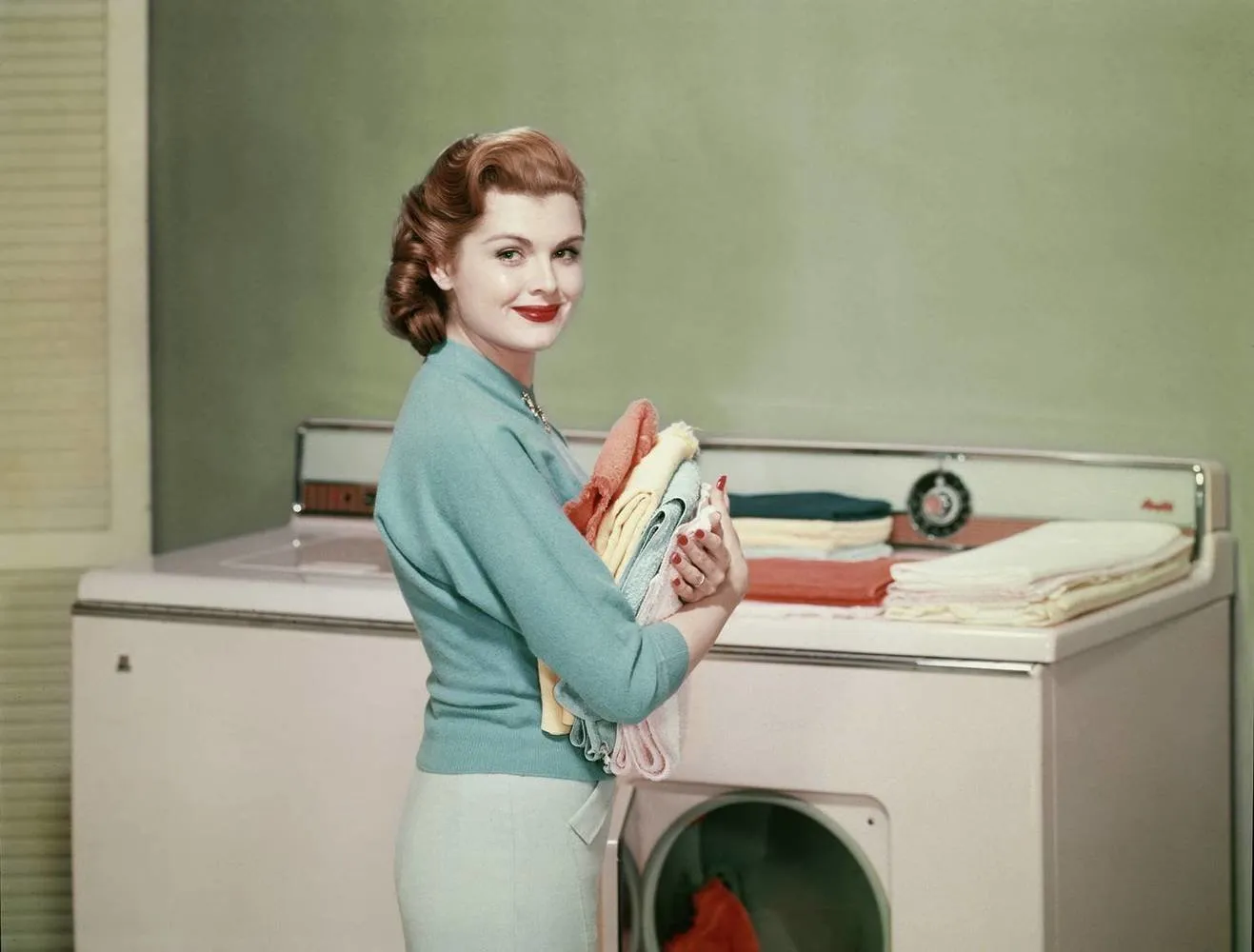
At the beginning of the 1950s, washing machines gained a new feature — wash programs tailored to specific types of laundry, and the function of manual rollers was now handled by an automated spin device — a centrifuge.
The first automatic machines were used in Europe. Here, drum-type machines were preferred over the active type with a built-in longitudinal axis and blades in the tub, which was common in America.
In the USSR, there were no sophisticated automatic models. The first Soviet washing machines were produced in Riga, Kirov, and Cheboksary. Water had to be manually filled and drained, and until the 1970s, these were quite primitive models. However, they had their advantages — for example, if any part broke down, it could be repaired by the user.
1970s
The first Soviet automatic washing machine, the "Vytka-avtomat," appeared at the end of the 1970s. A precise copy of Ariston washing machines, it was produced in Kirov under license from an Italian company. However, it soon ceased production due to frequent circuit breaker trips caused by insufficient electrical capacity for the machine. A corrected and improved model, the "Vytka-12" (where 12 refers to the number of wash programs), was released in 1980.
Washing Machine Ads in the USSR and the U.S. in the 1970s
In the U.S., at that time, engineers were developing washing machines based on microprocessors and implementing innovations to reduce water consumption and save electricity during washing.
1990s
American engineers came up with a control system for washing machines based on