Sound Insulation of Walls
On the modern market of construction materials and technologies, there are numerous options for sound insulation of various building structures, especially walls. Before describing soundproofing materials, let's first examine the types and transmission paths of sound within a room.
Types of Noise
All noise entering a room is divided into two main types based on its nature. The most common is airborne noise—such as human speech, passing vehicles, office equipment, etc. Airborne noise travels through air vibrations, where the sound source creates an acoustic wave that reaches the human ear.
The second type is impact noise—such as footsteps, operating tools, etc. The transmission path for this type of noise is walls and floor slabs, specifically their rigid connections. In essence, impact noise propagates through vibrations of the structural elements themselves.
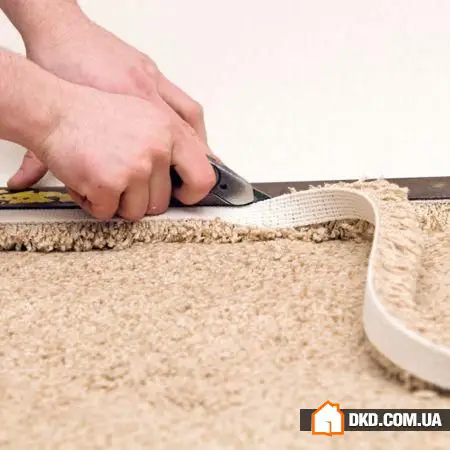
Different transmission paths require different solutions. While a wall filled with mineral wool insulation may be sufficient for airborne noise, impact noise requires breaking sound bridges between walls and slabs through floating floor systems. This structure forms a sealed chamber made of rigid, strong panels with excellent sound insulation properties. The material is cut into 20 cm wide strips and used to form a baseboard-like frame around the perimeter of the room. The floor surface is also covered with 30–40 mm thick panels. A cement-sand screed is poured into this chamber. Once the screed hardens, a fully isolated floating floor is formed, separated from walls or partitions by a 3–4 cm layer of mineral wool sound insulation material—this layer acts as the sound bridge break between the slab and wall.
Protection Against Airborne Noise
The key to achieving a comfortable acoustic environment is increasing wall thickness and eliminating all gaps, cavities, and holes in partitions. Wall thickness is increased by adding additional gypsum board cladding, filled with lightweight fibrous insulation.
Using mats and panels made from glass fiber is fully justified here, as they offer excellent damping performance despite their relatively low thickness. Homeowners always aim to preserve maximum usable area, especially by optimizing wall thickness. The sound absorption index (Rw) of glass fiber mats is such that a 100 mm sound insulation panel outperforms a 1-meter brick wall in sound absorption.
To achieve additional sound absorption, gypsum board sheets on the interior side can be bonded with a special sound-insulating membrane, Teknosound, which increases sound absorption by 10–15%.
Which Rooms Should Be Insulated?
Of course, the ideal scenario is to install sound insulation in every room of a house or apartment. However, this isn't always feasible due to technical or economic limitations. In such cases, let's identify the main types of rooms where walls and slabs should be prioritized for sound insulation.
First, rooms housing home cinemas, music systems, and other noise-generating devices. Second, it's advisable to insulate walls and structures facing elevator shafts, mechanical floors, and other areas with operating machinery or equipment.
Selecting Insulation for Soundproof Wall Cladding
Numerous studies conducted by the Institute of Building Physics at the Russian Academy of Sciences confirm that the sound absorption level of fibrous materials does not significantly depend on density within the range of 11 to 45 kg/m³. The sound absorption index (Rw) of various materials based on glass fiber and rock wool differs by no more than 2 dB, meaning it remains nearly constant.
However, as material density increases, sound absorption performance tends to decline. When selecting sound insulation materials, it is essential to refer to the vibration-acoustic certificate for the structure, which includes measured performance data. Based on these experimental values, one can choose the appropriate structure to reduce noise levels to the desired degree.