How to Choose Material for House Facade Cladding
Wood, metal or glass? The material used to clad the house facade affects not only its cost but also the well-being of its inhabitants. What to choose? Let's hear from the experts
The facade serves not only decorative but also practical purposes – from climate control to electricity generation. Olesya Sitnikova, head of the 'Arch.PREDEMET' studio, explains which materials modern architects use for facade finishing and what to consider when choosing.
Olesya Sitnikova, Architect
Graduated from the Architecture Faculty of a Construction University and completed a master's course at Milan University in Interior Design. In 2011, she founded the design studio 'Arch.PREDEMET'.
1. Wood
Wood is a material of the future. Of course, if humanity starts to use natural resources more consciously.
Modern processing techniques improve fire safety, durability, and energy efficiency of this material while keeping it the most eco-friendly and accessible.
A wooden-clad facade naturally blends into the landscape. Cladding doesn't have to be smooth; there are hundreds of different solutions and options: planks, strips, panels. For example, Norwegians love using irregular cladding made from boards of varying widths, creating a relief on the facade and integrating the building into the forest context even more.
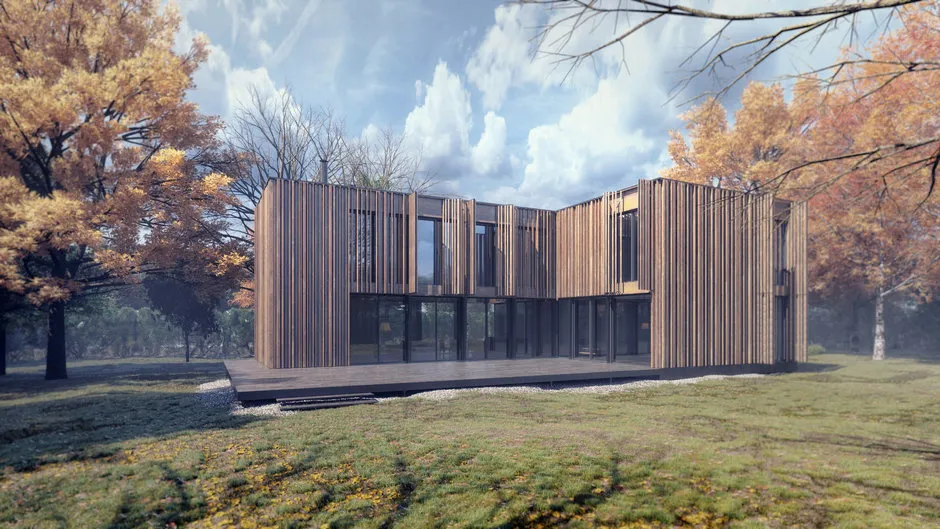 House in Suburbs. Architect Olesya Sitnikova
In England, shingles are often used. This traditional roofing material looks great on modern forms and can be used for both roof and facade cladding. Its multi-layer structure provides additional insulation.
In Russia, wood has traditionally been popular among architects (a modern example is Totan Kuzembayev), and wooden shingles are easy to find near most cities.
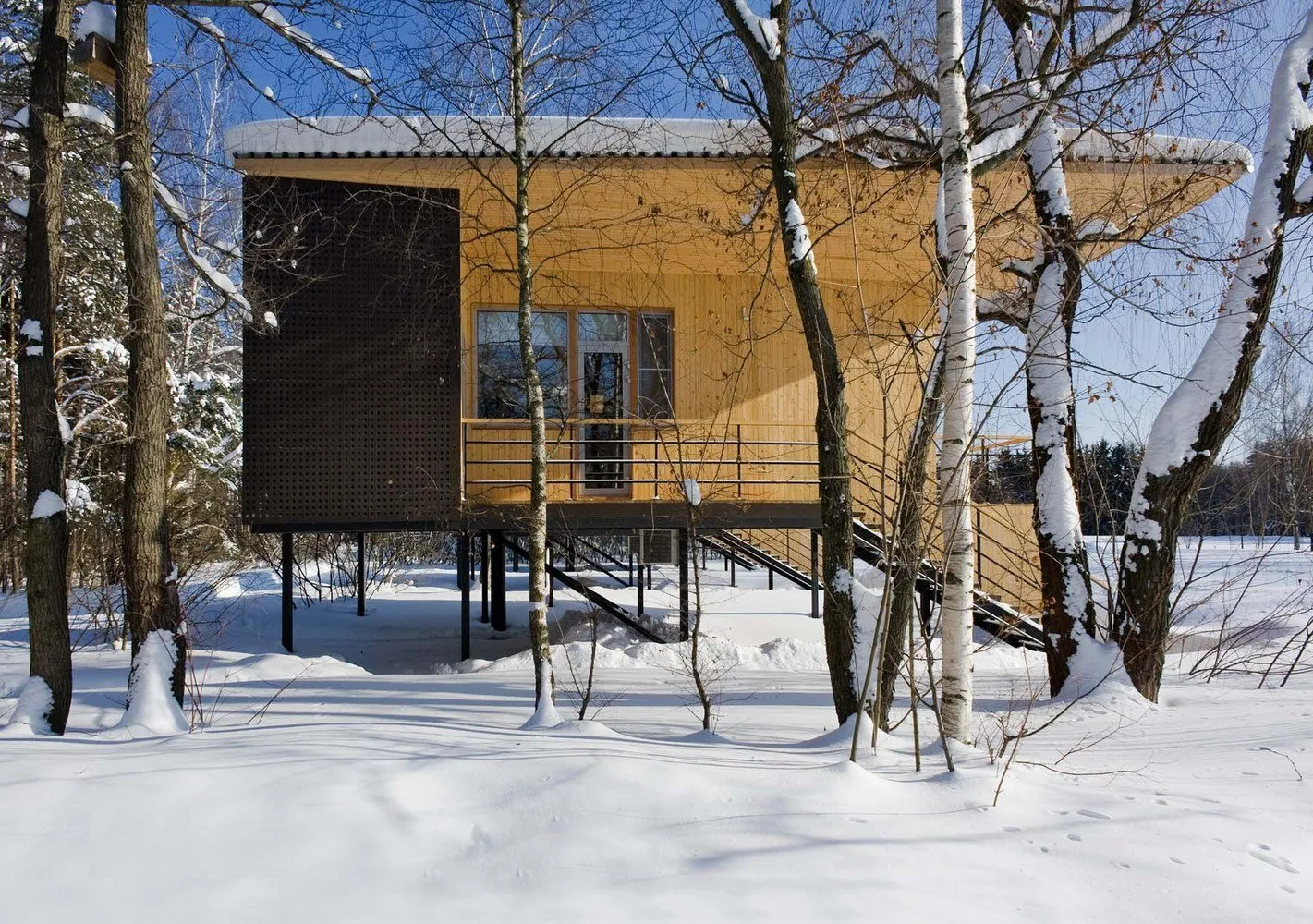 House 'Nest'. Architect Totan Kuzembayev
2. Metal
A metal facade gives a house a modern, bold, industrial look. Metal is reliable, durable, and resistant to all destructive factors, but it presents a challenge – how do you solve the climate control problem?
For house cladding, panels made of stainless steel, aluminum, corrugated sheet, black metal, or copper can be used – there are many options. Perforation can give metal transparency, and powder coating can change its color and properties.
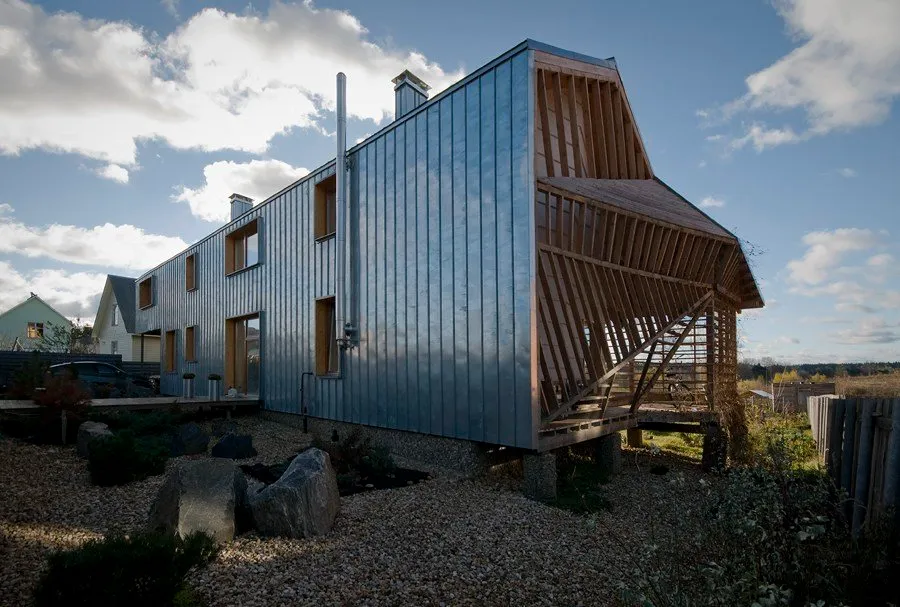 House with Galvanized Facade. Architect Totan Kuzembayev
The villa VT facade (Servie Boetzkes and Jeroen Helder, The Netherlands 2010) made of aluminum panels changes color depending on lighting due to a special powder coating. This facade does not overheat because there is a 10 cm gap behind the aluminum panels, followed by a waterproof foil layer.
In the Green Orchard house (Paul Archer design, UK, 2013), a facade made of polished aluminum creates a mirror effect and blends harmoniously into the landscape despite its radically modern design. Special panels covering the entire height of windows are equipped with electric drive and offer excellent thermal insulation, allowing homeowners to regulate indoor temperature.
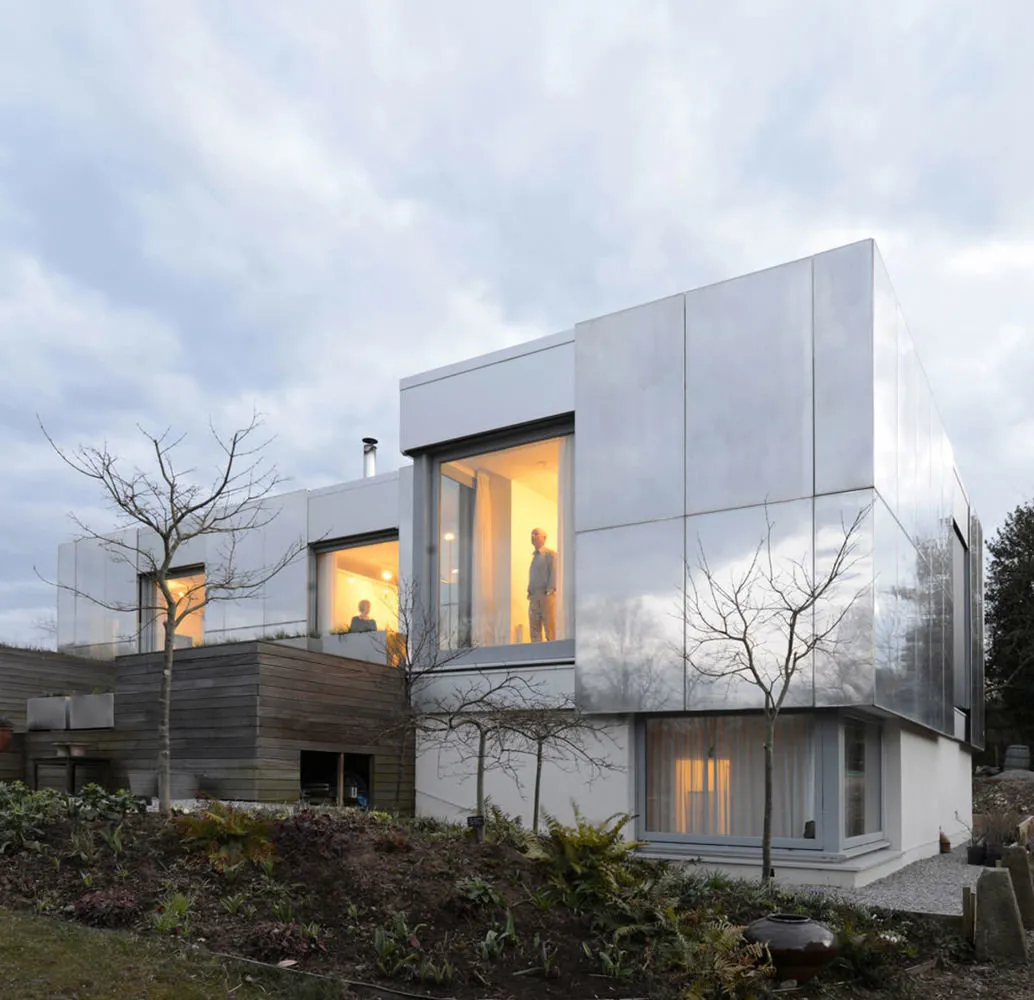 Green Orchard (Paul Archer Design)
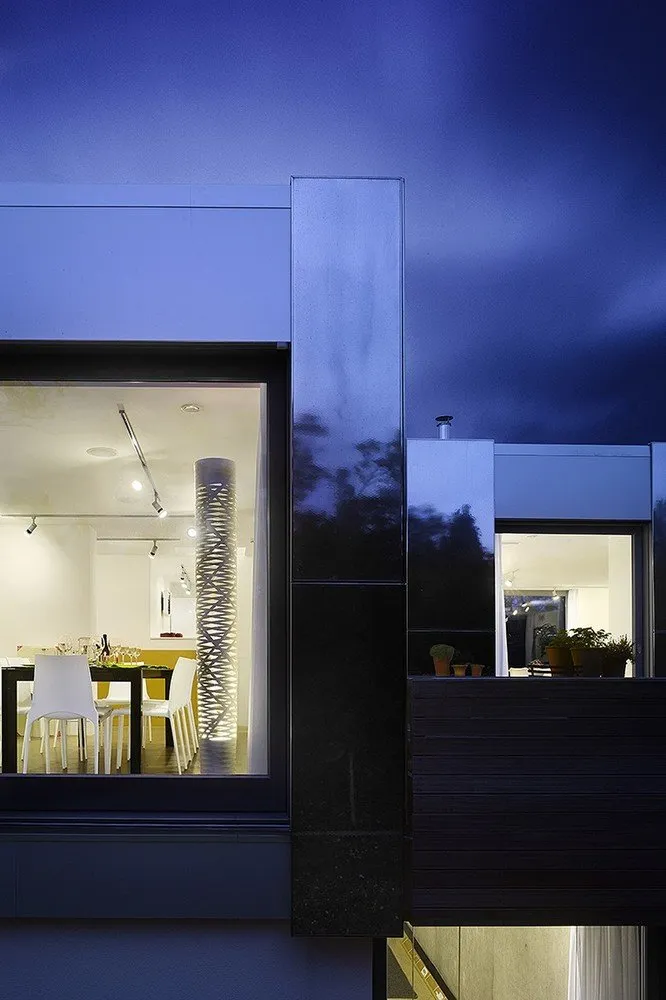 Green Orchard (Paul Archer Design)
3. Membranes
Facade cladding made of high-tech fabric can take any shape since it is stretched over the substructure. The fabric has high fire safety, different levels of transparency, and is widely used in public buildings, but can also be useful in private homes.
There is an example: architects Jay Atherton and Cy Keener used a semi-transparent membrane for the facade of a house in Arizona (Meadowbrook House) to protect it from overheating and maintain visual connection with the surroundings. This material is not yet common in mass construction.
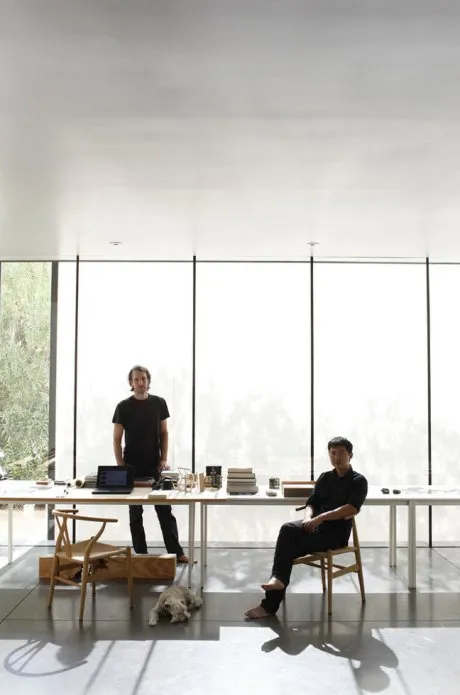 Meadowbrook House in Arizona
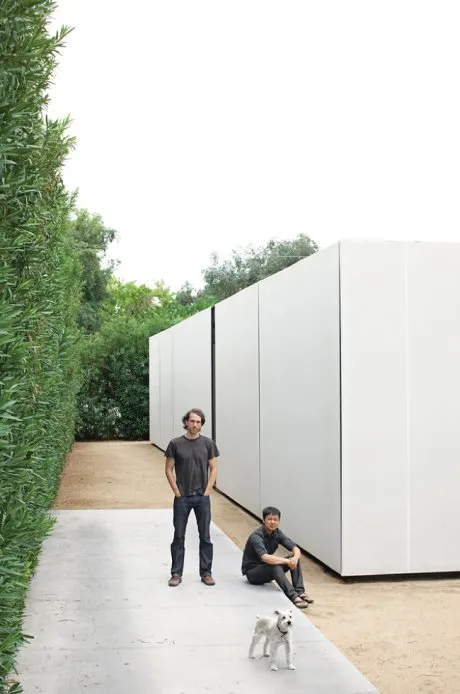 Meadowbrook House in Arizona
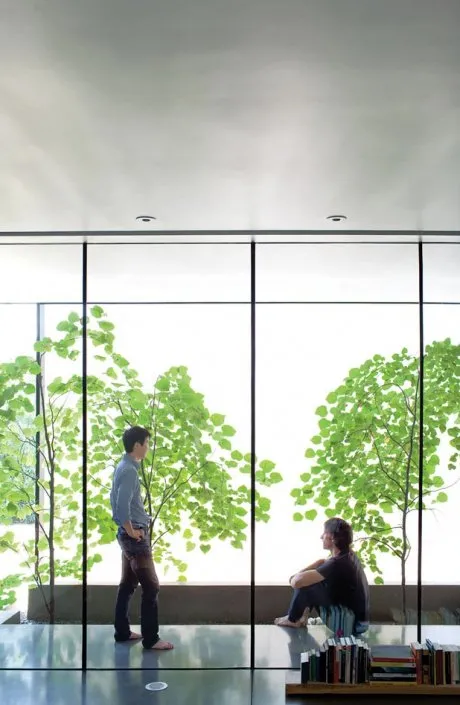 Meadowbrook House in Arizona
4. Glass
Glass facade allows maximum solar light into the interior – that’s a plus. But there are downsides too. How to maintain privacy in a transparent house and how to protect it from cold and heat? Answers to these two questions have already been found. The favorite example of a modernist glass house is 'R 128', built by engineer Werner Sobek (Werner Sobek, Stuttgart, 2000).
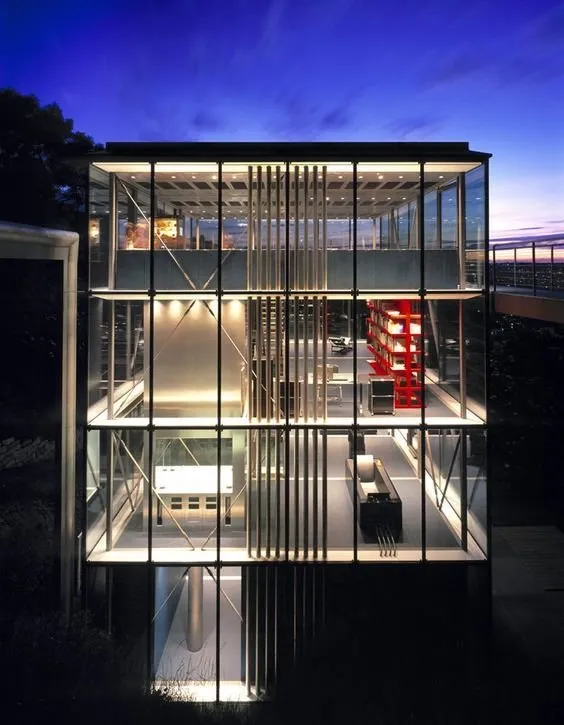 House R-128 in Stuttgart. Architect Werner Sobek (Werner Sobek)
The external walls of this house are made of triple glazing with high thermal insulation ratings. The house fully meets its heating needs through passive energy sources. It is positioned so that it remains hidden from outsiders’ view, while its transparent walls offer a panoramic view of the city.
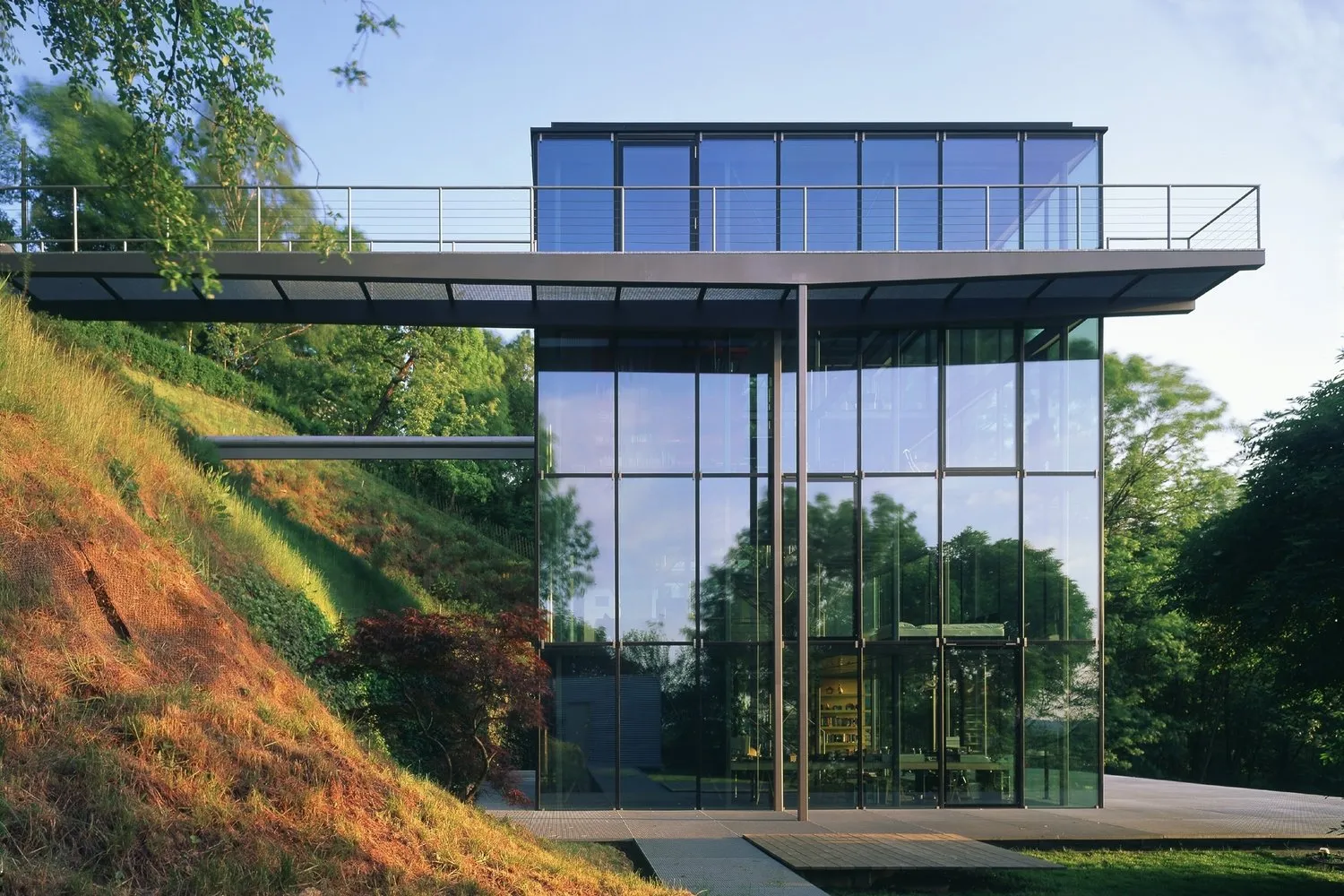 House R-128 in Stuttgart. Architect Werner Sobek (Werner Sobek)
5. Solar Panels
The dream of engineers and architects about a facade shell that provides the house with heat and energy is becoming reality. At the 2009 exhibition in Washington (Solar Decathlon, Washington DC), a German team of 24 students (Technische Universität Darmstadt) focused on facade cladding and won first prize.
The two-story cube’s shell consists of 250 photovoltaic (PV) solar panels – thin SIGS panels and 40 monocrystalline silicon panels on the roof. The system generates an impressive 200% more energy than required by the house.
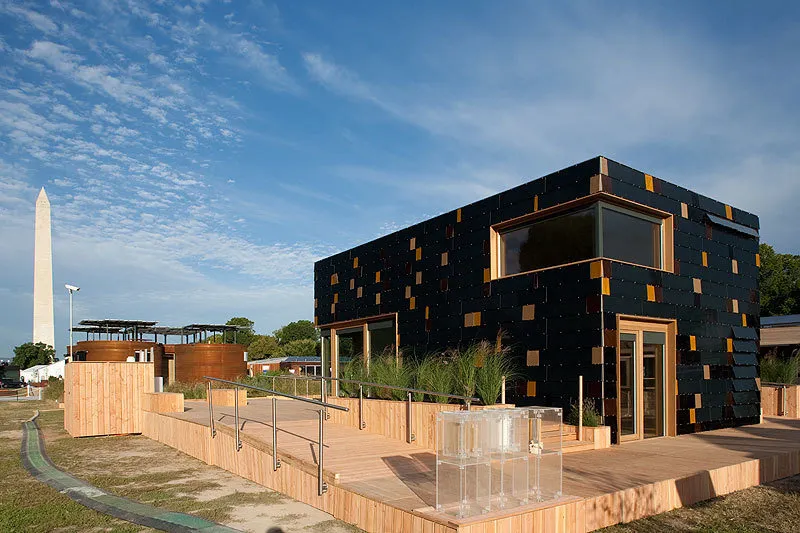 Solar panels cover SurPLUShome not only on top but also on the sides
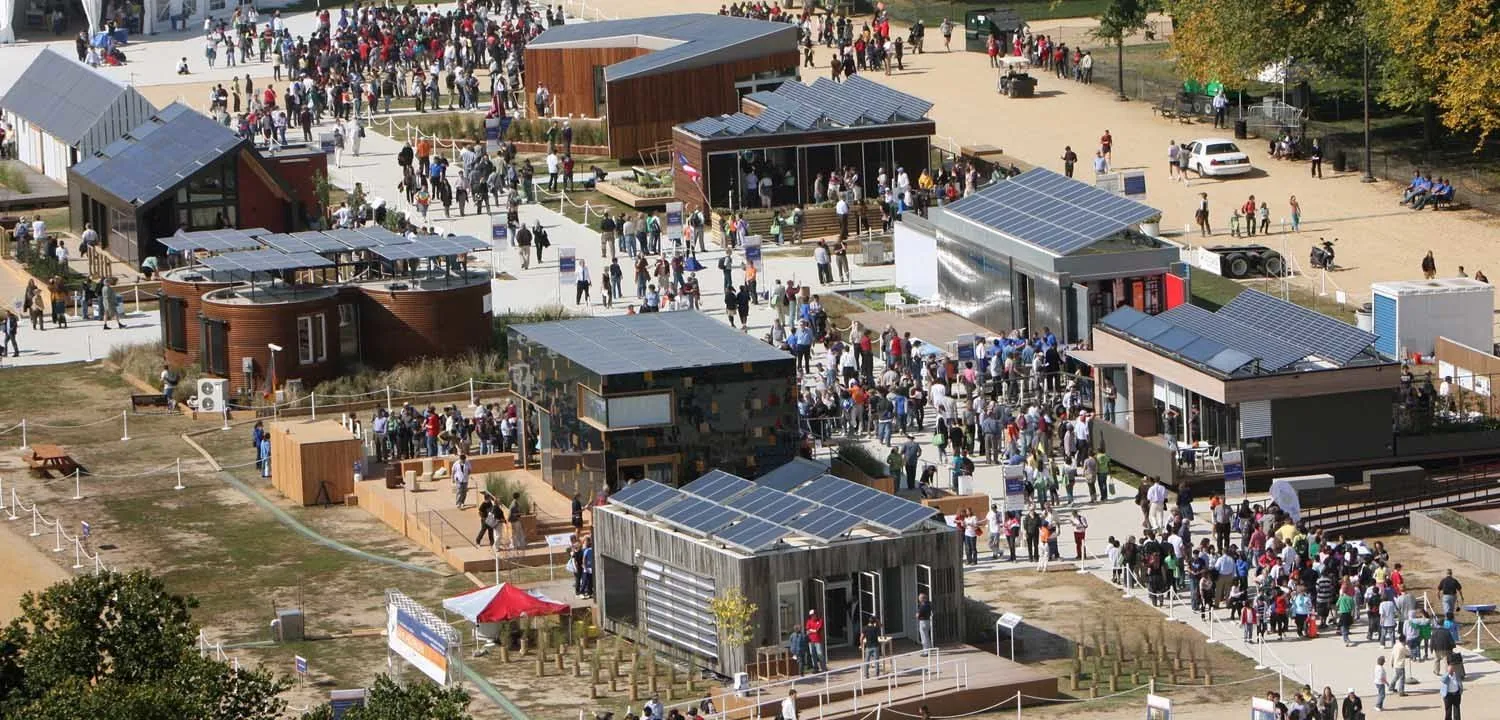 'Solar Decathlon'. Washington, 2009