Terrace House by Taguá Arquitetura in Brazil

Project: Terras House Architects: Taguá Arquitetura Location: Brazil Area: 6,996 sq ft Year: 2021 Photography by: Leonardo Giantomasi
Terrace House by Taguá Arquitetura
The Terrace House, located in the suburbs of São Paulo, occupies 7000 square feet and emphasizes spatial integration. Divided into separate blocks, it combines private life with public living. The residential house includes personal and social zones connected by glass passages surrounding the central garden.
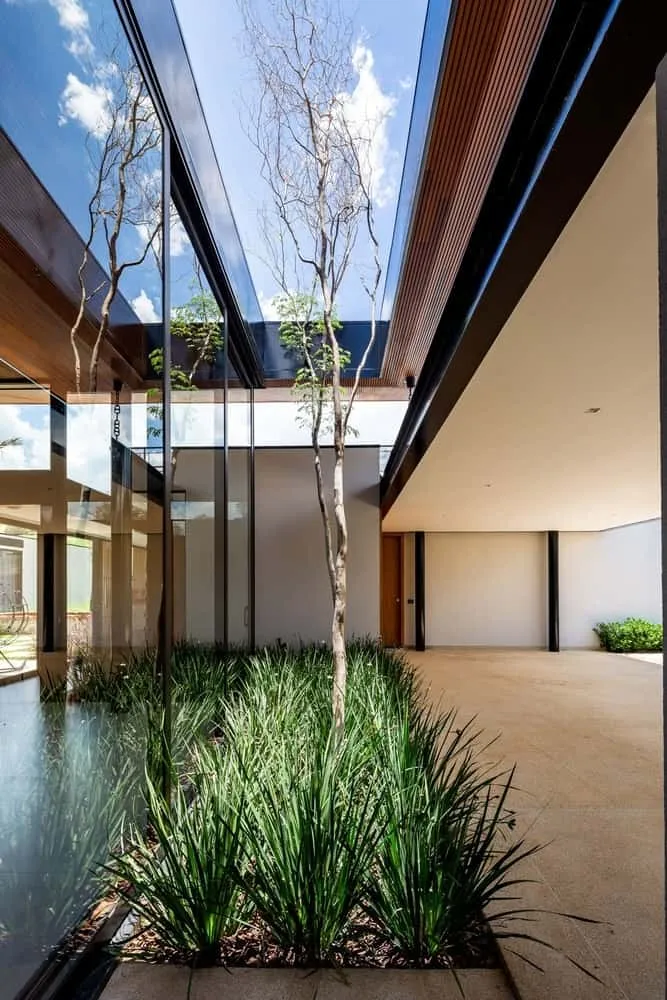
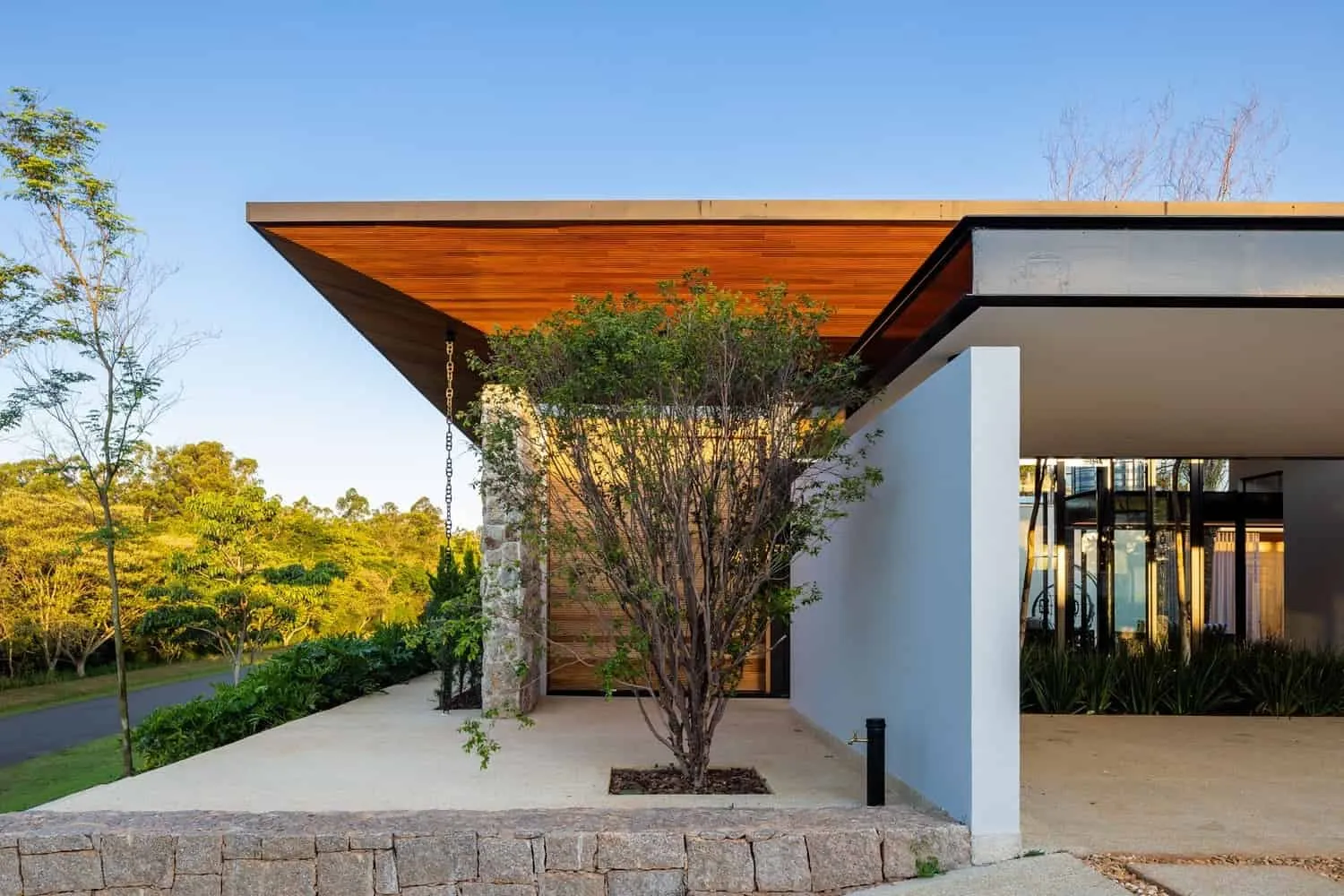
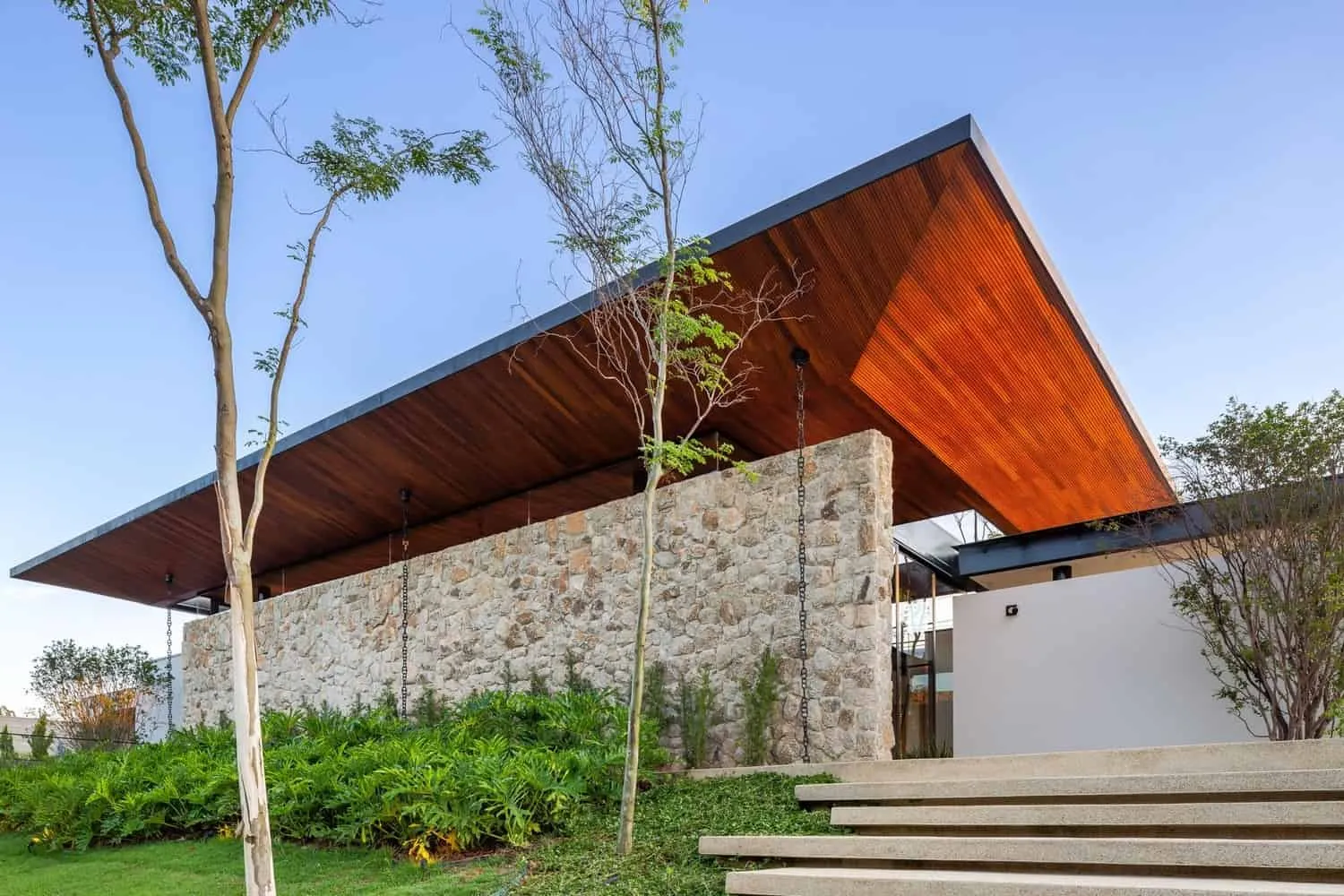
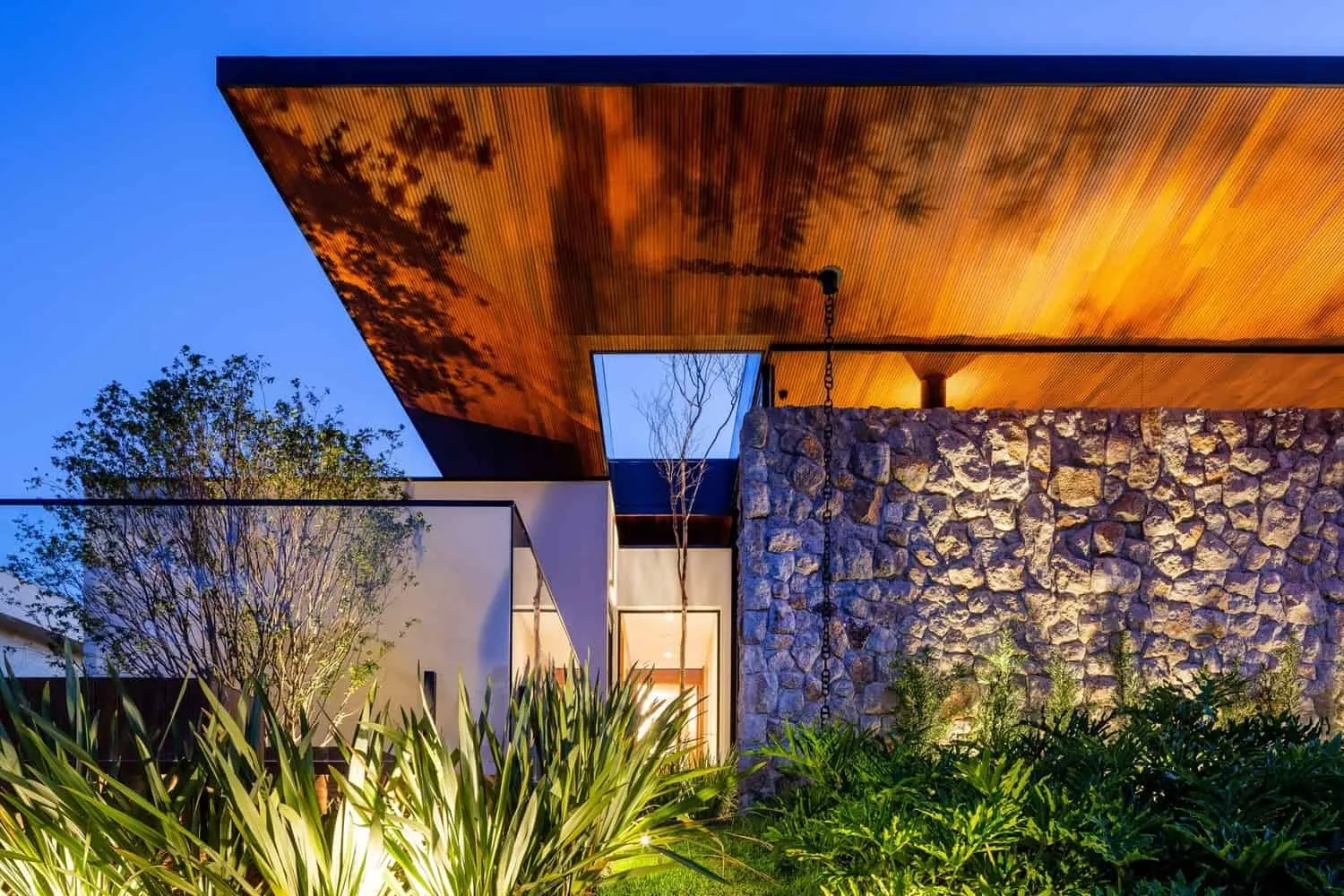
Almost opaque facade covered with soft stone ensures privacy. Metal roof covers the public area, creating gardens within. Steel, wood and glass blend to form open transparent spaces ensuring seamless living.

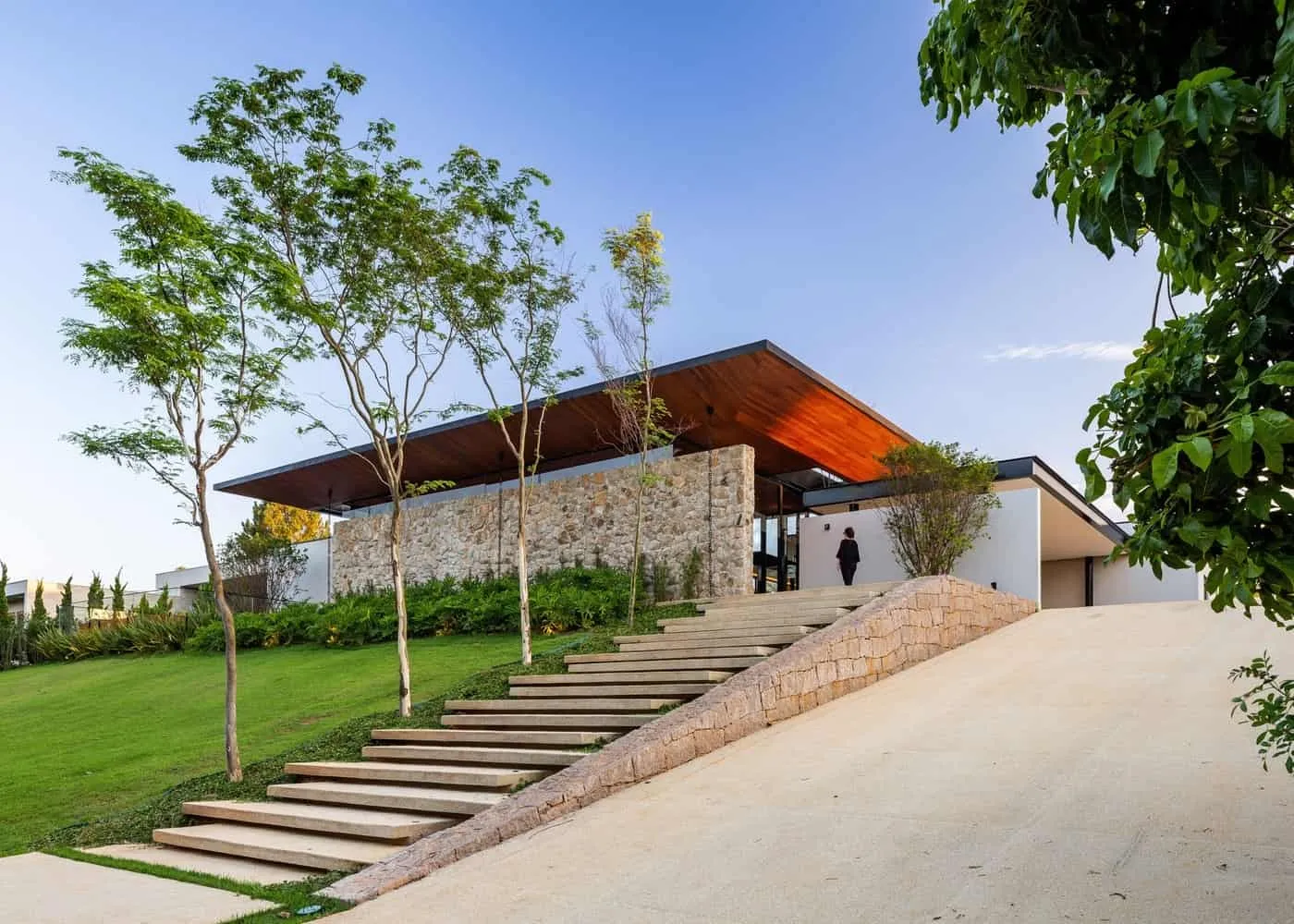
Located in the suburbs of São Paulo, the Terrace House has a built area of 650 m² with a hybrid construction system using concrete and steel. On the slope of a hill, the client requested a single-story house with visual and spatial integration of surrounding environments.
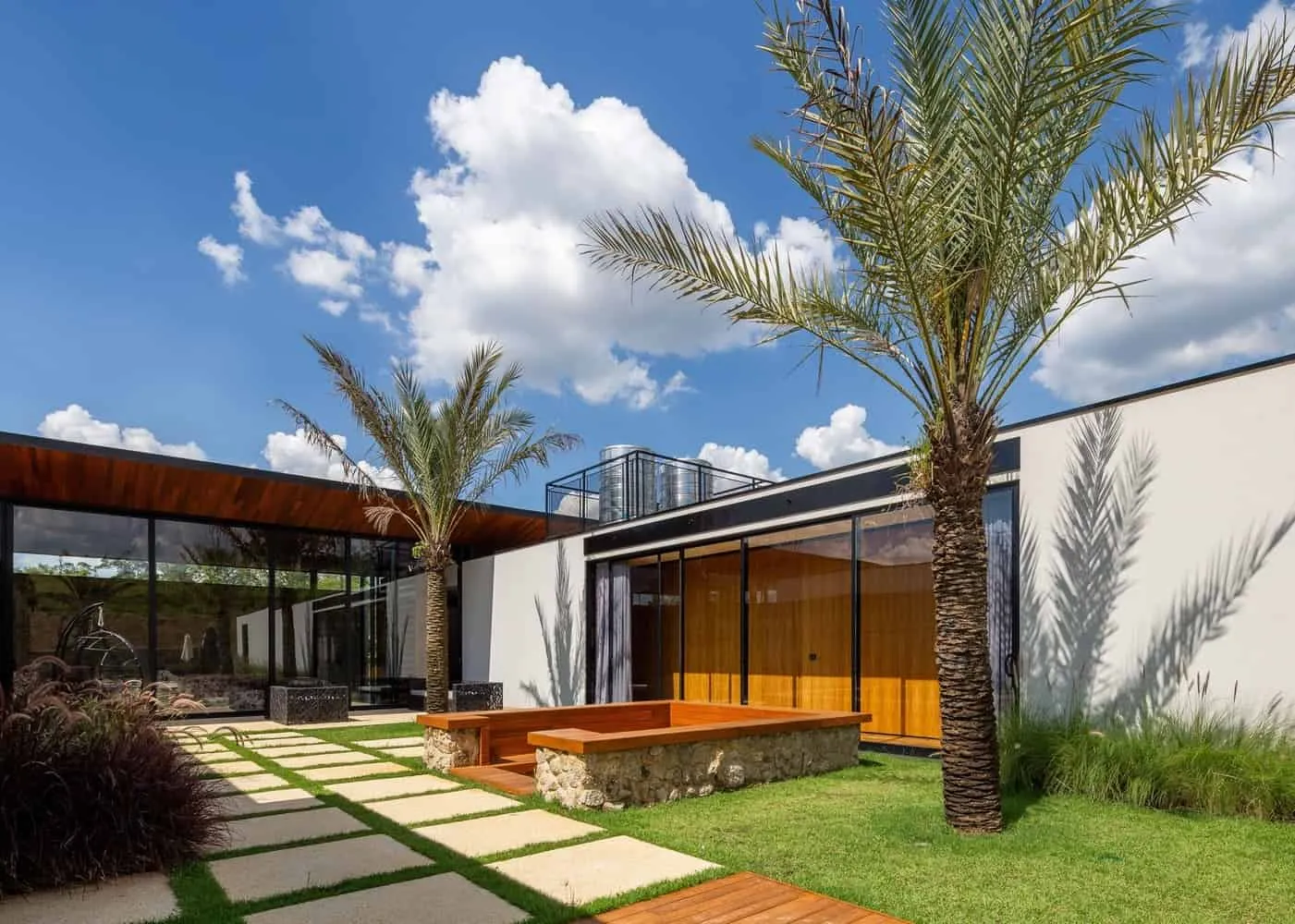
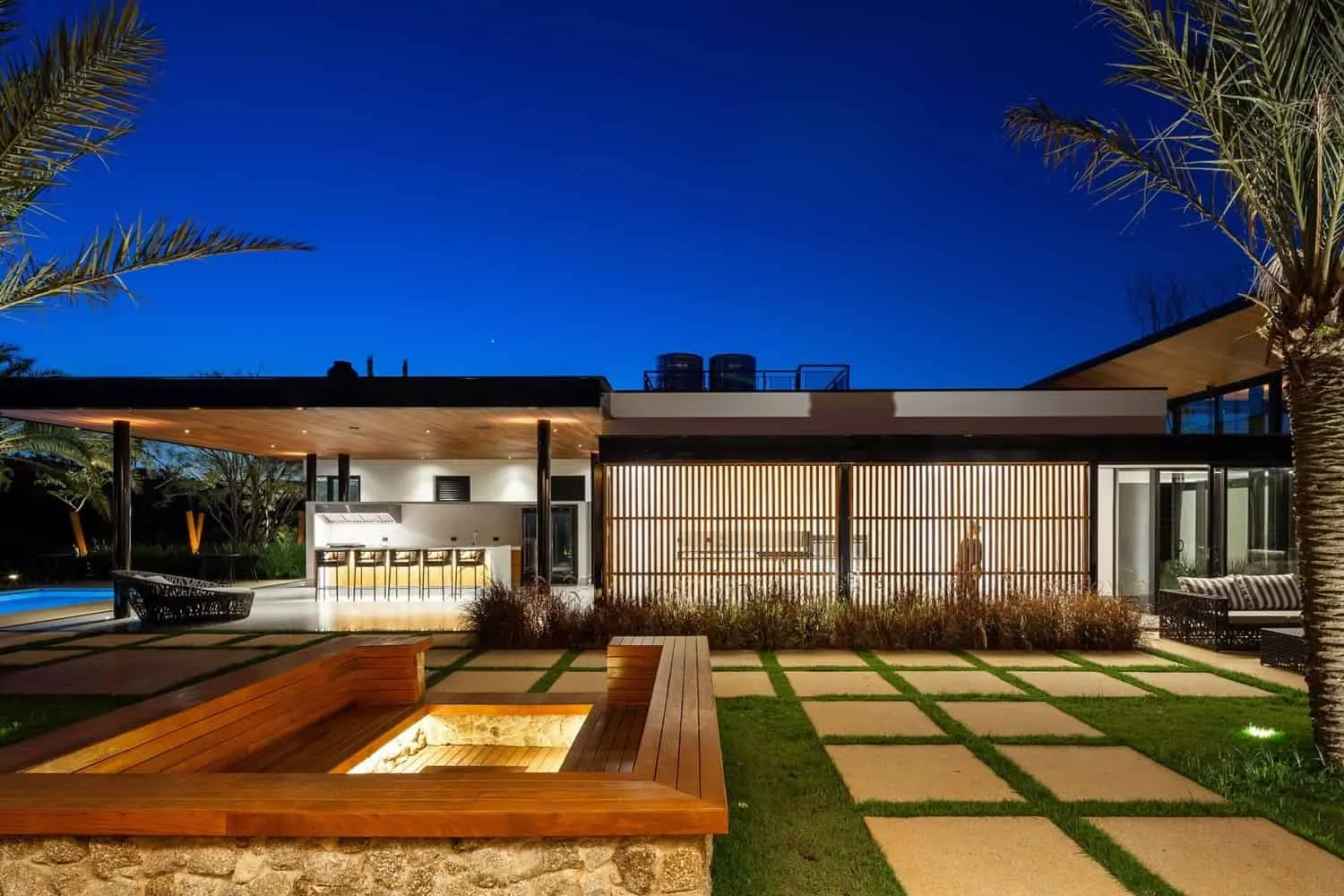
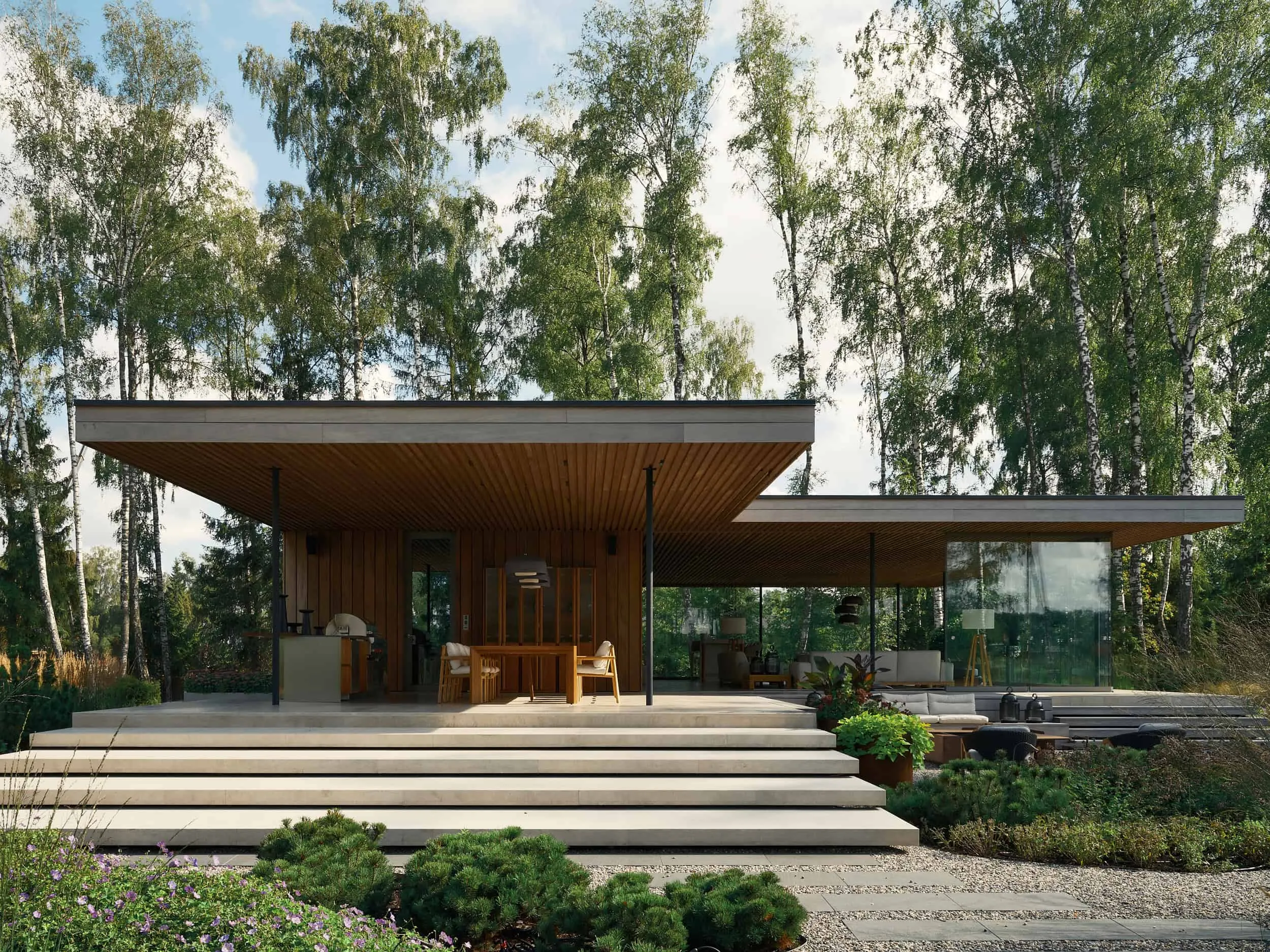
Considering the client's request, architects divided the residential house into several blocks: one block on the eastern side where the intimate zone is concentrated; a central block with large spans and metal roof covered in wood, housing the living room; on the western side — a garage positioned to ensure privacy and another block lower down the site — kitchen and service areas, as well as a gastronomic zone forming a U-shaped plan. These blocks are connected by glass passages where the garden can be seen at any time.
The large metal roof of the public area has some full and empty spaces where gardens are concentrated, except for the facade which is almost blind. All other sides of the public area have glass facades allowing visual integration with these gardens.
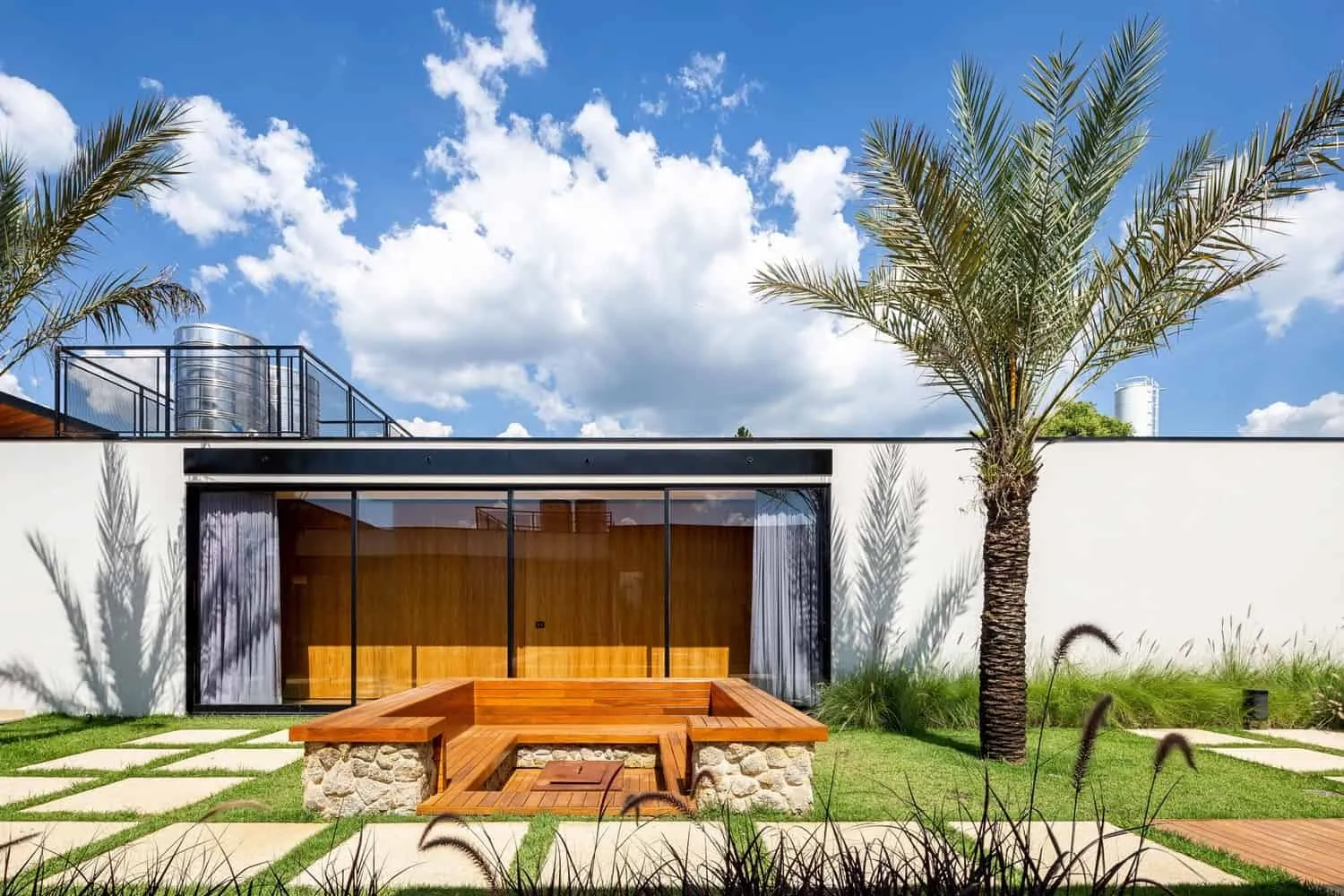
The residential facade is almost entirely blind, providing greater privacy for residents. The front wall of the house is fully clad in soft stone, which together with wooden roof finishing forms a composition of natural materials. The way all blocks are organized created a central garden, connecting all parts of the residential house and forming its core. Steel, wood and glass create materiality of these spaces, always integrated with landscape design.
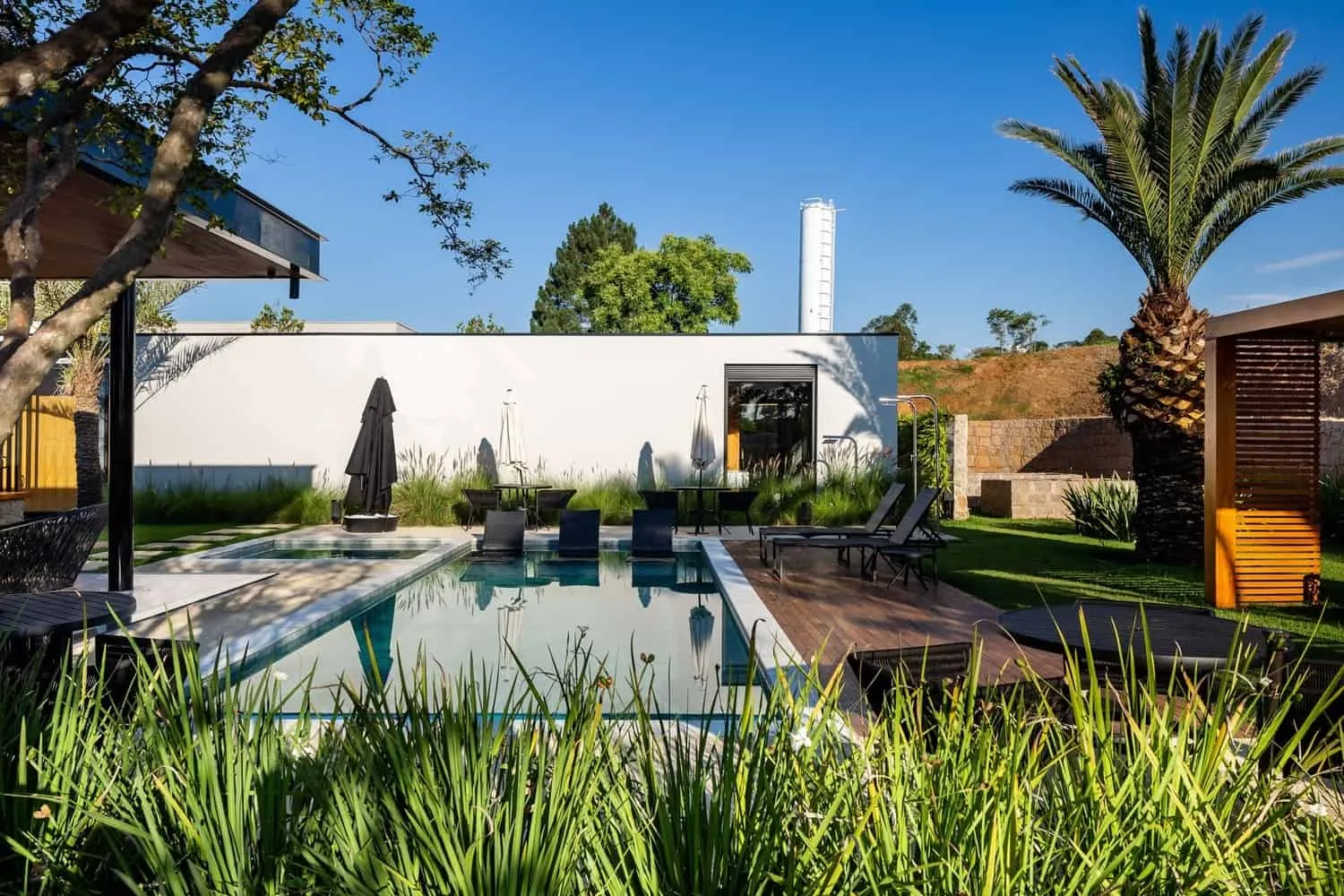
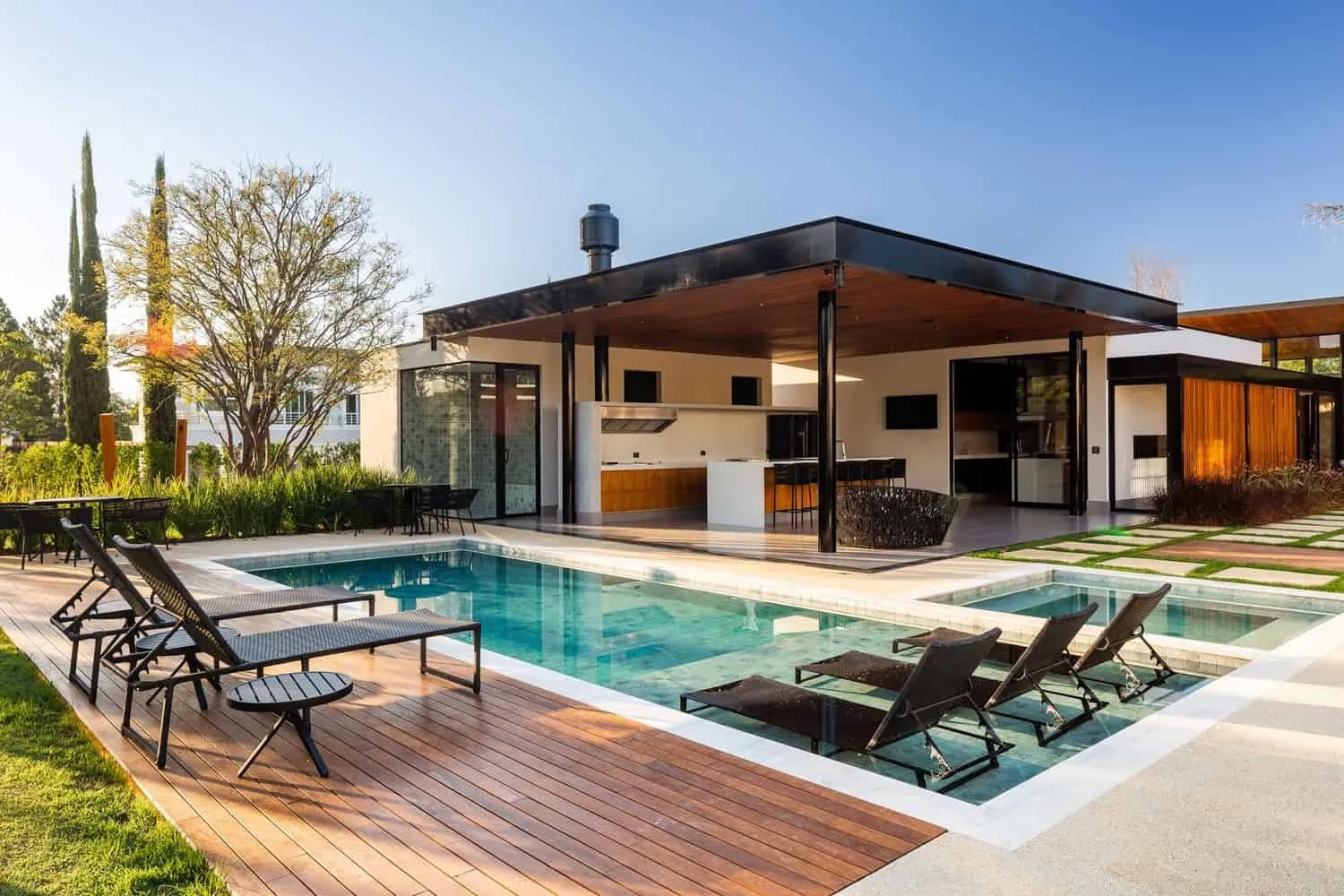
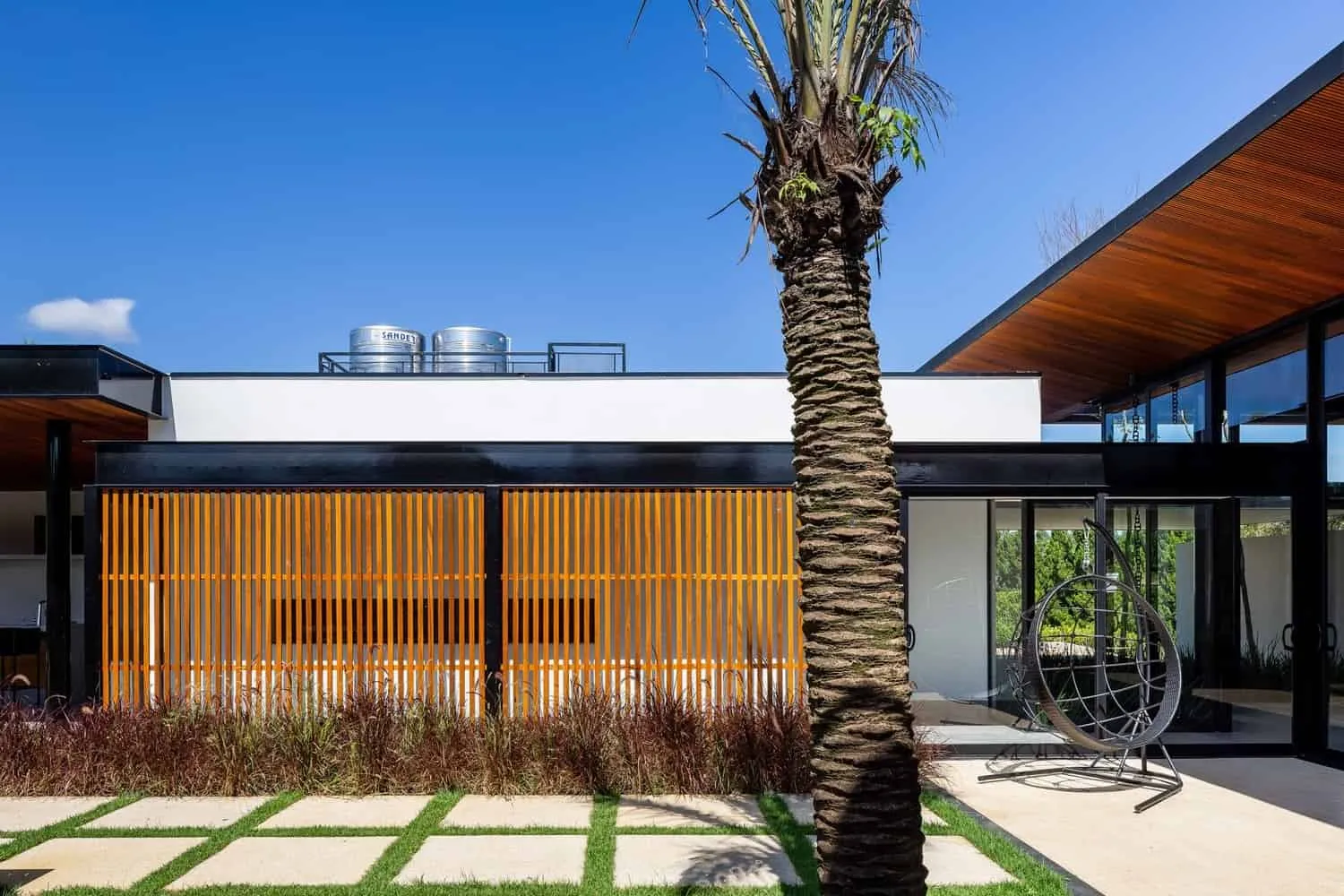
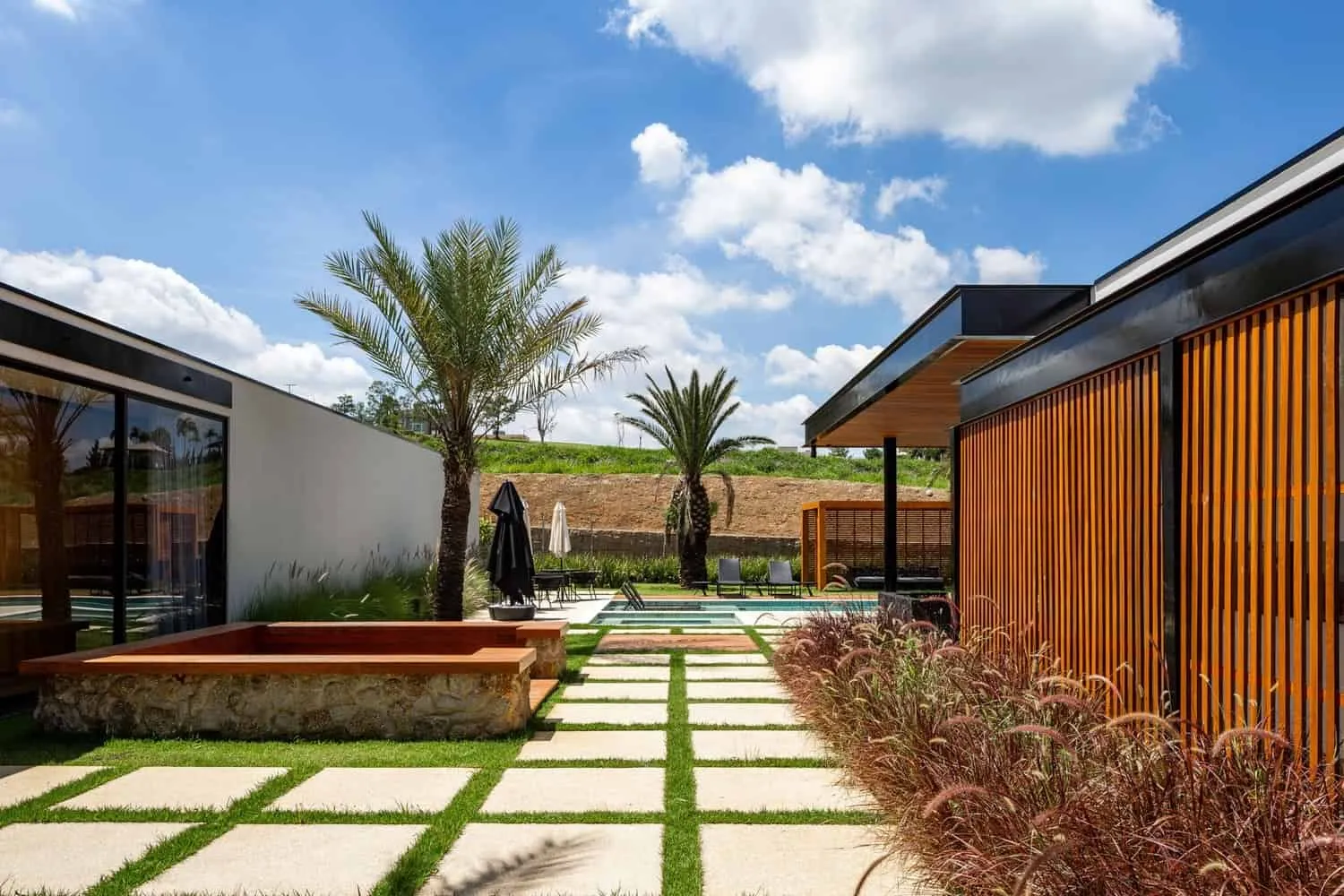
The living room is connected to the kitchen and gastronomic zone through a metal roof with glass closure and louvered breeze. The gastronomic zone has a metal roof supported by four columns, fully integrated with the garden and pool. The entire project contributed to openness and transparency of space, so that the house had spatial and visual integration.
The gastronomic zone was organized to ensure integration with the pool and central garden of the residential house, visually uniting all open areas and public zone through the central garden. The hybrid construction system allowed fast execution of most work, as well as enabling large spans with thin profiles thanks to the use of steel structure in the living room, garage and gastronomic zone.
-Taguá Arquitetura