Joining Gypsum Board Joints, 2 Ways of Work
How to Fill in Gypsum Board Joints
The question of "how to fill in gypsum board joints" turns out not as simple as it seems. For these purposes, joint compound and reinforcing mesh or tape are used, but you also need to know how to choose them.
How to Fill in Gypsum Board Joints
The question of "how to fill in gypsum board joints" turns out not as simple as it seems. For these purposes, joint compound and reinforcing mesh or tape are used, but you also need to know how to choose them.
Gypsum Board Joint Compound
Joint compound for filling joints should be based on gypsum. Finish joint compound is intended for a smooth thin finishing layer, not for leveling depressions and unevennesses. For example, Knauf Rotband Finish – a dry joint compound from KNAUF can be used to joint relatively even surfaces with a layer thickness ranging from 0.2 to 5 mm. For filling joints between KNAUF boards, this material is not suitable. To prevent cracking it is better to use a more firmly setting start joint compound.
IMPORTANT! There are special compounds designed specifically for filling joints of gypsum boards, such as Knauf Uniflot or Fugenfller.
To successfully apply any joint compound, it is necessary to strictly follow the recommendations provided on the packaging, mix properly and not use a mixture that has been standing for too long.
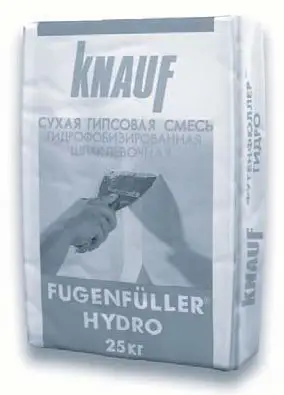
Photo 1 — Knauf Fugenfller Joint Compound for Filling Gypsum Board Joints
Filling GKL Joints: VIDEO
Paper Joint Tape
To prevent several layers of joint compound from cracking, they need reinforcement. For this purpose, burlap and/or reinforcing joint paper is used. There are debates among gypsum board installers regarding what is better: joint tape or mesh for joints. Many lean towards paper tape or their so-called "symbiosis," while others use fiberglass mesh. Before choosing such mesh, it is necessary to crumple it, twist it, and flatten it to check whether it is damaged.
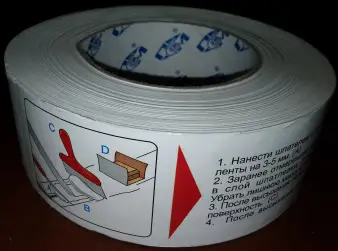
Photo 2 — Paper Reinforcing Tape
How to Fill in Joints
Filling in gypsum board joints starts, like any other construction operation, with surface preparation.
Check Temperature
For such work to be performed, the room must have stable normal humidity and temperature no lower than 10 degrees Celsius. Fluctuations in temperature and humidity can lead to deformation of gypsum board and inevitably cause cracks.
Joint Grooving
It is necessary to groove the joints. To increase the joint surface, small bevels at a 45-degree angle are made on the straight edges of the boards.
Inspection
It is necessary to check whether the boards are securely screwed to the framework and whether the screw heads are adequately embedded in the gypsum board. The gypsum board should be clean of dust, and the board joints must be even – without burrs.
Priming
The joint surfaces must be well primed, and the primer should have time to dry. For priming gypsum boards, Knauf Tiffen-Ground is suitable.
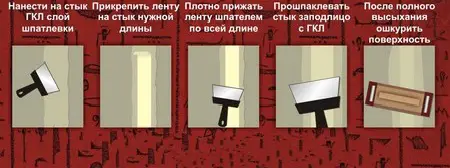
Photo 3 — Gypsum Board Joint Filling Scheme
Manufacturers have developed a technology for how to plaster gypsum board joints.
Joint Filling
The mixture for filling the joints is mixed and filled into the joint with a trowel, then the joint compound is leveled with the surface of the gypsum board.
Joint Filling with Paper Tape or Mesh
Surface separation – filling angular joints (internal) – is performed necessarily by adhering paper tape to the joint compound.
IMPORTANT! Joint taping with paper tape or reinforcing mesh is done in such a way that the joint is centered on the tape and, if it is not continuous, its pieces are laid in an overlap.
Joint Treatment
- Joint treatment – removal of excess joint compound. This is applied if reinforcing mesh is used: it is pressed into the joint compound with a strong trowel motion and excess mortar is removed with a trowel.
- Topcoat joint compound.
- Joint finishing. After the joint compound has dried, it is sanded to achieve maximum surface smoothness.
How to properly fill a joint using any particular mixture is indicated in the instructions for that mixture. For greater strength, each layer of joint compound can be primed. Some use such a "layered pie": joint compound, burlap, joint compound, paper tape, joint compound. However, the effectiveness of such a layered approach is debatable. It is better to test any joint compound or tape on a sample piece of gypsum board to confirm its effectiveness.
Filling Gypsum Board Joints: VIDEO
Cost of Filling Gypsum Board Joints
- Price in Kyiv – from 5 hryvnia per linear meter.
- Price in Moscow – from 40 rubles per square meter.