Ceiling Removal. How to Clean Ceilings
Ceiling removal can be complete or partial depending on the reason for the work. If the ceiling has served its purpose, is no longer functional or another type of ceiling finishing is planned and the whole system needs to be removed, then the removal can be done by yourself. However, if it is necessary to remove the ceiling fabric for replacement, or temporarily or partially for later reinstallation, these works should be left to professionals.
Ceiling Removal
Ceiling removal can be complete or partial depending on the reason for the work. If the ceiling has served its purpose, is no longer functional or another type of ceiling finishing is planned and the whole system needs to be removed, then the removal can be done by yourself. However, if it is necessary to remove the ceiling fabric for replacement, or temporarily or partially for later reinstallation, these works should be left to professionals.
One of the main reasons for this is that removing the film without damaging it requires an experienced hand and heating the ceiling with a blower. The ceiling is held under strong tension, and an unskilled attempt to remove the untreated coating will likely end up in costs for new fabric or even new profiles (plastic profiles may be damaged during careless removal).
Most often, only the ceiling fabric needs to be removed – the profiles remain in place. In each individual case, specialists decide based on the situation how much of the ceiling needs to be demounted. In case of flooding, it may be necessary to remove one of the corners to drain water and dry the fabric; for electrical wiring, installing additional lights, or major renovation work affecting slabs, it might be necessary to remove several corners of the stretched ceiling.
In case of serious cuts, burns, or melting of the film, a full removal and replacement is required.
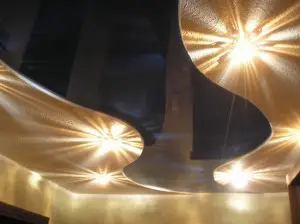
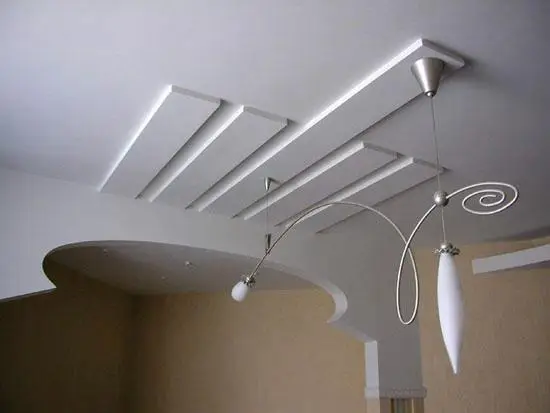
Photo 1 – Combined stretch ceiling
Theoretically, there is nothing complicated about removing a stretch ceiling – all work is done in reverse order:
$ Ceiling Removal, Price
Cost of removal will always be cheaper than cleaning up the aftermath of flooding or consequences of your own unskilled actions. Ceiling removal price, including replacement – from 500 rubles per linear meter, and water drainage from the ceiling will cost around 1500 rubles.
Ceiling Removal (Video)
How to Clean Stretch Ceilings
There is no specific answer to the question of what product should be used for cleaning a stretch ceiling, only general recommendations. When taking on the task of cleaning a stretch ceiling, it is important to remember that you must not touch it with anything rough or apply anything that could scratch or damage the film. This means no harsh abrasive sponges or household chemicals with abrasives in their composition.
Regarding solvent use – this is a controversial issue. It is not recommended to use them, as they can damage the fabric, but according to reviews, many have successfully removed serious stains with solvents and retained a whole ceiling. You can wipe the ceiling with a damp soft cloth or sponge, and if it becomes a question of how to remove stains, for example on the kitchen ceiling, a gentle window cleaner, dish soap, or even regular soapy water or special cleaning products for stretch ceilings can be used. These are available from companies that install stretch ceilings.
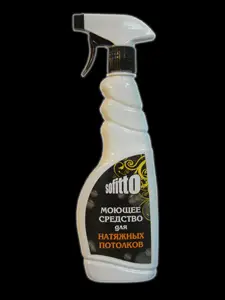
Photo 2 – One of the cleaning agents for stretch ceilings
How to Clean a Stretch Ceiling (Video)
Are Stretch Ceilings Harmful?
There are many debates about whether stretch ceilings are harmful. It is not possible to say definitively “no, they are not harmful,” or “yes, they are harmful.” First, you need to identify what could theoretically be harmful in stretch ceilings. Harmful to health may be volatile chemical compounds such as phenol. In principle, some emissions can come from any synthetic material, and the level of harm depends on their quantity.
Reputable companies such as Clipso or Pongs test their products for toxicity. Certificates confirm the ecological and safe nature of their products, low levels of volatile emissions, making them suitable even in children's rooms. As for fabric ceilings, the main issue is dust accumulation, but this can be combated with timely cleaning. According to reviews, dangerous products are often counterfeit or from unverified manufacturers, especially those from China.
The composition of the film and levels of volatile emissions are not controlled, so such a ceiling may harm the health of residents. Therefore, the principle of choosing ceilings is “trust, but verify” – a quality stretch ceiling is safe, but the fabric’s quality should be checked before purchasing.