Types of Plaster
Types of Plaster: Basics
It's essential to distinguish textured plasters (structural plaster) from coating plasters, i.e. standard plaster and finishing decorative plaster — different materials, so different prices. Thick-layer coating plaster is a base layer used for wall leveling prior to tiling, glazing, or painting. In other words, coating plasters are base layers, preparatory layers, not final wall finishes. Structural plaster, on the other hand, can not only create decorative surfaces but also help level uneven walls vertically. This type of material is considered a final finish.
Textured plasters are equally suitable for interior applications (wall and ceiling finishes, decorative elements) and exterior use (textured facade plaster for buildings — aesthetically appealing and impact-resistant).
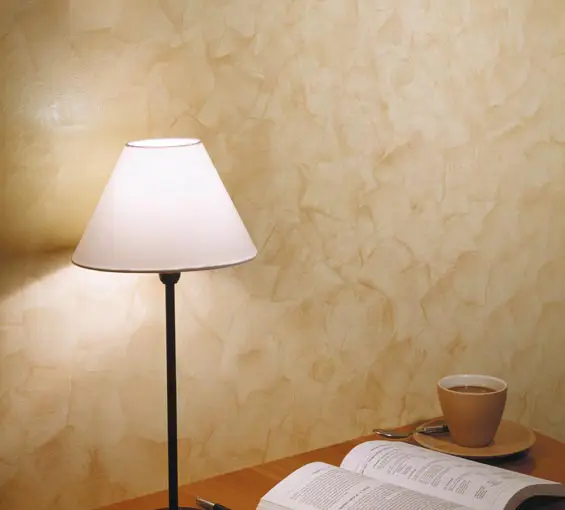
Photo 1 — Decorative lustering coating with matte, glossy, or pearl-like finish
Types of plaster are categorized by binding agent type, coating structure, application area, and application method. It's difficult to assess plaster quality objectively, as even expensive mixtures may fail if application guidelines aren't followed, leading to surface damage, budget loss, and stress. However, cheaper plaster doesn't necessarily mean lower quality.
ADVICE: If uncertain, choose mid-range branded plasters. Don't compromise. Consult a specialist before purchasing expensive plaster (e.g., decorative Italian plaster, 'Venetian plaster' — Imperiale finish plaster costs $148 per 4 kg, with a consumption rate of 0.20 kg/m²).
Plaster Types by Structure:
- Textured 'cork' plaster (Reibeputs) − $69.71 per 25 kg (FEIDAL);
- Rollputz (‘Shawl’ plaster) − $89.71 per 25 kg (FEIDAL);
- Kratzputs ('Lamb' plaster) − $79.53 per 25 kg (FEIDAL);
- Streichputs ('Painted' plaster) − $78.71 per 25 kg (FEIDAL)
Surface texture depends on grain size and shape of the aggregate used, as well as application techniques.
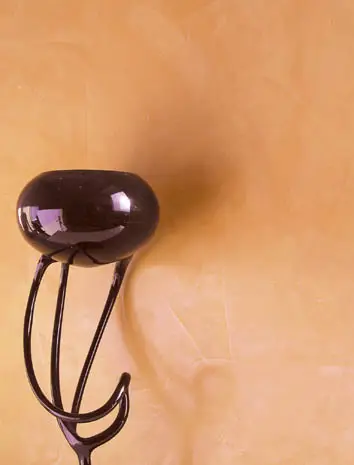
Photo 2 — Synthetic Venetian plaster creating a mirror-marmor effect
Purpose and Types of Plaster by Binding Agent:
Mineral plaster based on cementThis is dry plaster — a mix requiring water addition. It's suitable for nearly all mineral substrates. Key feature: breathable, non-combustible material. Hence, cement plaster is a rational choice for external insulation.
Subtypes include:
- Cement-lime plaster (natural cement-lime leveling plaster OSNOVIT STARTWELL-21, $5.9 per 25 kg; leveling cement-lime plaster Polimin SHV 1, $3.65 per 25 kg);
- Cement-sand plaster (waterproof external cement plaster for preliminary wall and ceiling leveling Weber Vetonit TT, $9.05 per 25 kg);
- Gypsum plaster — the lightest type (eco-friendly universal plaster Knauf Rotband, $9.2 per 30 kg).
Common gypsum plaster subtype: starter (rough) plaster, suitable for use on strong, solid substrates in rooms with normal humidity, including kitchens and bathrooms for surface preparation prior to further finishing (simple German plaster HP Start Knauf, $5.5 per 25 kg).
IMPORTANT: Despite high water resistance, special sanitary plaster is recommended for wet areas, e.g., Ceresit CR 62 WTA — hydrophobic plaster, $40.6 per 25 kg.
Interestingly, in Soviet-era households, due to material shortages, a homemade mixture called 'Armenian plaster' was popular — finely ground sawdust soaked in water and applied to walls, then sanded with gypsum.
Acrylic plaster based on acrylic resins (polymer plaster)This is ready-to-use plaster, not requiring water addition due to its initial water-dispersed composition. It can be applied to all mineral substrates and old dispersion coatings. While it lags behind mineral plasters in breathability, it performs better in climate resistance.
For example, Ceresit CT 64/2 (Ceresit CT 64) granular textured acrylic plaster 'cork', $40.8 per 25 kg, or Kreisel ACRYLPUTZ/2 (Kreisel Acrylputz) interior acrylic plaster 'pebble', $44.4 per 25 kg, or protective finishing plaster Dune (Dune) from Clavel — non-combustible, odorless plaster.
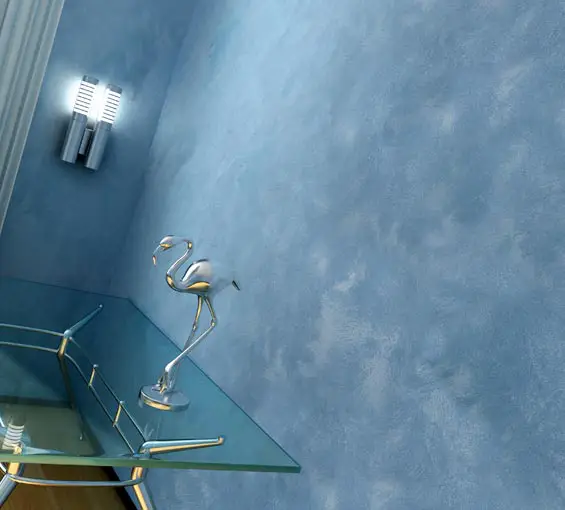
Photo 3 — Glossy plaster
Silicate plaster based on liquid potassium glassThis is sold ready-to-use. Silicate plaster can be applied not only to mineral substrates but also to silicate coatings. Key feature: high breathability. Color range is more limited than acrylic plasters, and it costs roughly 10 times more than polymer mixes. Silicate plasters must only be applied over silicate primers. Repainting or repair must use silicate or silicone materials only. Due to relative toxicity, Western standards prohibit its use.
For example, CAPAROL Sylitol-Fassadenputz R 30 silicate plaster 'cork' (latex roller plaster), $112 per 25 kg.
Silicone plaster based on silicone resinsThis is a ready-to-use final finish plaster. It can be applied to all mineral substrates and old dispersion coatings; it has very high breathability and water-, dirt-repellent properties, making it the most durable among the above types. The main drawback: high cost.
For example, Baumit SilikonTop/1.5 (Baumit Silikontop) modeling silicone plaster 'lamb' $87.65 per 30 kg or CAPAROL Amphisilan-Fassadenputz K 20 silicone 'pebble' plaster $117.1 per 25 kg.
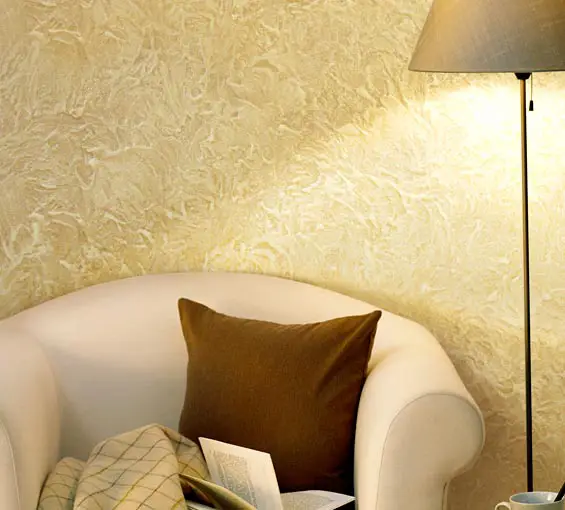
Photo 4 — Plastic structural plaster creating smooth reliefs
Plaster Types by Application Method
Hand-applied plasterFinishing plaster is mostly applied by hand: base plaster is applied, guides are embedded, and main mix is troweled between guides, leveled with a straightedge, sanded, and polished.
For example, gypsum plaster VOLMA-Sloy for hand application, $9.1 per 30 kg.
Machine-applied plasterThese are specialized plasters designed for mechanical application (in multiple layers during thick-layer wall leveling: initial spraying, then base layer). The machine method is convenient for large areas and when speed is critical. These plasters are labeled 'MN' on packaging. Machine plaster is high-quality: when applied correctly, it yields perfectly flat, monolithic surfaces that don’t crack. It’s suitable not only for walls but also ceilings (maximum layer thickness 15 mm).
For example, gypsum plaster VOLMA-Sloy MN, $6.5 per 30 kg.
Additionally, some plasters are suitable for both hand and machine application.
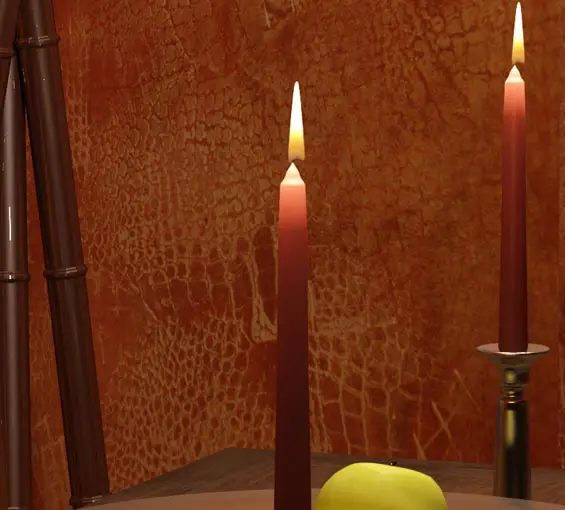
Photo 5 — Decorative plaster with animal hide texture effect
Types of Decorative Plaster
Decorative plaster is arguably the most expensive component in the range of finishing materials, yet also the most attractive. Thanks to modern techniques, decorative textured plasters can mimic almost any surface while maintaining key physical properties: they are mostly breathable, moisture-resistant, often washable, and impact-resistant.
Three main types are considered decorative plaster:
- Relief plaster;
- Venetian plaster;
- Smooth finishing materials.
Relief plaster is durable and can be applied to any surface with minimal prior preparation.
Due to differences in granule and particle size, various surfaces can be created: rough plaster for daubing (Bousillage Rustique from Clavel, rustic plaster imitating adobe, $93.1 per 7 kg), for crocodile skin (Safari from Clavel, $158.7 per 5 kg), stone imitation (Riviera from Clavel, fiber-reinforced plaster, $146.25 per 25 kg, or Travertino — 'stone plaster' imitating travertine, $184.1 per 25 kg), plastic plaster (Provence Antique from Clavel, $261 per 25 kg, capable of mimicking almost any surface — light rain or rose petals). When applied correctly, artificial surfaces are nearly indistinguishable from natural ones: whether it’s tree bark or noble marble. Note: Venetian plaster is water-repellent, so wet cleaning won’t harm the expensive finish.
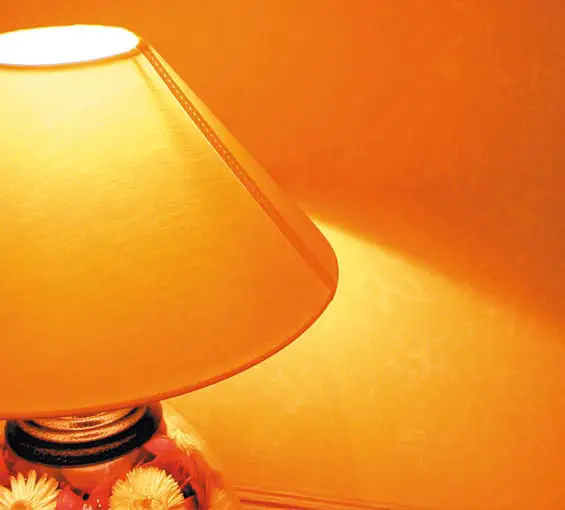
Photo 6 — Decorative coating with sea foam effect
Venetian plasterVenetian plaster is a complex, expensive finishing material creating truly unique surfaces. The beauty lies in the light-reflection effect created by layered application. Unlike other plasters, it's not a single-layer finish: it's a voluminous coating with 3–10 layers. Venetian plaster can mimic marble (Trevignano, a marble plaster, and Veneto, a glossy marble surface, from Clavel, priced $267 and $198.7 per 25 kg respectively).
Clavel’s Venetian plaster is slightly cheaper at $58.8 per 16 liters.
As the name suggests, 'Venetian' refers to geography: after the revival of the technique, it was used in Venice, though the method dates back to ancient Rome. Thus, it's sometimes called 'Roman plaster'.
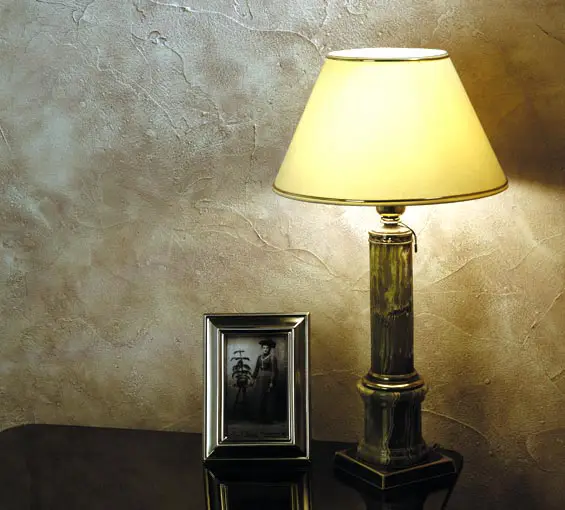
Photo 7 — Textured plaster with fiber-reinforced structure, imitating natural stone
Regional origins of plaster application techniques include:
- Munich plaster (acrylic dispersion with marble chips), average price $109 per 25 kg;
- Danish plaster (better known as 'liquid wallpaper'), average price $8.75 per 1 kg;
- Maroccan plaster (glossy version of Venetian), average price $135 per 5 kg;
- Byzantine plaster (variant of Venetian), average price $56 per 5 kg;
- American-style plaster ('raindrop' effect), average price $26 per 7 kg.
Do not confuse naming of application style with production location. For example, 'French plaster' refers to products from Senideco or Blancor, 'Japanese' refers to synthetic plaster from 'Silk Path' company, 'Turkish' refers to Siva plasters or improved Bayramix plaster.
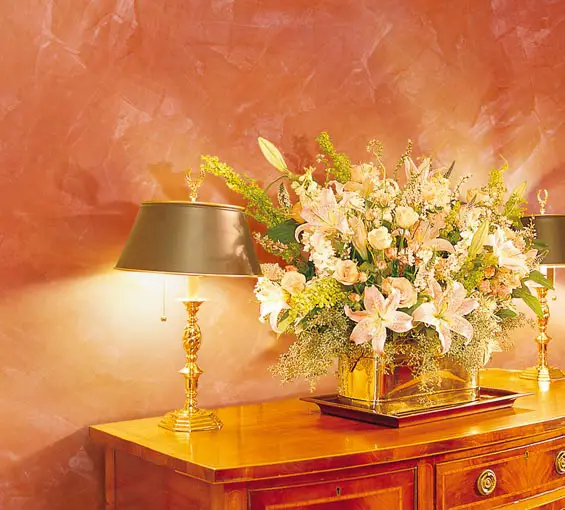
Photo 8 — Natural Venetian plaster with polished marble effect
Other decorative plasters include:pearl-like, 'silk' plaster (Refecto from Clavel, thin-layer plaster for finishing, $35.6 per 5 kg), liquid plaster for velvet or suede (Arabesco from Clavel, velvet artistic plaster, $278 per 5 kg), beautiful plaster with glossy-matte fantasy patterns (Sabbia from Clavel, fine-grained plaster, $117.18 per 25 kg), etc.
Most discussion has focused on ready-to-use plasters that don’t require water addition or mixing. These are more convenient than dry mixes, not needing painting or time-consuming mixing.
However, dry decorative plasters are also popular, mainly due to lower cost. For example, decorative polymer-cement plaster 'cork' Ceresit CT 35 costs only $13.5 per 25 kg, and warm plaster Diament (Knauf) is $8.6 per 25 kg.
IMPORTANT: For wall insulation, winter vermiculite and perlite plasters are suitable ($8 per 25 kg). Warm plaster 'Mishka' (price $21.25 per 25 kg) is also suitable for home insulation.
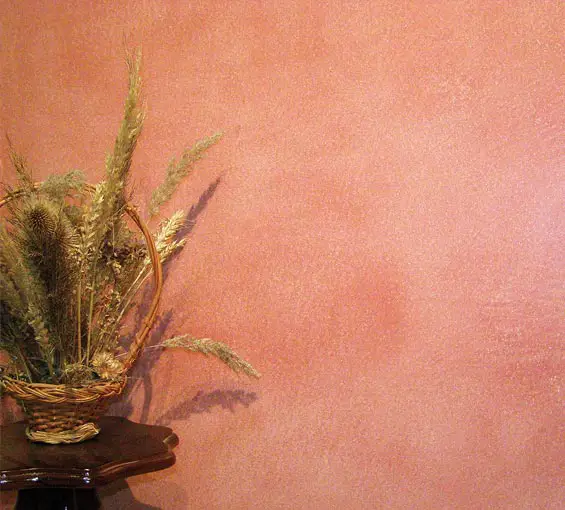
Photo 9 — Natural lime plaster Marmerella Stellare made from special Italian marble varieties with gold, silver, and bronze inclusions
Types of Decorative Plaster: VIDEO
Special Types of Plaster
Special types of plaster include finishing materials for surfaces under high stress or in high-risk zones. These may include fireproof (fire-resistant, heat-resistant), frost-resistant, radiation-shielding, acoustic, or moisture-resistant (waterproof) plaster.
For example, fire- and heat-resistant, high-temperature-resistant modern plaster TFS-170 ByProc, $8.75 per 25 kg, or barium plaster for radiation shielding FullMix, $24.68 per 25 kg.