How to Bring a Design Idea to Life: 10 Secrets of a Successful Interior Design Project
Each of us has encountered frustrating mistakes made by builders — sometimes the access to plumbing is inconvenient, and other times the wall color turns out to be a different shade. To avoid these issues, we turned to professionals for tips.
What do you think about when choosing an interior designer? How professional is he or she? Will he or she understand your desires? How soon will you move into your new apartment? And will it end up looking exactly like the image?
There are several rules that help us bring to life precisely the project we had in mind. We would like to share these with you.
Tatyana Plotnikova and Alexandra Safronova - Experts, Founders of the Design Studio P.S.Interior
Engineering
The final result is laid down from the very first seconds of working on a project. Even during the layout stage, we already know what will form its foundation.
One of the most important tasks is engineering, which should always be accessible. The better the designer's work, the less visible the solution should be to the naked eye.
Here's what we always think about in our projects:
- Pipes. As soon as plumbing appears on the layout, we understand how the pipes will go to it. We're sure that the slope for gravity drainage is sufficient, that the number of pipe bends does not exceed the allowable limit, and that there's enough floor height to hide them. Without a clear understanding of this issue, it makes no sense to continue working further.
Design: P.S.Interior
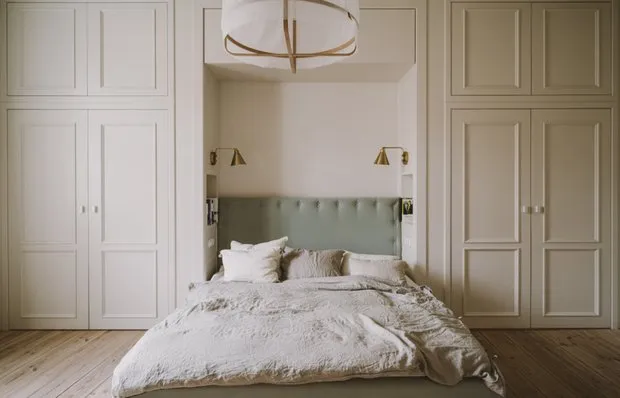
- Electrical Panel. It's important that the location of this panel is easily accessible. Even what is hidden should be done neatly and tastefully. We like to use wardrobes in the entrance hall or walk-in closets: we install false doors at the back of the cabinet where the electrical panel is hidden.
Decorative panels can help preserve a stylish design in this matter. Look more carefully at your friend's entrance hall, maybe something is hidden behind the rails.
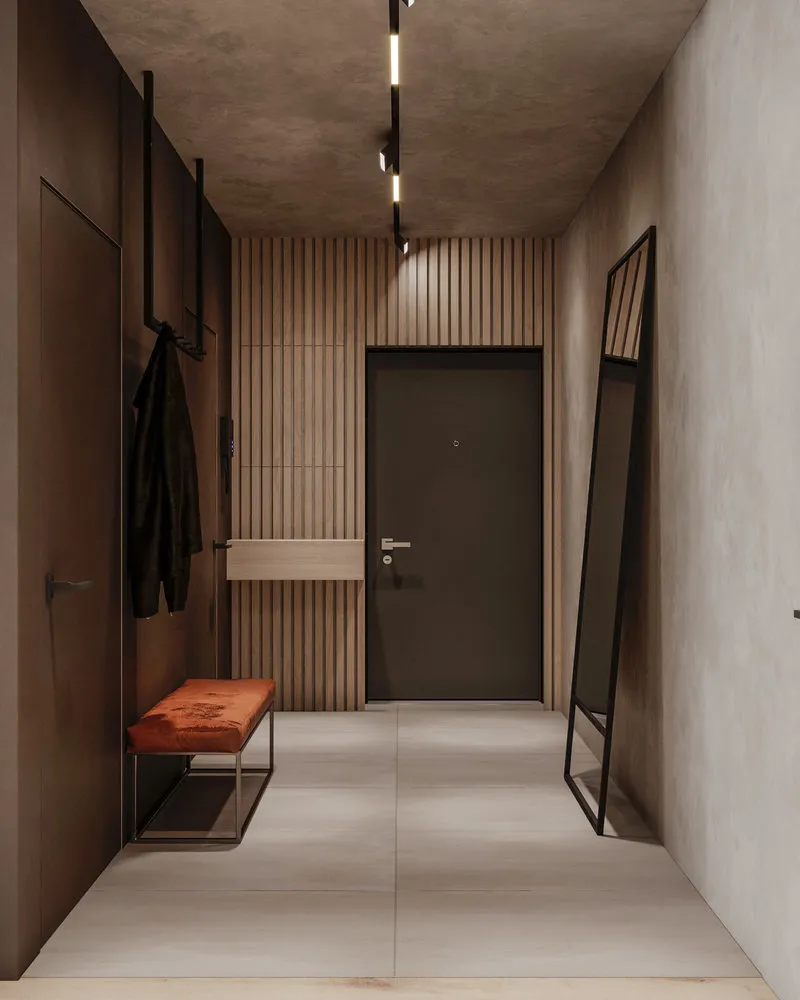
Design: P.S.Interior
- Heating Collector Plumbing. If the building doesn't have a centralized heating system, we always recommend our clients to use collector plumbing. We hide it using the same principles as for electrical panels.
- Water Supply Collector, Access to the Drain in the Bathroom, Any Hatches in the Bathroom. No apartment can do without such a hatch. When choosing it, we always refer to tile size — its integrity should not be compromised. In this case, the tile joints will hide the seams of our hatch and make it unnoticeable. And don't be afraid of dimensions: on one project, we had a hatch 120 cm high where we hid the water heater.
If space and layout allow, it’s possible to conveniently hide the water supply collector in a cabinet.
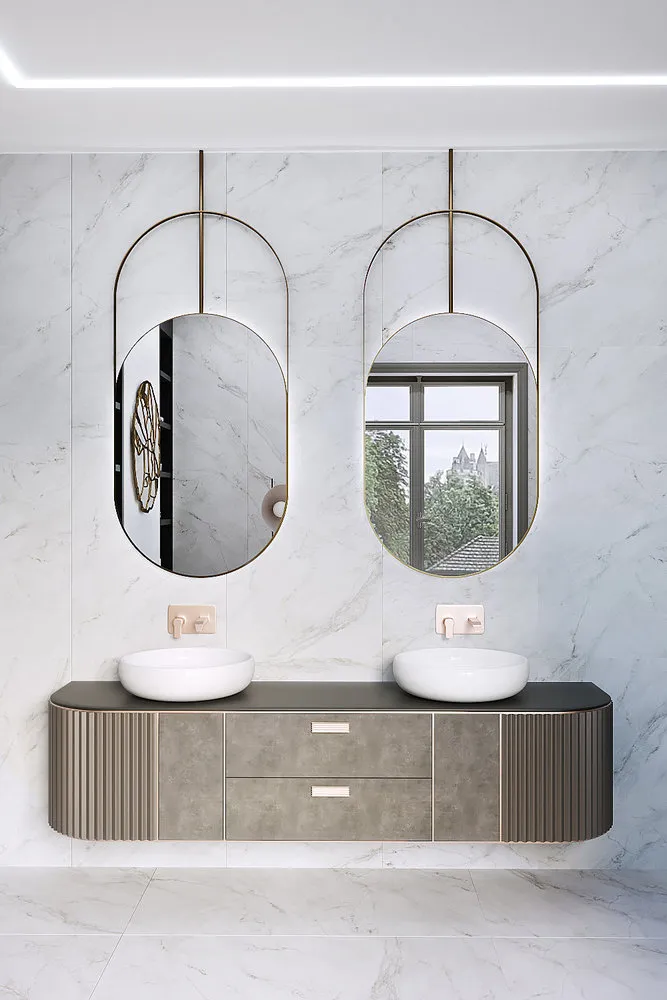
Design: P.S.Interior
- Ventilation and Air Conditioning. These are probably the most complex hatches to work on. The ventilation and air conditioning system affects ceiling heights, light fixture placement, and even furniture arrangement.
To make these hatches not stand out, we try to place them in auxiliary rooms. If that’s not possible, we integrate them into the layout of light fixtures.
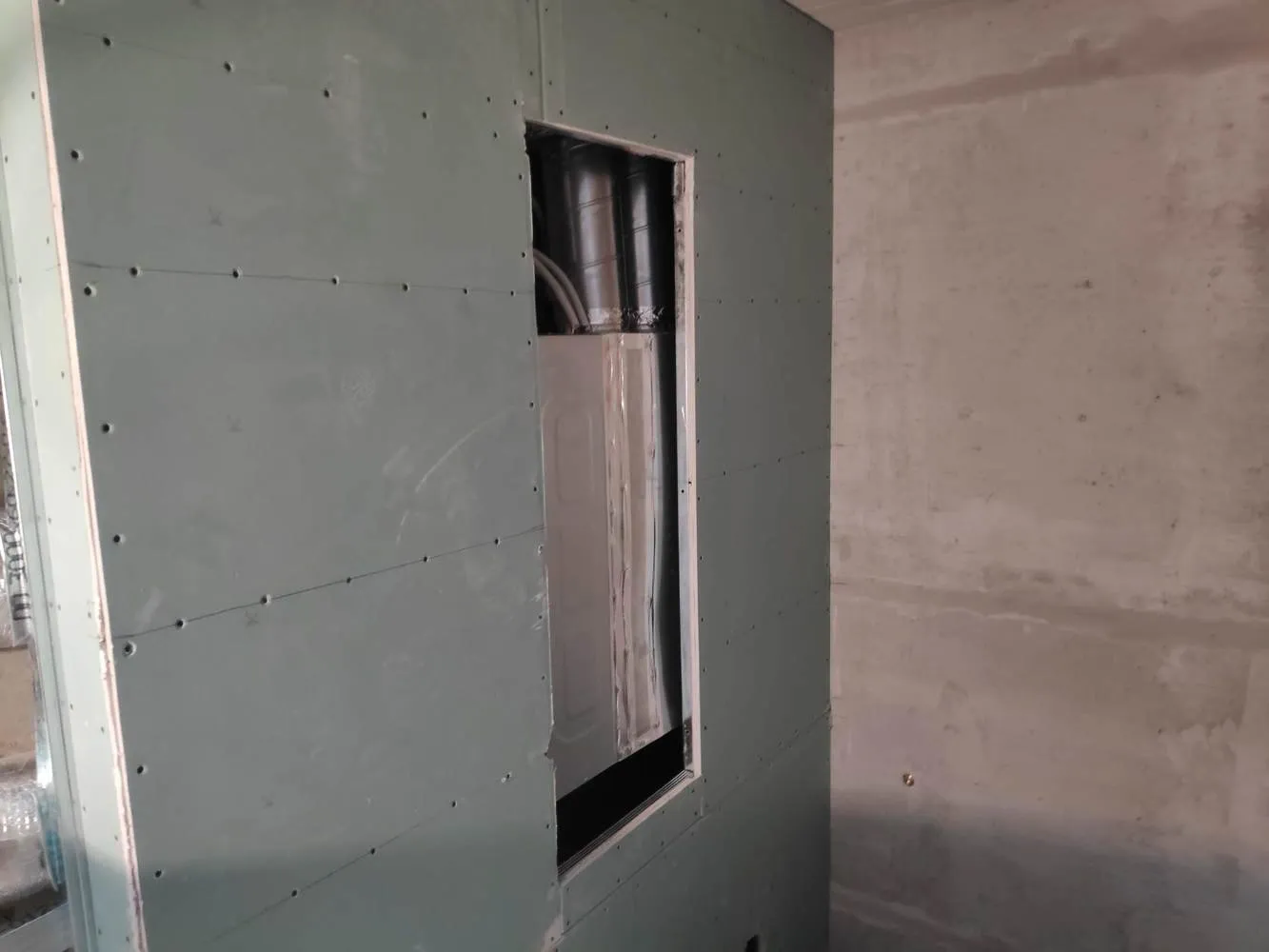
In small rooms, you can install a suspended ceiling. If access to the unit is needed, it can be completely removed and then reinstalled. For example, we used this approach in a small fitness room.
- Leak Sensors, Intercom, Router, Security System. We always plan ahead all additional “wishes” that may require electrical outlets or separate placement.
For this reason, we create a very detailed technical specification with our clients.
Visualization (Images)
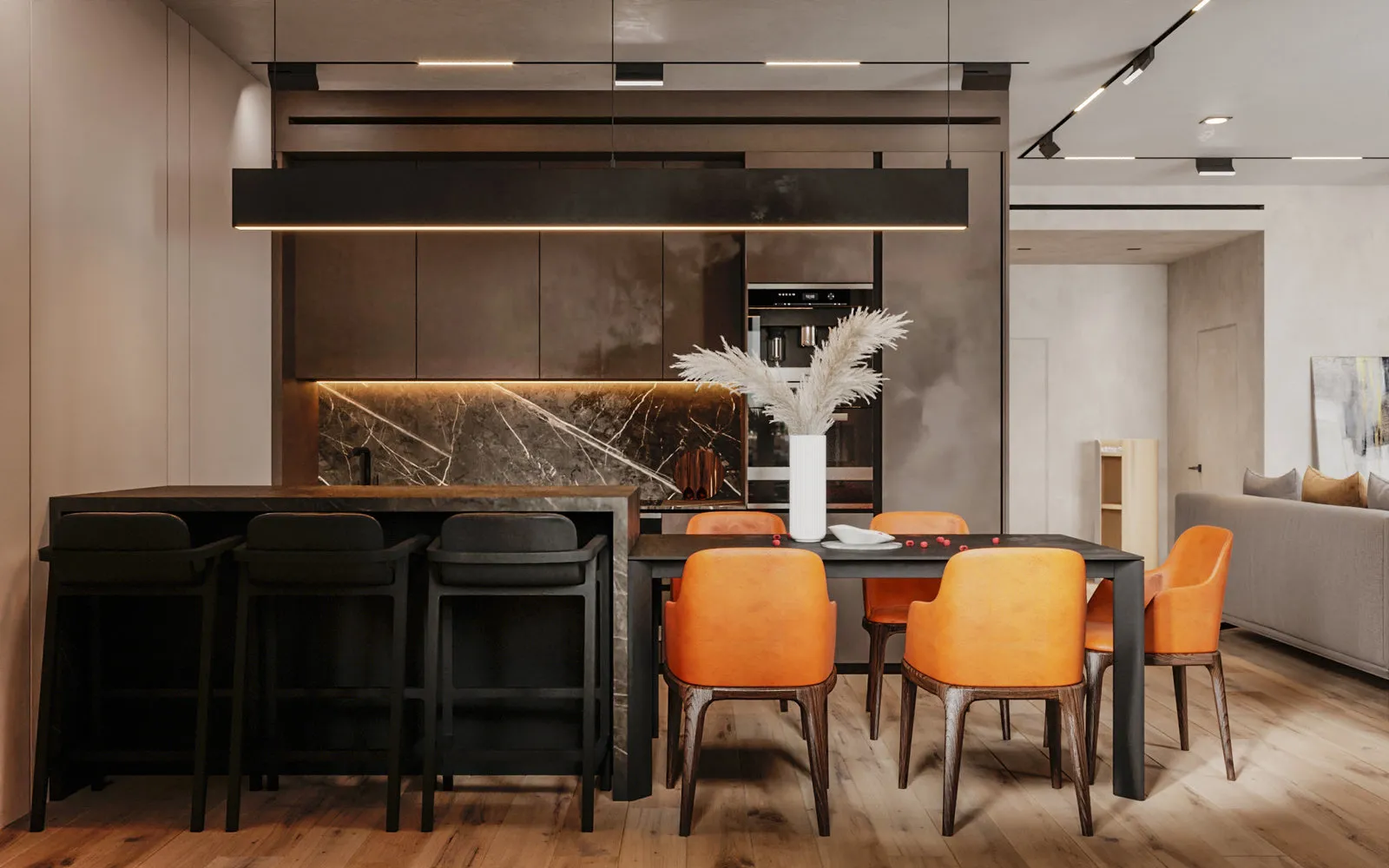
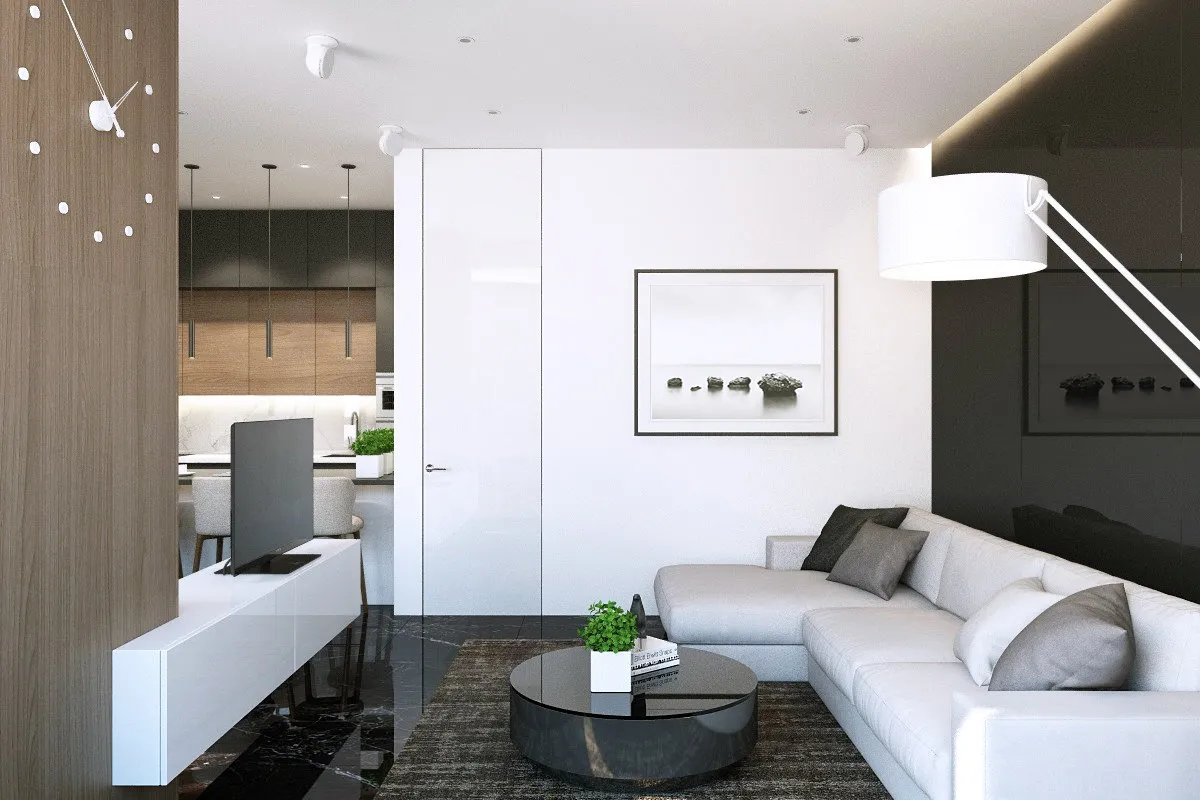
Our image always contains only real existing items (unless we're planning to make everything custom). Furniture and finishes are selected not during construction, but at the visualization stage. This helps understand the budget clearly and ensures that we get exactly what's on the image in the end.
Of course, sometimes a sofa might be replaced, but we will choose the color of its upholstery based on the visualization.
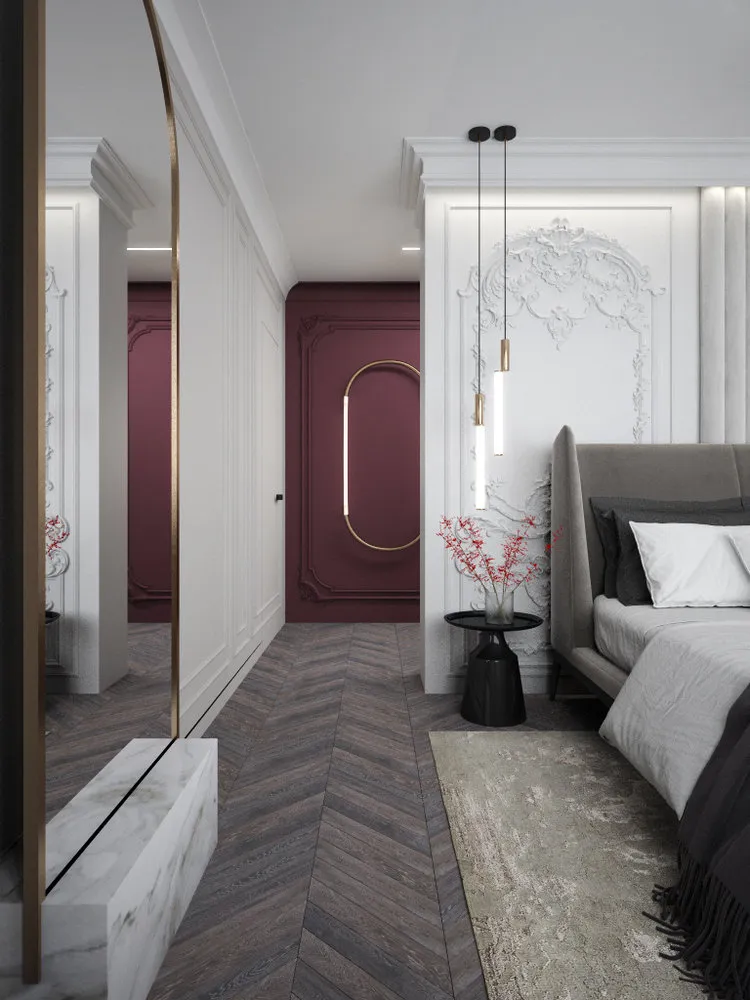
Design: P.S.Interior
Construction
There are always many concerns and questions during construction, but with a well-thought-out project, we know exactly how to implement it without major surprises.
Our first rule on the construction site is not to believe the phrase “this is impossible.” If a specific person hasn't done something before, it doesn't mean that doing it is impossible.
When we have an idea, we consult not just one builder, supplier, or seller, but several. Sometimes there may be 20 or even 30 of them. But there is always someone who, just like us, is interested in doing something unconventional.
Construction should never be left to chance. No matter how perfect everything might seem, the key to a happy move-in is constant monitoring of what's happening.
Design: P.S.Interior
Sometimes one centimeter plays a big role. It can ruin the composition of a pattern or prevent the bathtub from fitting properly. That’s why we trust, but also check.
Don’t forget that professional control and planning by the designer will help you enjoy the sunrise in your new apartment as soon as possible.
Finishing
Our last, but very important tip — proper finishing on the site: thoughtful and beautiful color and material combinations.
First, it’s about selecting the color of paint and decorative plaster. Each paint manufacturer has its own “color wheel” with a range of colors. But it’s not advisable to rely solely on this. The color on the wheel and the color on the wall are two different things. Therefore, we always make paint samples — at least three — and view them on-site in the actual room where we plan to use that wall color.
This is done because due to window size and direction of natural light, the same shade can look different in an interior.
Some paint suppliers can create a custom color by scanning a picture or even the color from a handbag. That’s why our projects can feature exclusive colors named after clients.
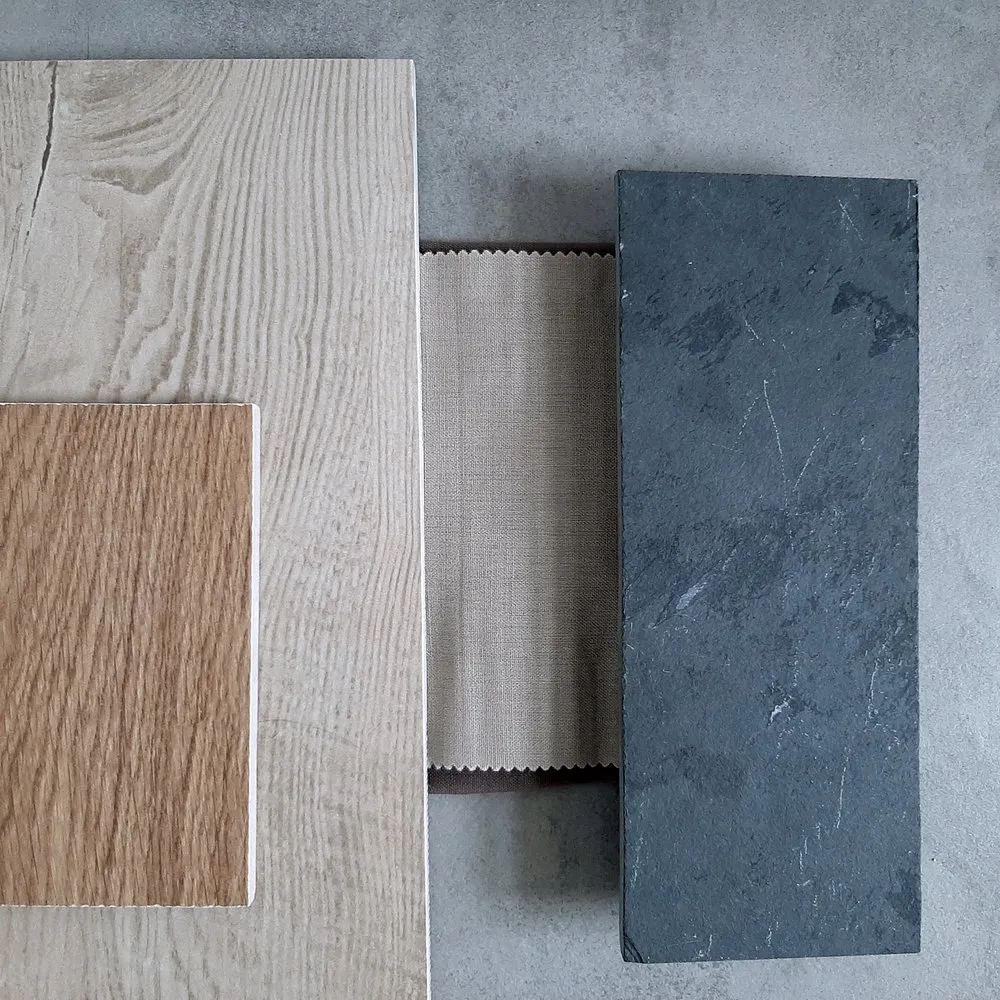
Second, every respected finisher always carries samples of finishing materials. We never buy anything at random. We only use approved materials, such as a small piece of parquet, tiles, wall paint sample, and then select other interior elements — wood veneer for a future cabinet, fabric for curtains, etc.
We never neglect this rule: an insignificant difference in tone can dramatically appear when combined with other colors, resulting in unpredictable effects.
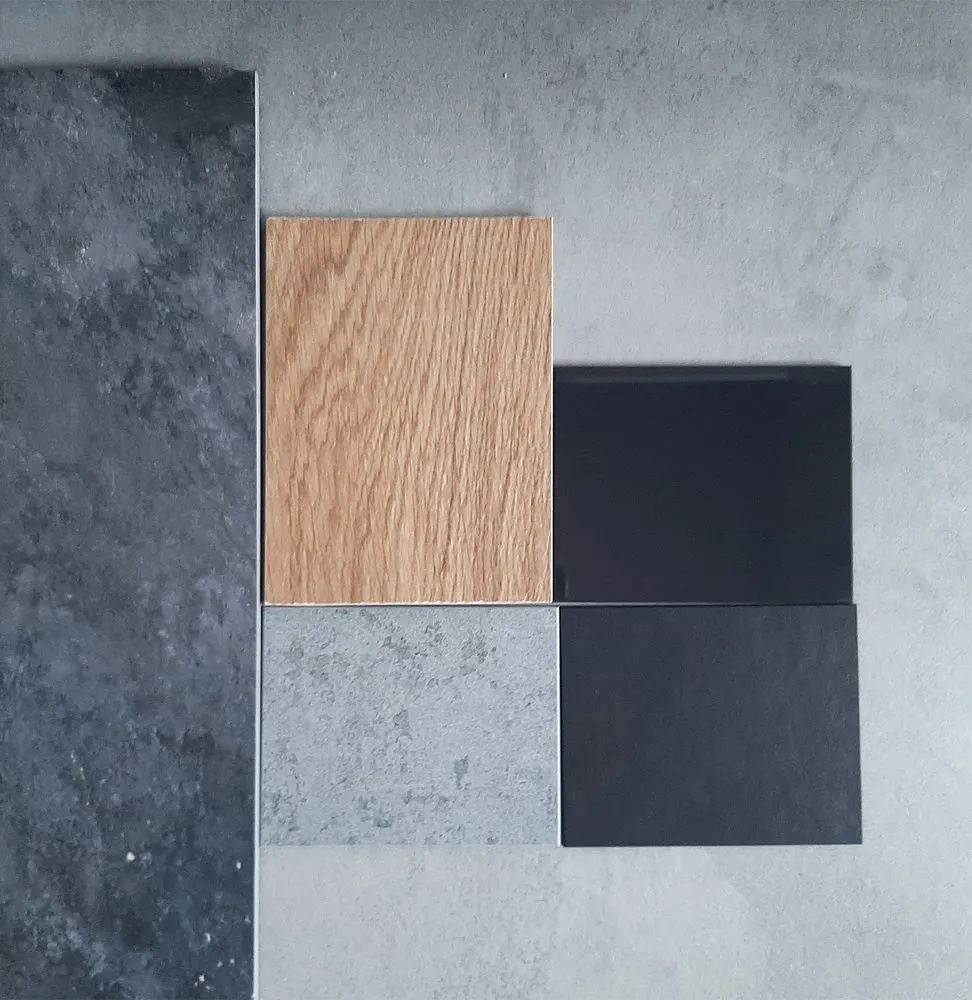
Of course, this is not all that’s needed for a perfect realization of the image in life — there are many nuances during project implementation. But this is the essential minimum without which the desired result is definitely impossible!
Cover: Design Project P.S.Interior