Concrete Foundation Pouring
It might seem that nothing could be simpler?
Yes, it’s fair to say that with proper preparation, pouring won’t be a problem. But the final foundation may still fail due to careless execution, ignoring basic rules. There aren’t many rules, but all are essential.
Manual Work
If the volume of work is small, there’s an option to mix concrete manually. The key is to complete all tasks in one day. The main issue is the setting time of the mix. Stretching the process over time (pouring in layers) is not only impractical but also dangerous for the future foundation.
Naturally, doing this alone isn’t feasible—helpers are needed. But even with help, success isn’t guaranteed. Still, if this option is chosen, the main thing is to follow the rules and maintain proper sequence.
Concrete mixing. Foundations are typically poured with M-200 concrete, made using M-400 cement. Using higher-grade cement is not advisable. Higher grades are more hygroscopic, which may become an issue during foundation use. Damage to waterproofing may cause the material to absorb moisture. In freezing conditions, water crystallizes (expands), eventually destroying the base from within.
Classic concrete recipe. Ratio: 1 part cement : 3 parts sand : 5 parts crushed stone. Water required: 125 liters per 1 cubic meter of mix. Water must be clean, free of impurities and fats. Crushed stone should be in small fractions. Sand must also be clean, free of soil, twigs, leaves, etc.
Pouring. In manual mixing, pouring happens in portions. Poured portions must be mixed to prevent layering. This can be done with a shovel or any other convenient tool, but work must be done carefully to avoid damaging the waterproofing.
Concrete must be poured immediately after mixing. As mentioned earlier, all pouring work should be completed in one day. Otherwise, the poured mix may partially set, making adhesion between new and old layers difficult.
Ready-Made Concrete
A faster method is to order concrete from a plant. This ensures mix quality: components are automatically dosed, and the mixer blends them far more effectively than manual mixing. Also, the exact amount needed for the specific foundation is delivered.
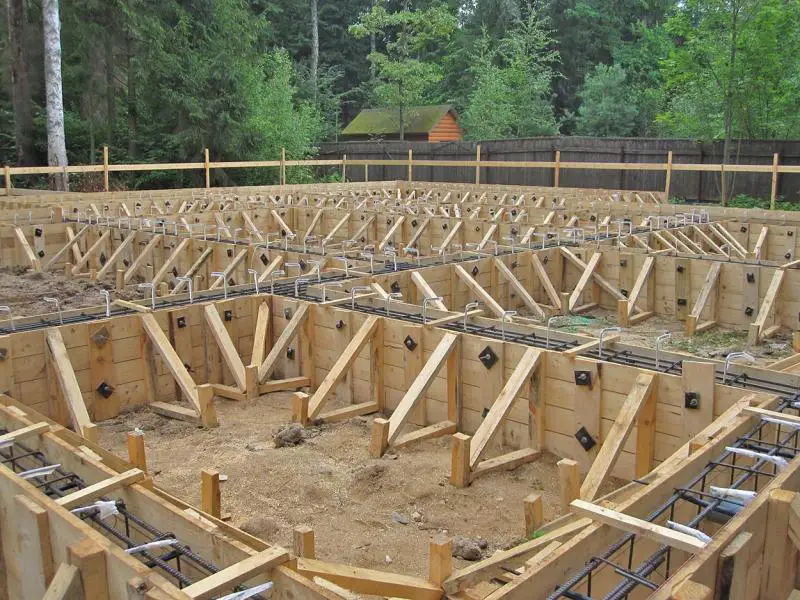
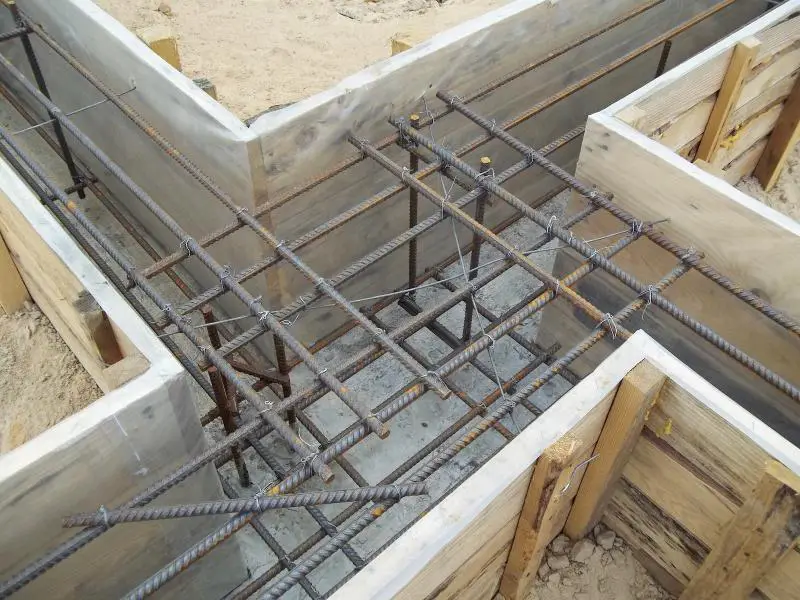
To ensure the concrete mixer discharges the mix evenly, you must prepare chutes in advance—machines may not reach every area. The mix must not only be leveled but also compacted using a special vibrator, rebar profile, or shovel. Compaction removes air bubbles, ensuring the concrete reaches its designed density.
General Rules
After pouring and leveling, cover the surface with plastic film to prevent moisture evaporation. This also protects the base from contamination and rain.
If pouring occurs in summer, periodically wet the foundation surface with water. This compensates for moisture loss from the top layer, ensuring even curing throughout the depth.
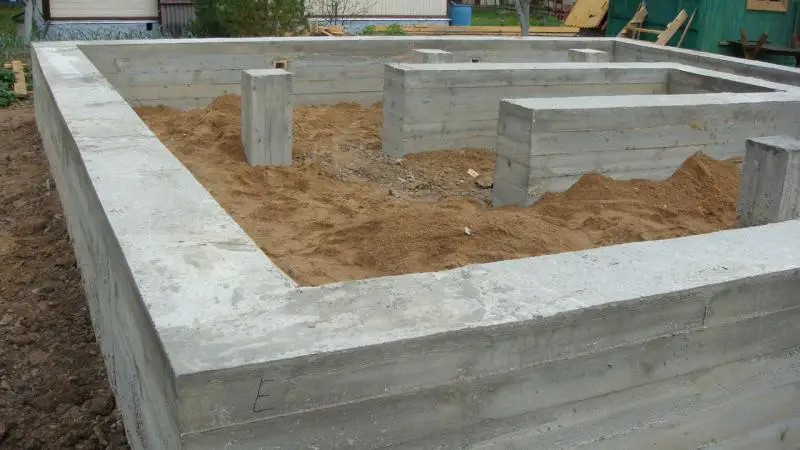
Setting time depends on concrete grade and foundation thickness. Even if formwork is removed after a few days, the base is not yet ready for load. Full strength is only achieved after 1.5–2 months.