Ventilation Vents in the Foundation
From this small, unnoticed opening—sometimes forgotten by builders—depends the durability of the house and even the comfort of its residents.
Should You Install Vents in the Foundation?
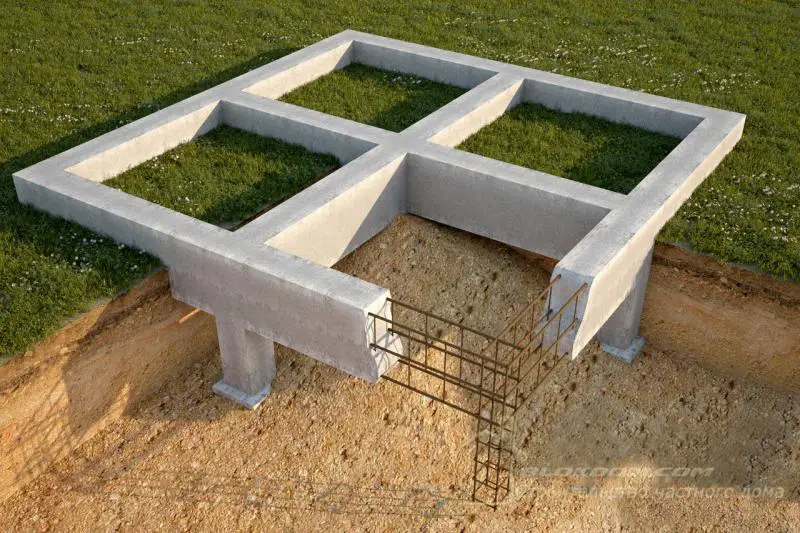
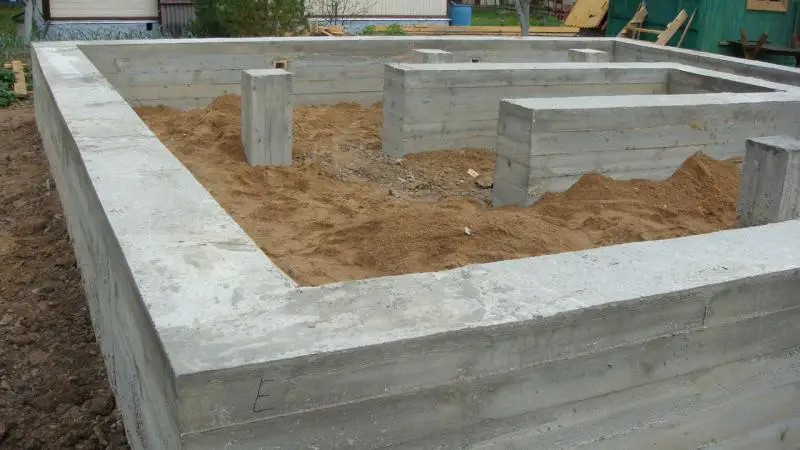
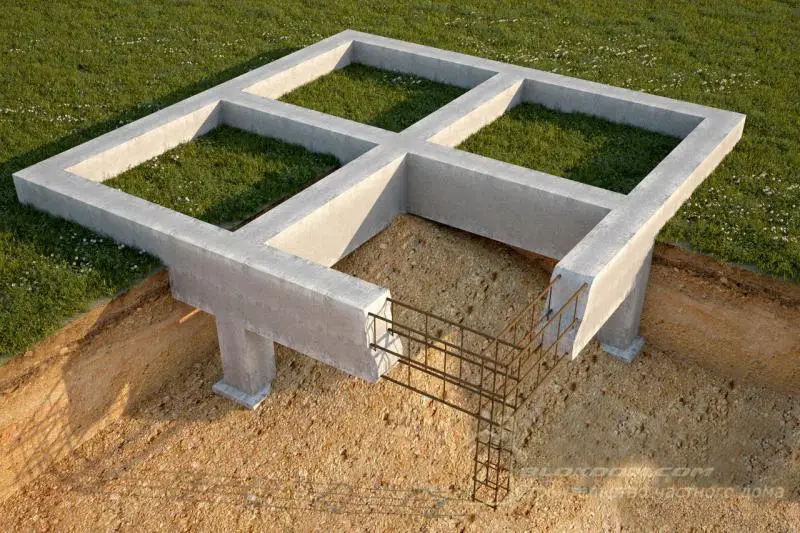
Ventilation openings are required for foundations with enclosed empty space between floor joists and the ground. This includes all types of strip foundations, as well as columnar foundations with a reinforced concrete beam embedded in the soil. In such cases, vents must be installed.
There are several conditions under which vents are not required, if:
- the space between foundation columns is sealed with a material of high vapor permeability;
- there are open ventilation openings in the floor, meaning the crawl space is ventilated through the living area;
- a ventilation system is installed in the crawl space and operates continuously;
- the crawl space is filled with compacted soil or sand and covered with a vapor-barrier material, with joints overlapping by 15–20 cm.
Calculating the Number of Vents in the Foundation
If ventilation is needed, a reasonable question arises: how many openings are required, and what diameter should they have? Builders often cannot give an accurate answer because they are unfamiliar with relevant literature such as SNiP 2.08.01-89. Therefore, you may often hear the general statement: at least one opening per side of the house. However, proper ventilation is somewhat more complex than this phrase, though still simple.
Size of Vents
Regulations state that the total area of all ventilation openings must be at least 1/400 of the floor area. Thus, for every 100 m² of floor, there should be 0.25 m² of vents.
The minimum size for a single opening, as specified in the same document, is 0.05 m². This corresponds to a rectangular opening of 20×22 cm or a circular opening with a 25 cm diameter. To avoid creating one large circular hole, several small ones are made, but each must be at least 11 cm in diameter—otherwise, the desired effect cannot be achieved.
Placement of Vents
The distance between openings must be proportional. At the same time, the first vent from the corner must not be farther than 1 m (0.9 m in European standards). This prevents the formation of stagnant air pockets in the crawl space. Vents should be installed on all sides of the house.
If the foundation includes a beam, it is considered a wall, so the 'dead corner' rule (0.9 m) applies. Openings must also be made in the beams themselves. The openings should be placed at least 20 cm above ground level; if seasonal flooding is possible, they should be above the expected flood level.
How to Install Vents in the Foundation
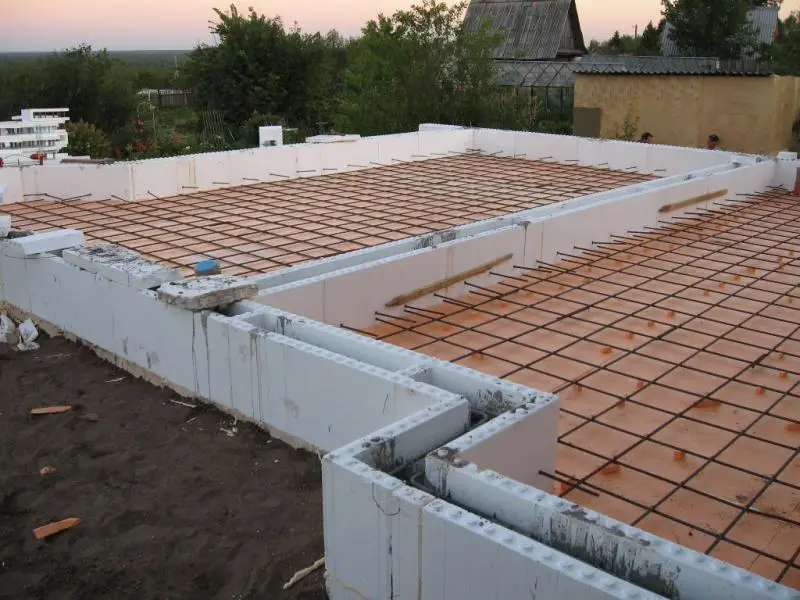
The vent frame is inserted into the foundation during rebar tying. It can be made of wood (plank) for rectangular vents or strong plastic (section of a drainage pipe) for circular ones. The frame is inserted snugly into the formwork and securely fastened to the rebar. It must be pre-filled with sand or sealed at the open end to prevent concrete from entering.
After concrete pouring and formwork removal, the openings must be cleared and opened. On the outside, a metal or plastic mesh should be attached to protect against small rodents, cats, and birds. Closing the openings with doors, as was done 30 years ago, is not recommended—this reduces usable vent area and undermines their purpose.
Forgot to Install Vents?
There are several solutions. If the house has not yet been built, the most reliable option is to construct a foundation wall (coping) and install ventilation openings within it. The coping can be made of brick, where one brick laid on edge replaces a vent. Alternatively, it can be poured with concrete—then the same installation technique applies.
If raising the floor level with a coping is not feasible, you must drill holes into the existing foundation. Cutting concrete is labor-intensive and difficult; in such cases, it’s best to hire professionals who offer such services. Even if done manually, care must be taken not to damage the reinforcing rebar, which is often challenging. The resulting hole must be lined with a frame to withstand concrete pressure.
Another option: build a foundation without vents. More precisely, organize crawl space ventilation through the living area. This involves drilling holes in the floor, preferably in areas not subject to load fluctuations (under furniture legs, in corners, under stairs). Holes must be covered with metal mesh.
Ignoring foundation vents can be dangerous. But they must be installed wisely, not just for show. Proper crawl space ventilation ensures protection of wooden building parts from moisture. Some may reasonably point out that in European practice, vents are not common. This is true. However, in Europe, crawl spaces are not left as air pockets—instead, they are filled with sand or soil and a secondary vapor barrier is installed under the entire floor. Domestic construction traditions differ, which is why we need these vents.