How Can I Make My House Look More Expensive Outside?
When planning home improvements that build equity and prestige, most homeowners pour their budgets into luxury interior renovations. Yet your property’s exterior creates the true defining impression, establishing the architectural pedigree of the home before anyone ever walks through the front door. A polished, visually balanced exterior signals craftsmanship, meticulous care, and elevated value from the street.
Achieving a high-end architectural look does not require an immense construction budget or a structural rebuild. Often, what separates an ordinary facade from a bespoke residence comes down to intentional details: balanced scale, layered illumination, crisp landscaping geometry, and the deliberate elimination of visual clutter. In this guide, you will discover practical, high-impact strategies to elevate your home’s exterior design, optimize your curb appeal, and create lasting architectural presence.
Quick Upgrade Summary
- Scale up your entry details by installing substantial solid-metal house numbers measuring 6 to 10 inches tall alongside a coordinated, heavy lockset.
- Create year-round structural presence by planting deep foundation beds anchored with evergreens rather than scattered seasonal annuals.
- Unify your exterior lighting using warm-white LED fixtures rated between 2700K and 3000K, avoiding harsh cool-white commercial bulbs entirely.
- Modernize your garage door with magnetic architectural carriage hardware or fresh paint, transforming the facade space that covers up to 40 percent of your front view.
- Conceal mechanical eyesores like air conditioning compressors and utility meters behind custom slatted privacy screens to maintain an uninterrupted facade.
- Refresh your trim and siding using the balanced 60-30-10 color rule to establish a cohesive, custom-built look from the curb.
How to Make Your House Look More Expensive Outside: Essential Curb Appeal Upgrades
Refine the Entryway Architecture with Proportional Scale
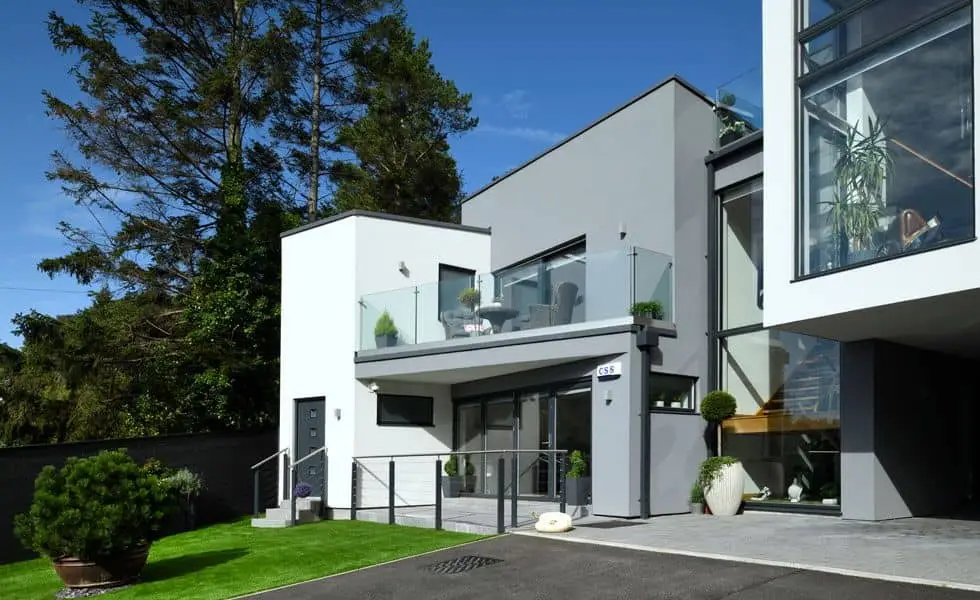
Scale matters most at the front door: install substantial 6-to-10-inch modern numbers and heavy hardware to make your entrance look custom and expensive.
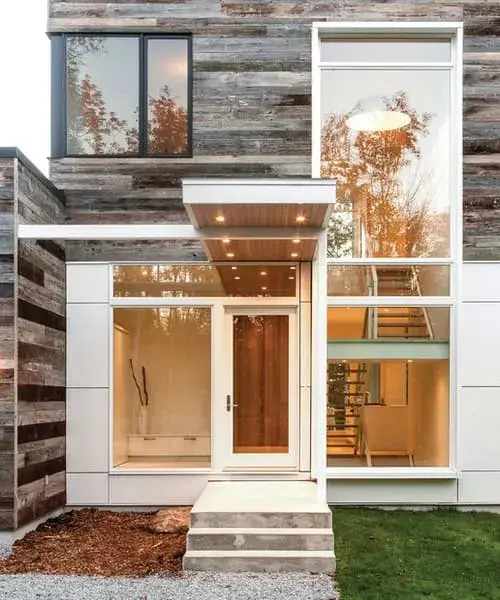
The front entrance acts as the primary focal point of residential architecture, anchoring the visual balance of the entire front elevation. Upgrading your entryway creates an immediate sense of grandeur because the human eye naturally seeks out the arrival point first. When an entrance feels undersized, builder-grade, or cluttered, the entire house loses perceived value, regardless of its square footage.
Select an Intentional Front Door Color and Profile
Your front door serves as the centerpiece of your facade. If the current door is dated, drafty, or deteriorating, replacing or refinishing it yields immediate structural and cosmetic benefits. Updating aging exterior doors and windows solves pressing performance problems like air and water leaks, while dramatically sharpening the building envelope. If a complete door replacement is outside your immediate renovation scope, a bespoke paint finish creates a dramatic transformation.
To capture an expensive look, steer away from thin, high-gloss primary colors. Instead, choose deep, complex pigments that harmonize with your exterior materials:
- Deep mineral tones: Charcoal slate, moody graphite, and deep iron ore ground light facades.
- Timeless classics: High-pigment navy, rich forest green, and classic satin black offer enduring elegance.
- Warm organic hues: Rich wood stains, burnt ochre, and warm terracotta introduce authentic craft and texture.
Upgrade Hardware and Modern House Numbers
One of the most frequent exterior design mistakes is installing diminutive hardware that disappears against the siding. Luxury homes feature generous, substantial proportions. Replace small house numbers with oversized modern numbers measuring six to ten inches in height, crafted from solid metal with a brushed brass, matte black, or satin nickel finish.
Coordinate your door handleset, knocker, doorbell, and mailbox so their metal finishes align seamlessly. A heavy, solid-brass mortise lockset with an elongated backplate immediately conveys substance the moment a visitor touches the door handle.
Execute Cohesive Front Porch Makeover Ideas
A high-end front porch feels curated, intentional, and balanced rather than crowded with random seasonal accessories. Frame the doorway using a symmetrical pair of substantial, heavy planters made from concrete, glazed ceramic, or composite stone. Planters should measure at least one-third to one-half the height of the door to balance the vertical scale. Fill them with structured architectural greenery such as clipped boxwoods or upright pencil hollies rather than chaotic arrangements.
Frame the Property with Structural Landscaping
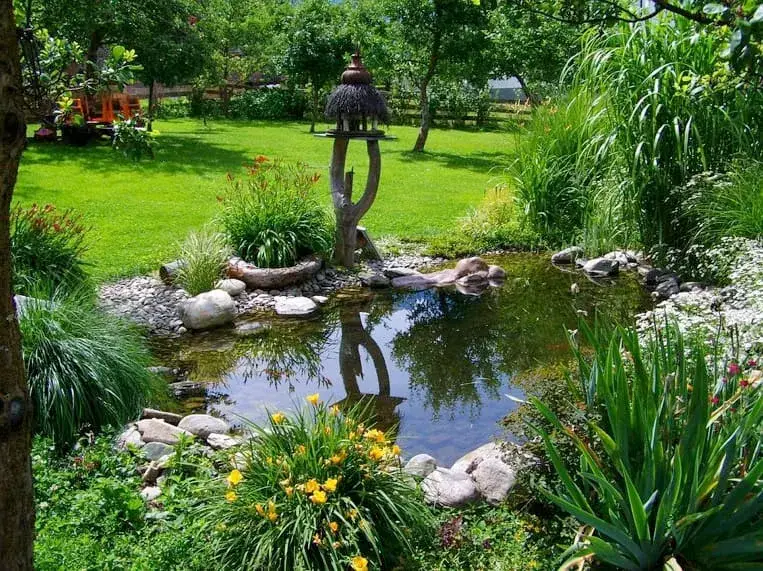
Thoughtful residential landscape design functions as outdoor architecture, creating soft frames and leading lines that flatter the structural lines of your home. To make landscaping look truly expensive, prioritize year-round architectural structure over random bursts of seasonal color. A well-composed garden establishes rhythm, clean boundaries, and enduring curb appeal in every season.
Establish Deep Foundation Plantings and Crisp Edging
Builder-grade landscaping typically relies on thin, wavy garden beds pressed tightly against the foundation. Luxury landscapes, by contrast, utilize deep planting beds that extend outward from the home, allowing for layered plantings that build depth from the curb. Anchor these beds with a backbone of evergreen shrubs that maintain their shape and foliage year-round.
Define the perimeter of your garden beds with clean, crisp edges. A spade-cut trench edge or a sunken stone border creates an immaculate division between lawn and planting soil. Top your beds with a uniform layer of dark, finely shredded hardwood mulch or local river rock. A consistent ground cover keeps the soil moist, prevents weed growth, and provides a polished, uniform aesthetic foundation.
Invest in Value-Adding Trees and Low-Maintenance Blooms
Mature greenery instantly communicates permanence and prestige. When selecting plants, consider planting trees carefully positioned along property lines or framing exterior corners. Beyond making your house look established and expensive, mature trees provide cooling shade and add documented market value to your property.
When selecting flowering plants, restraint is key to achieving a sophisticated aesthetic. Instead of cluttering your beds with dozens of contrasting annuals, choose cohesive swathes of reliable, easy-to-maintain perennials like lilies and cosmos, complemented by structural hydrangeas and ornamental grasses. These varieties provide lush, graceful color without requiring constant maintenance or replanting.
Elevate Walkways and Outdoor Living Decks
Narrow, cracked concrete paths immediately compromise an otherwise attractive home exterior. Replace or widen walkways using natural stone pavers, brick ribbons, or textured concrete flags wide enough for two people to stroll comfortably side by side. Ensure the path flows naturally toward the main entry.
In addition to the front walkway, developing your rear and side outdoor living spaces extends the perceived luxury of your home. Incorporating a well-built outdoor deck adds usable square footage and everyday comfort. Many homeowners choose composite decking because composite boards are easier to maintain, resist moisture rot, and last significantly longer than traditional untreated wooden decking. Choosing a composite finish that echoes your interior flooring creates a seamless indoor-outdoor transition.
Design a Layered Exterior Lighting Scheme
Stick strictly to warm-white lighting between 2700K and 3000K across all fixtures to achieve an inviting, high-end glow instead of cold, commercial glare.
A luxury exterior should look just as captivating after sunset as it does in broad daylight. An intentional exterior lighting design emphasizes architectural focal points while providing subtle security and effortless navigation. Harsh floodlights and disjointed fixture styles make a home look utilitarian; layered illumination creates warmth, drama, and dimension.
| Lighting Layer | Placement | Design Objective | Color Temperature |
|---|---|---|---|
| Architectural Uplighting | Base of columns, stone piers, facade bump-outs | Highlights texture, height, and structural form | 2700K (Warm White) |
| Entryway Lanterns | Flanking front door or porch ceiling mount | Provides welcoming focal point and scale | 2700K to 3000K |
| Low-Voltage Path Lights | Along primary walkways and landscape borders | Guides footsteps softly without glare | 2700K (Warm White) |
| Landscape Accent Lights | Base of ornamental trees, specimen shrubs | Adds organic depth and evening silhouettes | 2700K to 3000K |
Calibrate Color Temperature and Scale
The secret to high-end illumination lies in color temperature. Avoid harsh, cool-white bulbs (4000K to 5000K), which produce a sterile, commercial cast reminiscent of a warehouse or parking facility. Instead, install warm-white LED fixtures rated between 2700K and 3000K across all exterior fixtures. Uniformity in bulb temperature gives your property an integrated, professional glow.
When choosing decorative wall lanterns for your porch or garage, choose fixtures that are proportionally scaled to the facade. Entryway lanterns should generally measure one-quarter to one-third the height of the front door. Undersized wall sconces look lost on exterior walls and diminish the stature of the entrance.
Deploy Subtle Uplighting and Concealed Path Fixtures
Low-voltage landscape lighting turns basic curb appeal into a showcase after dusk. Position narrow-beam spotlights at the base of specimen trees to highlight trunk structure and foliage. Angle directional well lights upward across textured surfaces, such as brickwork, natural stone veneer, or architectural columns, to produce gentle vertical shadows.
Along walkways, avoid lighting every single foot of path in a rigid airport-runway pattern. Space low-profile, downcast path lights staggered along garden edges. The fixtures themselves should visually melt into the foliage, casting warm pools of light downward onto the path surface without shining directly into the eyes of arriving guests.
Upgrade the Garage and Driveway for Immediate Visual Impact
Because garage doors frequently occupy up to forty percent of a home’s front-facing facade, an outdated or dented garage door will undermine all other curb appeal improvements. Upgrading your garage entrance creates an outsized return on visual appeal because it modernizes the largest single plane on the exterior. Simple architectural modifications can turn a blank utility door into a distinct design feature.
Consider these practical approaches to elevate your garage and driveway:
- Install decorative carriage-style hardware: High-grade magnetic or bolt-on stamped metal hinges and pull handles replicate the look of custom swing-out doors on a modest budget.
- Paint or replace garage door panels: Painting the garage door to match the primary trim or the front door adds cohesion. For a higher-end renovation, consider doors with vertical frosted glass inserts or warm wood-grain composite cladding.
- Add an architectural pergola or eyebrow arbor: Installing a shallow timber or composite arbor directly above the garage header softens flat masonry and introduces structural depth.
- Refinish the driveway surface: Power wash concrete pads, seal faded asphalt with an even matte black coat, or install a contrasting stone paver border to define the driveway edges crisply.
Conceal Utilitarian Eyesores and Polish Finishes
Luxury properties feel serene and expensive because all functional clutter is deliberately concealed from view. Camouflaging utilitarian equipment keeps the focus squarely on your home’s architecture and landscape rather than its mechanical services. Exposed air conditioning condensers, utility meters, garden hoses, and garbage bins break visual harmony and cheapen the street view.
Build custom slatted cedar or composite privacy screens around air conditioning compressors and electrical meters, ensuring you retain required clearances and access for technicians. Use decorative, matching enclosure boxes for outdoor garden hoses, and route trash receptacles behind closed side gates or dedicated lattice enclosures. These simple adjustments remove chaotic visual distractions entirely.
Finally, do not underestimate the transformative power of a thorough exterior deep cleaning. Over time, road grime, pollen, and algae coat siding, driveways, gutters, and walkways. Renting a power washer or hiring a professional soft-wash specialist to clean your exterior siding, stone walls, and flatwork instantly brightens your exterior paint, making surfaces look brand-new without the expense of a full repaint. To explore additional budget-friendly exterior upgrades, review these practical methods to enhance your exterior and increase its curb appeal without overspending.
High-End Exterior Color Palettes and Trim Work
Apply the classic 60-30-10 palette formula to balance your body siding, trim, and accent color, creating cohesive architectural depth without visual chaos.
Paint remains the most cost-effective tool for reinterpreting the era and perceived quality of a home’s exterior. A unified, architecturally appropriate exterior color palette creates a cohesive, custom-built appearance. When colors clash or look dated, the eye registers disjointed surfaces rather than an elegant, unified residence.
To capture an expensive aesthetic, look to balanced neutral palettes. Layered shades of alabaster, warm greige, soft taupe, and slate gray pair beautifully with natural building materials such as brick, fieldstone, and wood decking. When repainting trim, window casings, and fascia, follow the three-color rule:
- Body color (60 percent): The dominant shade applied across siding, stucco, or brickwork.
- Secondary trim color (30 percent): Used on soffits, fascia boards, window casings, and corner boards to frame the structure.
- Accent color (10 percent): Reserved exclusively for focal points like the front door, architectural shutters, or decorative gables.
Always test large paint samples directly on different sides of your home before committing to gallons of exterior finish. Exterior paints look significantly lighter in direct sunlight than they do inside a showroom. Observing swatches during morning, afternoon, and overcast light ensures the undertones complement your roof shingles and surrounding vegetation across all conditions.
Key Takeaways for High-End Exterior Design
Creating an expensive, designer-grade look outside your home is an exercise in restraint, balance, and attention to detail. By anchoring your facade with proportional entryway hardware, cultivating a structured evergreen landscape, installing warm layered lighting, and concealing mechanical eyesores, you transform your property’s street presence. Focus on cohesive materials, maintain clean and crisp edges, and choose enduring design choices over fleeting trends to create lasting exterior elegance.