8 Front Doors to Welcome You Home in Style
Your front door is the architectural handshake of your home, setting the tone for everything that lies beyond the threshold. It is the last surface we touch on our way out into the world and the very first detail that welcomes us back at the end of the day. A well-considered entry does more than just boost your home’s curb appeal: it shields your interior from harsh weather, ensures family security, and anchors your facade’s exterior design language.
Whether you are planning a complete remodel, replacing a failing entry system, or simply looking to refresh an existing portal with bold color, choosing the right door requires balancing aesthetics with everyday performance. In this comprehensive guide, we explore inspiring exterior front doors from exceptional homes, break down the core front door materials and styles, and provide actionable technical guidance on hardware, glazing, and climate resilience so you can choose the perfect entrance with total confidence.
Key Takeaways
- Fiberglass composite doors deliver up to 4 times the insulating value of solid timber while resisting coastal rot, cracking, and seasonal expansion.
- Solid hardwood entries provide authentic architectural gravitas but demand disciplined refinishing every 2 to 4 years to prevent weather damage.
- Saturated accent colors like sunny yellow or vivid chartreuse create high-impact curb appeal when applied over an opaque exterior primer.
- Textured, fluted, or acid-etched glass inserts let daylight illuminate dark foyers while fully obscuring interior views from the sidewalk.
- Multi-point locking systems secure the slab at 3 points along the jamb, preventing pry-bar intrusion and stabilizing tall doors against seasonal warping.
Front Door Design Ideas: Inspiring Styles, Materials, and Expert Buying Guide
Choosing the Right Front Door Materials for Durability and Performance
Select door materials based on climate exposure: fiberglass offers up to four times the insulation of timber with minimal maintenance, while solid hardwood requires resealing every 2 to 4 years.
Before falling in love with a particular paint shade or decorative grille, we must determine the right core material for your exterior environment. The material you select directly dictates long-term maintenance requirements, thermal insulation, resistance to forced entry, and total project cost. Exterior front doors face brutal punishment from direct UV radiation, driving rain, seasonal freeze-thaw cycles, and relentless daily wear.
While traditional solid timber remains the gold standard for tactile warmth and architectural authenticity, engineered alternatives like composite fiberglass and insulated steel provide remarkable performance advantages in demanding climates. Below, we compare how the four primary entry door materials perform across essential functional metrics.
| Material | Aesthetic Appeal | Maintenance Needs | Thermal Efficiency | Durability & Security |
|---|---|---|---|---|
| Solid Hardwood (Oak, Mahogany, Walnut) | Unmatched organic beauty, authentic grain, historic character | High; requires refinishing or resealing every 2 to 4 years | Moderate; relies on natural timber density and tight weather seals | Exceptional physical heft; vulnerable to seasonal swelling and moisture rot if neglected |
| Fiberglass Composite | Convincing wood-grain textures or ultra-smooth modern finishes | Very low; resists denting, cracking, rotting, and warping | Excellent; dense polyurethane foam core provides high R-values | Tough outer skin withstands harsh coastal air and extreme temperature swings |
| Insulated Steel | Sleek, minimalist, or traditional panel stampings | Low to moderate; requires touch-up paint to prevent rust if scratched | High; insulated core blocks drafts, though the metal skin conducts cold | Superior forced-entry resistance; prone to surface dents under heavy impact |
| Architectural Aluminum | Crisp, contemporary, industrial profiles with slim stiles | Minimal; powder-coated finishes resist corrosion effortlessly | Requires a built-in thermal break to prevent thermal bridging and condensation | Extremely stable; zero warping across oversized pivot dimensions |
Solid Wood: Organic Warmth and Classic Joinery
Solid wood doors crafted from white oak, Honduran mahogany, Spanish cedar, or black walnut offer a sensory gravitas that synthetic materials cannot match. They can be hand-planed, stained, carved, or painted to achieve bespoke profiles. However, wood expands and contracts across changing humidity levels. If your entryway lacks an adequate protective porch overhang or receives intense western sun exposure, wood requires disciplined upkeep to prevent surface checks, fading, and joint separation.
Fiberglass: The Low-Maintenance Workhorse
Modern compression-molded fiberglass doors have transformed residential construction. High-end fiberglass can mimic the grain of rift-sawn oak or cherry so convincingly that it fool even seasoned builders. Inside, a rigid polyurethane foam core delivers up to four times the insulating value of solid timber. For homeowners living in humid coastal zones or regions prone to bitter winters, fiberglass delivers unmatched dimensional stability without peeling or rotting.
Steel and Aluminum: Strength and Minimalist Precision
If security and sleek lines are your top priorities, metal doors provide robust structural solutions. Insulated 24-gauge or 20-gauge steel offers exceptional strength at an accessible price point, making it a popular choice for budget-conscious renovations. For high-end modern front doors, thermally broken structural aluminum systems allow for dramatic, oversized pivot designs with soaring glass lites that remain perfectly square over decades of operation.
Matching Exterior Front Doors to Architectural Styles
A front door should never feel like an afterthought plucked randomly from a retail catalog: it must harmonize with your home’s rooflines, fenestration patterns, and wall cladding. Selecting an entry door that reflects your home’s architectural provenance elevates curb appeal from ordinary to breathtaking.
When styles clash, such as placing an ornate Victorian door on a sleek mid-century ranch, the facade feels disjointed. To help you create a cohesive facade, we have outlined the signature door profiles that complement today’s most popular residential design styles.
- Craftsman and Bungalow: Look for rich timber doors featuring a dental shelf, flat recessed panels, and upper third glazing with authentic divided lites. Stained white oak or Douglas fir pairs naturally with stone piers and tapered porch columns.
- Mid-Century Modern: Embrace asymmetrical glass inserts, geometric grooving, horizontal multi-lite layouts, and bold retro paint hues like avocado, turquoise, or warm mustard.
- Modern Farmhouse: Choose simple two-panel or vertical tongue-and-groove plank doors, frequently flanked by clear glass sidelites and framed in crisp white, charcoal, or classic black contrasting paint.
- Contemporary and Minimalist: Opt for full-height pivot doors, flush raw-sawn timber slabs, or blackened steel frames housing monolithic etched glass panels, paired with oversized vertical pull handles.
- Colonial and Traditional: Rely on symmetrical four-panel or six-panel door profiles, crowned by classical pediments, arched elliptical transoms, and flanked by fluted pilasters.
Front Door Design Ideas: Inspiring Entryway Case Studies
To see these design principles in practice, we have curated a diverse collection of distinctive front doors and entryways from around the globe. Each case study demonstrates how inventive materials, intentional color palettes, and custom millwork can transform an ordinary entryway into an unforgettable design statement. Take note of how landscaping, porch lighting, and structural overhangs collaborate to create a warm, layered journey from sidewalk to foyer.
1. Rustic Warmth with Salvaged Wood
The metal details and rich wood tones of this salvaged door create an entry that feels just as vivid and layered as one drenched in bright color. Repurposing antique or architectural-salvage doors gives a facade instant patina, texture, and storied character that brand-new millwork rarely achieves. Moravian star pendants line the walkway overhead, casting intricate geometric shadows along the path and drawing the eye naturally toward the door’s hand-wrought iron hardware.
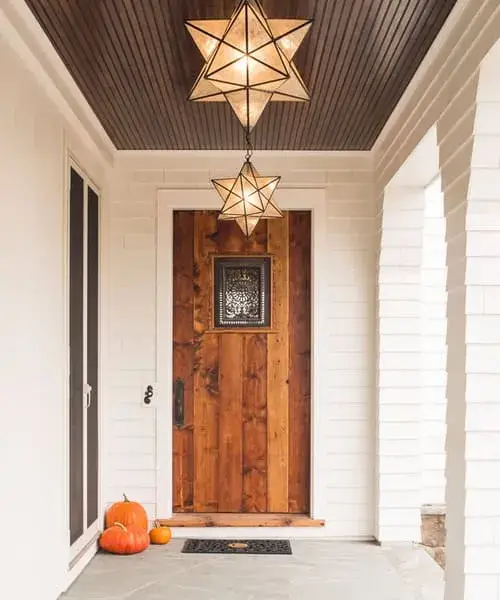
When working with vintage exterior doors, we advise consulting an experienced carpenter to assess the door’s structural squareness and core integrity. Older doors frequently require custom jamb construction, modern silicone weatherstripping, and specialized perimeter seals to ensure the historic slab meets current energy codes without sacrificing its historic soul.
2. Heritage Stained Glass and High-Gloss Turquoise
High-gloss turquoise picks up hues from the stained glass on this door, creating a balanced mix of period tradition and vibrant modernity. Using a high-gloss enamel finish amplifies natural light and highlights fine decorative mouldings that a flat or matte paint would flatten out visually. The cool jewel tone serves as a vibrant focal point against neutral masonry, bridging the gap between historical architecture and contemporary flair.
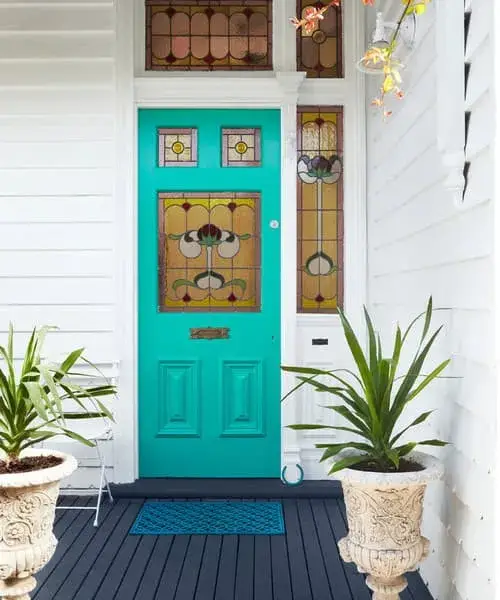
Door paint: Teal Trip, trim and wall paint: White on White, both by Dulux
Notice how the crisp white trim establishes a clean border around the door frame. By pulling an accent color directly from the leaded or stained glass inserts, the color palette feels deliberate and deeply integrated rather than arbitrary. For exterior doors receiving intense sun, high-solids exterior gloss paints provide durable UV protection while resisting everyday hand oils.
3. Geometric Modernism and Seamless Glazing
The projection of this front door’s overhang and concrete stoop instills a feeling of movement, even though everything is standing still. Cantilevered architectural canopies provide both dramatic shadow lines and indispensable protection from rain, safeguarding the door threshold from standing water. The glass door blends effortlessly with the expansive glazing of the surrounding entry windows, creating a transparent, light-filled connection between landscape and interior foyer.
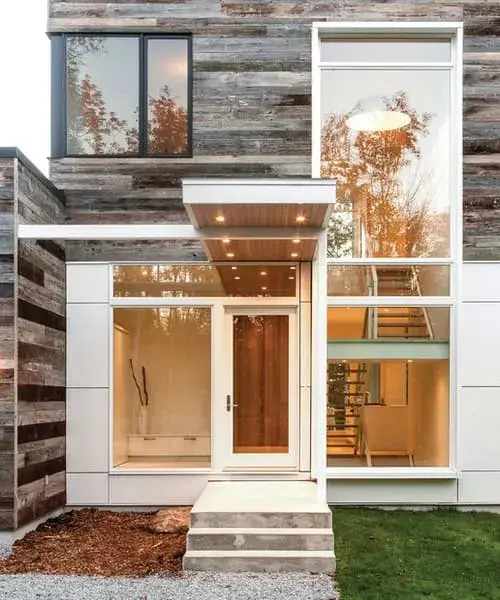
In contemporary installations where full-lite glass doors are specified, energy efficiency depends heavily on the glazing package. We recommend choosing double-pane or triple-pane insulated glass units with low-emissivity (low-E) coatings and argon gas fills to minimize heat gain during summer afternoons and prevent winter draft formation.
4. Cheerful Farmhouse Contrast
This cheery farmhouse entrance features warm mahogany steps and a sunny yellow front door that strikingly contrasts against the crisp, horizontal white siding. A saturated primary or citrus accent door is one of the most effective, budget-friendly ways to energize a conventional facade. The natural timber stair treads introduce organic texture, softening the stark contrast between the bright door and the clean field paint.
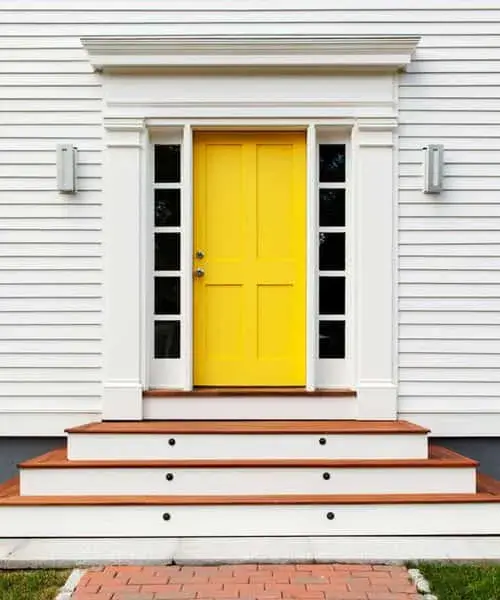
Door color inspiration: Originally painted in Egg Yolk from the discontinued Martha Stewart Living paint collection; you can recreate this warm, sunny glow using rich custom exterior yellows such as Benjamin Moore’s Stuart Gold or Sherwin-Williams’ Cheerful.
When painting an exterior door in vivid yellow or bright orange, always apply a high-hiding exterior primer first. Vibrant yellow pigments are naturally semi-translucent; a properly tinted gray or white base coat ensures your final finish achieves deep, opaque color saturation that will not fade prematurely under outdoor weathering.
5. Mediterranean Elegance with Old-World Craftsmanship
A vintage door sourced from Central America marks the entrance to this Mediterranean-style home in San Diego. Deeply carved relief panels, exposed clavos nails, and heavy iron knocker hardware bring tactile substance to smooth stucco facades. Flanking the entry with matching oversized lanterns, classical garden sculpture, and lush potted terracotta planters creates an inviting, balanced courtyard aesthetic.
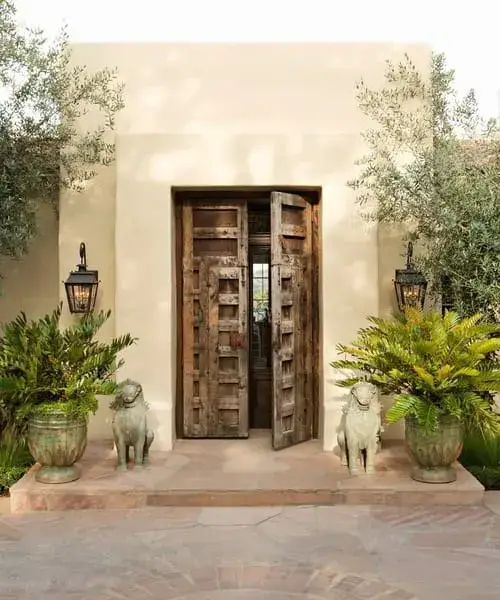
In warm, arid climates like Southern California or the Mediterranean basin, deep porticos and covered loggias are essential architectural devices. They protect hand-carved timber from sun-bleaching and drying winds, preserving the deep oil stains and natural wax finishes of heritage woodwork across decades.
6. Industrial Portal Architecture
This industrial entry in Melbourne, Australia, designed by architecture firm Jolson, resembles a monumental portal more than a conventional front door. It proves that there are countless innovative ways to cross a residential threshold, moving beyond standard hinged rectangles to celebrate pure form, scale, and materiality. Monolithic materials like patinated bronze, blackened steel, and cast concrete challenge ordinary domestic boundaries.
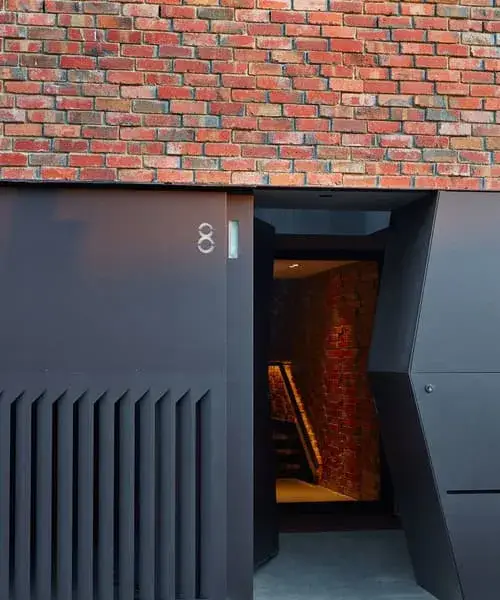
Oversized architectural doors like this demand specialized engineering. Pivot hinge assemblies mounted in the floor slab and header carry hundreds of pounds of structural weight effortlessly, allowing monumental door panels to glide open with a light fingertip push while keeping clean, trimless perimeter sightlines.
7. Mid-Century Eichler Geometry and Vivid Lime
Designer Alison Damonte bought an owl umbrella stand at a flea market and cleverly repurposed it as a quirky planter for a staghorn fern. The vivid lime front door invites visitors into a colorful Eichler home in the San Francisco Bay Area, honoring the exuberant palette of original California modernism. Paired with post-and-beam construction, floor-to-ceiling glass, and clean vertical siding, the citrus door pops like graphic art.
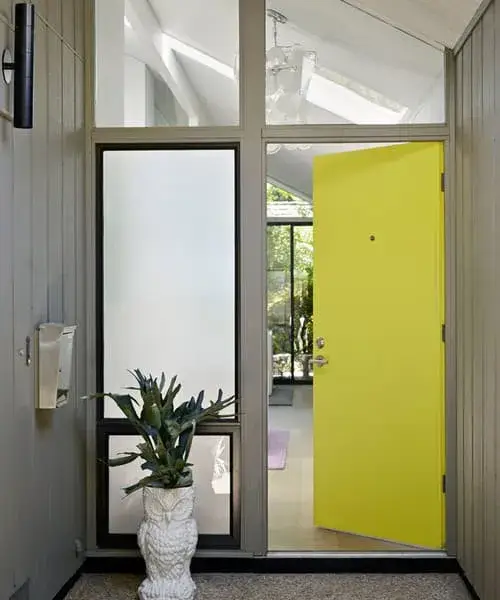
Door paint: Limelight, Benjamin Moore
Mid-century modern homes thrive on graphic visual rhythms. Introducing an adventurous hue like chartreuse or electric lime celebrates the optimistic spirit of mid-century architecture while maintaining respect for the house’s clean, uncluttered geometric framing.
8. Custom California Modern Millwork
Michael Fullen Design Group custom designed this sophisticated wood and glass front door in Los Angeles. Alternating horizontal timber slats with frosted glass inserts produces a compelling rhythm that delivers daytime interior sunlight while preserving complete privacy from the street. The rich wood stain ties the entry directly into the exterior soffits and architectural siding, producing an integrated look.
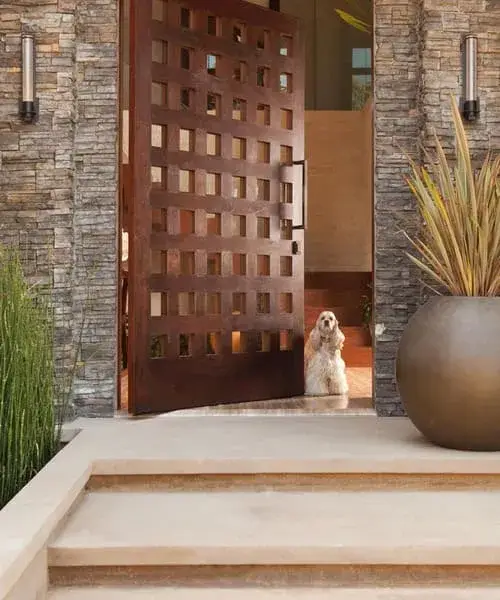
When commissioning custom architectural millwork, ensure your builder selects properly kiln-dried, quartersawn hardwoods. Quartersawn timber displays straight, uniform grain lines that resist seasonal warping and twisting far better than plain-sawn lumber, guaranteeing a tight weather seal year-round.
Glazing, Sidelites, and Balancing Natural Light with Privacy
Balance daylight and privacy by choosing textured, reeded, or frosted glass rated to diffuse exterior sightlines without darkening interior entry halls.
Natural light transforms dark foyers, but entrance glazing must always balance illumination with family privacy and sound insulation. Incorporating transoms, sidelites, and decorative glass lites allows daylight to cascade into your home while maintaining comfortable visual boundaries from the sidewalk.
If your front door opens directly into a main living space rather than a separate vestibule, the style of glass you select becomes paramount. Modern glazing technology offers varied privacy ratings, ranging from completely transparent float glass to fully opaque architectural textures.
- Reeded and Fluted Glass: Crisp vertical ridges diffuse street views while casting elegant linear light patterns across interior hallway floors. Fluted glass complements both art deco and contemporary spaces.
- Frosted and Acid-Etched Glass: Provides uniform, cloud-like translucency that admits generous daylight while obscuring human silhouettes, offering a high privacy rating.
- Textured Rain and Seeded Glass: Features subtle ripples, bubbles, and organic imperfections that bring vintage character to Craftsman, cottage, and farmhouse entries.
- High Transom Windows: Positioned horizontally above the door frame, a transom window captures natural sky light throughout the day while keeping sightlines well above street eye level.
- Sidelites: Narrow vertical glass panels framing one or both sides of the door broaden the perceived scale of the entryway, making an ordinary single door look grand and welcoming.
Security, Hardware, and Energy Efficiency
Pair multi-point locking systems with compression weatherstripping and thermal-break thresholds to prevent forced entry, seasonal drafts, and interior condensation.
Behind every handsome finish and decorative paint color lies the functional core of your entryway: security, ease of operation, and climate protection. Upgrading your exterior door hardware and weather seals protects your home from intruders and eliminates drafty energy leaks that inflate utility bills.
Modern building technology has turned front doors into high-performance security envelopes. Investing in the following key functional components ensures long-term comfort and peace of mind:
- Multi-Point Locking Systems: Instead of relying on a single deadbolt at lock height, multi-point locks engage steel bolts at the top, center, and bottom of the door jamb simultaneously with a single key turn or handle lift. This prevents pry-bar intrusion and stops tall doors from warping over time.
- Smart Lock Integration: Electronic deadbolts with biometric fingerprint sensors, backlit keypads, and secure smartphone connectivity offer keyless convenience, guest passcodes, and real-time entry logs without compromising visual style.
- High-Performance Compression Weatherstripping: Replace brittle vinyl strips with durable silicone or heavy-duty EPDM foam bulb weatherstripping around the perimeter stops to create an airtight seal against winter winds and wind-driven rain.
- Adjustable Thermal-Break Thresholds: Exterior door thresholds should feature an integrated composite or thermal break that halts the transfer of outdoor freezing temperatures into your interior floorboards, preventing indoor condensation and sill rot.
When selecting door assemblies for homes located in hurricane zones, coastal areas, or high-risk wildfire regions, always check local building codes for specific design pressure (DP) ratings, impact-resistant glass mandates, or fire-rated exterior door assemblies. Consulting a qualified local door installer ensures your entryway meets regional regulatory standards.
Conclusion: Elevating Your Curb Appeal
Upgrading your front door is one of the highest-return investments you can make in your home’s exterior appeal, everyday security, and thermal comfort. Whether you are drawn to the rustic history of hand-hewn salvaged wood, the clean lines of contemporary pivot glass, or the playful energy of a high-gloss yellow or lime paint finish, let your entryway express your personal design story.
Take time to assess your climate exposure, verify your porch’s sheltering overhang, and invest in quality hardware that will serve your household reliably through decades of coming and going. With thoughtful planning, the threshold you cross every single day can become the most memorable architectural feature of your home.