Pune House by Radhikesh Saiyani in Mumbai, India
Project: Pune House
Architects: Radhikesh Saiyani
Location: Mumbai, India
Photos: Provided by Radhikesh Saiyani
Pune House by Radhikesh Saiyani
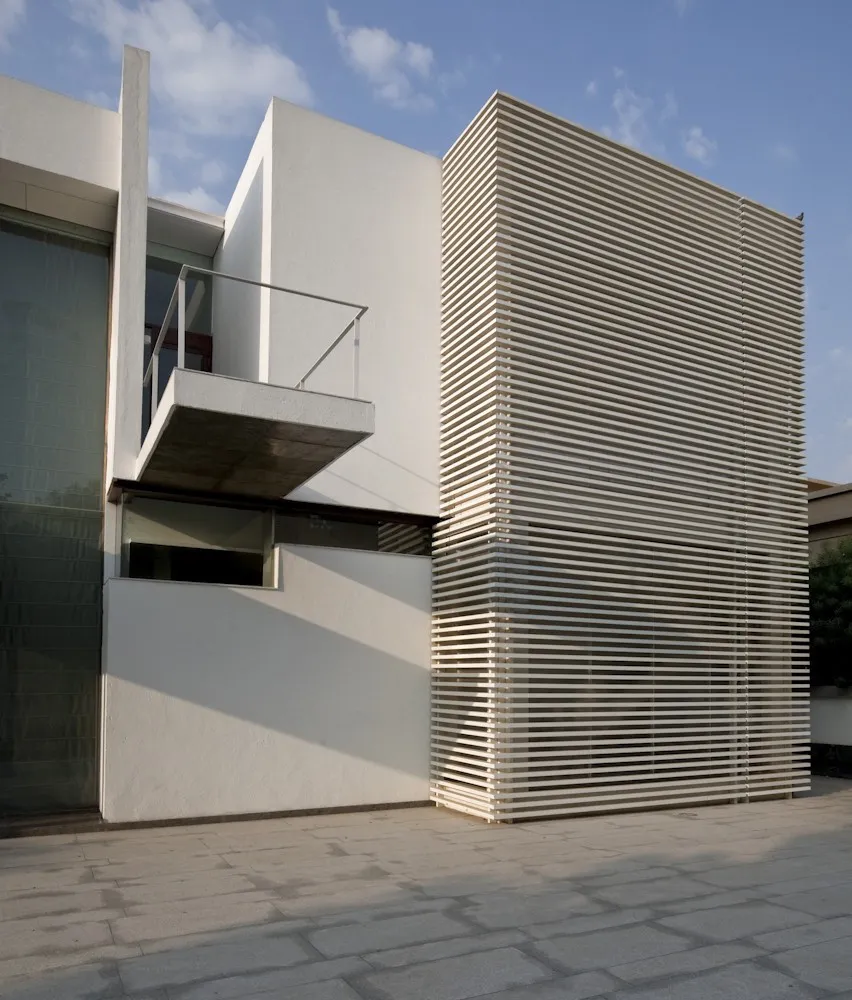
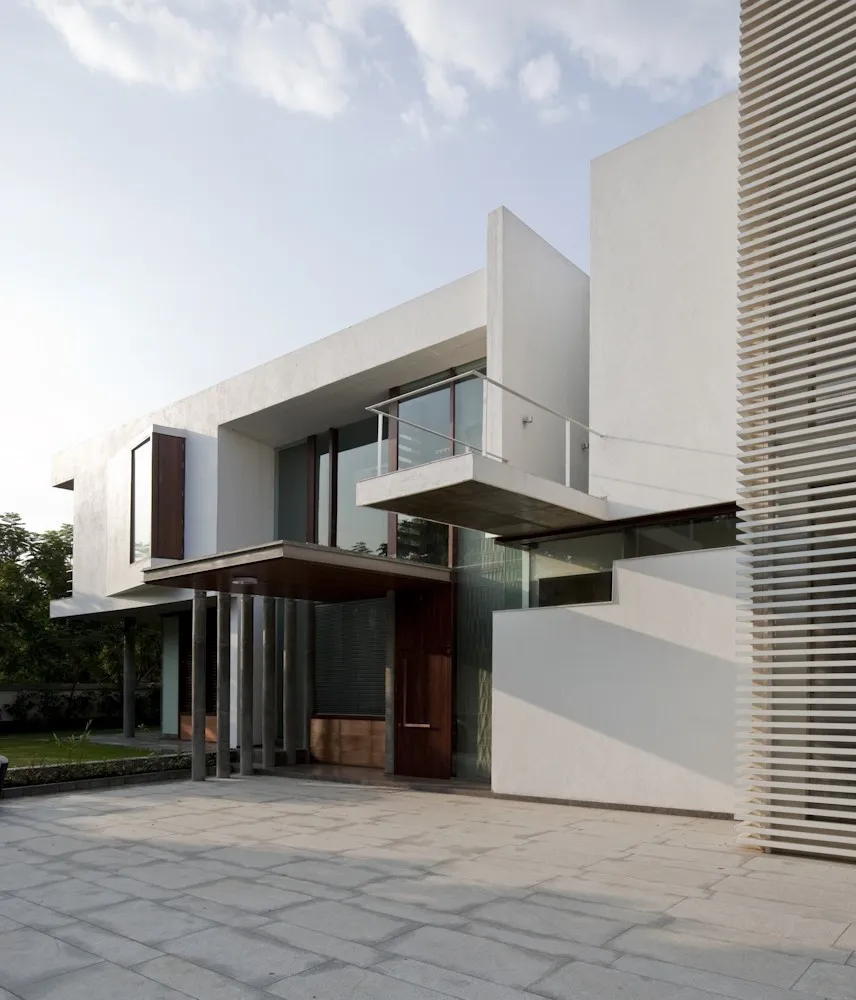
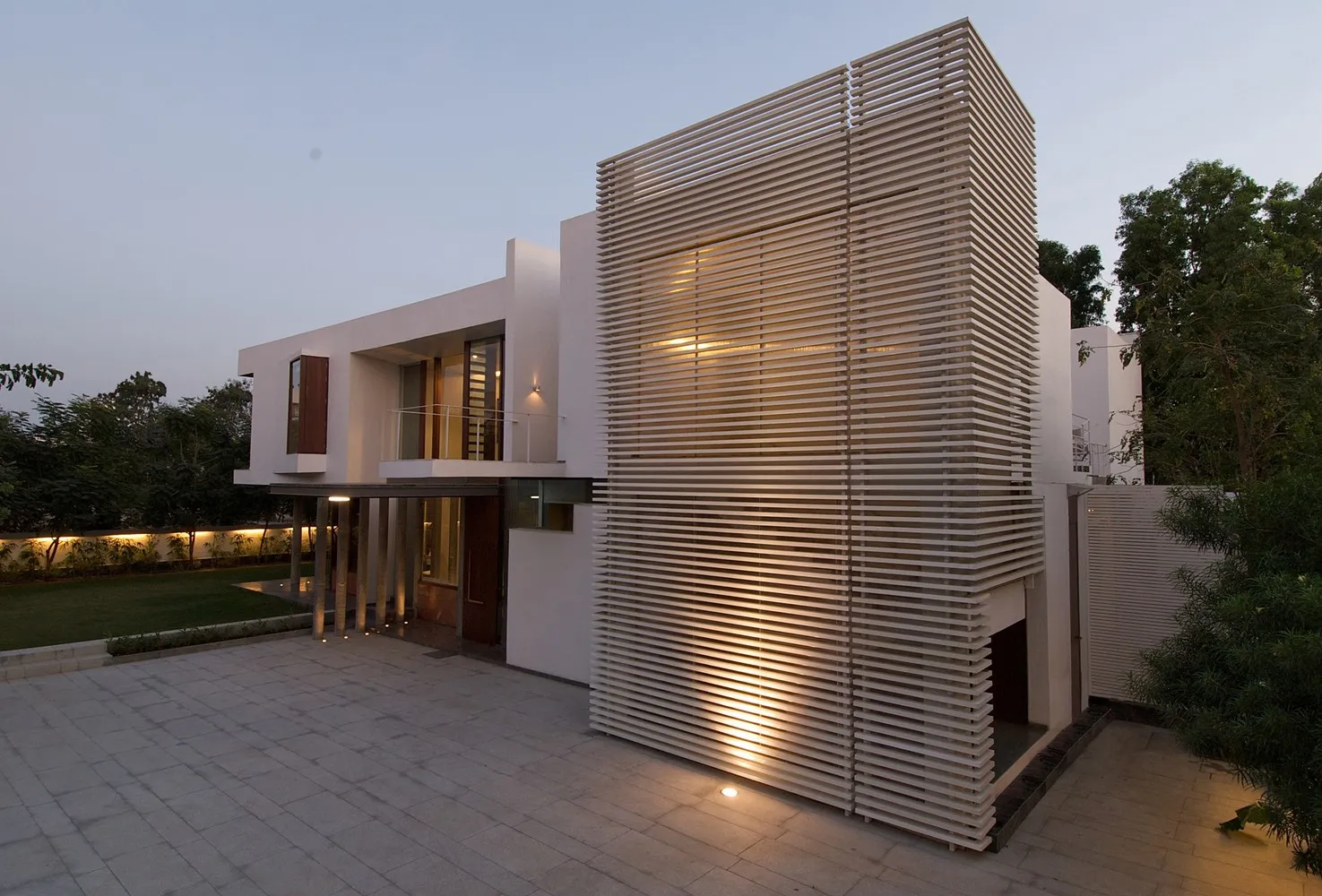
Radhikesh Saiyani designed the Pune House for people who had a clear vision of what they wanted. The result was a beautiful two-story modern residence with a playful exterior design and a genius interior with an open layout.
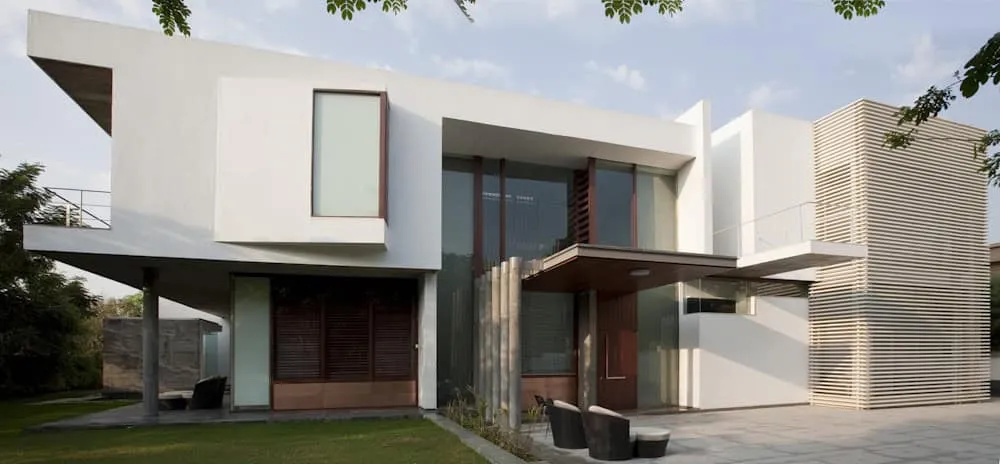
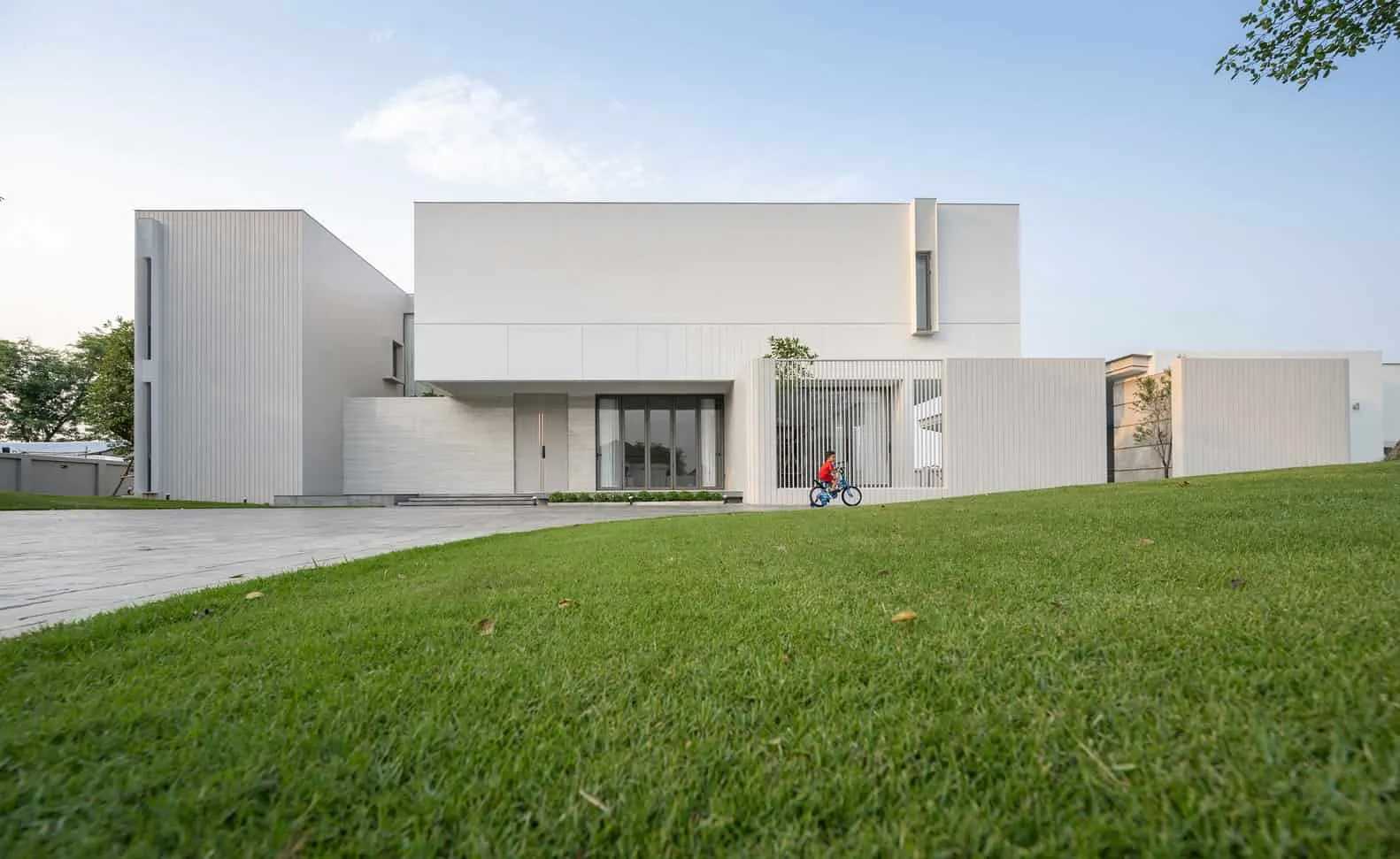
Customers approached us for this house knowing exactly where they wanted to place certain rooms, as "Vastu/Feng Shui" dictated... they were looking for an architect who would connect these spaces as they wanted. This was part of a closed residential complex, where each villa developed by the builder resembled colonial architecture, but at the special request of the client to invite his own architect, the contractor agreed, provided that the house would be a simple white straight structure on the outside.
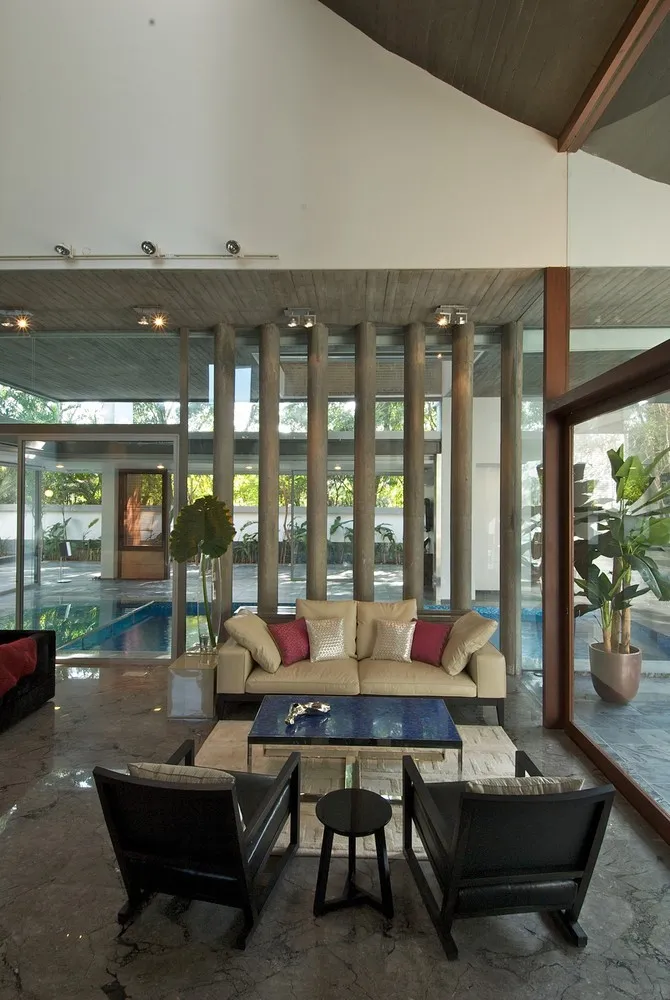
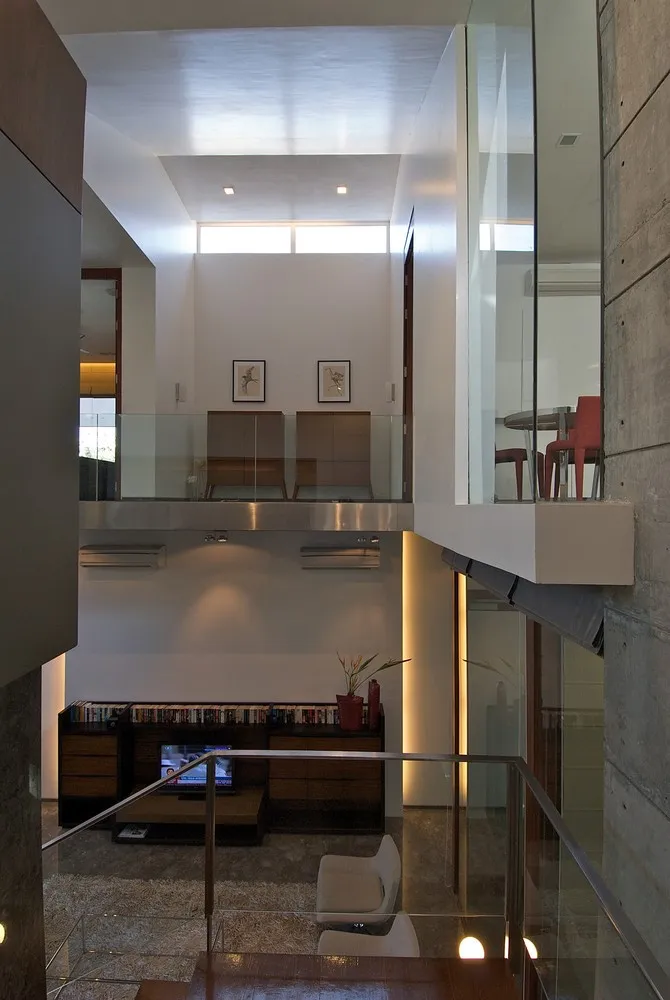
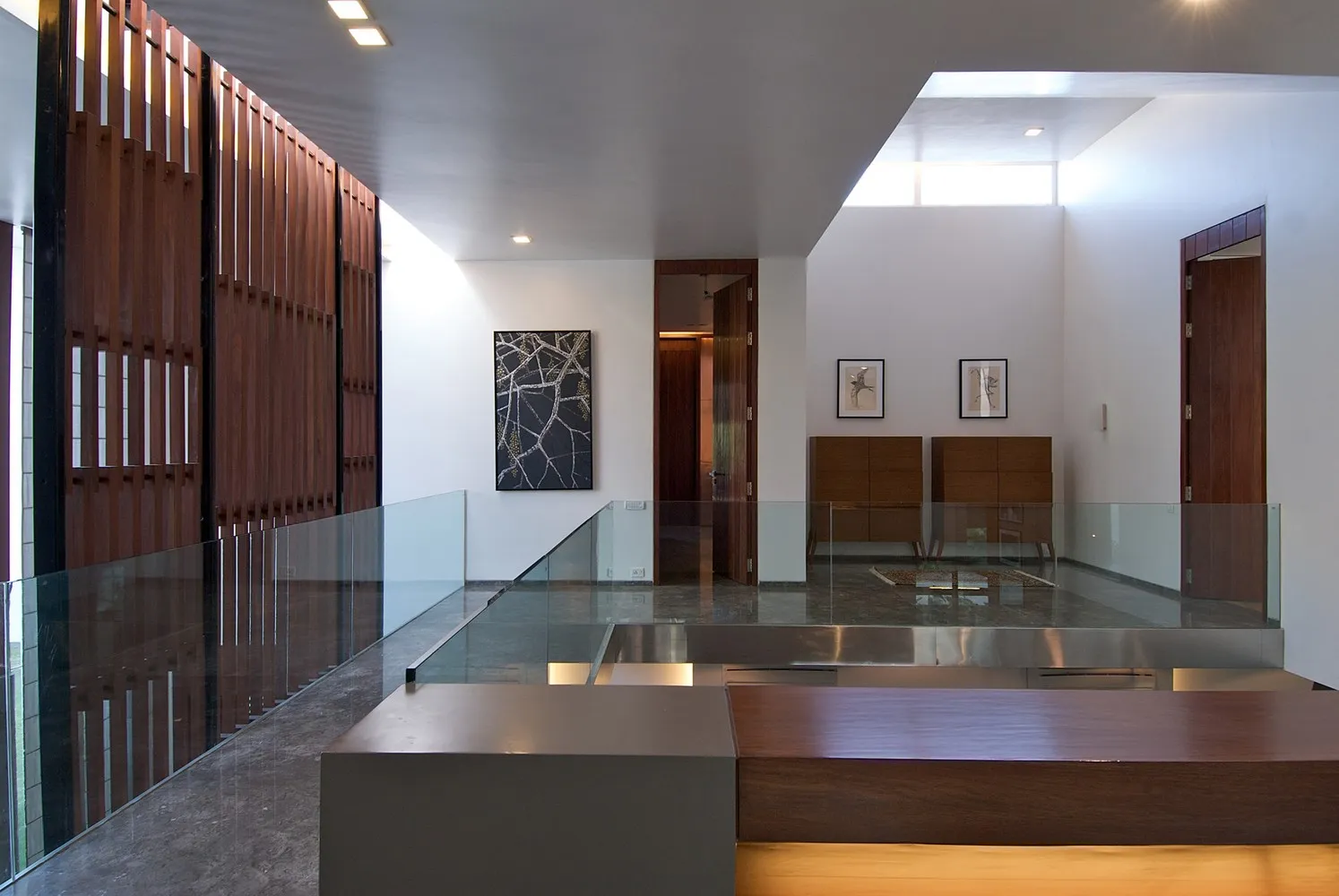
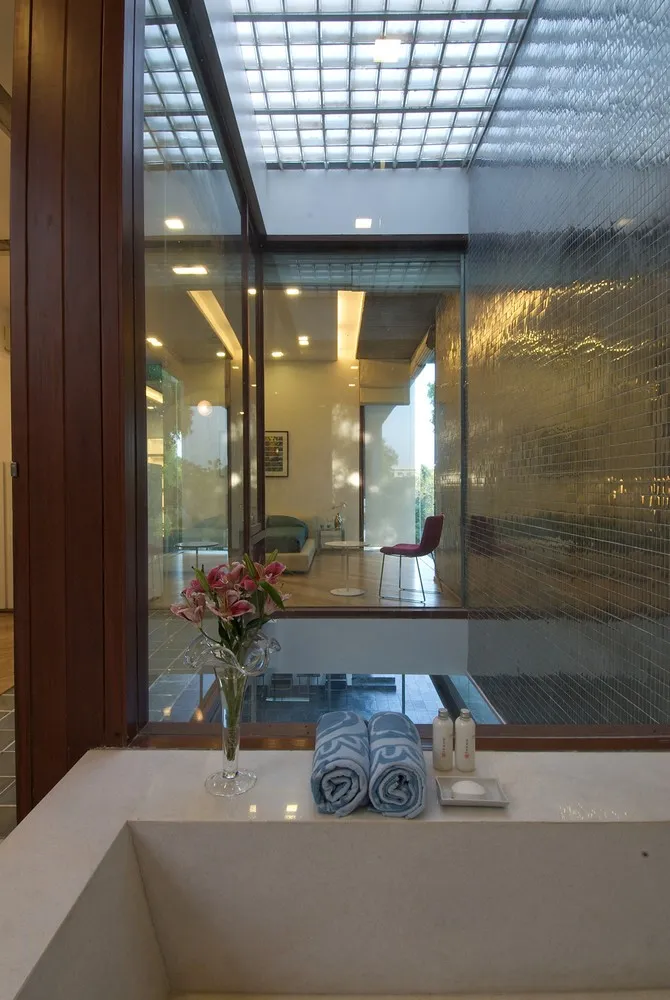
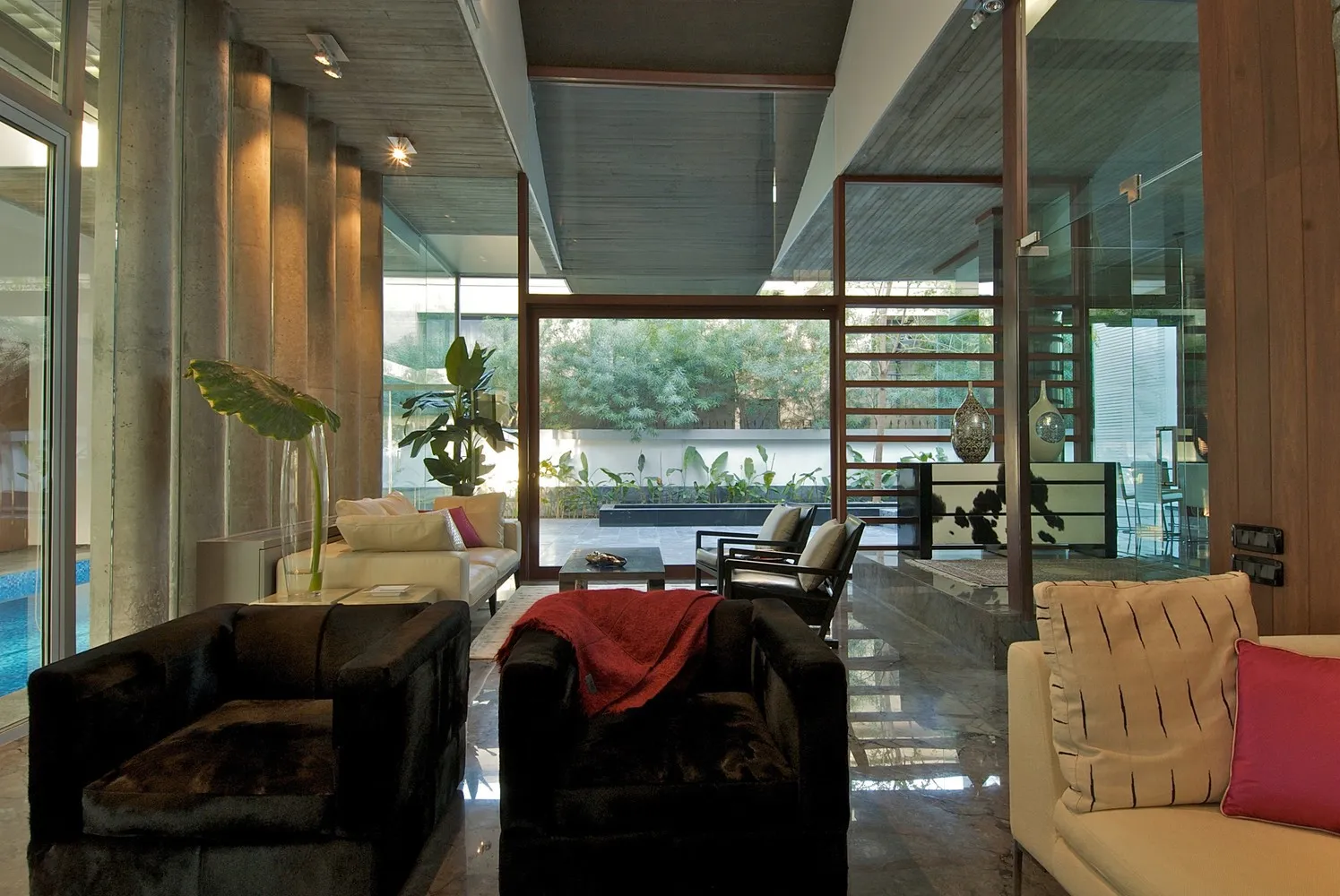
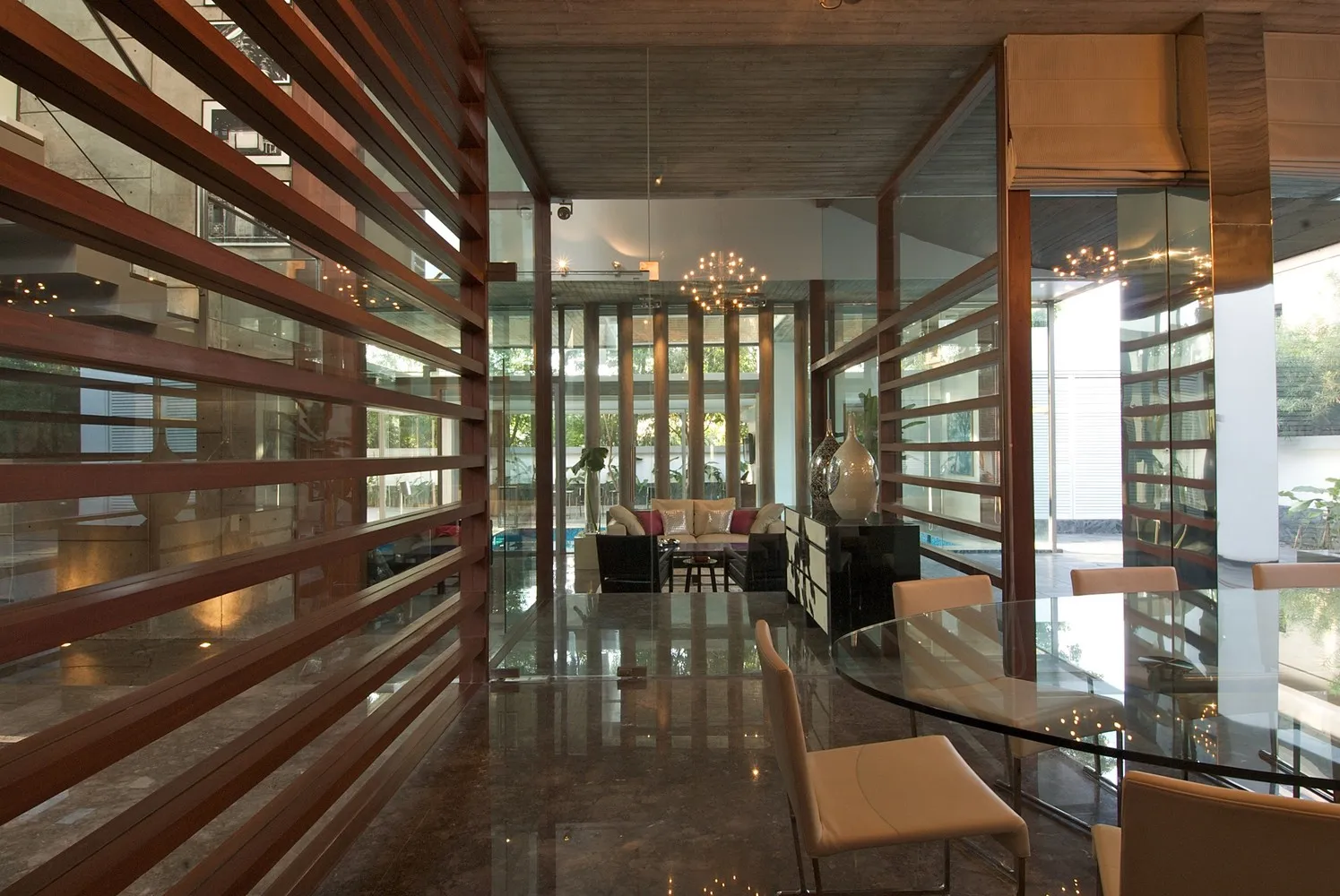
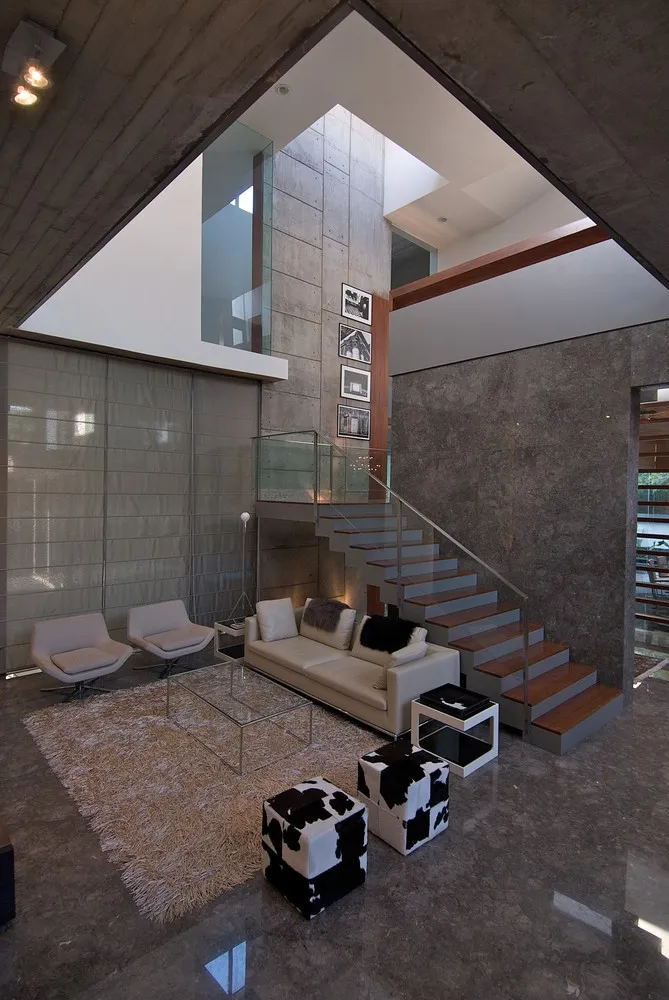
The center of the house is a two-story informal space that the client wanted to use as a living room with direct visual access to all parts of the house. The rooms are linked around this central area. As a result, getting natural light into the surrounding rooms was a complex task and achieved through creating a series of small lanterns and clerestory windows that fill the central space with light. A two-story screen in the form of wooden panels hanging from the ceiling and ending slightly above floor level separates the entrance hall and living room, while also concealing movement on the first-floor balcony leading to bedrooms.
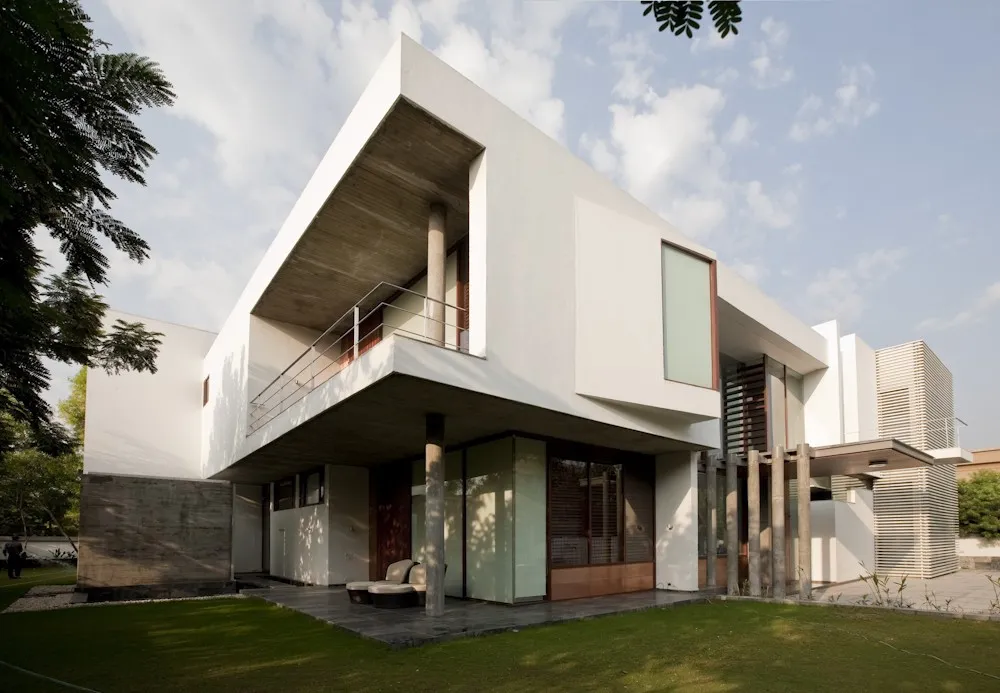
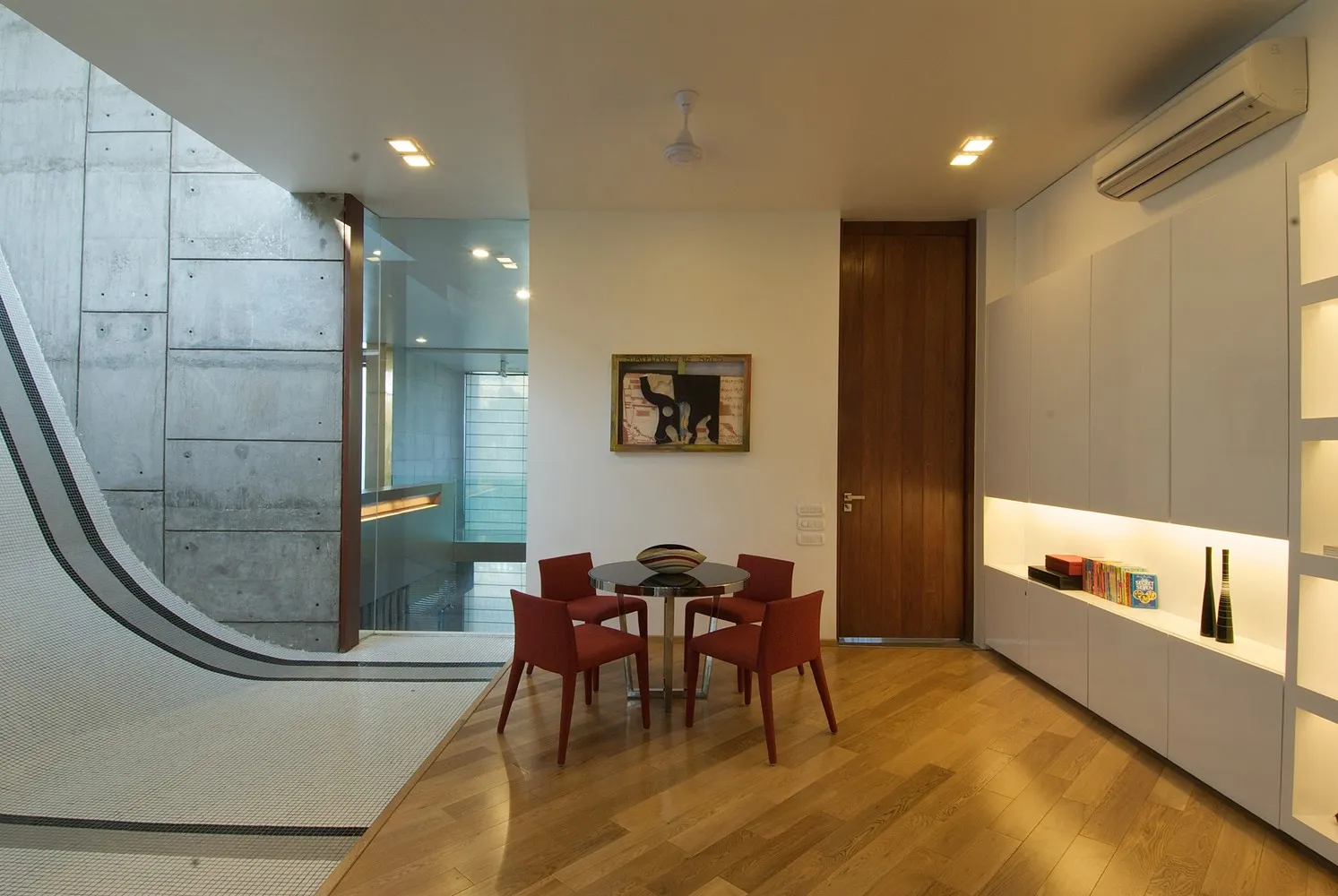
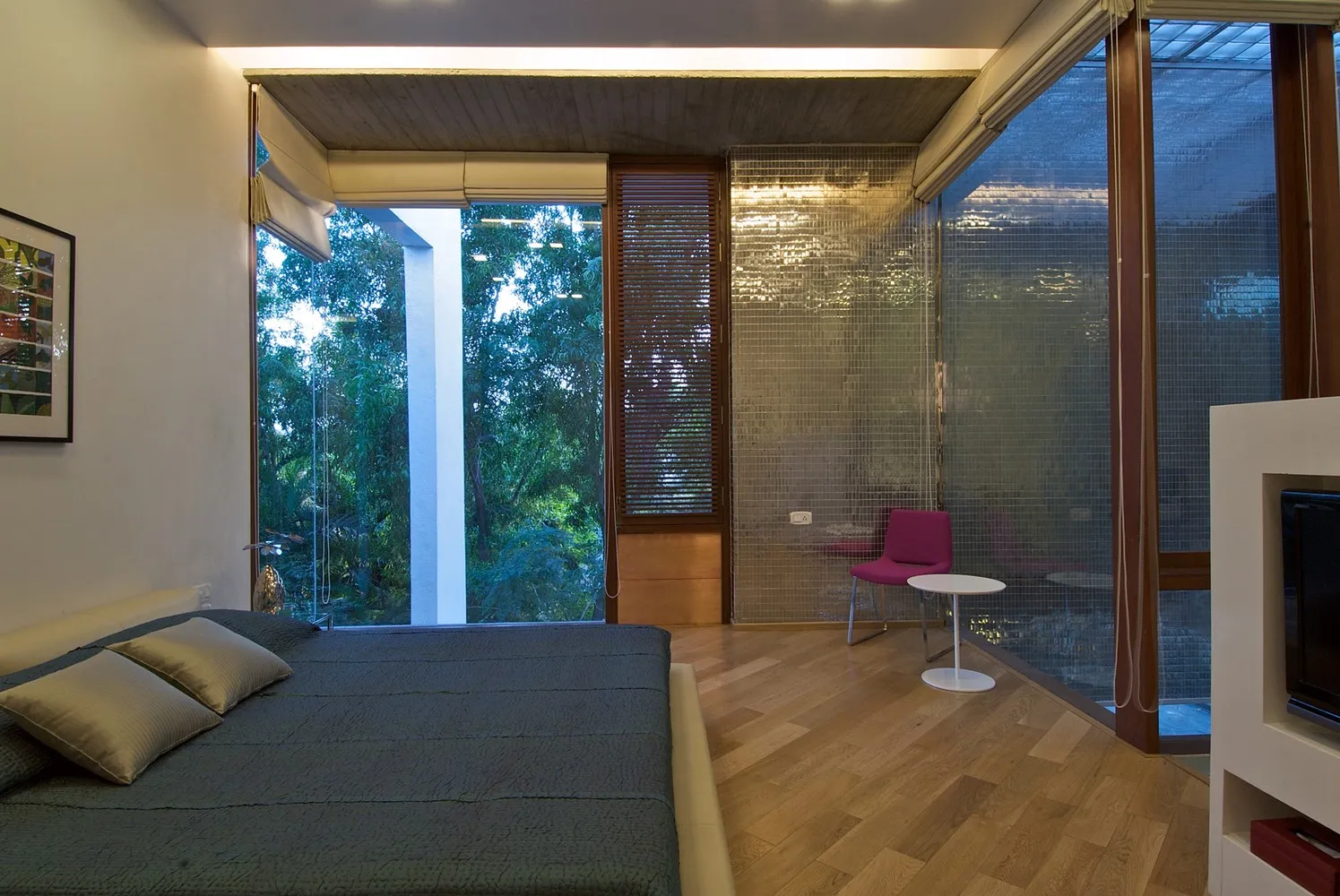
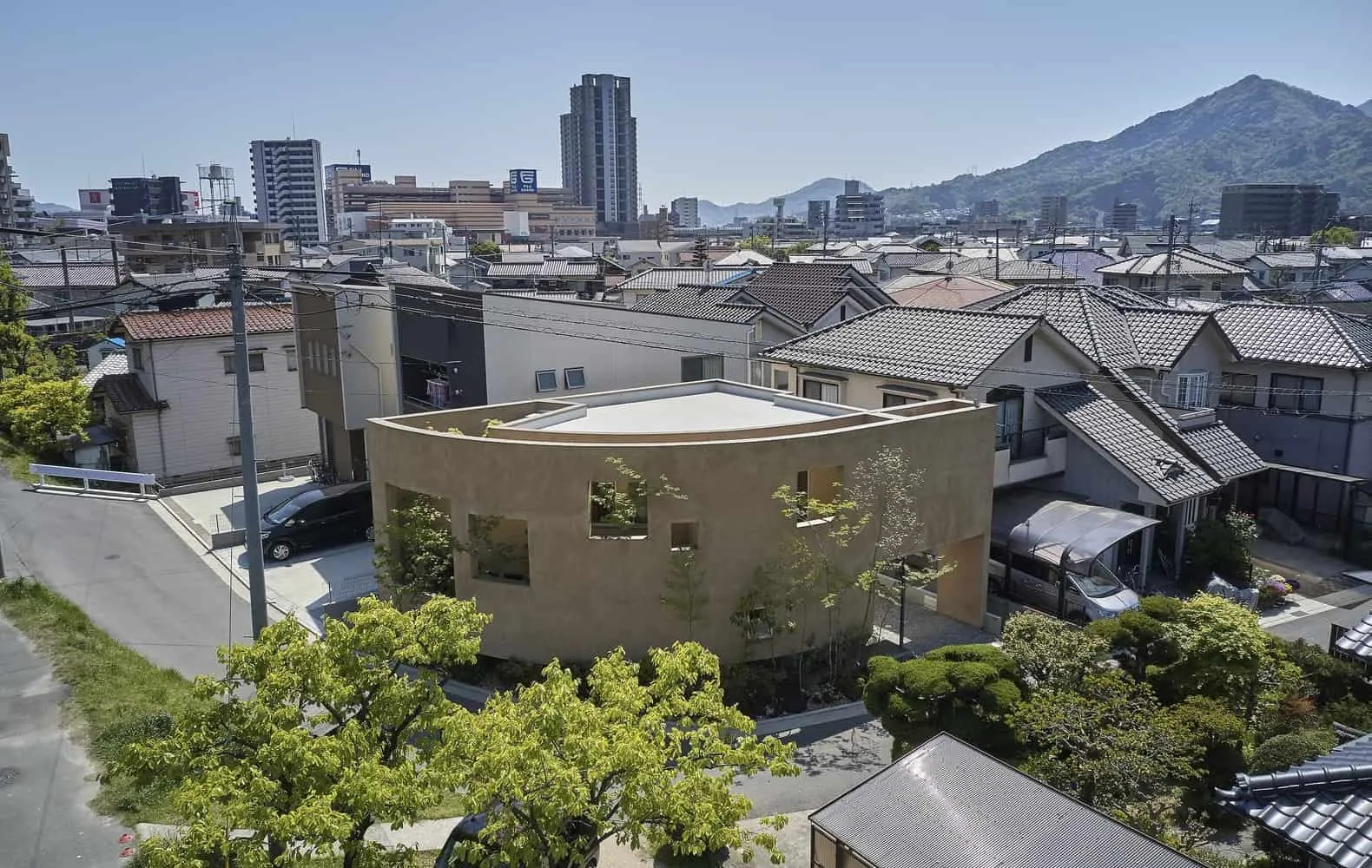
The house is built on a corner plot and comfortably fits into the green zone, providing sufficient privacy for owners. It is designed so that all public areas are on the first level and private ones on the second. The master bedroom, guest bedroom, and a group of two children's rooms combined with a shared play area define the second floor. The first level includes the living room and dining room, kitchen and bedroom with walk-in closet, as well as a central living area.
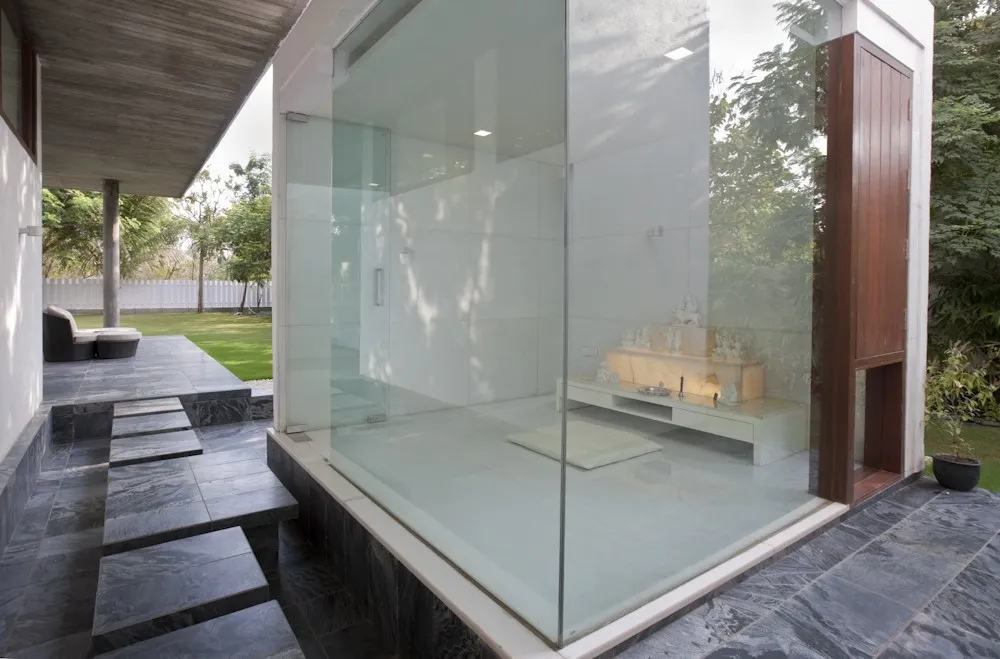
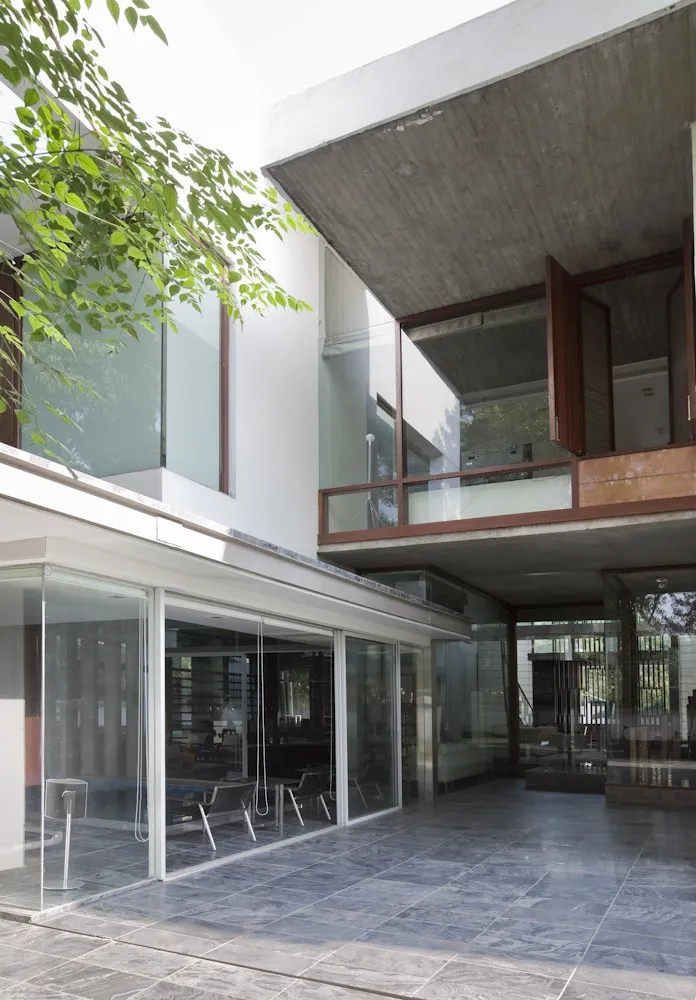
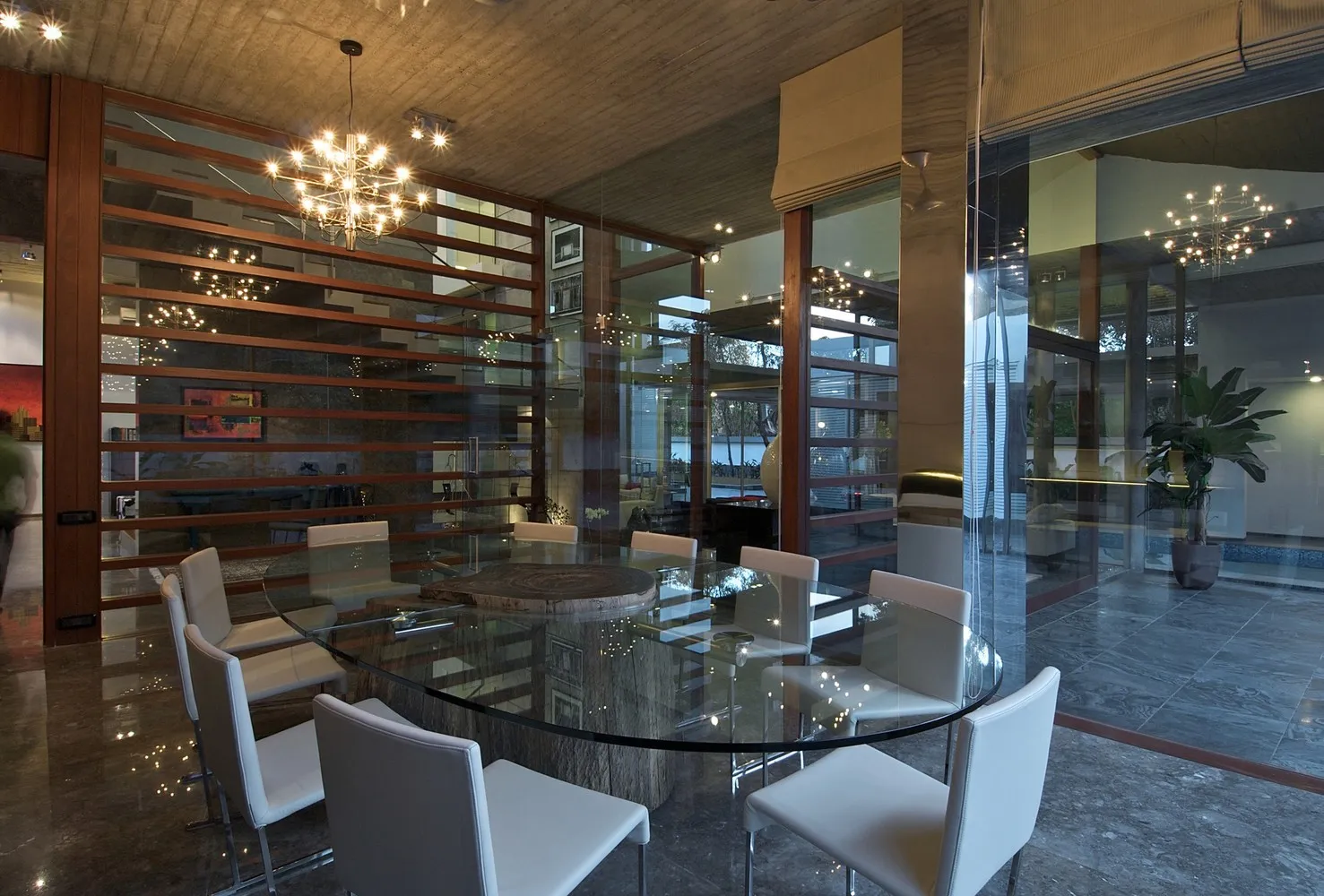
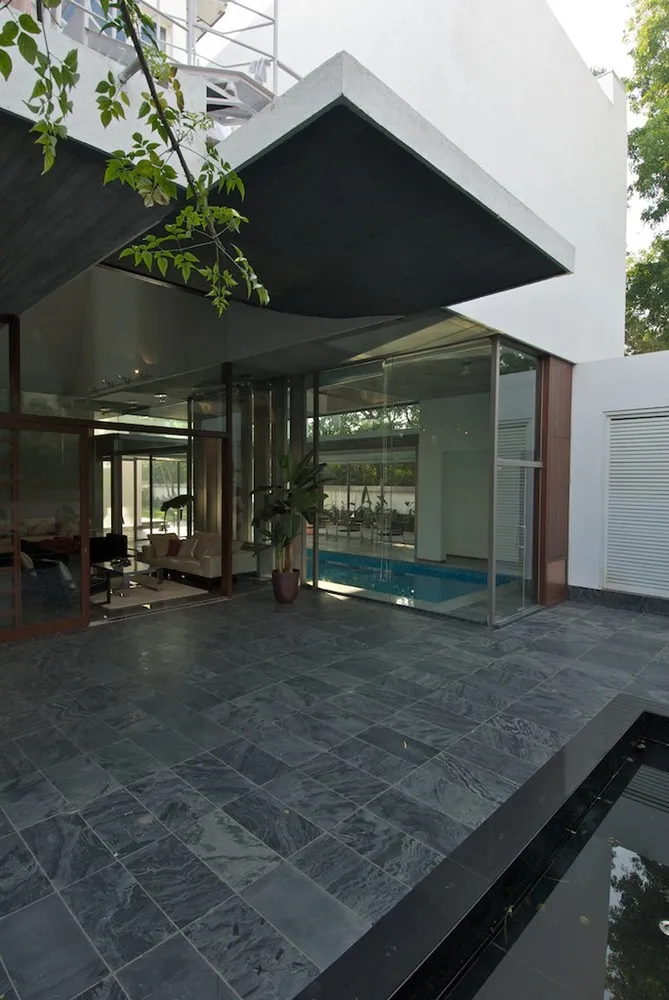
As requested by the developer to keep the house simple on the outside, it was designed as an upper white box with rooms floating above a transparent glass base (containing public areas). Large consoles suspend most of the second floor above the lower glass box, creating a sense of lightness and weightlessness. Glass partitions on all side walls of the first floor provide blending of boundaries between interior and exterior spaces, allowing use of terraces around the house during parties.
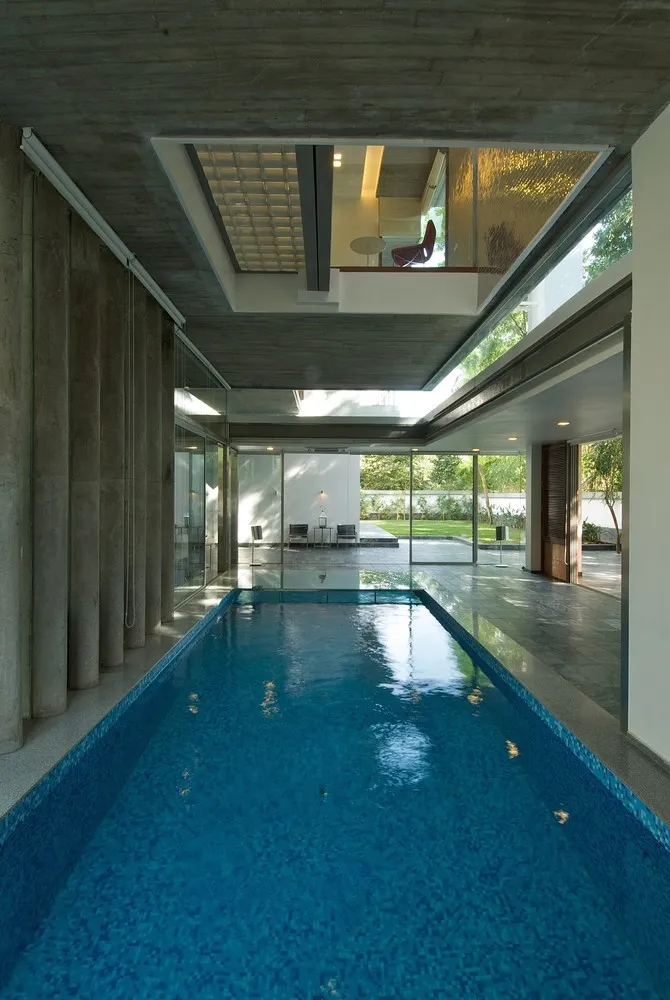
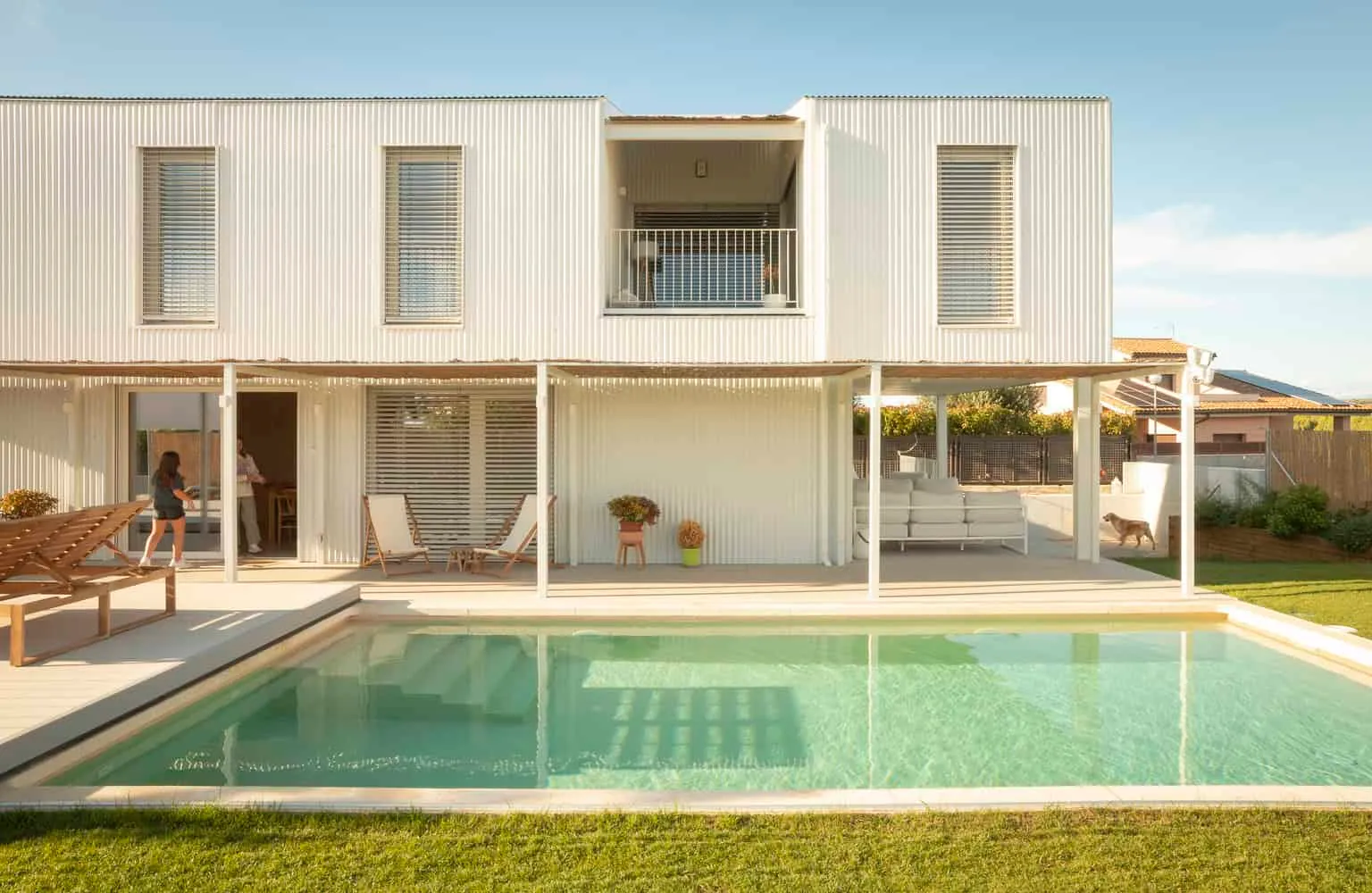
The client's request for a pool that could be enclosed as an internal space (to ensure privacy from house staff) was accommodated by placing it directly under the overhang of the daughter's bedroom above. A series of narrow concrete columns separate it from living space, and a two-story shaft rising above the pool allows light to pass through from the lantern above and creates visual connection with the daughter's bedroom above. Sliding glass windows around the pool balcony allow full opening when needed.
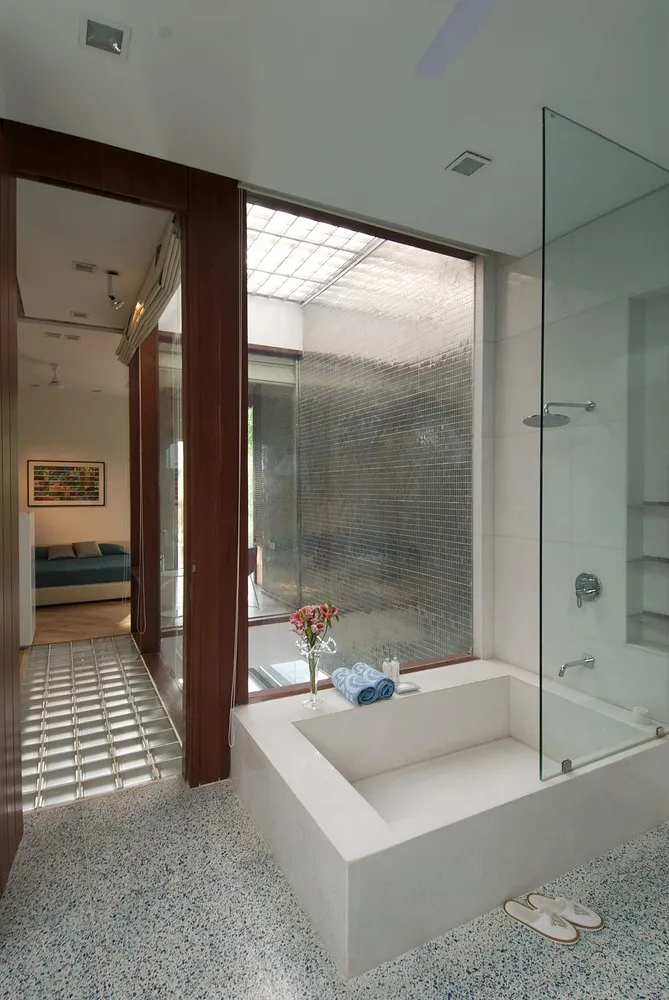
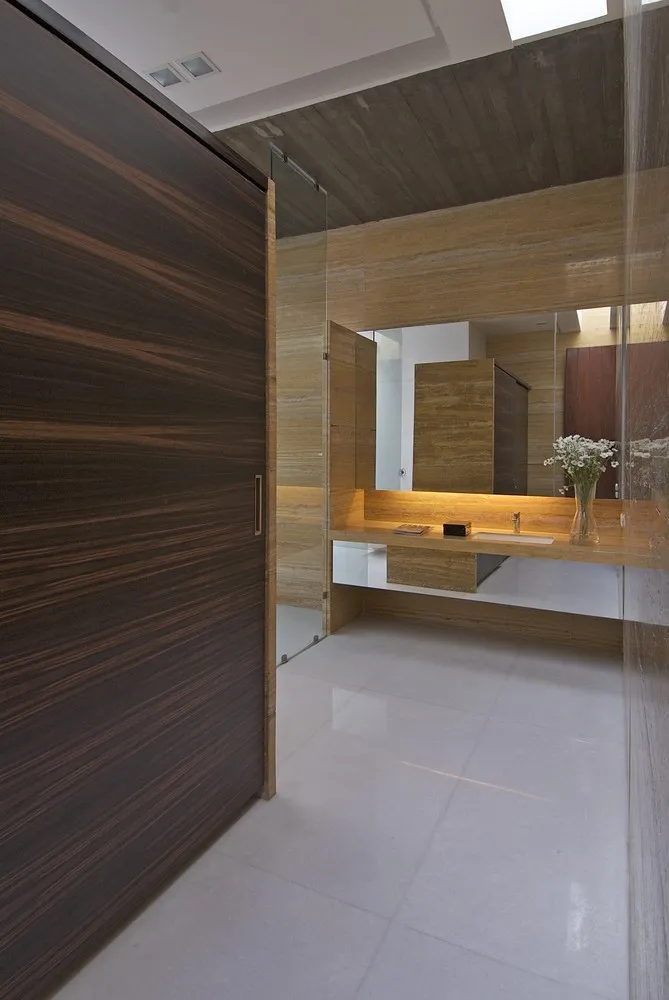
The bottom of all projecting slabs is left open in concrete, and interior finishes were chosen with the intention to create tension between materials by contrasting rough and smooth — exposed concrete ceiling, wood and copper against smooth surfaces of gray marble William, terraces and silk.
- Radhikesh Saiyani