How We Designed an Emerald Kitchen in an Apartment Inspired by Oblomov's Image
Here we found a way to combine history and modernity in the interior
The kitchen in this project is not just a functional space, but an important part of the apartment's concept. Designers Tatyana Kozhevnikova and Valeria Kuraeva wanted to highlight the atmosphere of comfort and measured pace typical of Russian classicism, while creating an interior that would be convenient for a modern family to live in.
Therefore, the design is based on a combination of noble tones, decorative accents and practical solutions.
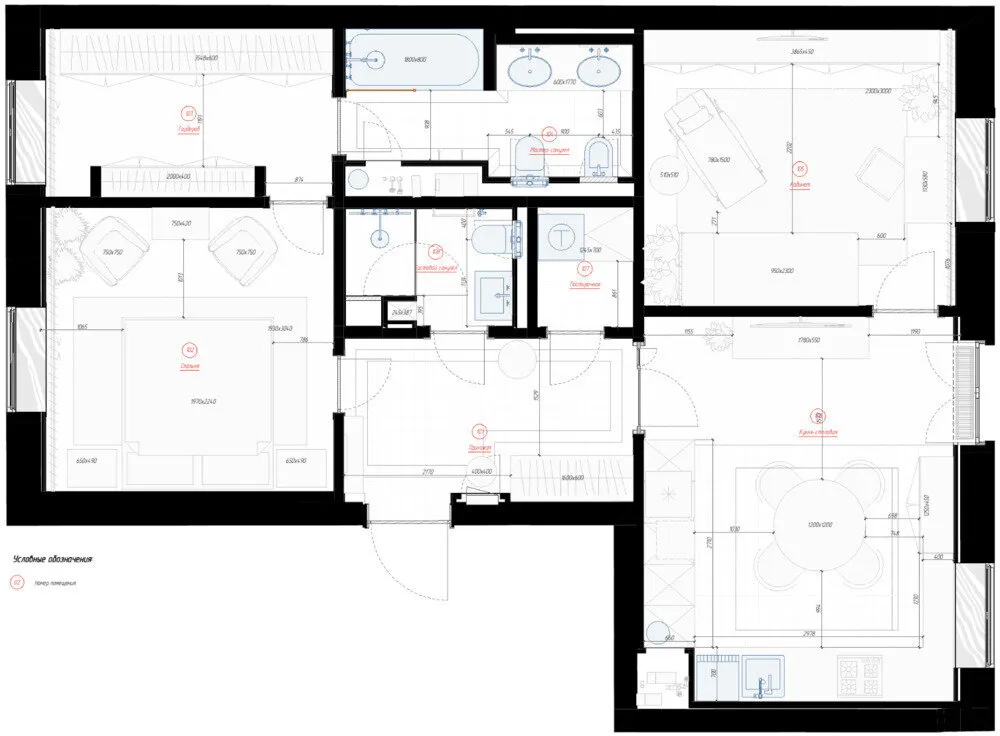 Apartment Layout
Emerald facades of the kitchen cabinet became the main accent: the deep color adds solidity to the interior without weighing down the space. White countertop with a marble pattern and a minimalist apron support the aesthetic. The glass display cabinet made of dark wood harmonizes with the cabinet and reminds one of historical interiors of Moscow's merchant houses.
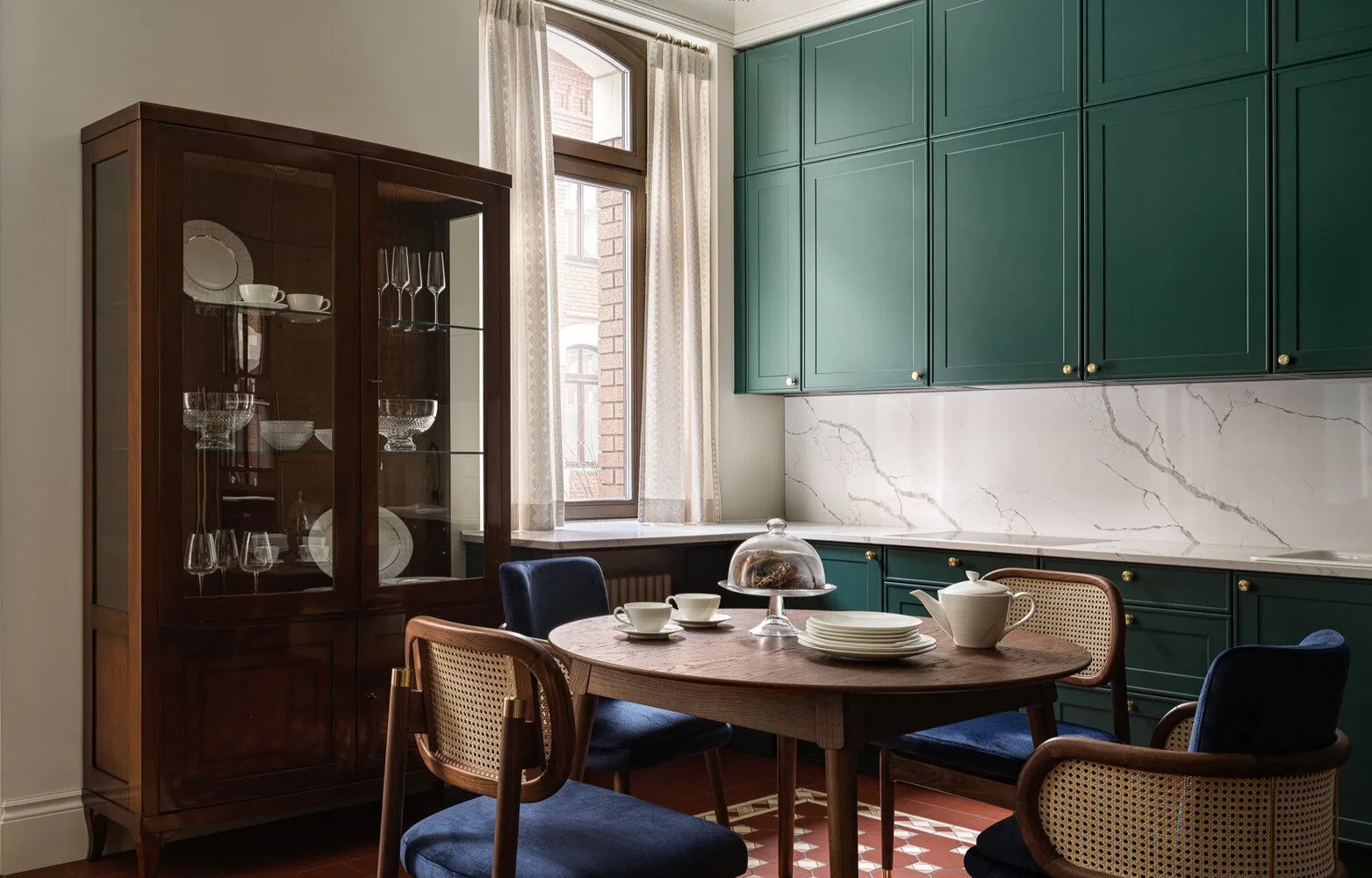 Design: Tatyana Kozhevnikova and Valeria Kuraeva
The ceiling is decorated with moldings and a rosette for a classical chandelier, instantly transporting one to the atmosphere of the 19th century. Modern recessed lights and a black track lighting system make the lighting more flexible and convenient for daily life.
Special attention was paid to the floor: metlakha tiles with an ornament form a kind of carpet. This is not only decorative but also functional—tiles are durable and easy to clean.
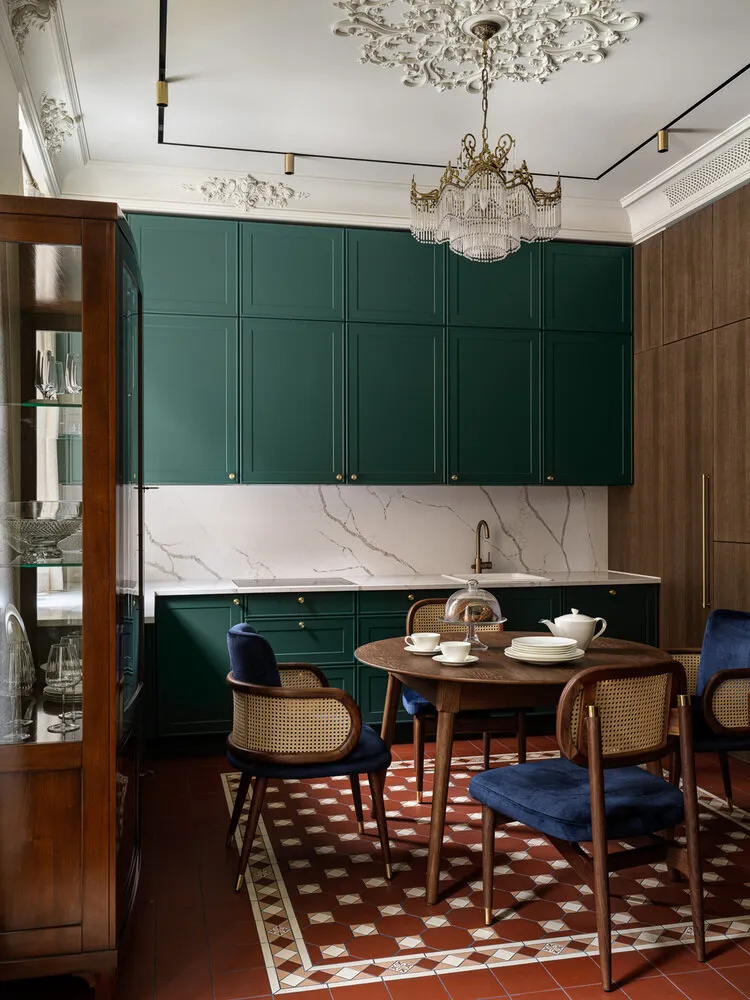 Design: Tatyana Kozhevnikova and Valeria Kuraeva
The dining area supports the concept of a historical cozy home. A round wooden table and chairs with woven inserts recall furniture from Soviet interiors in the middle of the century, but in a new interpretation. Blue velvet seats add softness and complement the emerald kitchen cabinet.
 Design: Tatyana Kozhevnikova and Valeria Kuraeva
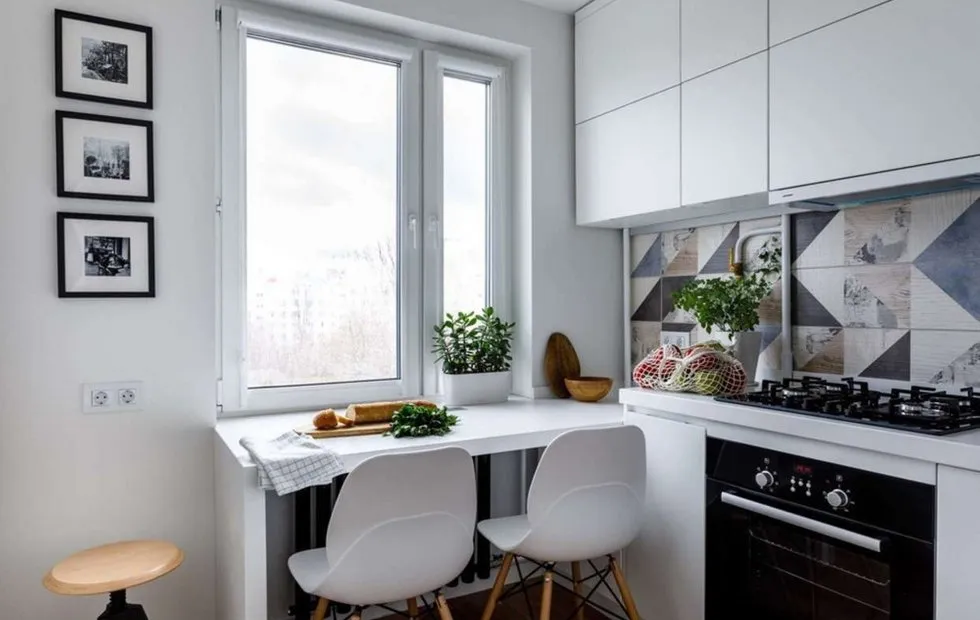
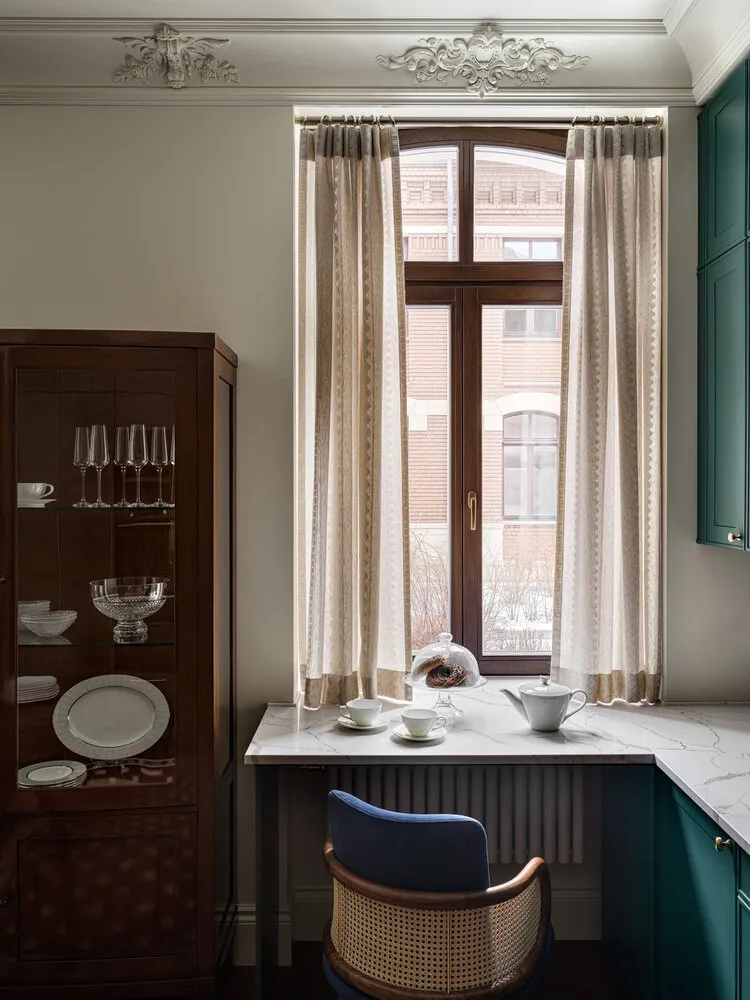
An additional element was a workspace by the window, where the countertop transitions into the windowsill. This created extra space for breakfasts, reading or working on a laptop.
The kitchen turned out intimate yet solemn—it fits within the overall concept of functional classicism, where classical elements coexist with modern materials and solutions.