Corridor in Old Buildings: How to Turn a Passage Room into a Functional Zone
The secret lies in understanding the specifics of layout and using every centimeter effectively
Long corridors in old-buildings apartments are often perceived as lost space—dark, narrow, and only suitable for moving between rooms. However, with a thoughtful approach, these spaces can be transformed into full-fledged functional zones: a library, wardrobe, home office, or gallery. The secret lies in understanding the specifics of layout and using every centimeter effectively.
Corridors in Stalin-era buildings, pre-revolutionary houses, and old brick structures have their advantages: high ceilings, thick walls, sometimes natural lighting. These features can be utilized to create unique interior solutions.
Main points from the article:
- Wall-to-ceiling built-in wardrobes turn the corridor into a full-fledged wardrobe;
- Proper lighting can visually expand narrow spaces by 1.5-2 times;
- A gallery with paintings and photos makes the corridor an interesting route;
- A workspace by the window in the corridor is a great alternative to a room office;
- Mirrors and light tones create the feeling of spaciousness even in the narrowest passage.
Space Analysis: Work with What You Have
The first step is accurate measurements and understanding the structural features. In old buildings, walls may be uneven with niches and protrusions that seem like drawbacks but become design highlights.
- Pay attention to the location of utilities—pipes for heating, electrical panels, meters. These can be incorporated or hidden in decorative boxes.
- High ceilings in old buildings are the main advantage. 3-4 meters allow for maximum vertical space utilization.
- Check the condition of the walls—walls in old buildings may require leveling, but this pays off with the opportunity to create perfectly flat surfaces for built-in furniture.
Wardrobe in the Corridor
A long corridor is ideal for organizing a wardrobe. Built-in wardrobes from floor to ceiling can accommodate all the family's clothes and free up space in bedrooms.
- The depth of wardrobes should be at least 60 cm for convenient clothing placement on hangers. In narrow corridors, sliding doors can be used—they don't require space to open.
- The internal layout of wardrobes depends on family needs. Lower sections are for shoes, middle ones for everyday clothes, upper ones for seasonal items and rarely used objects.
- Lighting inside wardrobes is mandatory—LED strips or spotlights with motion sensors. Without lighting, it's hard to find the right item in a deep wardrobe.
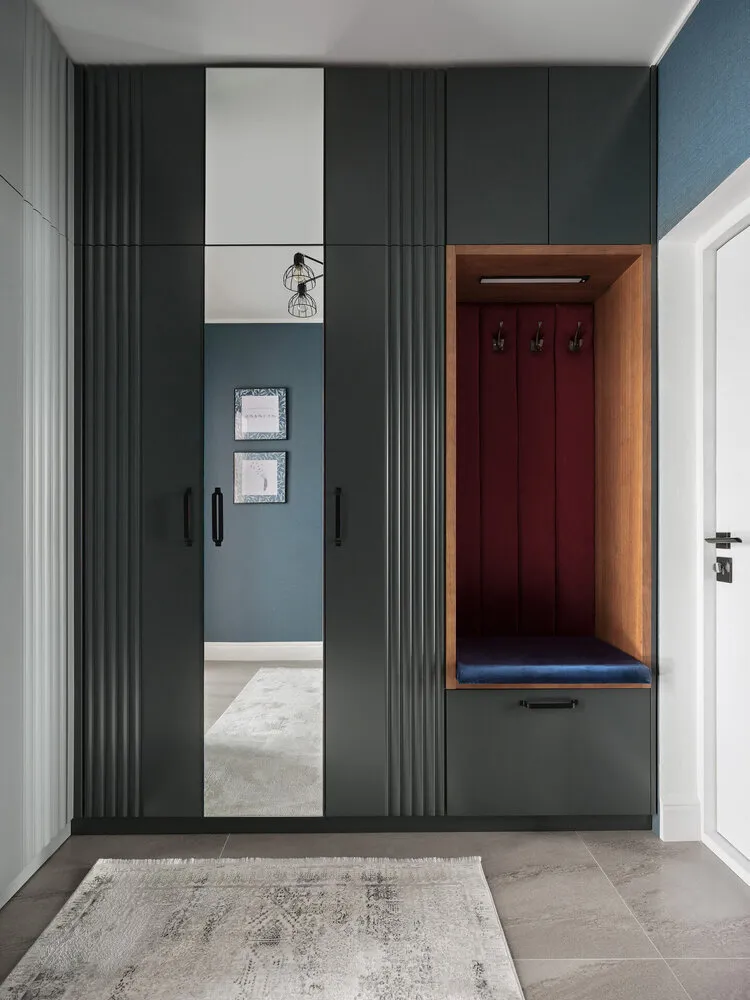 Design: Liliya Gorozheeva
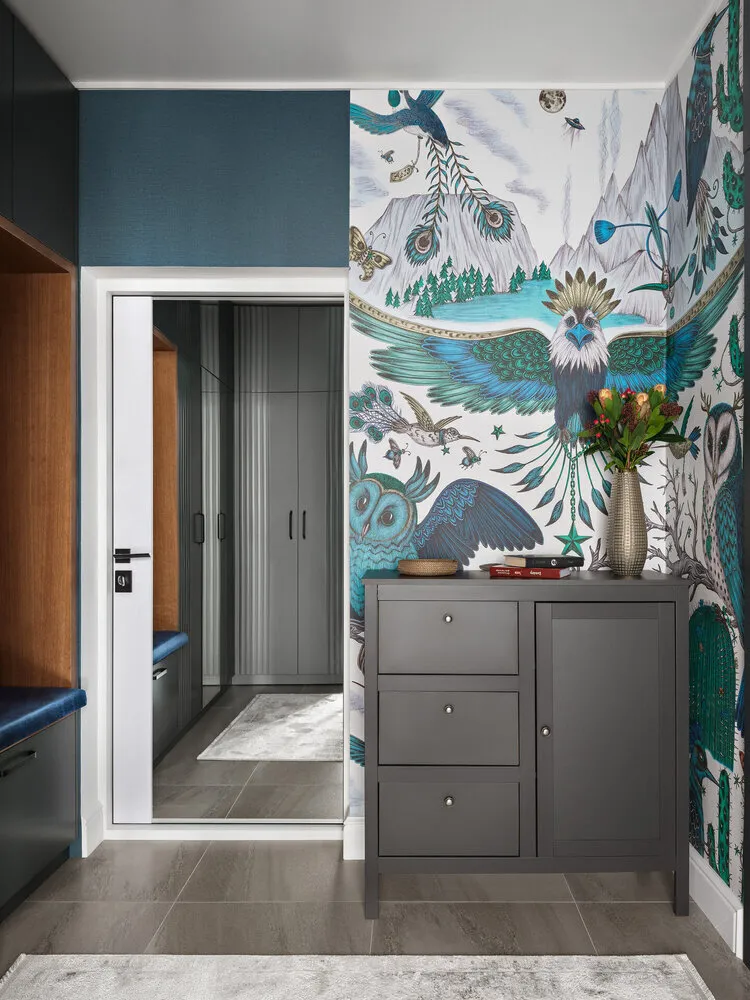 Design: Liliya Gorozheeva
Home Library
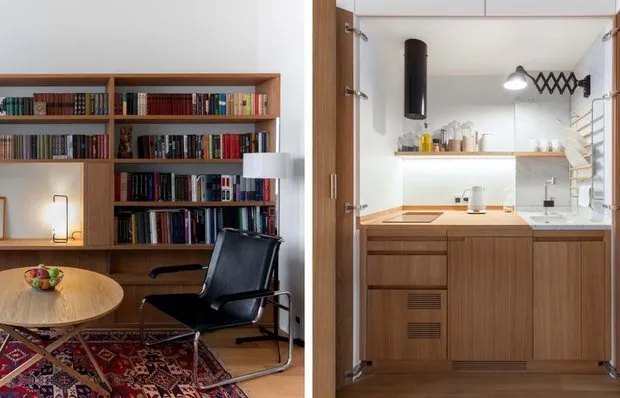
Tall corridor walls are the perfect place for bookshelves. A library in the corridor creates an intellectual atmosphere and transforms a simple passage into an interesting space.
- Shelves can be custom-made precisely to wall dimensions or use modular systems. It's important to plan shelves of different heights for books of various formats.
- Place heavy books and albums in the lower section, light literary works in the upper part. The middle level (at eye height) is for books you use most often.
- A sofa or bench will turn the library into a reading zone. If the corridor is wide, a narrow sofa can be placed; if not, a foldable bench.
Workspace by the Window
If there is a window in the corridor, this spot is perfect for organizing a workspace.
- Natural lighting is a big advantage for computer work.
- The countertop can be narrow (40-50 cm)—this is enough for a laptop and necessary items. Place drawers or open shelves under the table.
- Choose a compact chair, preferably on wheels. In narrow corridors, maneuverability is crucial—being able to quickly move aside for passage.
- Additional shelves above the workspace can be arranged for documents, books, and stationery.
Gallery and Art Space
Long corridor walls are ideal for placing paintings, photos, and posters. A gallery transforms a boring passage into a museum space.
- Hang pictures at the same height—150-160 cm from floor to center of image. This creates visual unity and a professional look.
- Each picture can be lit individually or a general directional light from above can be used. LED spotlights on a rail allow adjustment of the light direction.
- Mix different frame sizes but stick to one style. Or, conversely, use identical frames with different images.
Relaxation and Waiting Zone
- In wide corridors, a small relaxation zone can be organized—a bench, chair, or console table. This is especially relevant in large apartments where the corridor serves as a central space.
- Soft furniture should be compact and not obstruct passage. A bench or a seat with storage inside is a practical solution.
- A console table by the wall can serve for keys, mail, and decorative items. A mirror above the table completes the composition and visually expands the space.
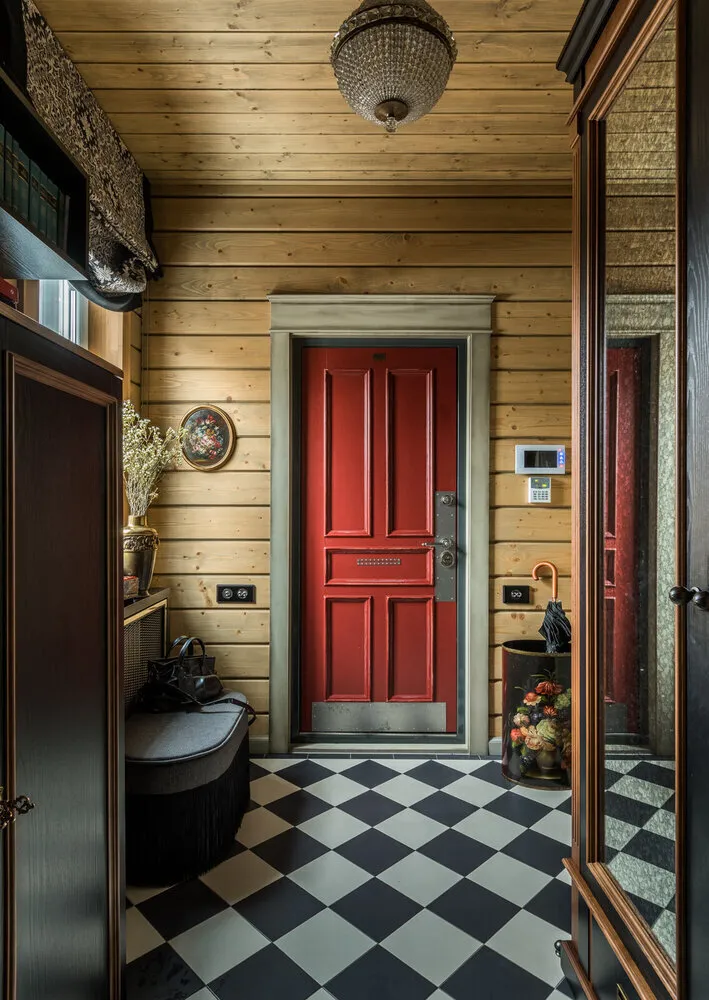 Design: Olga Aysina
Technical Zone
- The corridor is a convenient place to house technical elements: electrical panels, meters, distribution boxes. These can be hidden in decorative cabinets.
- A built-in vacuum cleaner with outlets in various spots in the corridor is a modern solution for large apartments. The hose can be stored in a special niche.
- A smart home system often starts with the corridor—this is where the central control unit for lighting, climate, and security is installed.
Lighting — The Key to Success
Proper lighting can dramatically change the perception of the corridor.
- One central light fixture creates shadows and makes the space feel gloomy.
- Multi-level lighting includes general light (ceiling lights), functional (task lighting in work zones), and decorative (lighting for pictures, niches).
- Wall-mounted lights provide even illumination without shadows. LED strips in niches or under cornices give soft diffused lighting.
- Dimmers allow brightness adjustment based on time of day and tasks. Bright light in the day for work, dimmed in the evening for rest.
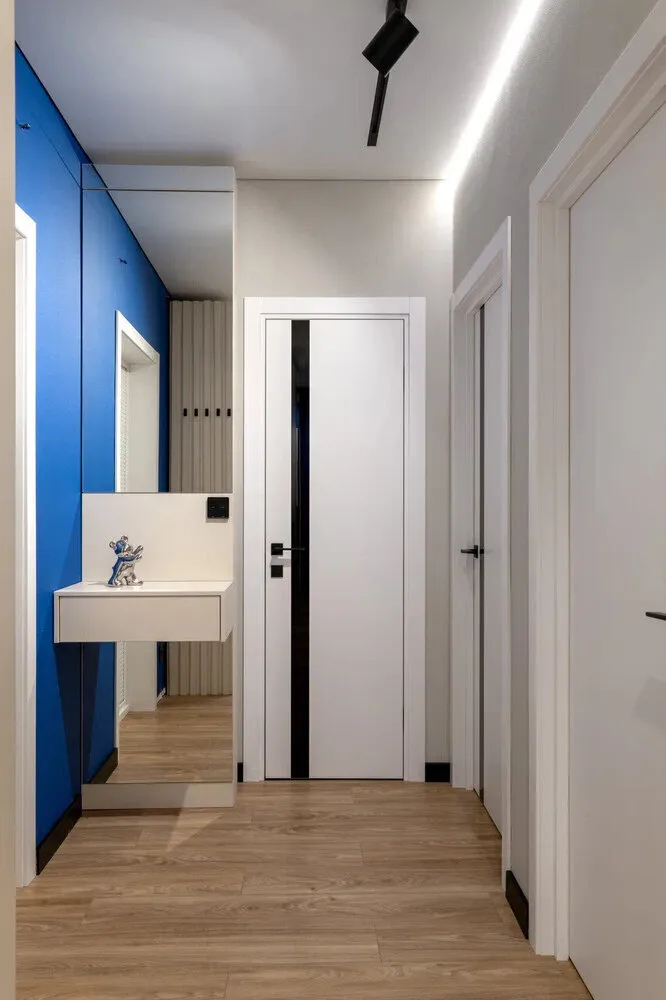 Design: Alisa Kachyeva
Color Solutions
Light tones visually expand narrow corridors.
- White, cream, light gray—safe choices for the base.
- One wall can be accentuated—paint it in a darker color or use wallpaper with a pattern. This adds depth and character.
- Horizontal stripes visually expand space, vertical ones lift the ceiling. Use this technique carefully to avoid overloading the interior.
- Color accents through accessories, paintings, cushions on the bench can be easily changed to refresh the interior without major costs.
Flooring
The floor in the corridor should be practical—there is high foot traffic and possible dirt from outside.
- Ceramic granite, quartz vinyl, quality laminate are the best options.
- Longitudinal tile or laminate laying visually elongates the corridor, transverse—expands it. Choose depending on the desired effect.
- A center path in the corridor protects the main surface and adds warmth. Choose washable materials—wool and cotton are impractical here.
- Heated floor in the corridor is a comfortable solution, especially if people change clothes and shoes there.
Storage Systems
The corridor is a natural place for storing coats, shoes, umbrellas, and bags. Storage systems should be as functional as possible.
- Hooks at different heights suit all family members. Children's hooks at the bottom encourage small kids to keep things tidy.
- A shoe cabinet should be closed—open shelves look untidy. Choose models with ventilation for air-drying shoes.
- Niches in the walls provide additional storage. These can be made during renovation or purchased as ready-made modules.
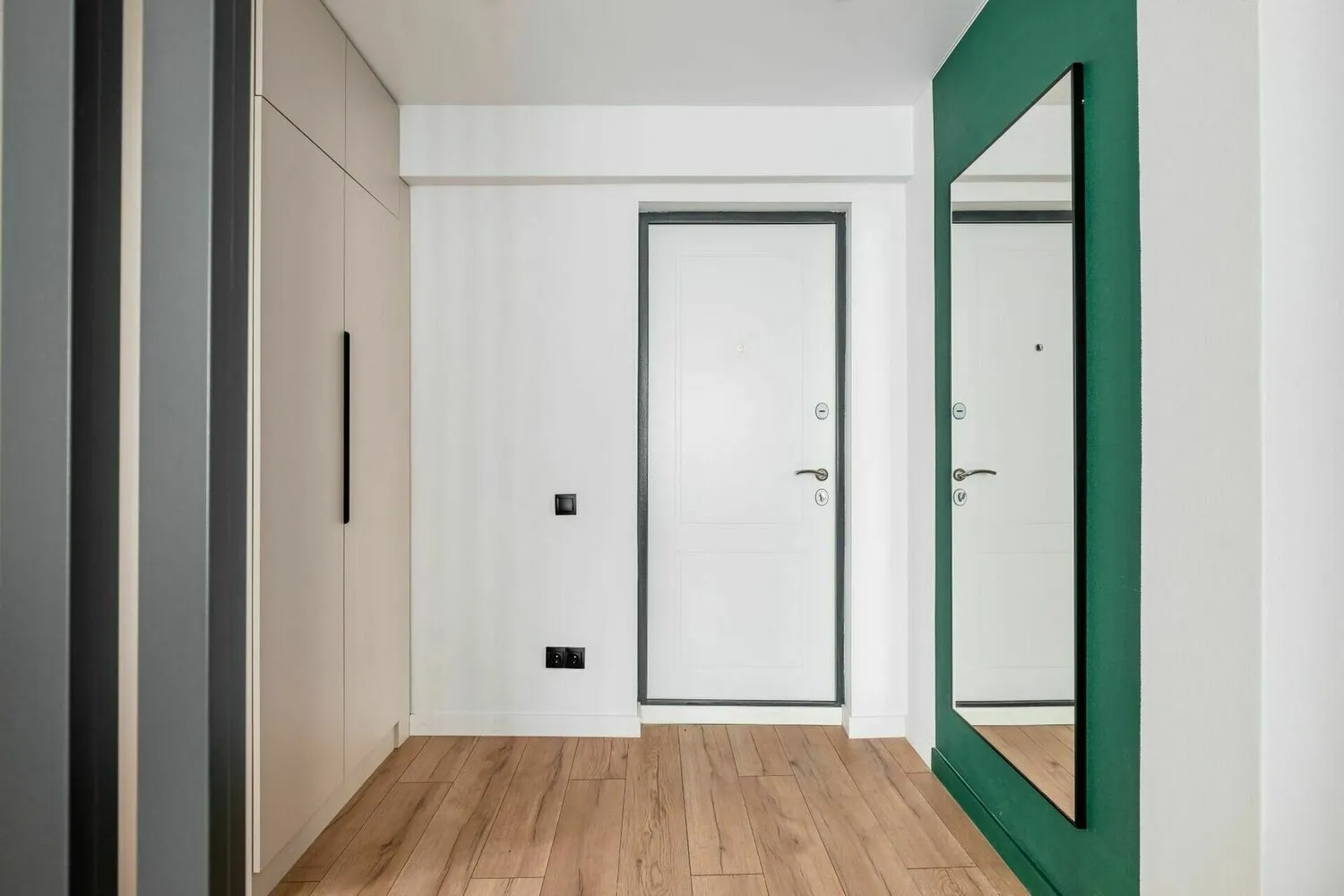 Design: Ksenia Shahmatova
Mirrors and Visual Effects
A large mirror in the corridor is not only a functional element but also a way to visually increase space.
- A full-wall mirror can double the sense of width.
- Mirror inserts in wardrobe doors create depth and reflect light. But don't overdo it—too many mirrors can disorient.
- Glossy surfaces—a suspended ceiling, lacquered furniture—also reflect light and create a sense of spaciousness.
Design: Olga AysinaFeatures of Old Buildings
- Uneven walls can be leveled with gypsum board, but this will consume centimeters. Sometimes it's better to embrace the irregularities as a design element.
- High ceilings allow for large light fixtures that look bulky in regular apartments.
- Thick walls provide excellent sound insulation—the corridor can become a quiet workspace even in noisy apartments.
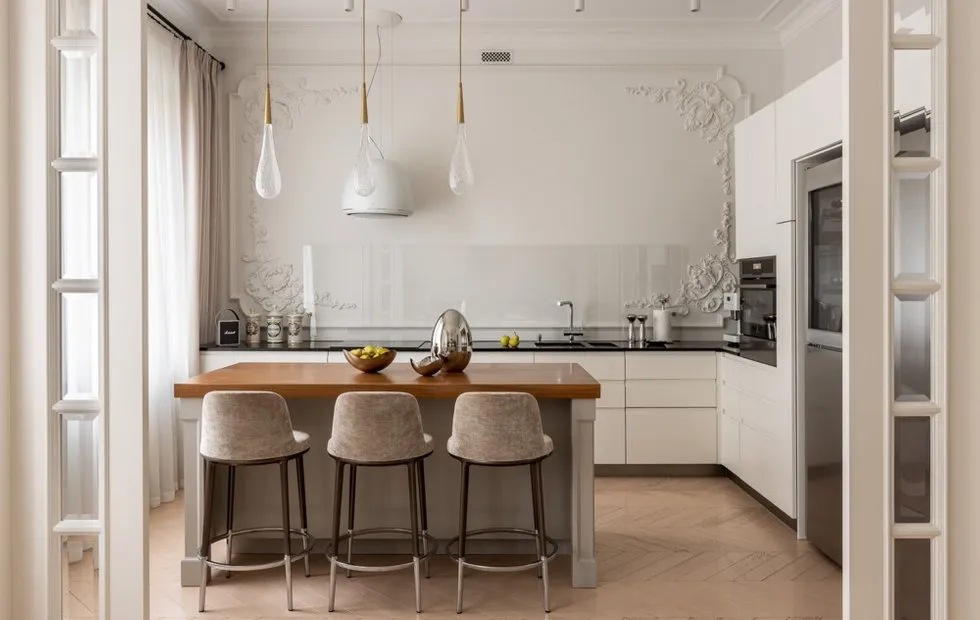
- Trim, outlets, cornices—elements worth preserving and highlighting in the interior.
Budget Solutions
- Painting walls is the most affordable way to transform a corridor. Quality paint lasts years and can be easily refreshed.
- Self-made shelves from boards and brackets will cost less than ready-made storage systems.
- Posters in frames instead of expensive paintings can create a gallery atmosphere for a reasonable price.
- LED strips are a budget alternative to built-in lighting that can be installed independently.
Planning Mistakes
- Don't clutter the corridor with furniture—passages should remain free.
- Avoid dark colors in narrow corridors—they visually narrow the space.
- Don't place furniture directly opposite the entrance door—it creates a sense of obstruction.
- Avoid complex suspended structures in corridors with low ceilings.
A corridor in an old building is not a lost area but an opportunity to create a unique functional space. The key is understanding the specifics of layout and not being afraid to experiment with unconventional solutions.
Cover: Design project by Olga Pisyarikova