How to Paint Walls Made of Different Materials?
All will depend on the material your walls are made of. That's what we'll be dancing to.
Wooden Walls
So, painting wooden walls. Wooden walls must be thoroughly prepared for painting: clean of debris, cobwebs, dust, old paint, plants. After that, the wall should be washed with water to remove any debris that might have gotten into the gaps between boards. If you won't be painting some parts of the wall, take the time to cover them with plastic or construction tape right away, otherwise you'll have to spend a lot of unpleasant minutes removing paint afterward. By the way, wooden house walls are often simply coated with water-based lacquer, preserving the natural look of wood.
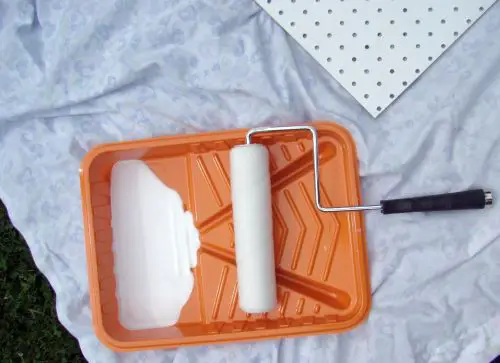
Photo 1 – Painting walls with lime is the cheapest way to renovate
Gypsum Board
Painting walls made of gypsum board is not the most complicated process, but it is very laborious. Before painting gypsum board walls, you must first fill in the joints that remain at the edges of the boards. Even several layers of paint won't completely hide them. Therefore, before painting walls made of gypsum board, you should fill them with spackle. It is recommended to paint gypsum board walls in several thin layers rather than all at once. For painting such walls, a special roller with long nap is used.
Painting Brick Walls
Brick walls should be painted with elastomeric paint. It applies in a thick layer, has water-repelling properties, and thanks to its elasticity, fills small cracks. Before painting, walls should be thoroughly cleaned, removing mold and white efflorescence (if present). This can be done using a stiff brush or vacuum cleaner. Large cracks can be filled with silicone or 100% acrylic spackle. Brick walls don't always require priming, but applying latex primer before painting helps the paint apply evenly.
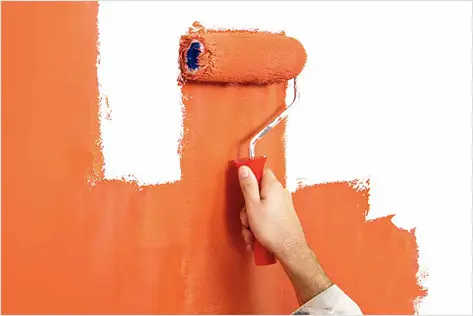
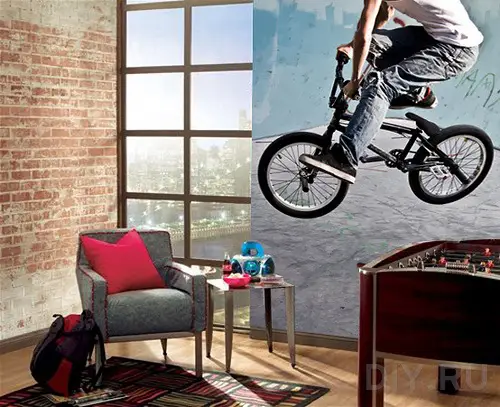
Photo 2 – Painting walls is no longer associated with boring interiors
Concrete Walls
Preparation and painting of concrete walls is done as follows. By the way, if less than 30 days have passed since the wall was made, it cannot be painted. If a month has passed, you can confidently begin. After removing the old coating (if there was any), the wall should be leveled with plaster or gypsum board (if the irregularities are too significant). Large wall areas should be painted with a roller, and hard-to-reach spots should be done with a brush. Layers should be applied with intervals to allow the previous layer to dry. Depending on the paint composition and wall condition, you may need 2-3 layers.
Removing Old Paint
So, you have old paint on your walls that desperately doesn't want to come off, wash off, or peel away. But you want to update the walls. Before applying a new layer over old paint, you should understand several important rules. The old surface needs to be primed with a thin coat; otherwise, without preliminary treatment, the new paint will quickly deteriorate. If necessary, you can plaster over the wall if the walls in the room are uneven, then re-prime. Only after that should you apply new paint. Of course, it's better not to work on old paint but to remove it completely.
Walls Made of Vagonka
If you want to paint walls made of vagonka, it is recommended to use aqua-lacquers and alkyd lacquers, acrylic and oil-based paints, covering and anti-septic agents. For preparing and painting walls made of vagonka, you will need: roller, bucket, ladder, safety goggles, paint, lacquer, painter's tray, brush, spray gun, sandpaper, primer. The process occurs in several stages:
- cleaning the surface of dust and dirt, degreasing;
- sanding the surface with sandpaper;
- for longevity, it is advisable to apply a primer anti-septic;
- now apply the paint with a roller, brush, or spray gun. The finishing coat is applied in thin layers, from top to bottom.
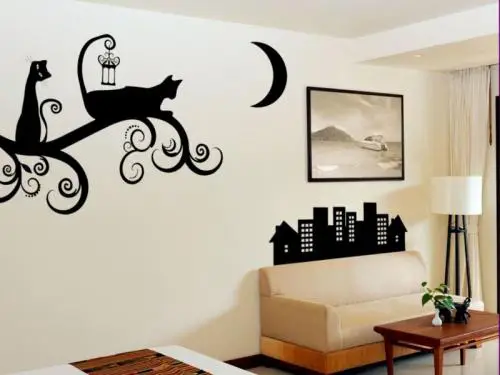
Photo 3 – Painting walls with stencils
Ways to Paint Walls. Interesting and Unusual Ideas
Today, the construction industry offers various options for painting walls to suit any, most sophisticated taste. There is no need to think that painting walls is an outdated activity and associated with the 'Soviet era'. A wide variety of improved materials compared to previous years offers scope for creativity. Now, fashionable and creative wall or ceiling painting becomes an excellent design addition to your interior. If you're planning a renovation, painting walls is a great way to make your home more interesting.
There are many types of wall painting.
- Painting with acrylic paint. These walls are not afraid of wet cleaning and resistant to wear. Acrylic paints offer a wide range of color options compared to PVA-based paints. After painting with acrylics, the wall will have a beautiful matte finish.
- Whitewashing with lime – the simplest and cheapest way to renovate. You can easily do this task yourself. A small tip: you can vary the color palette by adding special dyes to the lime solution. If the walls have never been whitewashed and are simply plastered, painting is done in three layers. If there is already some old coating on the walls, the surface must be thoroughly cleaned and degreased. If there is already old whitewash on the walls, it should be washed off with water, which is done in several steps.
- Gradient wall painting. A design frequently found in modern interiors. This is an original way of painting walls, where the color changes gradually (a gradient). It's important to plan in advance how your project will look when completed. Professional experts in this field recommend measuring the room and dividing it into equal parts with pencil marks. Also, choose approximately similar colors, as their transition will look harmonious.
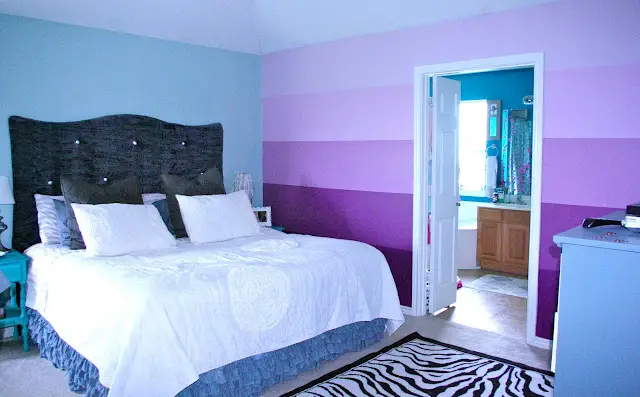
Photo 4 – Gradient wall painting
- Walls can also be painted with oil-based paint. These are usually used for painting external and internally plastered, metal, and wooden surfaces. Oil-based paints are conventionally divided into glossy and matte types. Matte compositions are mainly used for decorative finishing of surfaces. When painting by hand, some rules should be followed. For example, work with vertical strokes, spaced 5-7 cm apart from each other. Then blend the strokes horizontally, covering the entire surface.
- Velvet plaster. Venetian plaster is one of the most elegant types of finishing wall coating. A thin layer of coating creates a polished marble effect. Besides its appearance, velvet plaster has other advantages – longevity and uniqueness. However, there are drawbacks too. For applying venetian plaster, it's better to use the services of specialists, as it dries very quickly and must be leveled on the wall at high speed.
- If you like gloss, you can paint walls with azure paint. Decorative azure is usually applied on painted walls or wallpapers suitable for painting, on colored or white surfaces. Various techniques are used for application. You can choose gold, silver, or pearl azure according to your taste, or dye it in the color you prefer.
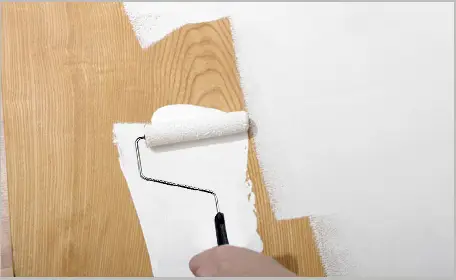
Photo 5 – Painting vagonka
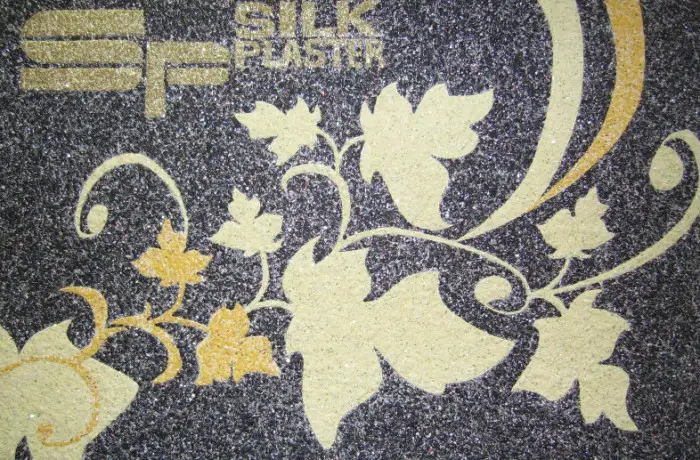
If you use textured paint (e.g., paints from brands like Tekkuri, Trioa, Kapa), you can create textured, beautiful surfaces in your interior. Textured paint is often also called structural or textural paint. With its help, you can decorate walls to look like old times, stone, silk (silk printing), or marble. These paints are applied with a textured roller to give the appropriate texture.
One of the options for applying textured paint is also painting walls to look like a "fur" effect. This type of painting is often used on the exterior of buildings for facade decoration.
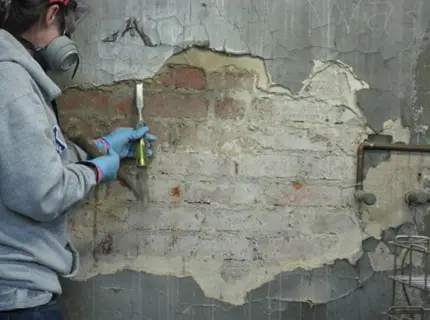
Photo 6 – Cleaning brick walls before painting
Textured (textural) paint will free your interior from everyday monotony.
If you are not naturally an artist, stencils can help. This method on one hand does not require serious effort from you, but on the other hand, it allows you to create a unique interior. These can be stencils with patterns or abstract designs, depending entirely on your desires, imagination, and artistic taste. In addition, it's easy to find examples of images for stencils online.
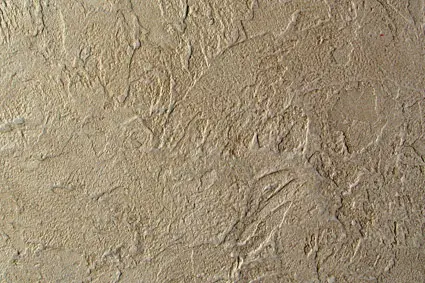
Photo 7 – Decorative plaster in the style of the old times
$ Painting Walls. Cost
- Cost of painting work in Moscow – 150-300 rubles per sq. meter.
- Cost of painting work in Kiev – 20-30 hryvnia per sq. meter.