Plaster for the bathroom
Plaster for the bathroom
Plaster for the bathroom is selected based on its main feature – constant presence of moisture. When choosing plaster for the bathroom, pay attention to its operational characteristics. The description may indicate that it is plaster for the bathroom or moisture-resistant plaster for the bathroom (more precisely, that it is suitable for use in the bathroom as well). The best plaster for bathroom walls is cement-based, such as those produced by Ceresit. Specialists recommend the universal 'Rotband' plaster for bathrooms.
- Plastering the bathroom begins with standard wall preparation. Old paint is removed, dust is cleared, and surface scratches may be made to help the mixture adhere better to the wall. If the wall is brick, mortar joints are slightly widened and old mortar is scraped out. Wall guides (maya) are installed.
- Walls are moistened and the first layer of plaster – a light spray (obryzg) – is applied. This layer should be thin (up to 5 mm) and doesn’t need to be leveled.
- Priming is applied once the obryzg has dried. The plaster is thrown onto the wall and leveled with a straightedge. In small bathrooms, a float may be used instead of a trowel in some areas. Two primer layers may be applied, but each must dry before the next is applied.
- The final coat (nakryvka) is applied over a damp primer layer. The plaster is thinly applied with a trowel and then gently sanded with a floating tool as it dries.
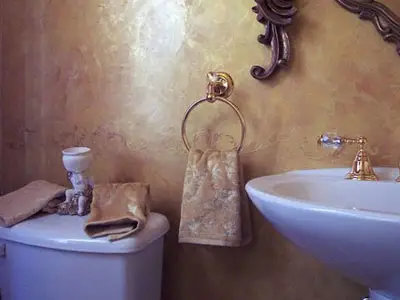
Photo 1 — Bathroom decoration with Venetian plaster
Since the plaster itself will not be in direct contact with water – the final finish will be applied on top – universal plasters are suitable for bathroom wall application. However, for decorative finishes, greater attention should be paid to moisture resistance.
Decorative plaster for bathrooms ranks below tiles in popularity. However, decorative plaster is an excellent solution for bathroom decoration in areas not exposed to direct water contact. For example, Venetian plaster has long been used for bathroom finishes. It is moisture-resistant due to special additives in its composition. The surface is coated with wax, which repels water, and joints and corners can be further sealed with sealant. Other types of decorative plaster may also be used. For instance, decorative mosaic plaster can create a unique interior. Mosaic plaster is often used for facade finishing, indicating its durability.
Some professionals recommend using durable facade plaster in bathrooms. Applying mosaic plaster to walls can mimic a rocky surface due to crushed natural stones in the mix.
Decorative mosaic plaster is suitable for both exterior facades and interior finishes in various rooms.
- Mosaic plaster – price in Moscow starts from 80 rubles per kilogram.
- Mosaic plaster – average price in Kyiv from 20 hryvnias per kilogram.
Application of mosaic plaster, video:
Decorative plaster for kitchen can be used in similar types. Kitchen wall finishes offer even wider options, as kitchen walls are not directly exposed to water. However, decorative plaster for kitchen should be easy to clean and not attract dirt. The "backsplash" area can be tiled with marble-effect tiles, while the rest of the walls can be enhanced with the same Venetian decorative plaster, further protected with wax.
Plaster for standard glazed balconies is rarely used. Typically, balconies are lined inside with wood or plastic. However, increasingly, balconies are being combined with living rooms and finished with plaster. Decorative plaster on balconies or loggias can be done DIY. Before finishing, the balcony must be properly insulated.
Therefore, no special composition requirements apply to wall plaster on balconies. If the balcony is open, a facade plaster such as the previously mentioned mosaic plaster may be chosen.