Lime Plaster
Universal Plaster
Lime plaster is one of the oldest plaster mixtures. The name itself indicates that lime is the main component. Lime can be combined with sand, cement, gypsum, and clay. Depending on the chosen 'partner' for lime, the composition will gain different properties and change its purpose.
Lime-based plaster is a versatile material used for both interior and exterior finishing. Advantages include relatively low cost, ease of application, and good adhesion to wall surfaces. However, it has drawbacks: it is quite fragile, not very durable, easily damaged, and sensitive to moisture and low temperatures.
For use in high-humidity areas and external finishing (as a base layer – undercoat), cement is added to lime plaster in a 1:1:4 ratio (lime:cement:sand). For splashing and finishing coats, slightly less lime and sand are used than for the base layer.
Standard lime plaster, or more precisely lime-sand plaster (sand is mandatory), can be made at home. The preparation of the mixture is not complicated: the lime-to-sand ratio is 1:2 or 1:3. The main challenge lies in preparing the components properly.
Lime for Plastering
Lime comes in various forms, but for interior plastering, air-dried, fine powdered, finely ground lime is required. Before use in a plaster mix, lime must be slaked: the powder is poured into a large container (note that lime expands during slaking), water is added, and thoroughly mixed. The main challenge is allowing sufficient time for complete slaking—this takes at least two weeks. If lime is not fully slaked, bulges and bumps may appear on the finished surface over time.
Sand for Plastering
Sand must be clean, sieved, and free of shells and pebbles. The quality of sand directly affects the quality of the plaster and, consequently, the success of subsequent work.
As mentioned, adding cement to lime plaster creates a stronger and more reliable option. This type of plaster is more resistant to mechanical damage, withstands environmental exposure well, is frost-resistant, and is ideal for exterior wall finishing prior to further decoration. Such plaster mixtures are available in any building supply store.
Lime plaster, priced reasonably, costs from 30 UAH per 25 kg in Kyiv. In Moscow, the price is from 140 RUB per 25 kg.
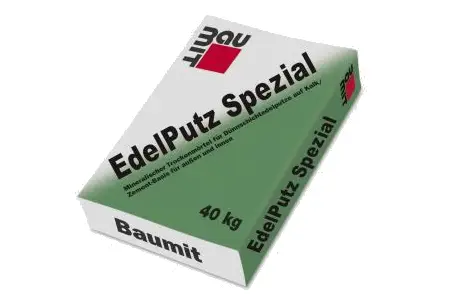
Photo 1 — Decorative lime-cement plaster, special Baumit
For dry indoor use, lime plaster can be simple lime-sand plaster. Internal wall plaster may contain gypsum, causing rapid setting—thus, it must be mixed in small batches and used immediately. Clay may also be added to plaster, though less commonly.
There is also decorative lime-based plaster for interior use, such as Baumit EdelPutz Spezial. When using lime plaster indoors, remember that to prevent early rework, proper proportions of binder with additives must be followed, and the plaster must be allowed to dry thoroughly on walls before proceeding to the next finishing stage.