Installation of Self-Adhering Roofing
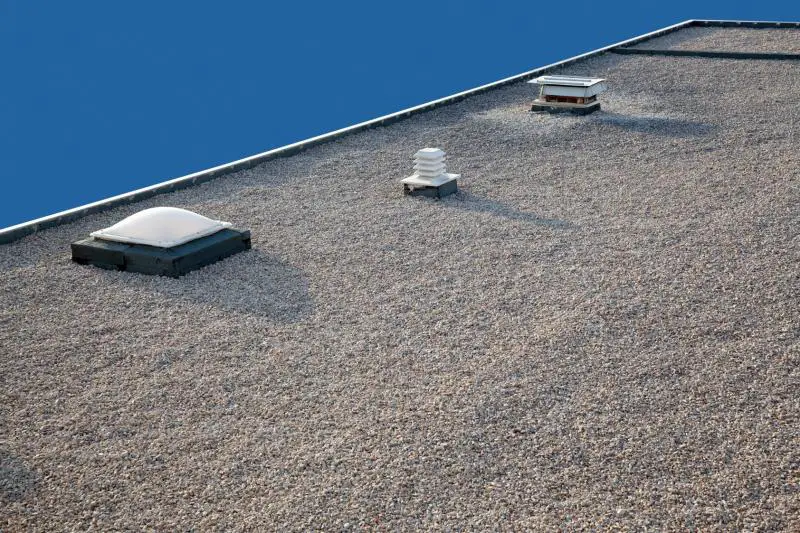
Self-adhering flexible roofing has held a leading position in terms of popularity on roofs across our country for many years. Residential multi-story buildings, warehouses, commercial facilities, and small structures such as garages are frequently covered with this type of roofing. This type of roofing consists of a rolled bituminous material applied directly onto a base layer beneath a waterproofing membrane, which can be either a protective screed or a rigid insulation plate.
Self-adhering flexible roofing has held a leading position in terms of popularity on roofs across our country for many years. Residential multi-story buildings, warehouses, commercial facilities, and small structures such as garages are frequently covered with this type of roofing.

This type of roofing consists of a rolled bituminous material applied directly onto a base layer beneath a waterproofing membrane, which can be either a protective screed or a rigid insulation plate. Roofing materials have undergone significant evolution over the past decades: initially, simple materials like ruberoid and rubemast appeared, while today the market offers high-performance self-adhering materials such as VillElasta. With advancements in production technology, the maintenance-free service life of flexible roofing has significantly increased.
Advantages of Self-Adhering Roofing
The service life of flexible roofing depends on the base material of the self-adhering waterproofing membrane. Most popular materials include polyester, glass mat, and fiberglass. The best among these is undoubtedly polyester, due to its maximum flexibility and frost resistance, ensuring a watertight seal on both flat and curved roofs. Next comes fiberglass, followed by glass mat.
All listed materials are inorganic, meaning they do not rot in moist environments. Glass mat is less expensive than fiberglass but has lower tensile and bending strength, as well as reduced resistance to freeze-thaw cycles.
Key advantages of self-adhering flexible roofing can be summarized as follows:
- Long maintenance-free service life of 10 to 30 years;
- High strength and flexibility of the waterproofing membrane, which is easily cut and can be installed even in hard-to-reach roof areas;
- Watertight performance;
- High mechanical strength of the waterproofing membrane;
- Resistance to temperature fluctuations and other atmospheric conditions.
Application of the Waterproofing Membrane
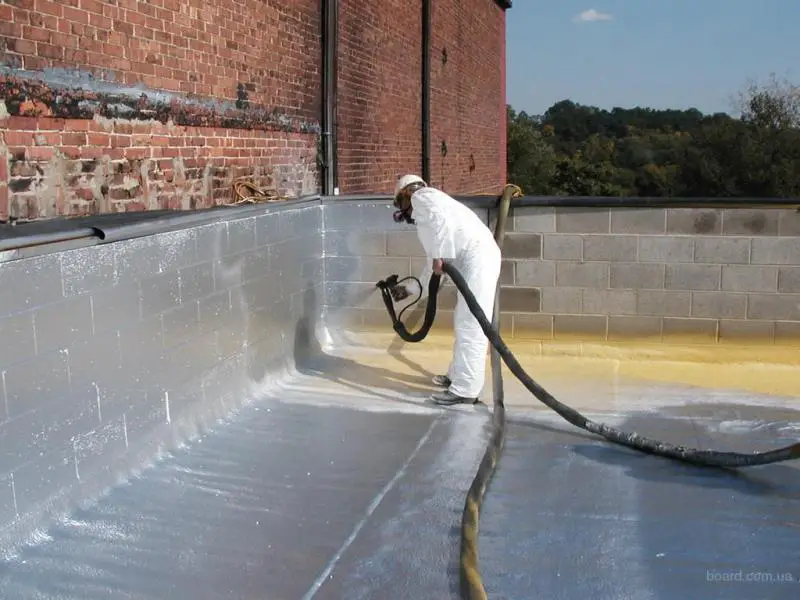
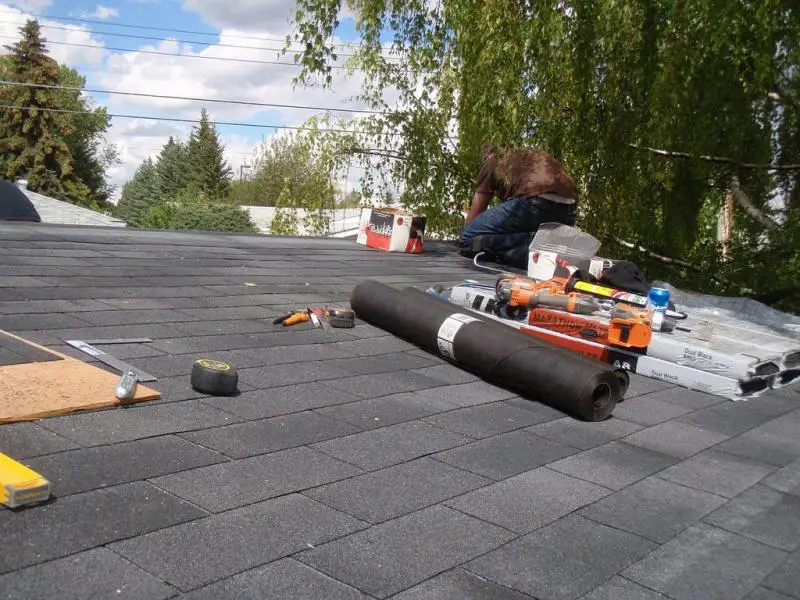
The primary tool used during installation is a propane torch, which heats the bituminous component of the rolled material, enabling it to achieve strong adhesion (bonding ability) to the base. Among modern innovations, bituminous rolled materials with a self-adhesive layer are now available, helping to secure the membrane in place and reduce or eliminate the need for gas torches.
During production, modified additives are incorporated into the waterproofing material to enhance the performance of the final membrane: for example, increased bending strength, resistance to crack formation, and minimal or no shrinkage.
The typical thickness of self-adhering roofing is about 3–4 mm, meaning it can be installed in 2 to 4 layers. For flat structures with a slope of less than 14 degrees, 3–4 layers are recommended, while for sloped roofs with a slope exceeding 14 degrees, two layers may be sufficient.
When laying the membrane sheets, ensure overlaps of at least 15 cm on all sides, and align the roll direction with the water runoff toward the eaves — rolls should be unrolled in the direction of water flow, not perpendicular to it.
When applying heat, direct the torch flame only at the waterproofing membrane itself. Never apply direct flame to rock wool, which serves as the base under the waterproofing membrane. Direct exposure of the flame to rock wool can burn out the binder within the insulation, leading to structural damage and detachment of the flexible roofing.