Roof Construction
A roof is a complex multi-layered structure. The number of layers depends on several factors, the first of which is whether the roof should be warm or cold. If the attic space is used, a thermal-insulated roof is required; otherwise, a cold roof may suffice.
The structural design remains similar, but the number of layers varies.
Cold Unoccupied Roof
These structures are primarily intended to protect the house from precipitation and wind, so only essential components are used.

Wall plate (mauerlat) – timber beams encircling the walls along the perimeter, used to secure the rafters. These must be strong wooden beams with a minimum cross-section of 10x10 cm; sometimes a log is used, planed on one side (this side rests on the wall).
If the house is built from logs, the top ring course serves as the wall plate. It is secured to the wall using hooks.
Rafters – the main support for the roofing material. The roof essentially rests on them. They are made from timber of various cross-sections, depending on rafter length and spacing. Timber of 8 x 10 cm can be used for rafters up to 3 meters long with a spacing of about 120 cm. The longer the rafters and the greater the spacing, the stronger and larger the beam must be: a rafter about 6 meters long with a 140 cm spacing requires a minimum beam size of 10 x 20 cm.
Other factors affecting rafter cross-section include regional snow load, average wind strength, roof weight, and more. The wood used for rafters must be top-grade, undamaged, and well-dried.
Inclined rafters rest on two walls (single-pitched roof) or on one wall and a ridge beam. In gabled roofs, rafters don’t need to be placed directly opposite each other; they can alternate on the ridge beam. If the ridge beam exceeds 6.5 m, an intermediate support is needed to stabilize the rafters. With one support, rafter length can be extended to 12 m; with two supports, up to 15 m.
Rafters without intermediate supports are connected by a tie beam (rafters’ tie) – a horizontal beam at the top of the rafters. This creates a rigid structural frame, increasing strength at the ridge joint. The tie beam is not mandatory, but its presence extends the roof’s lifespan by reducing (or better, redistributing) vertical pressure from rafters on the wall plate and walls.
Sheathing is fastened horizontally to the rafters and serves as the base for the roofing material. Sheathing uses timber with a minimum cross-section of 5 x 5 cm, or 2.5 cm thick boards. The spacing depends on the final roofing layer, but must not exceed 20 cm.
Occasionally, a solid, even decking is used instead of spaced sheathing (e.g., for flexible or rolled roofing). This is made from planed, tightly fitted boards.
Waterproofing. While not always required, it is highly recommended. It protects against leaks and subsequent wood damage in case of roofing material damage. Minimum protection covers side elements like eaves, roof valleys, pipe vents, dormer windows, and other openings. Maximum protection should cover the entire roof surface.
Final roofing material must be installed according to manufacturer’s instructions, as different materials have different requirements. Proper fastening technique is essential, as incorrect installation can compromise the entire roof structure.
Naturally, the roofing material significantly influences the entire roof’s structure. Therefore, before installing the framework, it’s crucial to know exactly what the final roofing layer will be.
Warm, Occupied Roof
The structure of a warm roof is a cold roof enhanced with thermal insulation. In addition to insulation, such a roof requires vapor barrier and, if it includes a loft, interior finishing. Note: when the roof is used, waterproofing is mandatory.
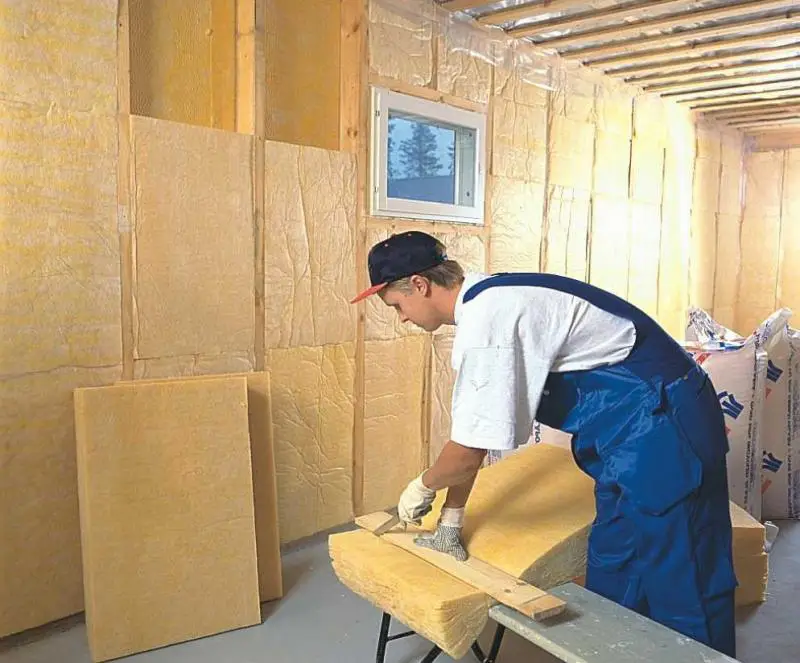
Insulation mats are placed snugly between rafters. To improve thermal performance, insulation can be installed in two layers: one between rafters, and another above or below them.
If a two-layer insulation system is used and the second layer is placed above the rafters, the waterproof membrane must be taut and not sagging. Otherwise, it may block airflow, thus closing the ventilation gap. If the second layer is attached inside the attic (loft), such issues won’t occur, but usable space will be reduced.
Diffusion membranes may be used as waterproofing layers. They simplify roof construction because ventilation gaps are not required. During installation, it’s crucial to orient the membrane correctly toward the insulation. Information on the right side is typically found in the documentation or on the label.
Vapor barrier is used for attic roofs. This film protects the entire roofing system from condensation and indoor moisture. It’s especially critical for insulation: once wet, it loses its insulating properties. But it’s equally important for all wooden structural elements, as prolonged exposure to high humidity causes wood to deteriorate, despite its high strength.
Roof construction is both simple and complex at once. It’s easy for those familiar with it, but challenging for beginners learning roofing engineering. Numerous questions arise, and answers are sometimes not found even in the most advanced textbooks. But if you ever wonder whether a particular structural element is necessary, think twice. Roof reliability is just as important as foundation strength.