Gable Roof Truss System
Architects consider the roof to be the fifth facade of a house. A well-designed and expertly built roof not only shields the structure from precipitation but also enhances its aesthetic appeal. The truss system is the skeleton of the roof.
Key Elements of the Roof Truss System
Structurally, a roof consists of the roofing material and the truss system. The roofing material is the upper protective layer made from various materials such as tiles, corrugated steel sheets, or roll materials. Together with the sheathing, the truss elements form the load-bearing framework of the roof. Sloped roofs are generally defined as those with a pitch exceeding 15°, though exceptions exist.
It is better to choose simple configurations: every bend, protrusion, or joint is a structural weak point, increasing the risk of leaks. The simplest and most common roof type remains the gable roof. It is sometimes also called a hip roof, and the wall sections within the attic are referred to as hips or gables.
Key elements of the truss system:
- rafters (struts),
- beams (purlins),
- plate (mauerlat),
- posts (vertical supports),
- diagonal braces (struts),
- tie beams (rafters' connections),
- hanging rods (bobbins),
- splices (reinforcements),
- sheathing (roof deck).
Wooden rafters are most commonly used in private construction. Two main types of gable roof truss systems exist: nailed-in (supported) and suspended (hanging) rafters. Nailed-in rafters offer simplicity and reliability. Suspended rafters are used for spanning large distances but require more precise calculations and are harder to repair.

Supported Truss Systems
The bottom end of the rafter rests on the wall, while the top end connects to a beam supported by vertical posts.
It is ideal if the distance between walls ranges from 5 to 8 m, eliminating the need for a central support. With internal load-bearing walls and diagonal braces, this span can increase to 14–16 m. Rafter spacing is determined by structural calculations and depends on wind and snow loads, as well as the weight of the chosen roofing material. Spacing typically ranges from 0.8 to 1.2 m, but should not exceed 2 m.
If the roof is insulated, rafter spacing is selected based on insulation dimensions to avoid cutting. Standard insulation mat widths are 0.6 m and 1 m.
When building an attic, external walls are raised to a suitable height (e.g., 1.5–1.8 m). Internal walls are raised only to a level 15–25 cm above the top of the last floor’s ceiling, or several brick courses. Beams are laid on top, and a post system with a 4–6 m spacing is installed to support the ridge beam.
To strengthen the framework, a diagonal brace is installed between a post and beam when the span exceeds 6 m. The angle between the brace and post must not exceed 40–45 degrees.
Dimensions, Sections, and Fastening Methods
Rafters are typically made from logs, timber, or boards. Standard lumber length is 6 m; for longer spans, rafters are built from multiple boards. Cross-sectional dimensions are determined by strength requirements, but should not be less than 50×100 mm for rafters, posts, and braces, or 100×150 mm for beams and plate.
The plate and all wooden elements contacting masonry must be treated with a wood preservative and protected with roll-type waterproofing materials. They are secured to walls using anchors or embedded steel rods. Rafter ends are attached to the plate via notching and reinforced with angle brackets, steel plates, or bolts. They are connected to walls via wire ties, using 4–6 mm diameter wire tied to a metal spike (‘erz’) driven 300 mm below the wall’s top.
Where extra strength is needed, rafters are doubled using two identical timber sections. This is common at points of increased load, near dormer windows, or near ventilation flues. Wooden roof elements must be at least 130 mm from brick chimneys and 250 mm from ceramic flues.
There are two main methods for joining rafters at the top:
- Rafters are butted together at their angled ends and connected with a splice plate,
- Rafters are placed side by side and fastened with bolts.
To increase rigidity, rafters are tied together with a tie beam, which is supported and protected from sagging by a vertical element known as a hanger or bobbin.

Suspended Truss Systems
In this design, roof spans are covered using truss frames. Installation is more complex because the truss is built on the ground and then lifted into place using a crane. The simplest form is a triangular truss made of two rafters and a tie beam. The tie beam resists outward thrust, so only vertical loads are transferred to the walls.
Trusses are not placed directly on the plate but on a wooden spacer. The spacing between trusses is 3–4 m. More complex designs may include metal components. However, suspended truss systems are generally less economical than supported ones and heavier due to higher material usage.
Sheathing and Eaves Overhangs
The type of sheathing depends on the roofing material.
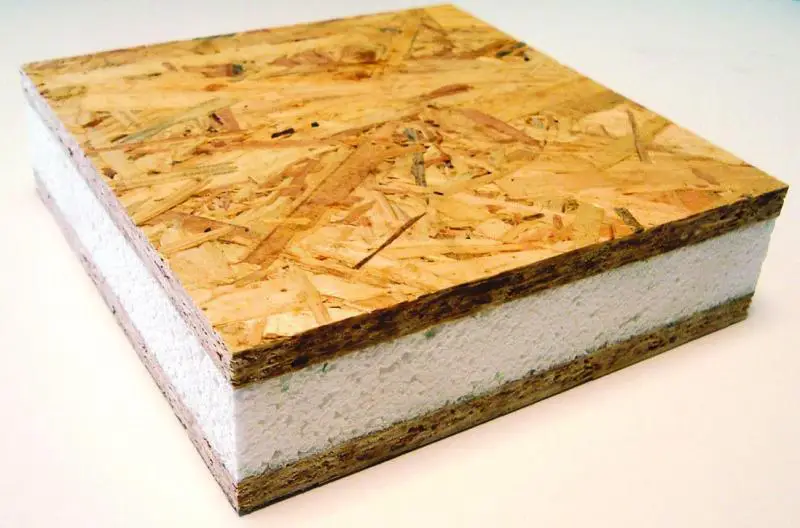
- For flexible materials such as bitumen shingles, a continuous sheathing is used. Materials include boards, plywood, or OSB panels, with gaps between elements not exceeding 10 mm.
- For rigid materials like tiles, a spaced sheathing made from 40×50 mm or 50×50 mm battens is used, spaced several decimeters apart. Spacing is determined by tile size, so selection should be made in advance. A counter-battening layer, installed at a 45–90 degree angle, is often added on top.
The roof overhang for protecting walls from runoff, known as the eave, is typically 50–60 cm. An overhang less than 30 cm is ineffective and visually unappealing. For low-pitched roofs, the overhang forms by extending the rafters; for steep roofs, additional short pieces (called 'kobylki' or 'noggers') are attached to the rafter ends.
The truss system is a critical component of the entire building structure. Proper design and calculation ensure long-term, reliable performance of the structure.