Approximately 350 thousand rubles were spent on furniture wood for the entire apartment
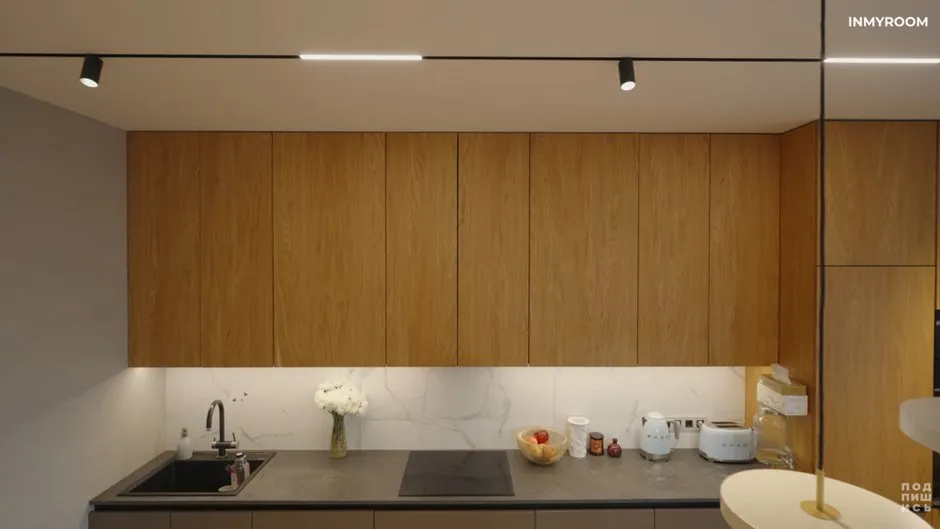
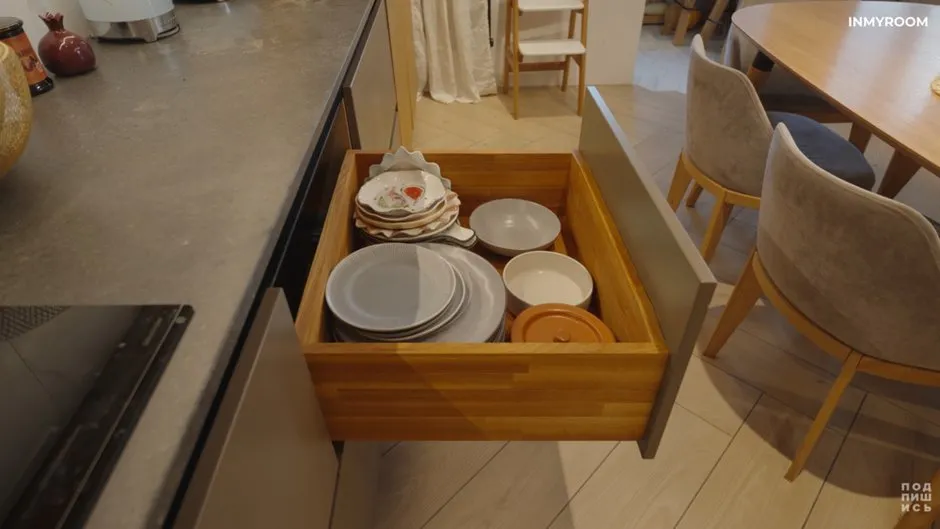
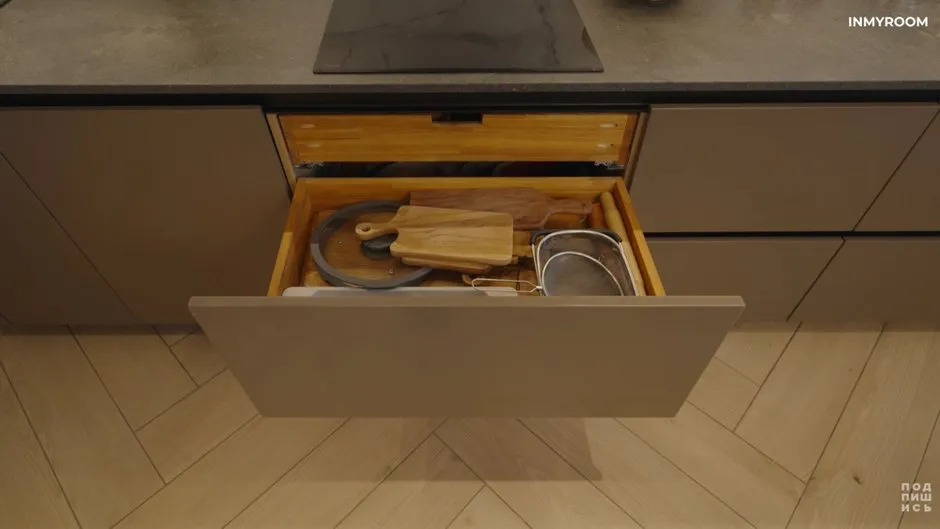
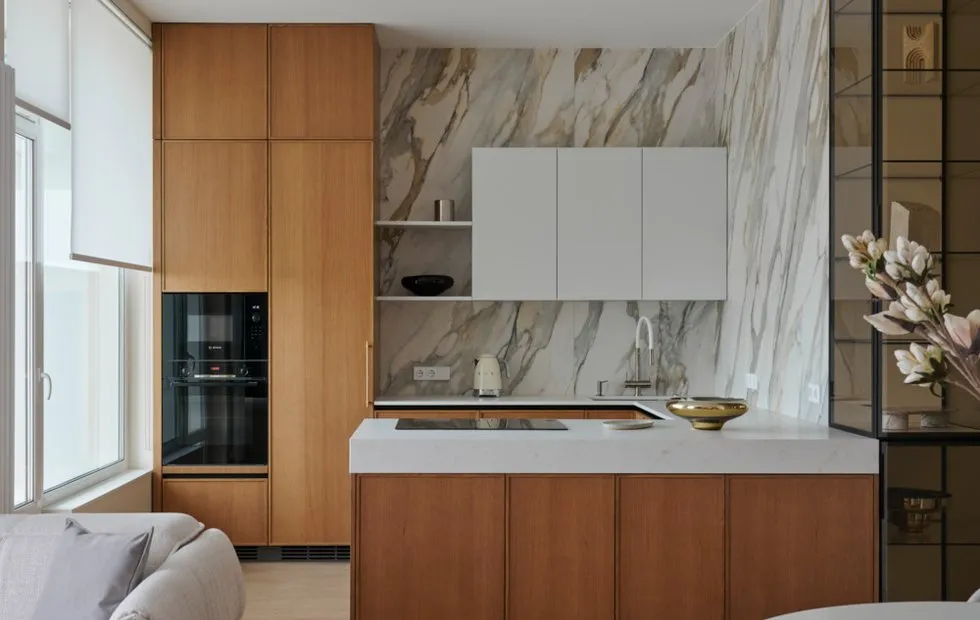
After his initial experiments, Andrei moved on to the kitchen. He decided to use natural wood not only for the exteriors but also for the internal components, shelves, and drawers.
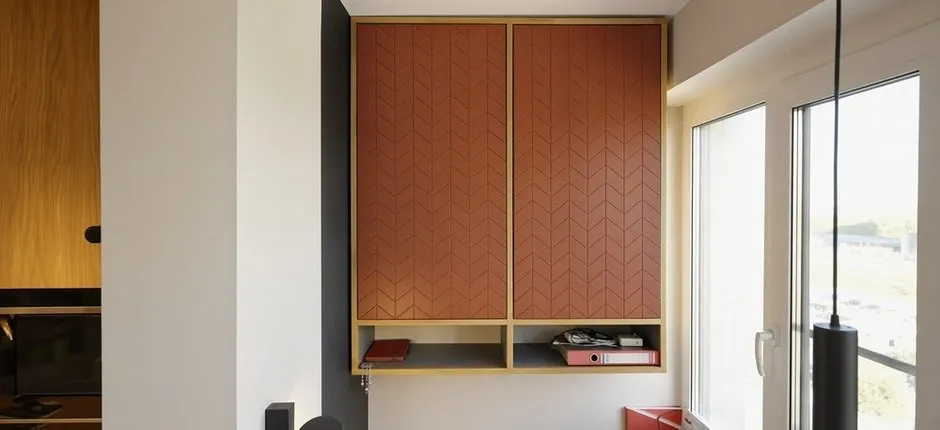
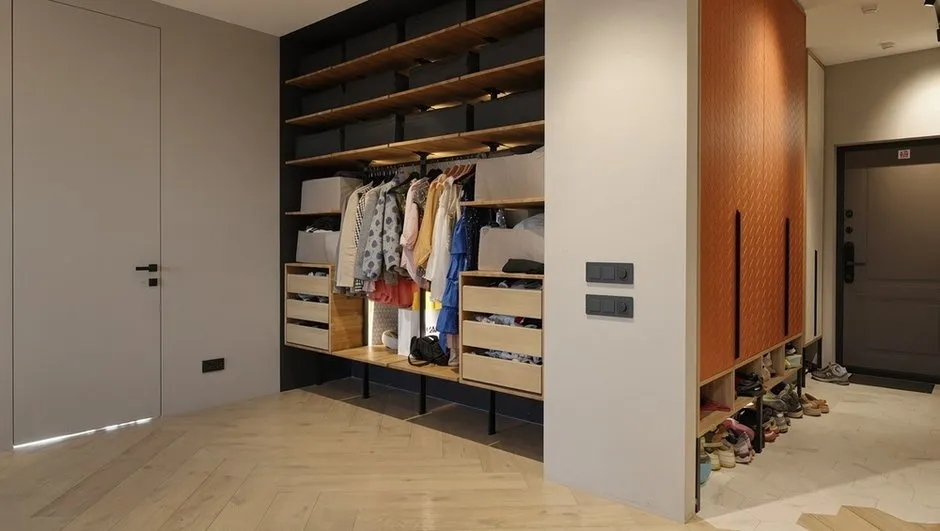
Later, he created other furniture for the apartment using the same approach: cabinets, storage systems, and a TV stand. According to Andrei’s rough estimate, about 350 thousand rubles were spent on wood for all the furniture in the apartment.
It’s important here not to mix up the amounts. This is not the cost of a finished kitchen nor the total budget for furniture. The stated amount does not include all the work, appliances, stone countertops, and other separately purchased elements.
The savings were achieved in part because Andrey took on a significant portion of the construction work himself.
But instead of paying the furniture workshop, the family had to invest their own time and effort.
Processing the wood turned out to be the most labor-intensive task
Andrei built the kitchen in late autumn and winter on the balcony of his old apartment.
Each wooden piece needed to be cut, sanded, and treated with protective coatings. According to him, the process involved several stages: oil primer, sanding, re-treatment, followed by oil-wax application and more sanding. This sequence was chosen to protect the wood from moisture and achieve the desired surface finish.
But even this wasn’t the most difficult part.
The kitchen required long wooden pieces, one of which was almost five meters long. They had to be lifted manually up the stairs to the 13th floor of the old building, processed, then brought down, transported, and lifted again — this time to the 8th floor of the new apartment.
Things to keep in mind: when building furniture by yourself, you need to assess not only the cost of wood and tools but also the space available for working. Another issue is how to deliver the long pieces into the apartment and whether they can be unfolded inside.
The kitchen was assembled to the millimeter
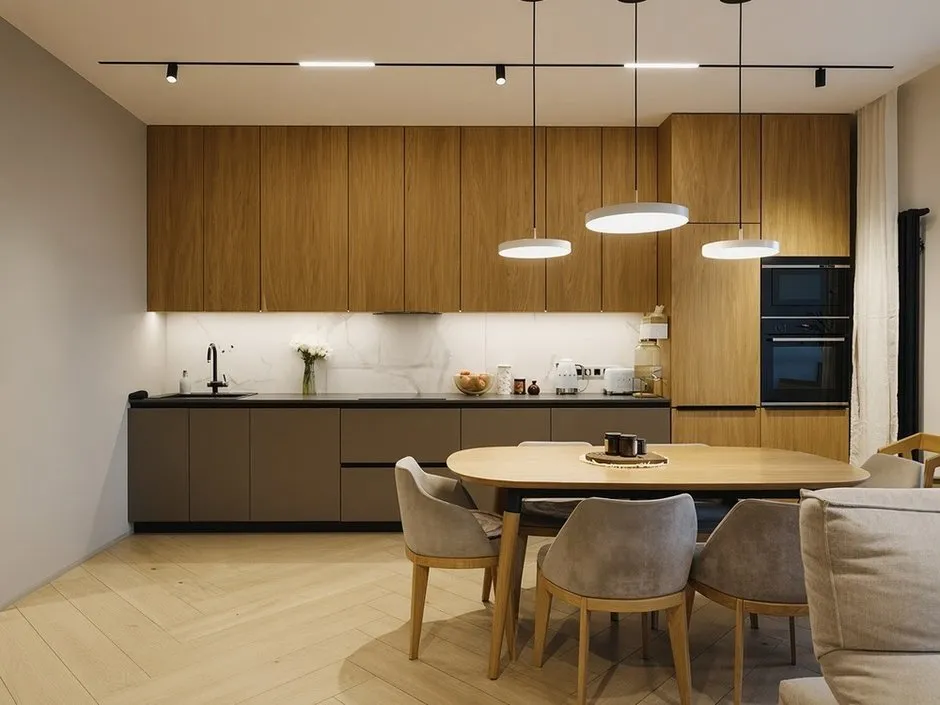
Andrei wanted a single integrated unit rather than a set of visually separate cabinets.
This made the work more complicated: the dimensions of the components had to be maintained with great precision. According to the owner, the deviation along the entire length of the kitchen was about one to two millimeters.
They decided to avoid protruding handles on the lower cabinets. For this purpose, they used a special Gola profile that allowed the fronts to open within the designated gap. The upper fronts were made slightly longer than the cabinets—about one and a half centimeters. This enabled them to be opened by gripping the lower edge.
In furniture manufacturing, such solutions require additional processing of the components. Since Andrei did this work himself, the cost of the profile itself did not constitute a significant expense.
Things to keep in mind: the lack of handles needs to be planned in advance. It is necessary to provide a place to grasp the front surface and check whether the cabinets and drawers open easily. It is not possible to simply remove handles from a finished set.
Where the Family Refused to Cut Costs
Andrei didn’t build the entire kitchen by himself.
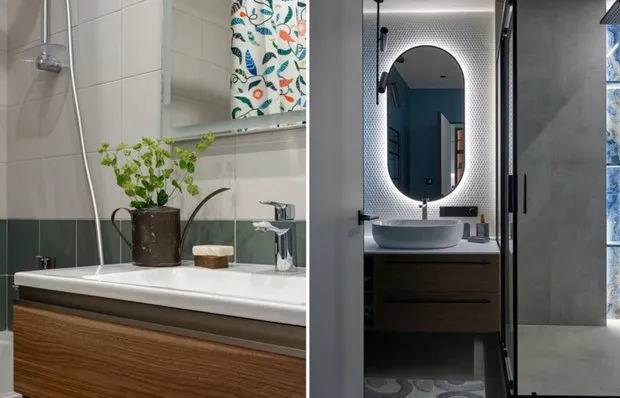
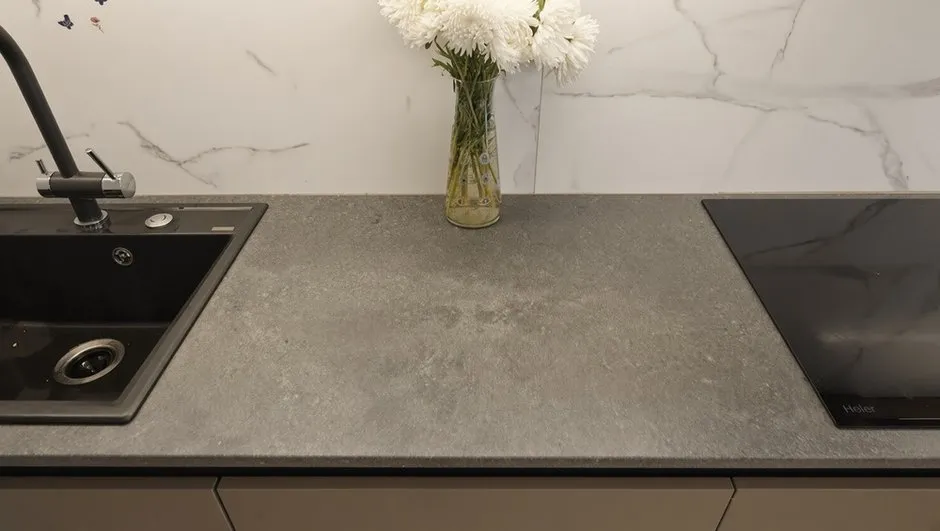
For example, the stone countertop was ordered separately. The couple liked the material so much that they decided to use it in the bathroom as well.
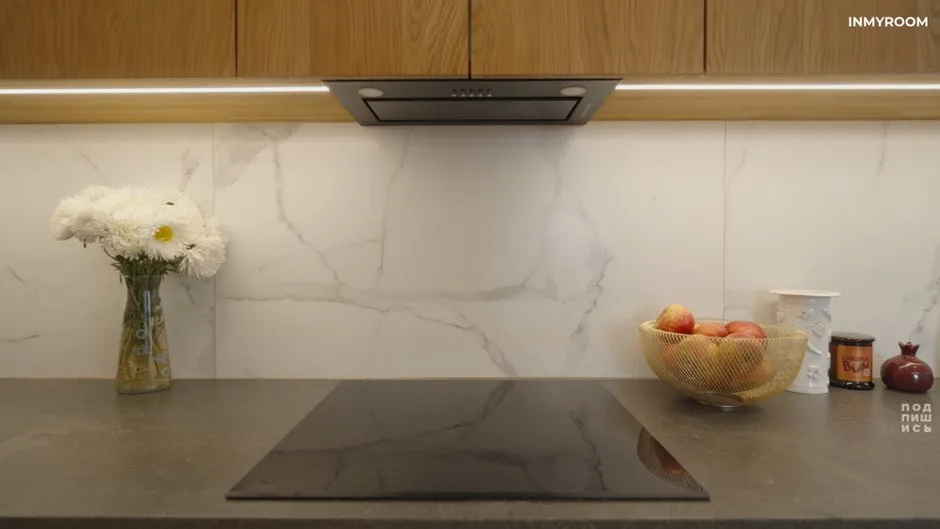
They also had to change their original plan regarding the kitchen apron. At first, they chose ceramic tile measuring 60 × 60 cm, but after trying it out, they realized the numerous seams were too noticeable. In the end, they ordered tiles in a larger format.
However, the kitchen’s cabinets and interior fittings remained wooden.
The result was a combination of furniture made by myself and individual components ordered from specialists. One thing to keep in mind is that when planning a budget, it’s not necessary to do everything entirely by yourself. You can divide the tasks: handle those you can manage on your own, while ordering more complex elements separately.
For making and installing furniture, appropriate tools, reliable fasteners, and adherence to the requirements for installing built-in appliances are needed.
What Happened to the Wooden Kitchen in Three Years
The most interesting result became clear after they moved in.
The family uses the kitchen every day and cooks a lot. According to Andrei, over the course of three years, the wooden cabinets and drawers have not warped, swollen, or tilted. The owners are also satisfied with the cabinet’s capacity; the cabinets reach the ceiling, and the large pull-out drawers allow them to store a large amount of dishes.
This is the result of using a specific kitchen, not a guarantee for any solid wood furniture. The behavior of the wood depends on its preparation, construction, room humidity, and protective coating. In Andrei’s case, another aspect is particularly illustrative: the savings came from doing the work himself, rather than skipping complex manufacturing steps.
On the contrary, the wood had to be processed multiple times, precisely fitted, and carefully assembled. As a result, the family got a kitchen of the desired size and appearance, and the skills acquired were useful for making the rest of the furniture in the apartment.