Precise measurement — the foundation of success
The first step in getting started is measuring the space. Determine the width and length of the floor area, including niches and doorways. Considering the unevenness of the walls, add 5–8 cm to each measurement—this margin will allow you to fit the flooring neatly along the edges without gaps at the baseboards.
If multiple tiles are planned to be joined, be sure to include a margin for the repeat pattern. This is especially important when the pattern is precise and requires alignment. Depending on the complexity of the pattern, this margin can range from 10 to 30% of the total area.
Manufacturer and warranty: trust proven names
The market offers a wide range of options — from world-famous European brands to reliable domestic manufacturers. European brands are often associated with high quality and advanced technology. However, it should be noted that these advantages usually come at a higher price.
Tip: Domestic manufacturers are offering increasingly competitive solutions by actively adopting modern technologies and materials. In Russia, for example, the JUTEKS factory has been in operation for 18 years, producing roll-form vinyl coatings that meet high standards.
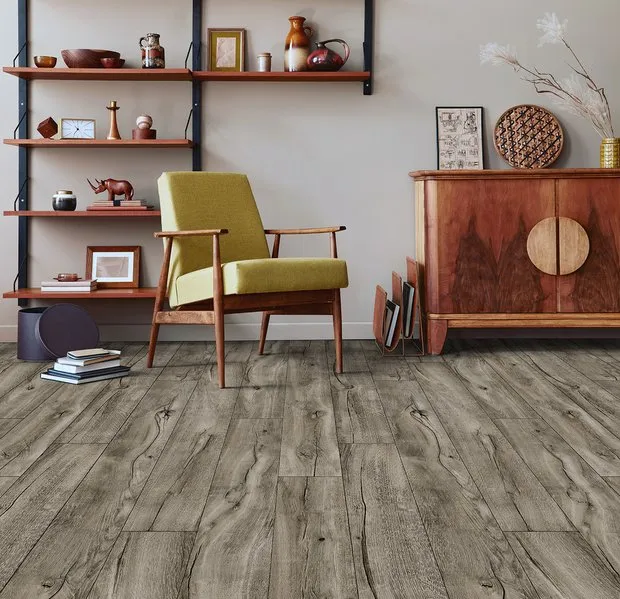
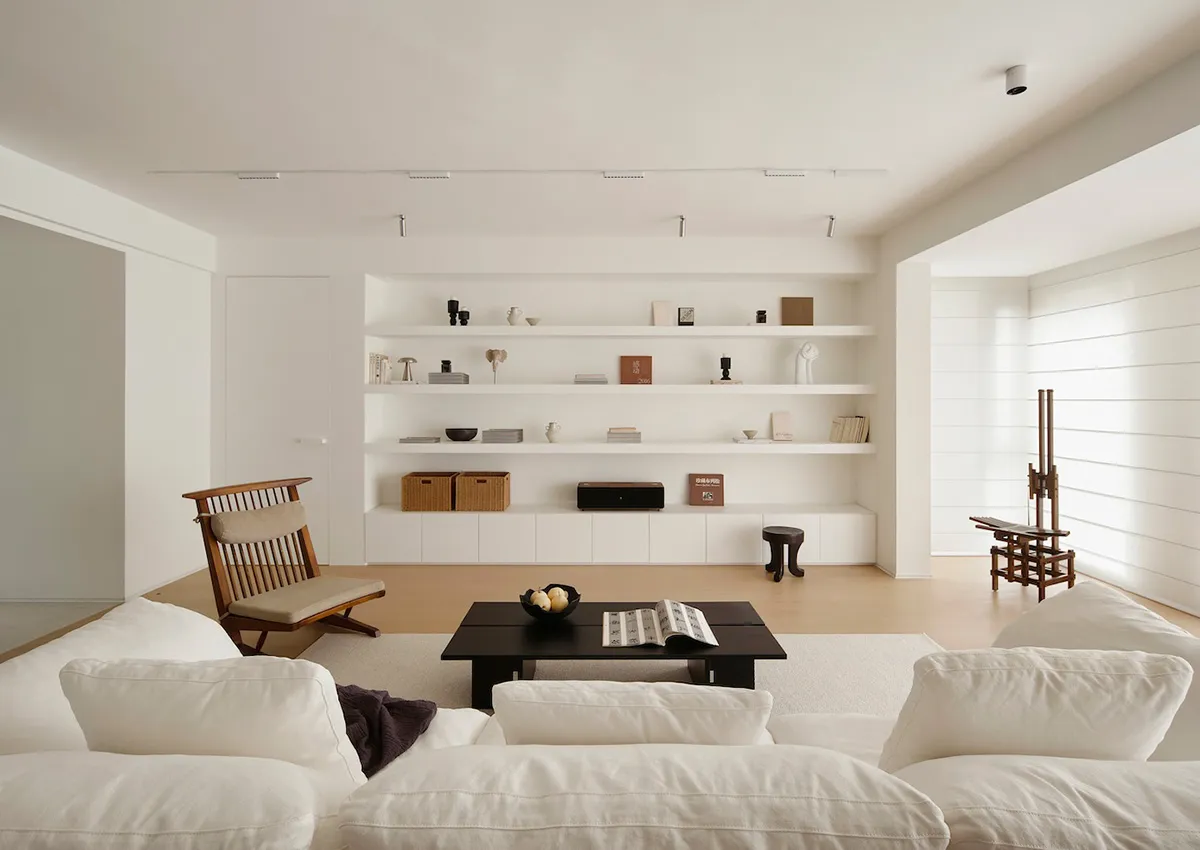
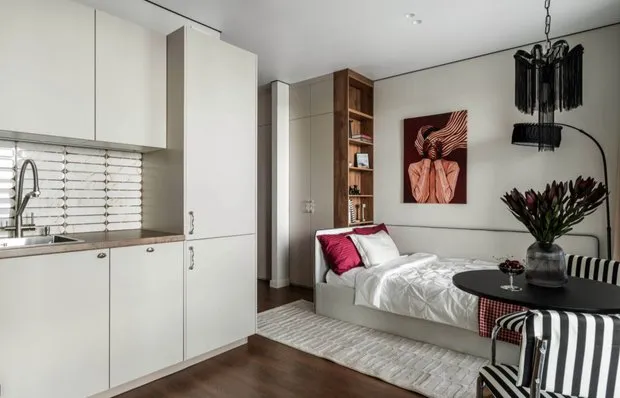
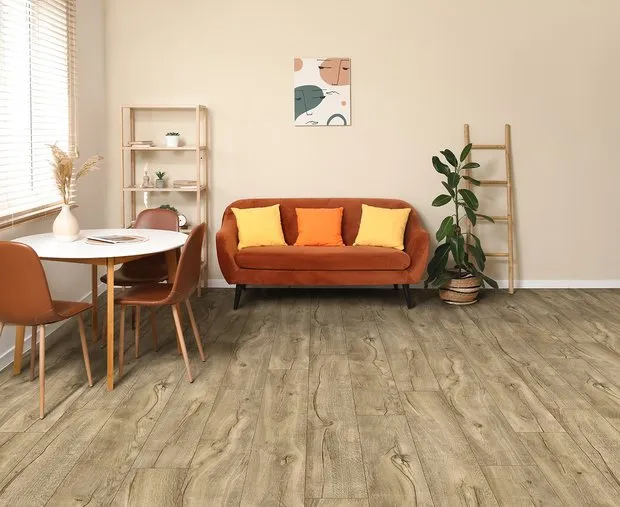
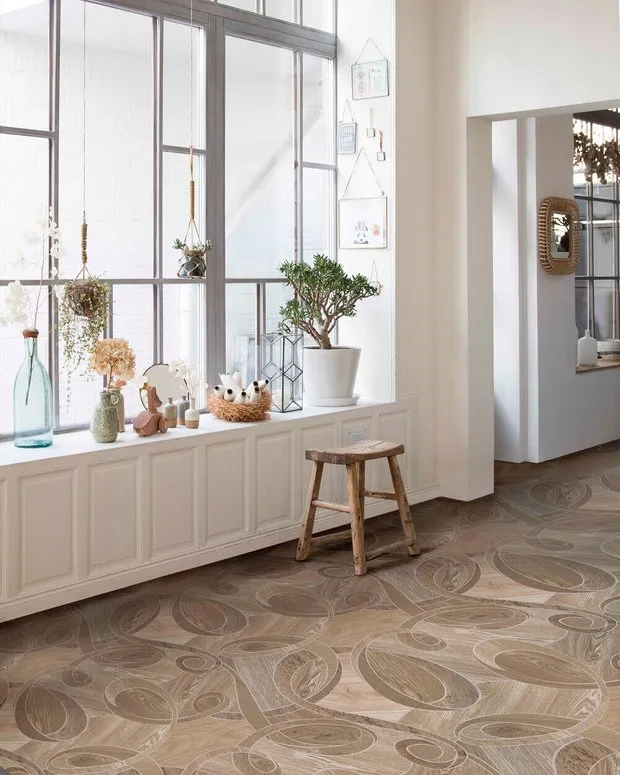
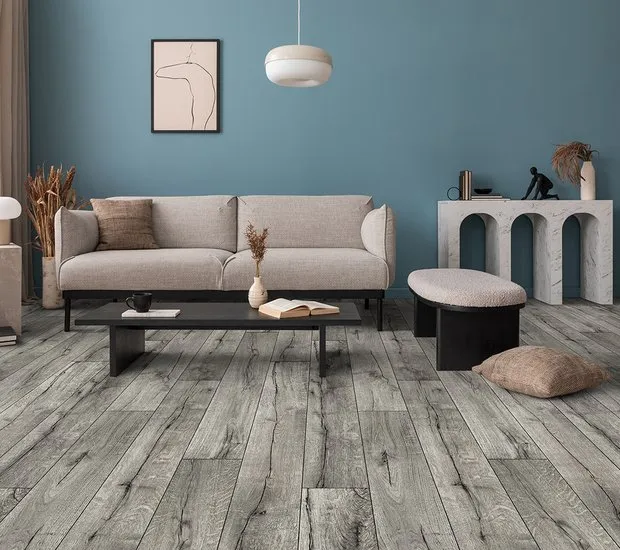
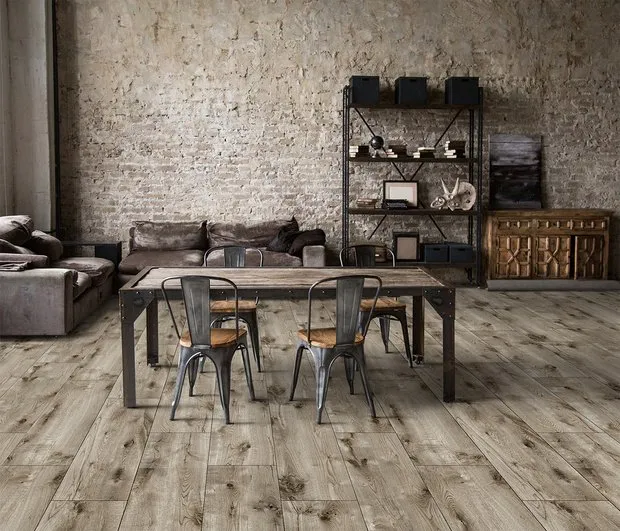
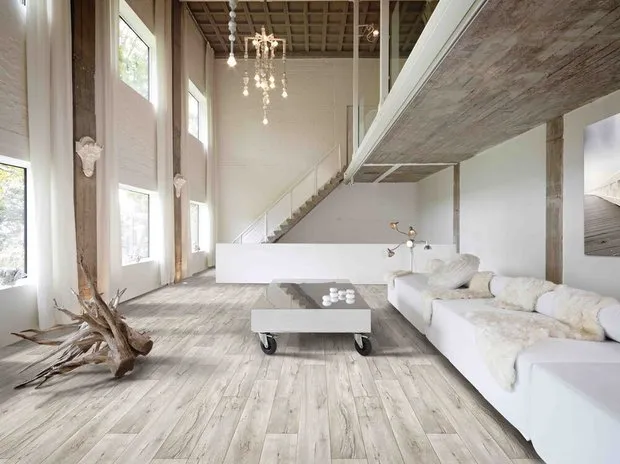
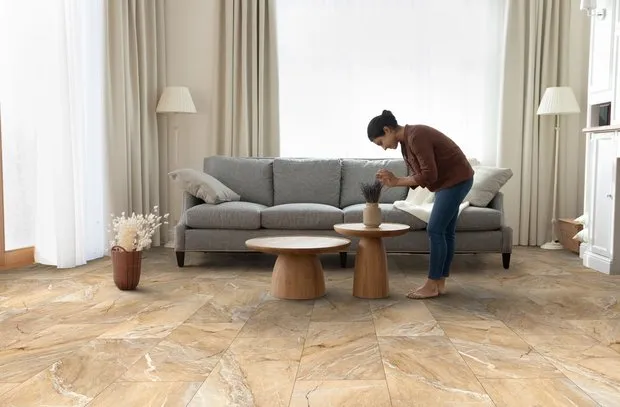
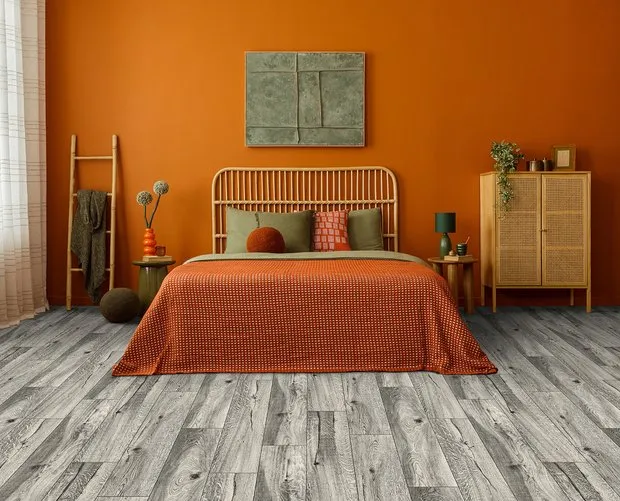
Under four brands — JUTEKS, IDEAL, TEXTURA, and PROFI — flooring solutions are produced for various applications: apartments, offices, and commercial spaces. Many collections, especially those of high quality, realistically mimic natural materials such as wood, stone, or tile. Often, it’s difficult to tell at first glance that it’s linoleum. You can choose linoleum suitable for a specific room and usage level rather than randomly. These flooring materials are resistant to moisture and easy to clean, and their designs with realistic textures fit perfectly into any interior.
Choosing a collection — not by price, but by load
Select several suitable collections. It’s important to consider not only the design and price but also the expected load on the floor in the space.
Class is a characteristic of the room, not the flooring. Manufacturers label linoleum with two-digit codes (21, 22, 23, 31–34, 41–43) to indicate the types of rooms it is suitable for.
The first digit indicates the type of space: 2 for residential, 3 for public, 4 for industrial. The second digit indicates the load intensity: 1 for low, 2 for medium, 3 for high, 4 for very high.
What this means in practice:
21 — bedrooms, closets, wardrobes (low load);
22 — living rooms, dining rooms, offices (medium load);
23 — kitchens, entryways, corridors (high load);
31–33 — public areas: offices, shops, classrooms, hospital corridors;
34 — areas with very high traffic;
41–43 — manufacturing workshops, warehouses, facilities with heavy machinery traffic.
Flooring designed for a higher class can be used in areas with lower traffic. For example, class 32 linoleum is excellent for homes, especially if there are children or large pets in the household.
How to choose a floor covering for your home? Don’t focus on the class, but rather on the thickness of the protective layer (transparency) — it is what determines durability. Based on this criterion, linoleum is classified into:
- residential (transparency up to 0.4 mm);
- semi-commercial (from 0.4 to 0.6 mm);
- commercial (0.7 mm and above).
For apartments, household or semi-commercial linoleum is usually sufficient. For kitchens and entryways, it is best to choose a flooring with a protective layer of 0.3–0.5 mm and PU lacquer — it will last long and retain its appearance.
Transport and Storage: Preserving the Original Appearance of Linoleum
Even the highest quality linoleum can be damaged by improper transportation or storage. To keep your new floor covering in perfect condition until installation, follow these simple rules.
- Transportation and storage in a roll:remember that linoleum is transported and stored rolled up. The surface side of the flooring should face inward toward the center of the roll.
- Avoid sharp bends:any severe bending or twisting can cause irreversible cracks on the linoleum surface.
- Temperature conditions:if transportation must occur during cold weather, try to minimize prolonged exposure of the material to low temperatures.