Laathof 44 Social Housing by plusoffice architects in Wetteren, Belgium
Project: Laathof 44 Social Housing Architects: plusoffice architects Location: Wetteren, Belgium Area: 43,335 sq ft Year: 2021 Photography: Pieter Rabijns
Laathof 44 Social Housing by plusoffice architects
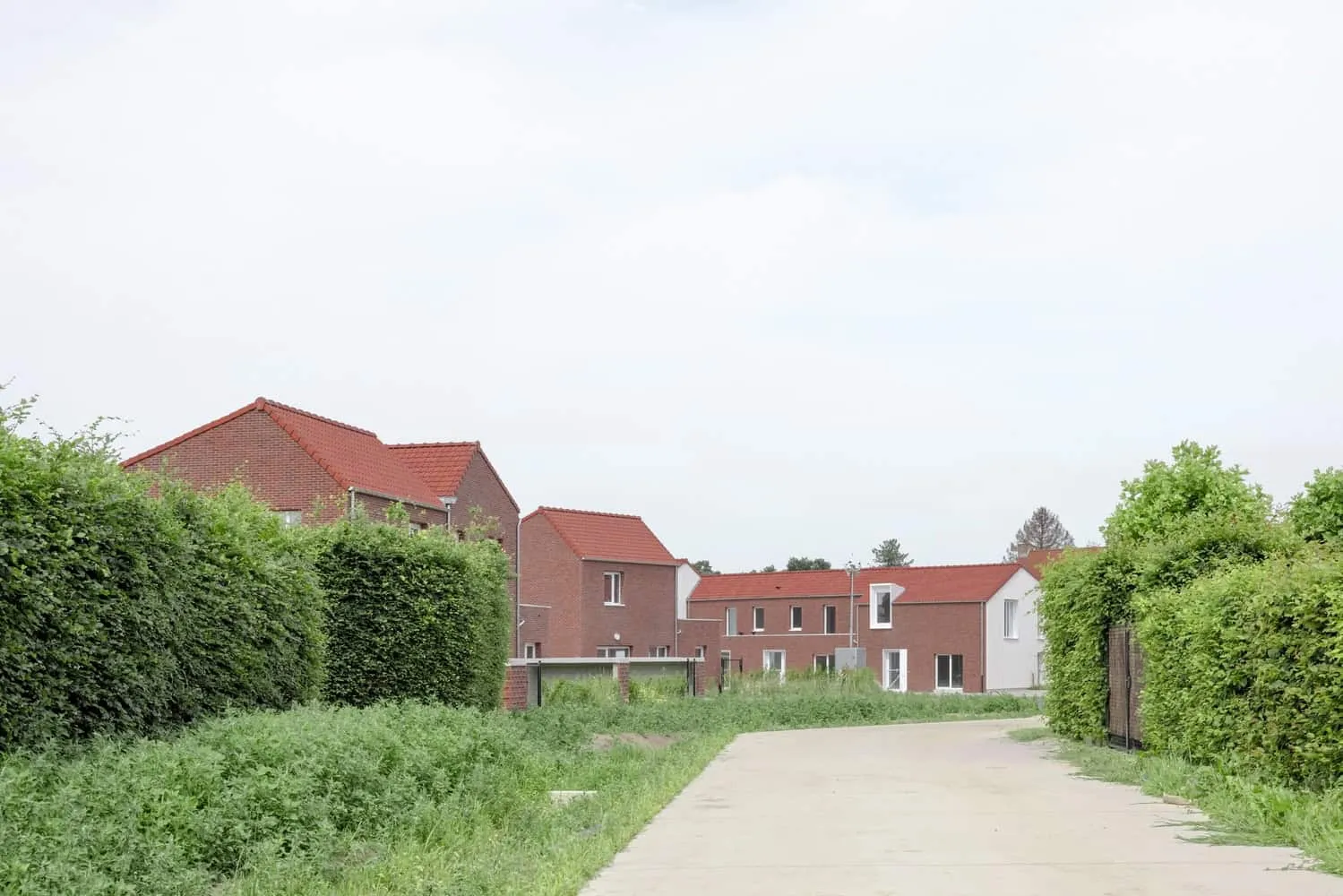
The 'Laathof 44 Social Housing' project by plusoffice architects in Wetteren, Belgium redefines social housing through a harmonious blend of individuality and architectural coherence. Located in a community with a neutral water balance, the development offers diverse housing types—from courtyard groups to terrace houses. Aesthetic consistency is achieved through a palette of red brick, metal, and concrete. In pursuit of sustainable development, the project incorporates an intelligent district heating network using combined heat and power generation systems and solar boilers. Open spaces facilitate water collection and management. This project not only meets housing needs but also serves as an example of energy efficiency and community-oriented living in a dynamic, adaptive urban environment.
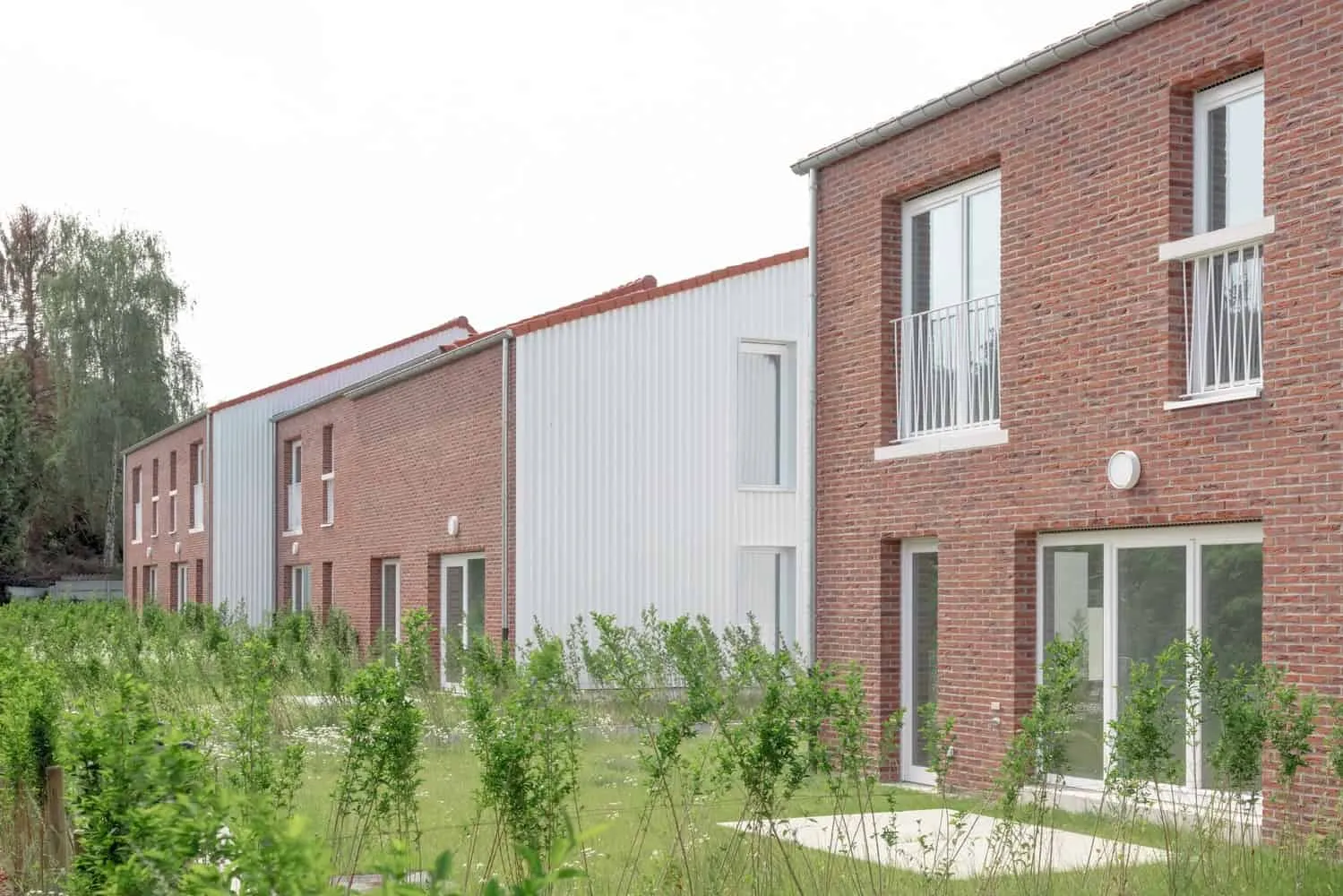
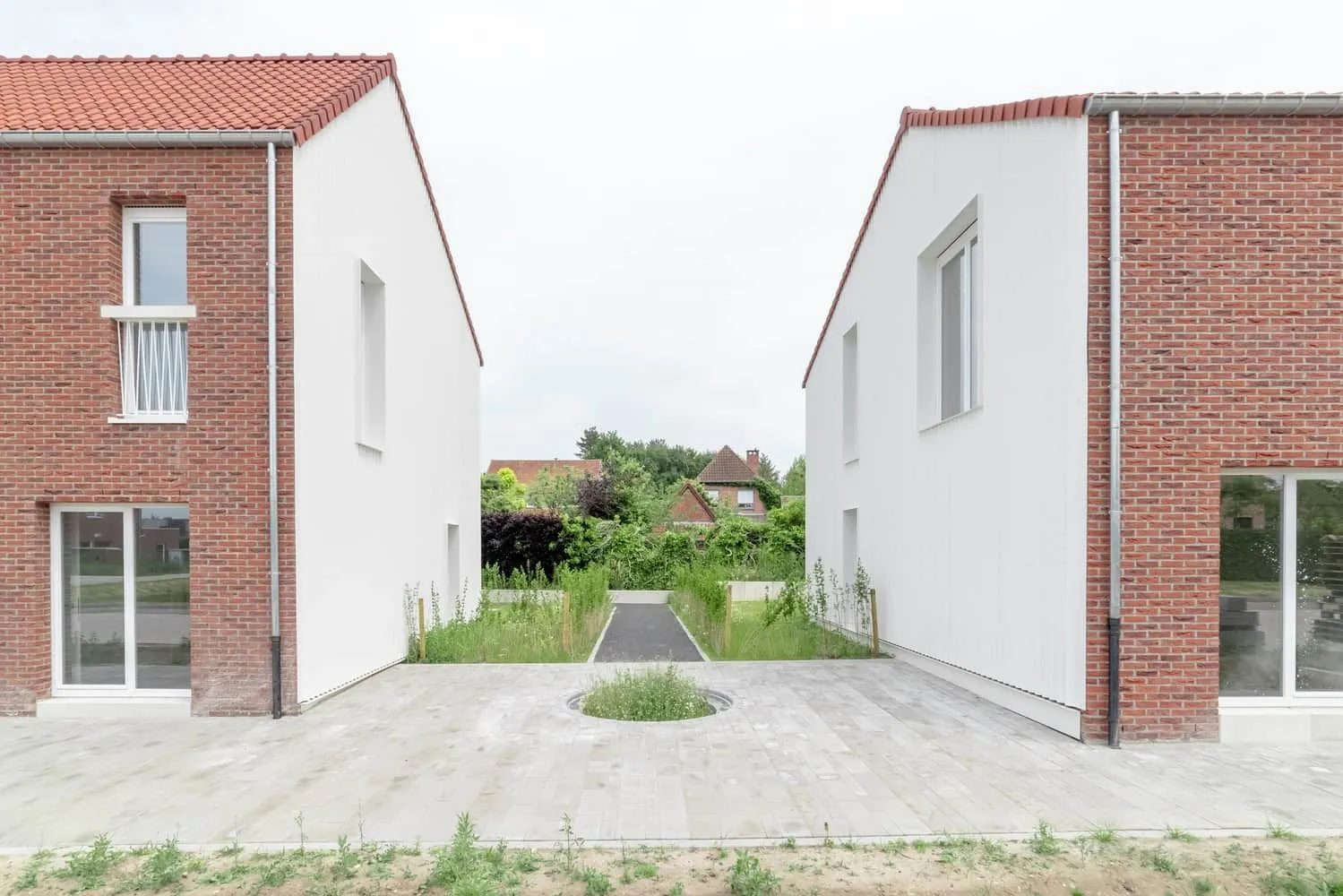
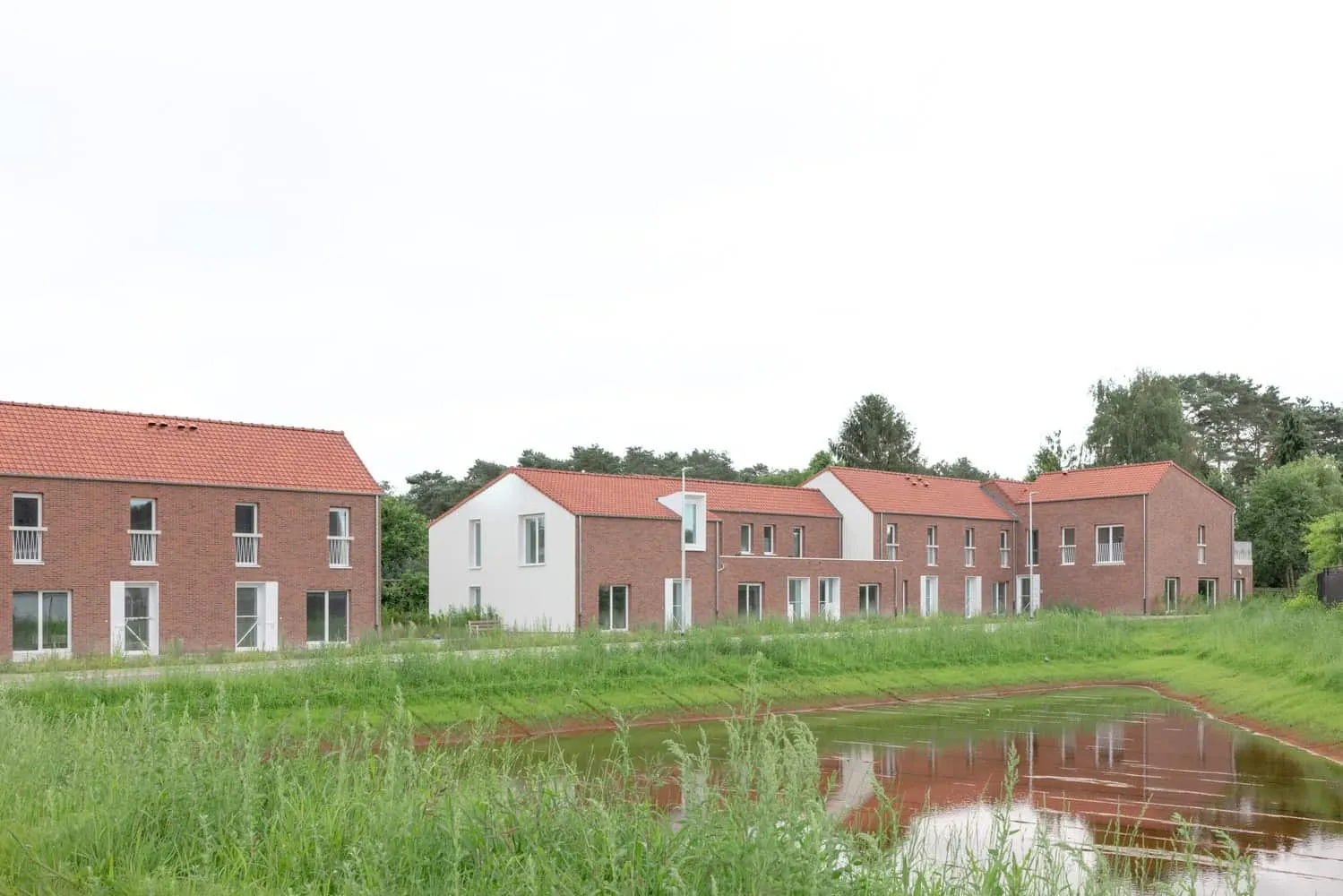
On the outskirts of Wetteren, the new social housing neighborhood 'Laathof' is shaped as an extended plot structure. Located near a flood-prone area along the river Wimp, the district is designed to maintain water resource balance. Here, public space is conceptualized as a water machine showcasing how natural systems can facilitate infiltration, buffering, and reuse of rainwater. In the Flanders region, there is a strong culture of private property ownership in housing, so each house seeks individual expression. This is especially true in small residential areas where the dream of owning a home on an individual plot runs deep. A large-scale group housing project can serve as a stark contrast here. The design emphasizes individuality of each house and its outdoor space while maintaining architectural coherence. We aim to make house recognizability a design principle.
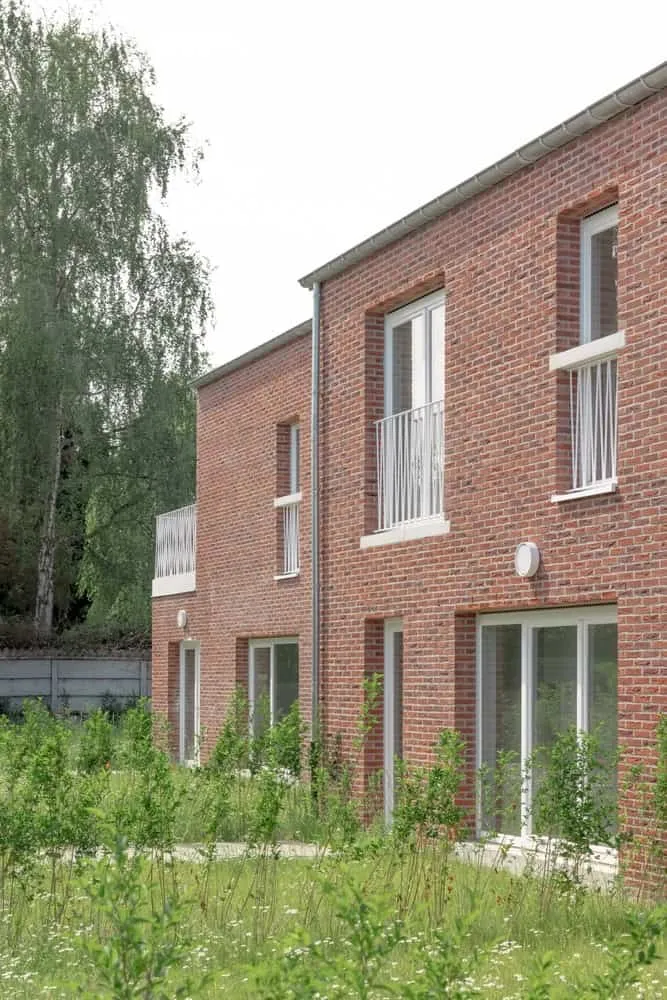
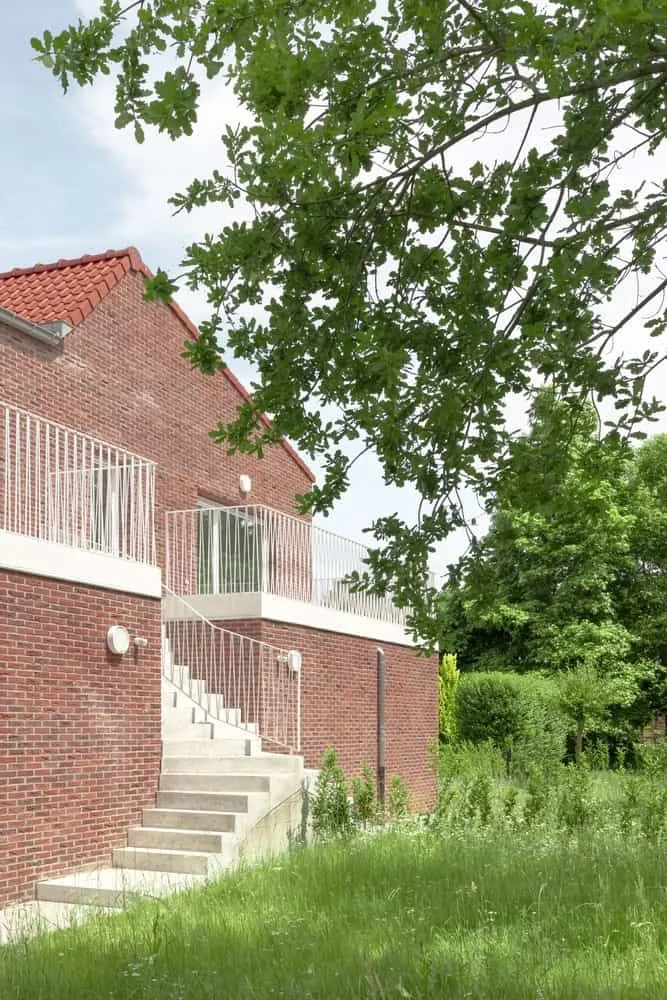
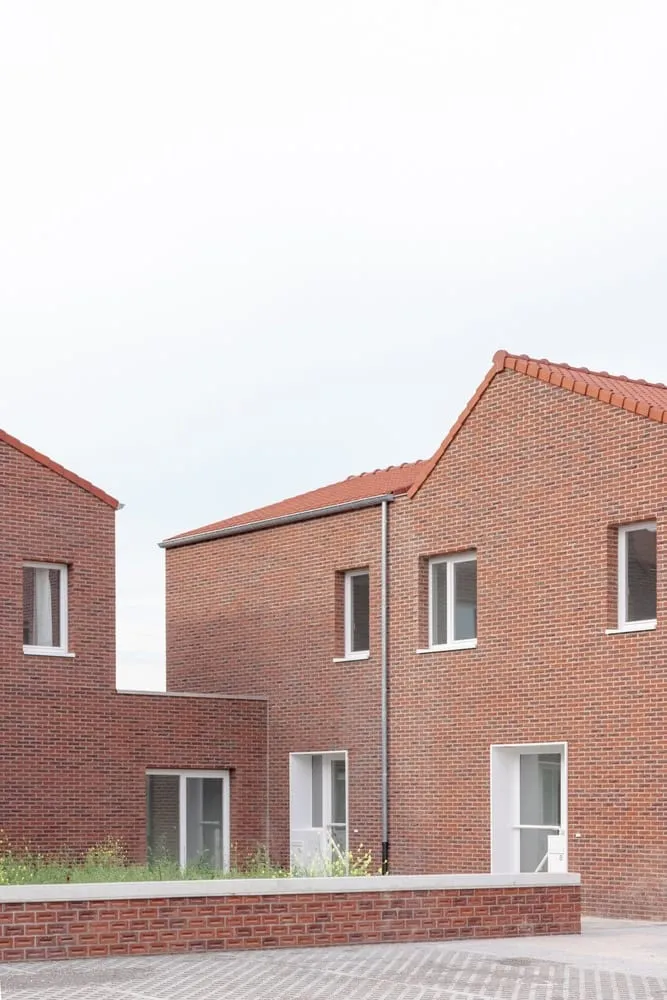
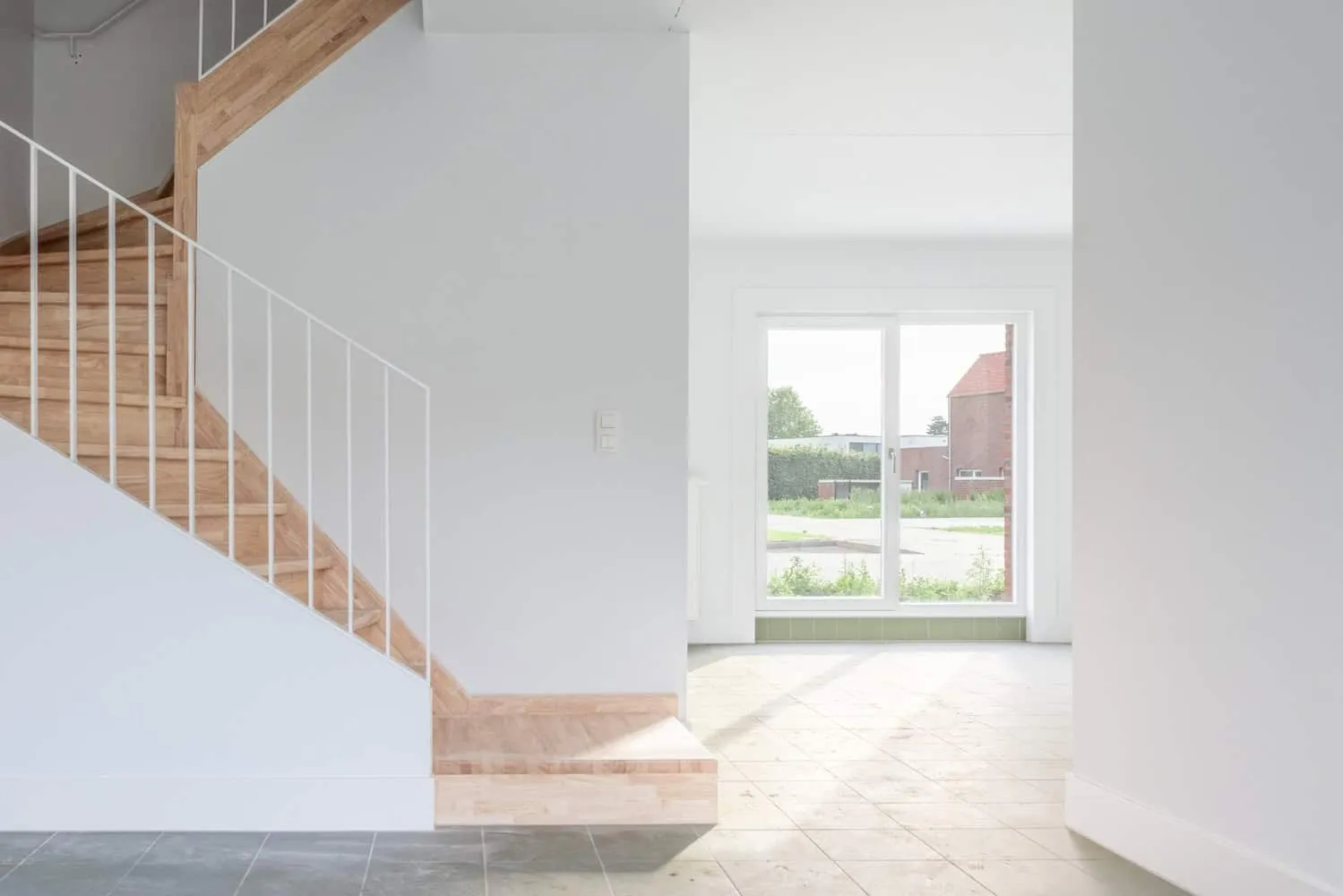
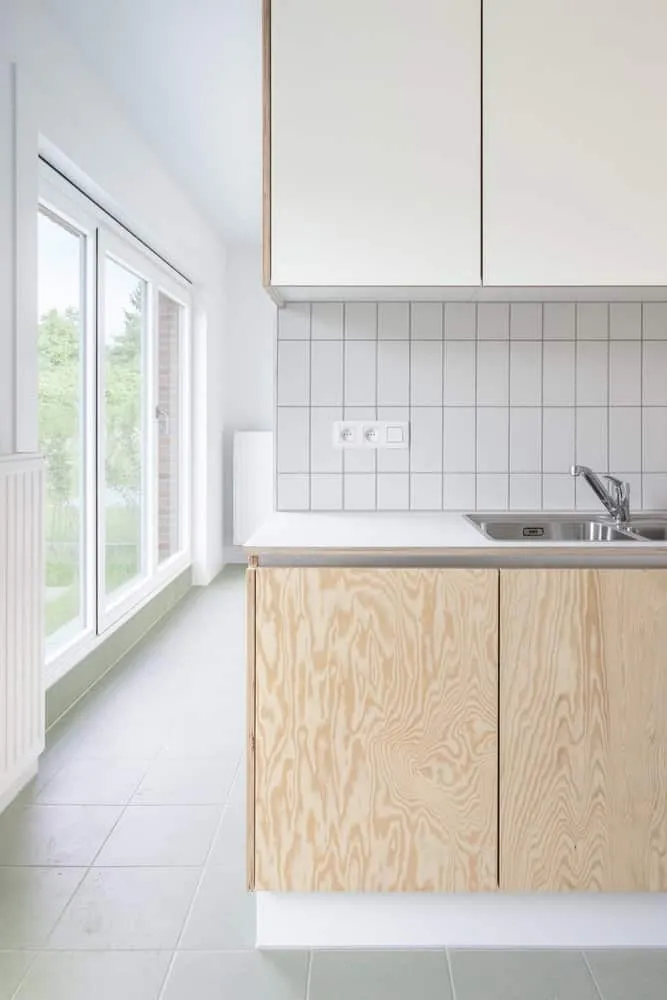
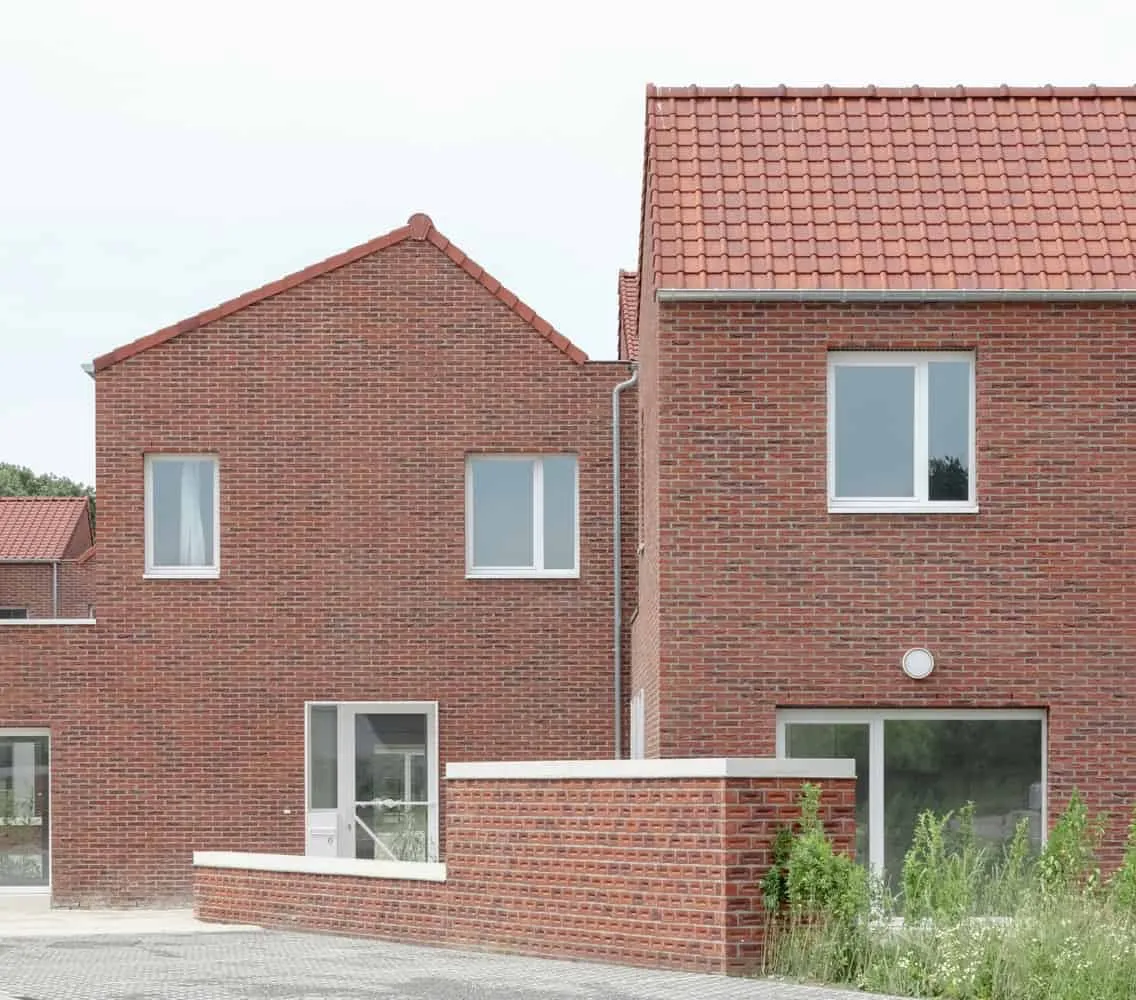
44 homes include 10 different and adaptable housing types for beginners, families, elderly, and seniors: courtyard houses in groups, terrace houses along an alley, and glass houses with shared entrances at the ends. Soft red brick and red tiles integrate into the area's material palette. Brick architecture is complemented by several white metal and concrete elements in varying compositions. This limited number of materials achieves a simple yet playful architectural language. The wavy roof landscape, as well as recessed and protruding facade lines, create a transition between private and public zones. The compact arrangement of houses leaves part of the plot free, making public space a valuable resource: a meeting place, an active water buffer, tree-lined alleyways, and more. Key to this is the continuity of the central alley, which intentionally avoids a 'blind' relationship with its surroundings and forms the basis for future residential expansions. Parking is designed as a grouped solution, considering modal transition; these parking spaces can be gradually removed from service and converted into additional bicycle space.
The social housing company, which has long been working on innovative energy concepts, has high ambitions for this district. The new neighborhood is centrally heated using an intelligent local heating network aimed at reusing and consuming as much energy as possible. A centralized combined heat and power generation system (CHP) generates hot water for heating terrace houses and produces electricity as a byproduct. This electrical energy is used to power heat pumps that heat courtyard houses. If the CHP does not produce enough electricity for the heat pumps in courtyard houses, heating shortfall is compensated by condensing gas boilers as a backup system. Sanitary hot water for all houses is produced using solar boilers. Overall, this social housing project aims to be sustainable and energy-efficient, designed with a limited number of materials but diverse in composition and details. Thus, housing in this new district becomes more recognizable and individual, as well as resilient to energy and climate changes.
– plusoffice architects