Suspended Ceilings: Reviews. Care Tips
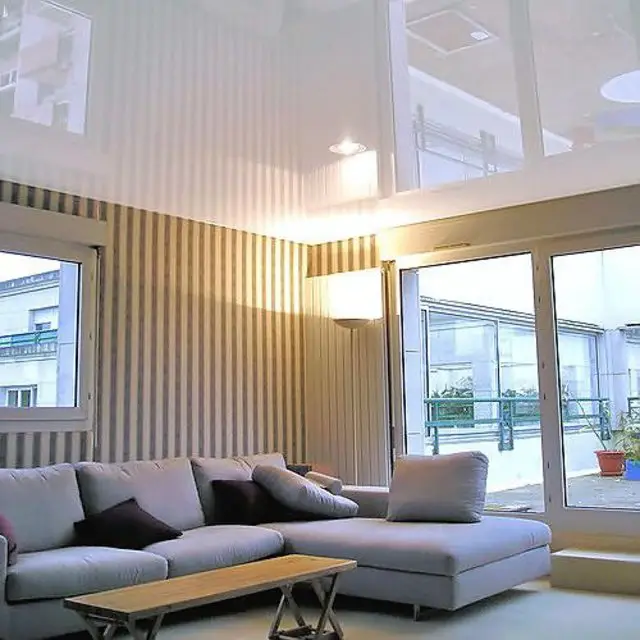
Photo 1 — Glossy suspended ceiling made of PVC film
Suspended Ceilings: Pros and Cons
A suspended ceiling is a quick repair: installing a single-layer system in a living room takes no more than 3-4 hours (5-6 hours if installing fixtures).
This is a way to uniquely illuminate a room using recessed lights.
There are many options for organizing a suspended ceiling: from choosing material and texture to color solution or photo printing. Plus, there is an option to mount level structures without overloading the ceiling and walls by weight.
The service life of a suspended ceiling can reach 15-25 years depending on the type of fabric and manufacturer.
Whether film or so-called "fabric" ceilings - they are safe for any room when ordering certified products, the eco-friendliness and technical compliance with standards of which are confirmed.
Suspended ceilings are sensitive to heat, which is inevitable when installing lighting fixtures at too close a distance from the film.
The film is easily damaged by sharp objects, after which restoring the coating is practically impossible - the film tears upon such damage.
Many buyers choose fabric over film ceilings because "fabric is not PVC" - an environmentally friendly material. You're mistaken: there is no such thing as a suspended ceiling made of natural materials. Fabric ceilings are nothing more than texture imitation of fabric with polystyrene impregnation, which provides "tensile strength" to the coating. This is more of a clarification than a minus.
The main drawback of suspended ceilings is ordering the fabric to size and installation by non-professionals. Hence, almost all disadvantages of suspended ceilings: seam tears, over-tensioning of fabric, wrinkles after incorrect film loading into grooves, and gas cylinder explosion during thermal expansion. Therefore, before ordering ceiling work, think three times, read reviews about local companies and make the right choice.
What problems can arise with suspended ceilings and how to solve them - continue below.
Possible Problems
The core issue: Proper film tension requires a solid base that can withstand such load. Assume you have leveled the walls in the room with gypsum board. Will the Gypsum Board (GKЛ) peel off from the wall during ceiling tensioning?
The force acting on any base under a suspended ceiling is called "pull-out". After installing the system, it's not small - about 30-70 kg per linear meter of base. Can gypsum board handle such a load?
Solution: If you plan to install a suspended ceiling, reinforce the gypsum board: Gypsum Board (GKL) sheets or any other type of gypsum board must have additional fixation. If you're mounting GKL with adhesive rather than a frame, the sheets should be covered with adhesive over the entire surface, not just at specific points. If mounting on a frame, it's better to use two sheets instead of one: the second sheet as a spacer between the wall and finishing cladding.
You can also install embedded profiles at mounting points of the suspended ceiling batten.
The core issue: All light fixtures installed in a suspended ceiling are power-limited. Otherwise, you can't avoid melting the ceiling from heat. Limited power - insufficient light from a single source.
Also, you cannot install incandescent and halogen lamps because these bulbs generate too much heat.
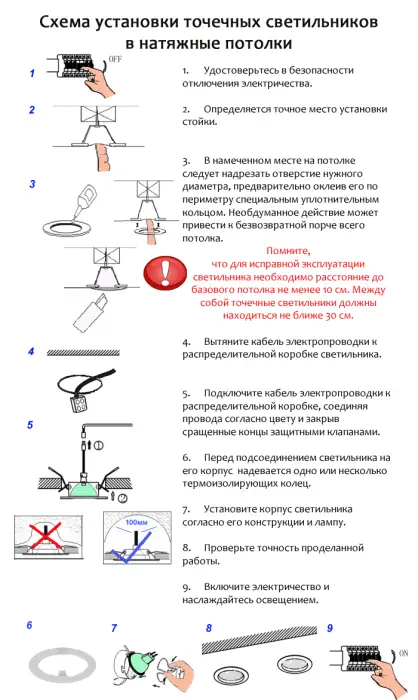
Figure 1 — Installation scheme of recessed lights in a suspended ceiling
Solution: For suspended ceilings, we recommend purchasing lamps with a 60° light angle without the so-called "backlight". This way, the room will be evenly lit. Each bulb's power should not exceed 40 W. If you really want to install a halogen lamp, do it at your own risk but with power no more than 50 W. Ideally, you can install more fixtures with lower power - 35 W is sufficient for lighting in a living room.
Be prepared that after five years, spots may appear on the ceiling from constant light direction due to overheating.
Replacing bulbs in built-in fixtures is done the same way as in regular ones. No need to worry about damaging the film: special mounting rings are installed during fixture installation, preventing film tearing.
The core issue: "What is this problem?" - you might ask. A rare case, we admit, but it does happen: when opening or closing a door in the room, the suspended ceiling gets pulled in, as if sticking to the base ceiling. This phenomenon is explained by physics: opening doors creates airflow, lowering air pressure in the space above the ceiling. Visually, this looks like "suction" of the ceiling surface.
Solution: With seamless suspended ceilings, such surface defects are excluded. This is the only thing you can truly influence: choose a seamless ceiling over joined panels. The second method is equalizing pressure inside the room and in the space above the ceiling. This technique should be familiar to every installer, mandatory during suspended ceiling installation.
The core issue: ...and it's obvious. Your ceiling was flooded by neighbors. What to do with a large amount of water, how long to wait for the fabric to burst, can the ceiling be restored?
No panic. The fabric of a suspended ceiling can withstand up to 100 liters of water before bursting. Yes, leakage is possible even without a pool above your head: water can seep through mounting holes of built-in lights or spread along the walls via the batten. But for such catastrophic consequences, it takes a lot of time: near-zero cases of long-term leaks occur, and everything else can be handled easily.
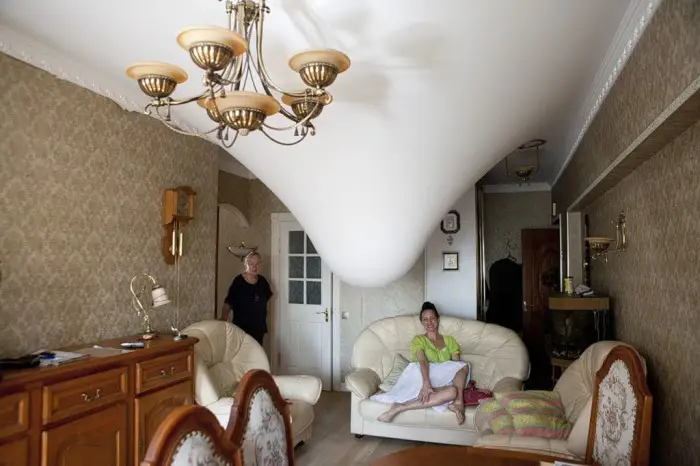
Photo 2 — Water flooding a suspended ceiling
Solution: You come home to find a flood? First, cut off power in the room. Then, inform your neighbors that someone forgot to shut off the water supply. Third, report the flood to the housing management company or the building administration responsible for your property.
Collect all water that drips from the ceiling into containers of sufficient volume and wait for the installer's specialists to arrive. Removing water from a suspended ceiling is their job. Don't try to reinvent the wheel. By the way, drying waterlogged areas of a ceiling after flooding to prevent mold growth is also a task for professionals.
To avoid such unpleasantness, you can additionally seal the junctions between the batten and room walls.
The core issue: In small spaces, sagging shouldn't occur at all. Otherwise, the only conclusion is that you used a very unskilled craftsman. For rooms with ceiling areas of 20 m² and more, the issue of fabric sagging is extremely important. And, to be honest, it's heard quite often.
By the way, there is a concept of "permissible sagging level". In rooms with 20 m² ceilings, this indicator should not exceed 4 cm.
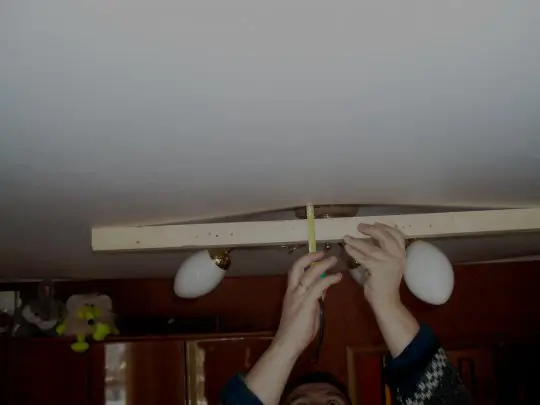
Photo 3 — Sagging of a suspended ceiling
Solution: If you don't want your ceiling to sag, don't install ceilings with one fabric in large rooms. Otherwise, don't be surprised if the ceiling sags.
Even if the surface appears perfectly flat on the day of completion, don't be fooled: over time, it will settle. Seamless ceilings have a better chance of minimal sagging. Sagging itself is a natural phenomenon, so either prepare for a slight ceiling droop or start looking at other ceiling coating schemes.
6. Reduction in ceiling height after installing a suspended ceiling
The core issue: A suspended ceiling will take away 2-3 cm of ceiling height and more. Less than that is impossible. 2-3 cm is the minimum available with a perfectly flat base ceiling, where no leveling is needed. In practice, a couple of centimeters can grow to 5-6 cm.
Solution: There is no technological solution to preserve the precious ceiling height in already low rooms. However, there is a small trick: lost space from the batten during installation can be compensated for even better - make the room visually larger and more spacious using a white matte ceiling.
The core issue: Don't attempt to install the suspended ceiling yourself. Working with a gas thermal blower is a task for professionals. Not only because of proper tensioning considerations, but also for your own safety.
Plus, stretching the film with a gas blower means not only the film but also the entire room will heat up to at least 45°C (according to technology, it should be even 60°C). An unprepared person for such working conditions may not handle the mounting task.
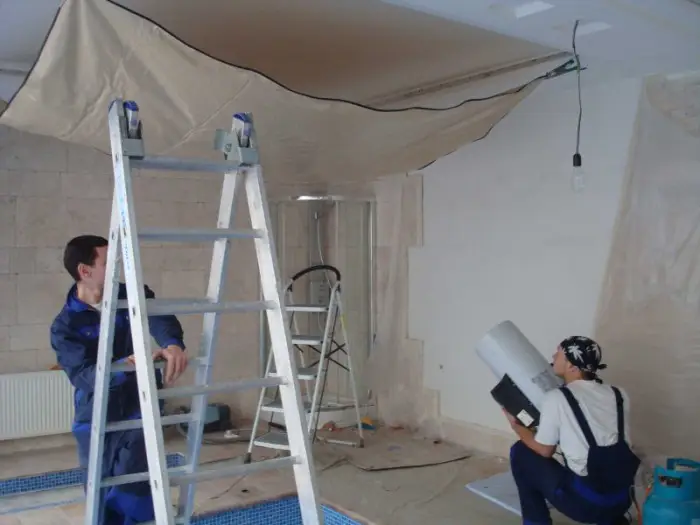
Photo 4 — Heating the ceiling with a gas thermal blower
Solution: You can avoid heating the room altogether by using fabric ceilings instead of film ones. Fabric does not require heating.
IMPORTANT! Before installing a suspended PVC ceiling, remove all items from the room that would not benefit from high temperatures (e.g., indoor plants).
The core issue: If you didn't plan mounting points for cornices or even the installation of ceiling lights before tensioning the ceiling, you won't be able to fix anything to the fabric later.
Solution: One. Any built-in elements must be included in the installation plan before it starts and each one should have a designated "mounting spot".
IMPORTANT! If discussing mounting ceiling cornices to hide wall seams and suspended surface, these elements must be mounted only on the walls, not the fabric.
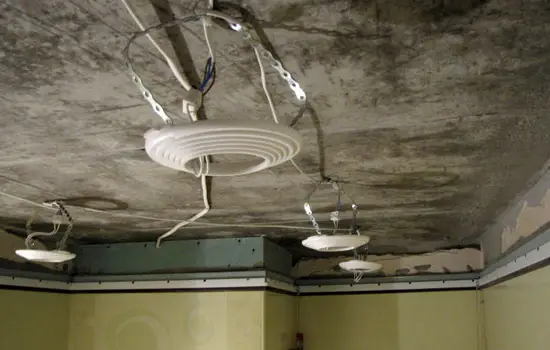
Photo 5 — Ceiling mounting elements for built-in lights
The core issue: Vinyl suspended ceilings, if the room width is more than 1.3 m or 2 m (standard fabric width), can only be installed with a seam. The seam is an almost invisible joint between panels. Due to poor workmanship or other reasons, seams tend to separate. Certified companies even guarantee the integrity of seams for at least 10 years.
The hook - fabric tensioner can also "detach" from its mounting point due to worker carelessness.
Solution: First, only use verified installers. Second, if a rupture occurs, call the contractor to fix the shortcomings. You cannot sew a suspended ceiling yourself.
The core issue: China is everywhere. Probably, there isn't a single industry sector where the cheap Chinese product hasn't made its way in. For understandable reasons, many small resellers buy products "made in China" for a few cents and then market them as Italian, French or German goods.
Low-quality PVC film is not just an unecological coating, and the answer to whether such a ceiling is safe is clear: of course not. Defects in the fabric, noticeable within the first few hours of use - a pungent smell. The fabric, to be honest, smells so badly that staying in the room for the first few days without an open window is impossible.
Besides the fact that the fabric smells of factory chemicals and simply causes discomfort, after prolonged presence in a room you may experience headaches, nausea, insomnia, skin irritation (up to allergies).
Solution: Why does it smell? Because it's cheap. Don't save on a suspended ceiling. Chasing low-cost coating isn't always profitable.
The core issue: For various reasons, a hole appeared in the suspended ceiling. Accidentally cut with a sharp object, burned with something hot, torn during lighting installation, or conversely - the fabric split during operation of lights (a plug for suspended ceilings wasn't installed - mounting reinforcement ring).
Solution: The easiest repair is with fabric ceilings. If there's a small hole in the fabric, it can initially be secured with nylon thread. But self-repair is also excluded here.
As an exception, you can personally fix a hole in a film ceiling if someone slightly punctured the fabric: place a patch or cover it with a decorative sticker (if there's no danger of further tearing).
There is a hole, and a solution for repair exists. Examples of removing tears depending on their origin on fabric and PVC suspended ceilings are provided below in a table.

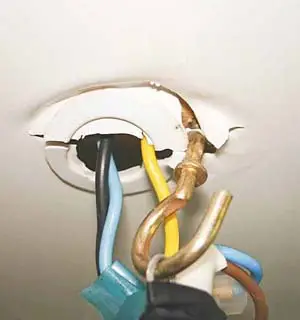
Photo 6 — Continuing the topic of overworked installers
This is more of a reminder than a problem - how to care for the fabric.
How to clean a film ceiling?
To clean a suspended PVC ceiling, use soft fabric (microfiber is preferred - the fibers of this material won't scratch the ceiling surface) and a window cleaning solution or regular dish soap without aggressive components (acids, abrasive ingredients).
Wipe the ceiling without pressing down.
How to clean a fabric suspended ceiling?
The same method, but instead of microfiber, use a silk fabric piece, as it won't leave lint on the ceiling.
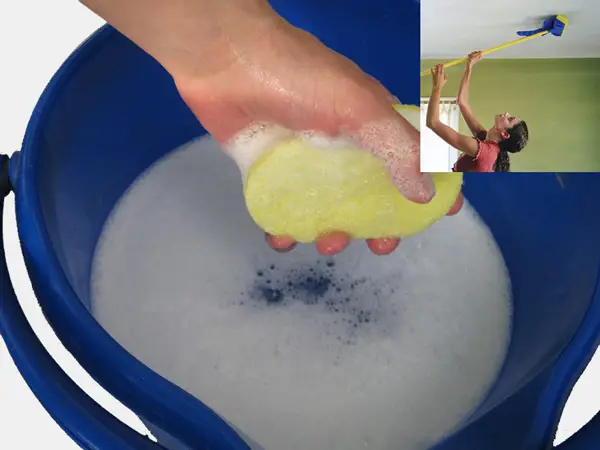
Photo 7 — A little soapy solution and a soft sponge or microfiber will help
CONCLUSION or Suspended Ceilings: Pros and Cons
Pros/Cons:
- Quick installation and removal/Impossible to fix yourself if damaged;
- Mounts on any base, including Gypsum Board/possible peeling of Gypsum Board if insufficient reinforcement;
- Room decoration using built-in lighting/If mounting fixtures was not done before installation, it's impossible to install them afterward;
- Manufacturer guarantees ceiling service life up to 25 years, and installation team guarantees seam integrity for at least 10 years/Installation by third parties leads to a whole bouquet of unpleasantness (from strong fabric odor to seam tears and batten detachment).
Material Cost
Depending on the width and type of fabric, the price for a suspended ceiling ranges from $12/m² (matte film width 1.3 m) to $45/m² (seamless, photo printing).
Installation Cost
The cost of suspended ceiling installation is calculated based on the material cost. On average, work costs about 25% of the total cost of film, batten, and lighting fixtures.