Interesting Facts About Vacuum Cleaners You Didn't Know
People have been thinking about making house cleaning easier for several centuries. For example, cleaning the Louvre using brushes and cloths could take several days, so cleaning in the palace was rare and reluctant. By the end of the 16th century and beginning of the 17th century, the Louvre was a giant garbage dump. It's no surprise that the first prototype of the modern vacuum cleaner appeared in France.
In Paris, the metalworker Etienne Lar proposed a special device for fast room cleaning to Cardinal Mazarin. It was a long, heavy pipe with five strings that drove a screw inside the pipe. How this mechanism worked is hard to explain. Perhaps the driven screw should have sucked in dust. Unfortunately, the device didn't take off.
First Vacuum Cleaners
The first known patent for manufacturing a vacuum cleaner was obtained in July 1860 in the USA. Daniel Hess from Iowa proposed equipping the device with a rotating brush and a complex system of bellows to create an air current.
According to the preserved project, the 'carpet sweeper' had considerable dimensions. However, there is no evidence that the mechanism was built.
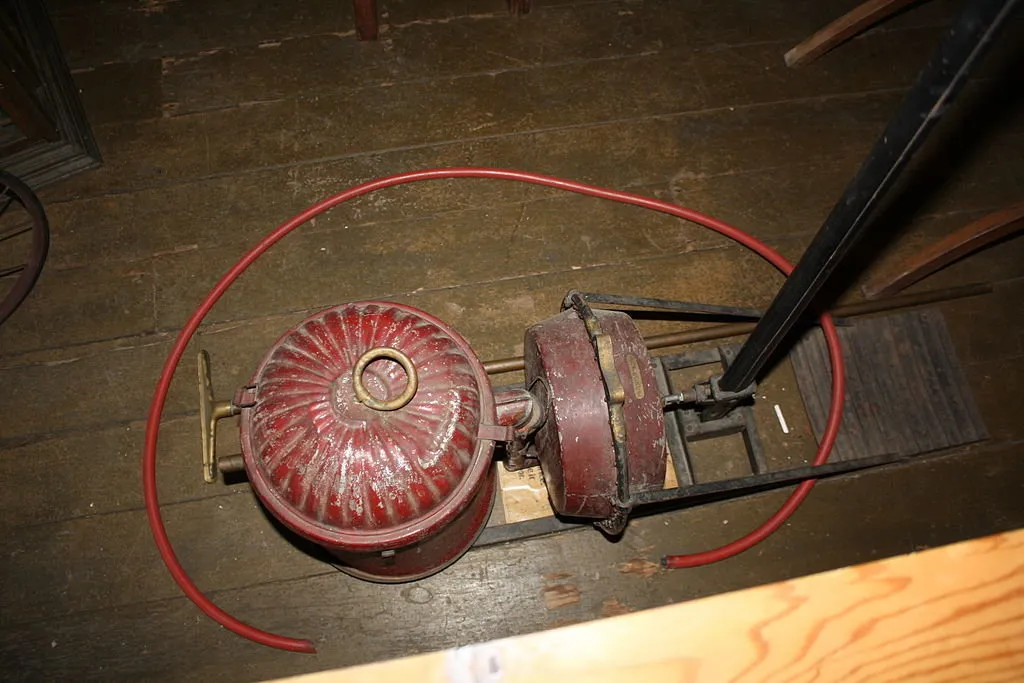
Far more luck came to another American — Aivu McGaffney. In 1869, he received a patent for developing a vacuum cleaner with a belt drive. The dust-sucking mechanism was powered by a special handle that had to be pressed continuously.
The device was lightweight and compact, its only problem remaining that pushing the vacuum cleaner and pressing the handle at the same time was not as easy as it might seem.
In 1899, John Tormen received a patent for a gasoline-powered vacuum cleaner. In 1900, Corin Duffor patented an electric vacuum cleaner. Both inventions completely failed commercially.
The gasoline-powered vacuum cleaner by Tormen was unsafe, even during testing, two devices exploded. Duffor's child failed to be practical, so the company he created burned out in half a year.
The new breakthrough was made by Britishman Hubert Cecil Booth, who turned home cleaning into a real show.
Booth designed a giant vacuum cleaner that quickly sucked dust from carpets and curtains.
Vacuum Cleaner as a Show
Customers of Booth's British Vacuum Cleaner Company hired the vacuum cleaner for cleaning at a cost of 3–5 pounds depending on room size. The vacuum cleaner was delivered to the house on horses and left outside.
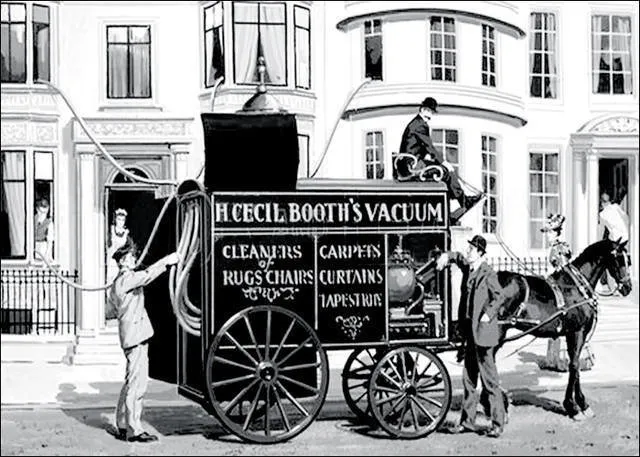
It was cleaned using 30-meter hoses. The British Admiralty, the Treasury, and even Queen Victoria called on Booth's services. In London, it became fashionable to invite guests to watch the cleaning.
Portable Vacuum Cleaner
In 1905, Booth had a competitor — Walter Griffiths, who patented a lightweight portable vacuum cleaner very similar to modern devices. He called it 'Improved Vacuum Apparatus for Removing Dust from Carpets'. After the invention was introduced to the market, cleaning dust from a home no longer became a show. The device looked like modern vacuum cleaners in that it could fit into an apartment, didn't take up much space, and anyone could operate it.
To the right — advertisement of a vacuum cleaner in a newspaper.
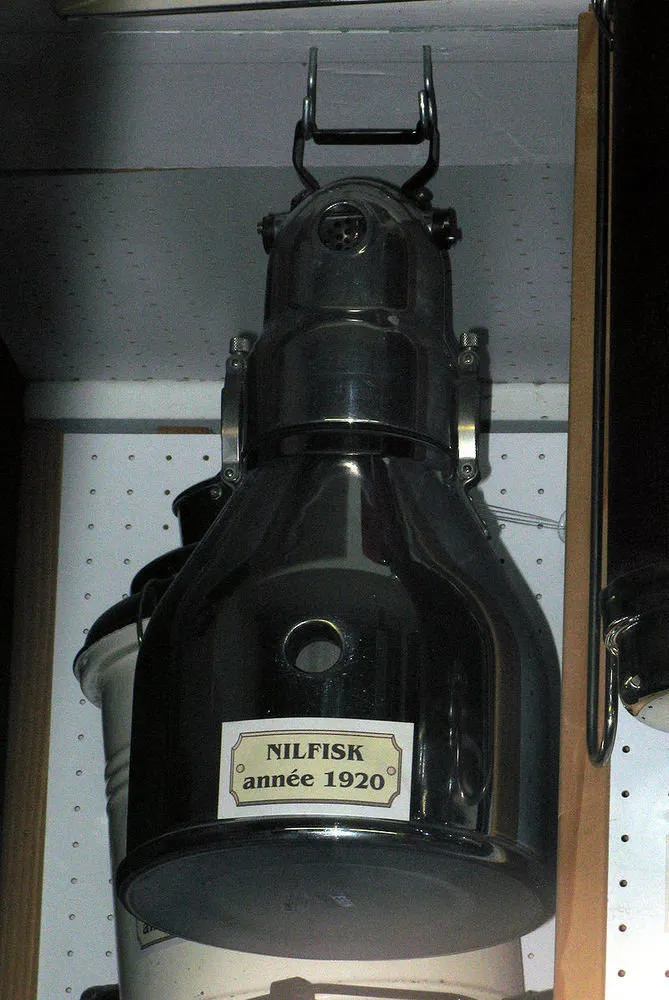
In 1910, P. A. Fisker patented an electric vacuum cleaner, the name of which he took from the company's telegraph address — Nilfisk. This vacuum cleaner weighed only 17.5 kg and could be operated by one person. The company founded by Fisker and his partner Nielsen still exists today and is called Nilfisk-Advance.
American Standard
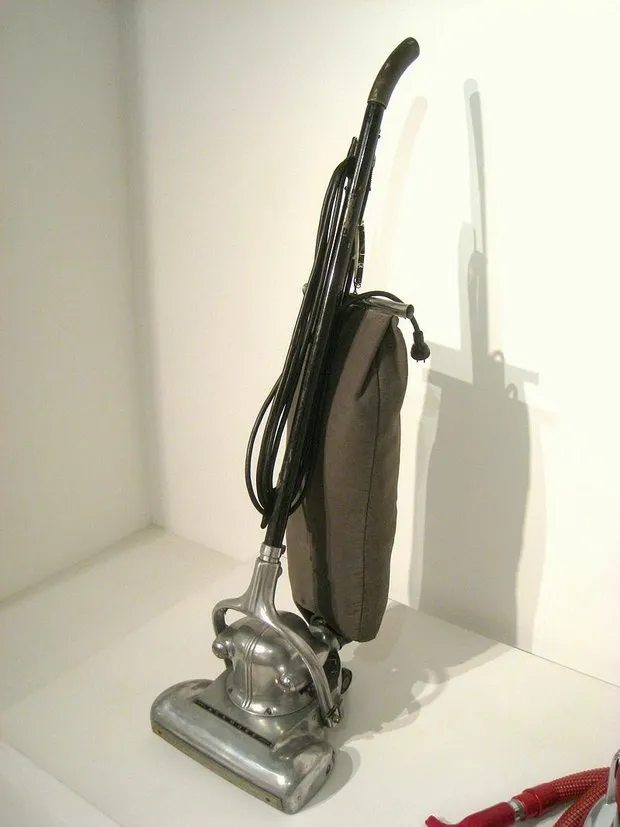
At about the same time, a humble cleaner named Murray Spengler worked at William Hoover's leather factory. It was he who came up with the idea of creating an electric version of Booth’s device. This was a device with a cover instead of a dust collector and a broomstick handle instead of a handle — it worked perfectly, absorbing dust.
The visionary potential of this humble mechanism was seen by entrepreneur Hoover, who bought the patent from Spengler for production.
Hoover's models weighed around 20 kg, which was an incredible achievement of engineering thinking. Thanks to Hoover's innovations, the classic American model of vacuum cleaner emerged — a brush, bag, and motor mounted on one handle.
European Version
In 1910, Swedish Axel Wenner-Gren, on business in Vienna, became interested in a strange American device displayed in a store window — the 'Santo' vacuum cleaner. This was a vacuum cleaner that couldn't be called domestic.
For two years, Axel worked in the European branch of the 'Santo' company and in the USA, where he studied new methods of selling goods to Europe. Returning to Sweden, he brought back an idea that had been born in front of the vacuum cleaner display.
Wenner-Gren assembled a team of engineers who started developing the first domestic vacuum cleaner, which appeared in 1912.
The device had a fan instead of a heavy air pump, and its weight instantly dropped to 14 kg.
The real breakthrough came with the Model V device. This was a cylinder that moved on wheels, connected to it by a rubber hose and telescopic tube with a brush. This is how almost all vacuum cleaners for dry cleaning looked throughout the 20th century.
Robotic Vacuum Cleaner
The first robotic vacuum cleaner appeared in 2002. Consumers now had the opportunity not only to admire this intelligent gadget but also purchase it for personal use.
Recent Achievements
Today, many models of vacuum cleaners are available on the market. They are compact and lightweight, easy to clean and wash. They not only clean surfaces but also air, collecting spilled liquids. Manufacturers are developing systems that make life easier for allergy and asthma sufferers.
For example, the multifunctional vacuum cleaner DryBOX Amfibia by companyThomas is equipped with two of the most modern filtration systems — the cyclonic DryBOX for dry cleaning and the water-based AquaBOX for thorough cleaning with simultaneous air purification. This vacuum cleaner collects 99.99% of dust and 100% of dust mites.
Moreover, with AquaBOX Amfibia, wet cleaning of soft furniture, carpets, and mattresses is possible, as well as delicate cleaning of parquet floors with the unique Aqua Stealth attachment.