Repair of asbestos-cement shingle roof
Although asbestos-cement shingles are a classic in the roofing materials category and have long been a recognized leader in terms of popularity on roofs of various buildings, there comes a critical moment when they begin to leak. justify; \">The main damages that occur on the surface of a corrugated asbestos-cement shingle roof are small cracks, chips, and broken corners of the sheets.
Although asbestos-cement shingles are a classic in the roofing materials category and have long been a recognized leader in terms of popularity on roofs of various buildings, there comes a critical moment when they begin to leak.

The main damages that occur on the surface of a corrugated asbestos-cement shingle roof are small cracks, chips, and broken corners of the sheets. The most severe test for an asbestos-cement shingle roof is, of course, hail. Large hailstones during intense impact can cause irreversible damage. However, damage to asbestos-cement shingle roofs is usually localized, and repairs must also be localized.
Repair Method for Asbestos-Cement Shingles
The simplest and most cost-effective method of repairing asbestos-cement shingle roofs was invented and used as early as the mid-20th century, during a period of acute shortage of basic building materials. Before starting restoration or repair work, damaged roof sections are cleaned of dirt, dusted, and primed with linseed oil.
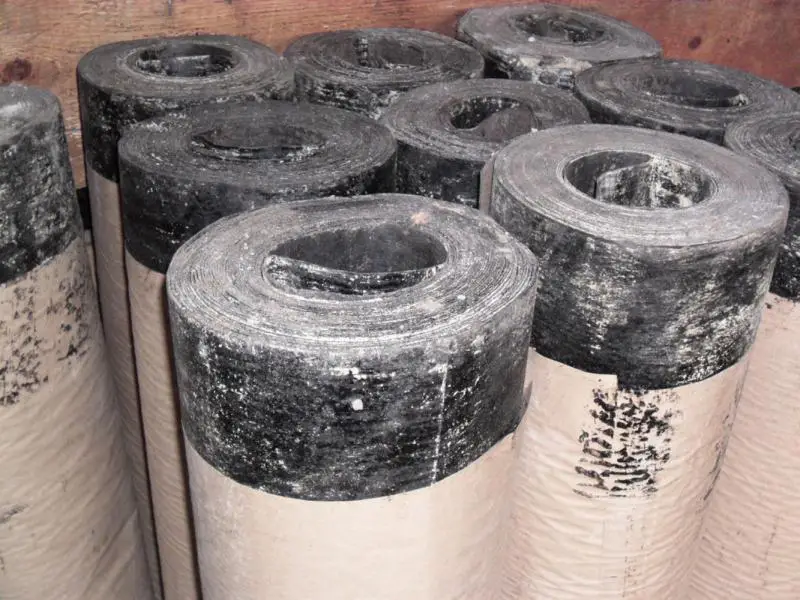
Next, a special fabric is prepared, thoroughly soaked in oil-based paint. This fabric is cut into strips, which are then applied over cracked areas of the corrugated shingles. After completion, the entire roof surface is coated with the same oil-based paint to conceal the repaired areas.
The drawback of this method is that it only resolves roof leaks for 3–4 years. After this period, repairs must be repeated.
A more modern repair technique for asbestos-cement shingle roofs, allowing the roof to last until the next repair for 6–8 years, involves applying a mixture of PVA glue and cement directly into cracks. The materials required include the previously mentioned PVA glue, cement (not less than grade M400), asbestos, and water.
If PVA glue is unavailable, it can be replaced with freeze-resistant water-emulsion paints such as E-VS-17 and similar. However, using paint instead of glue may slightly reduce the durability of the repaired area. Asbestos can be used either as loose fiber or as flat sheets passed through a fine sieve.
The repair mixture is prepared as follows: 2 parts cement, 3 parts finely ground asbestos, mixed with PVA glue, which was previously diluted with water in a 1:1 ratio. If water-emulsion paint is used, it does not need to be diluted with water. After thorough mixing, the repair mixture should reach a consistency similar to sour cream or tomato paste.
The prepared mixture is used to fill cracks and can also be used to patch small chips and dents on the shingle surface. Since cement hardens quickly, the mixture must be prepared in the amount that can be applied within 1.5–2 hours.
Before applying the repair compound, the roof is thoroughly washed with a garden hose. All cracks and irregularities in the shingles that are to be sealed are further cleaned with a stiff-bristled brush or metal scrubber. Damaged areas may be additionally primed with PVA glue diluted with water in a 1:3 ratio. The thickness of the applied layer should not exceed 1 mm per pass and 2 mm in total after completion.