There can be your advertisement
300x150
Roof Insulation
Roof insulation allows you to create a living space under the roof or use the attic area as a warm storage space where items are preserved and do not deteriorate. Special materials with high thermal resistance are used for roof insulation. These materials, regardless of their density, structure, or composition, must serve one purpose: to retain heat.
What Can Be Used to Insulate a Roof
Options are wide-ranging. A more specific answer depends on the actual conditions of the project. The choice depends on the roof structure, the intended use of the space under the roof, and whether it is heated.
Glass Wool

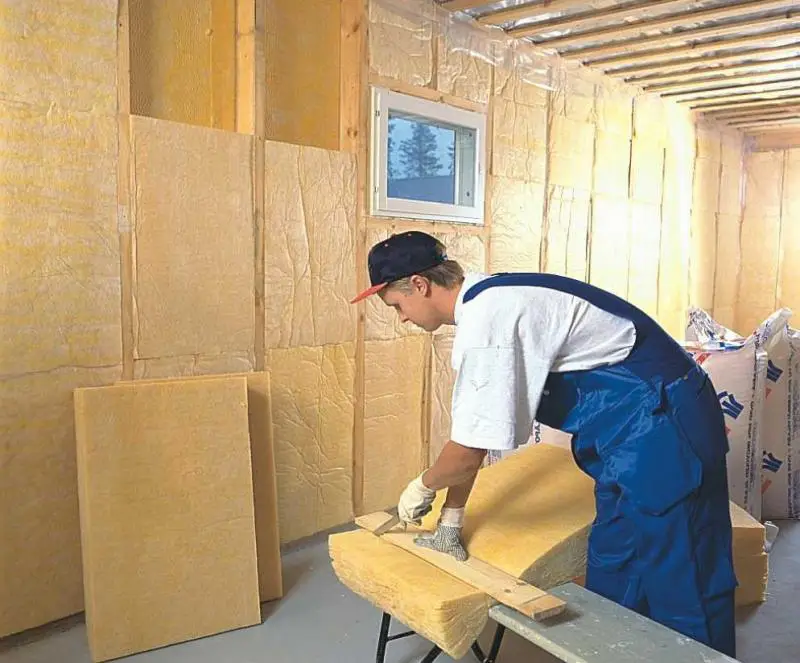
The main advantage of mineral wool panels made from glass fiber is their lightweight nature. This is an environmentally friendly material, and despite claims by manufacturers of basalt wool, glass wool is equally eco-friendly. Modern glass wool is far from the old cardboard-like, prickly rolls remembered from Soviet times. However, when working with this material, gloves should still be worn and safety rules followed.
Myth: glass wool crumbles, particles may float in the air and enter the respiratory system, causing injury. Heated spaces require vapor barrier protection to prevent moisture accumulation and, thus, loss of insulation properties. Additionally, external finishing of the attic will protect occupants from the unlikely spread of glass fibers indoors. Therefore, this claim is merely a myth.
Basalt Wool
Matrices made from basalt rock are completely environmentally safe. Their distinguishing feature is density and weight. They are heavier than glass fiber materials but more compact.
High vapor permeability prevents moisture absorption, swelling, and shrinkage. Therefore, thermal resistance performance remains stable.
A potential downside is weight—structural reinforcement of the roof truss system may be required.
Polystyrene Foam
A lightweight, easy-to-install, and affordable material. However, roof insulation with polystyrene foam is only advisable if continuous ventilation is ensured. Polystyrene is almost impermeable to vapor.
On the other hand, this property protects the material from degradation, moisture damage, and loss of performance—unlike mineral wool, which may degrade under moisture exposure.
How to Insulate a Roof
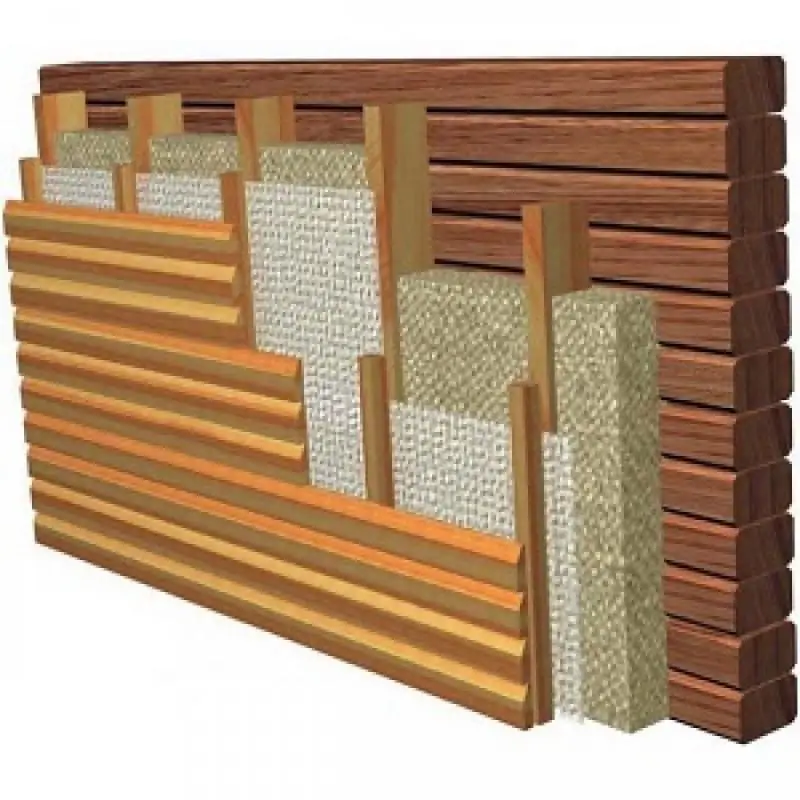
The most common method is placing insulation between rafters. However, this thickness is often insufficient, as roof insulation needs to be thicker than wall or floor insulation. Therefore, additional layers are used: above rafters (preserving attic space and insulating the roof structure) or below rafters (reducing usable area but not requiring additional sheathing, placing the structure in a cold zone).
Examining the full roof construction is beyond the scope here—this is another topic. Here, we focus on key questions related specifically to roof insulation.
What thickness should roof insulation have?
Some recommendations mention a minimum of 200 mm. Partially correct, but the key factor is not thickness but thermal resistance of the specific insulation type. For each climate zone, a legal standard for thermal resistance is established—these values are available online. Use these coefficients to calculate required insulation thickness.
Should mats or roll material be used?
No significant difference exists between them. Choose the one easier to install. However, since insulation must be placed between rafters, mats are often easier to install as they fit snugly. Rolls may still be useful for multi-layer insulation: a roll layer placed over mats installed between rafters.
Why use multi-layer insulation instead of a single thick mat?
Multiple layers (same thickness and thermal conductivity) provide higher thermal resistance. This is because an air gap forms between layers—air being the best known insulator.
Additionally, the second layer covers joints formed during installation of the first layer’s panels or rolls. Therefore, for identical parameters, multi-layer insulation is recommended.
Is it necessary to use specialized roof insulation materials? How do they differ from others, such as facade insulation?
Indeed, most insulation manufacturers offer specialized materials for roofs. Whether to use them is a personal choice, but several recommendations apply specifically to roof insulation.
Roofs are high-moisture areas, so insulation must have low moisture absorption. Moisture in the roof structure may lead to undesirable consequences. Therefore, proper waterproofing and vapor barrier installation across the entire roof assembly is crucial.
Roof insulation materials differ from others by their low moisture absorption. Therefore, if confidence in the quality of waterproofing and vapor barrier installation is low, specialized materials are better.
Roof insulation prevents heat loss in winter and maintains coolness in summer. The process is not complicated, but correct execution is vital. As the song by Yuri Antonov says: "It will be warm in winter and summer under your roof."