Foundation on Moorland Soil
If, of course, you proceed with care and avoid rushing.
What Is Moorland Soil?
Moorland soil is considered a multi-layered, heterogeneous structure composed of peat, clay, and sandstone, with varying density and moisture saturation. Due to its instability, it's very difficult to determine the load capacity, which is crucial before constructing a foundation for a future house on boggy soil.
Moorland soil is one of the most challenging for construction, and building a foundation on it is regarded as one of the most complex construction tasks. Before selecting the foundation type, depth of placement, or base area, it's essential to study the geological conditions of the construction site.
Geological Research of the Land Plot
Key soil indicators include type, groundwater level, maximum frost depth, and proximity to the groundwater table. This requires knowledge of the hydrogeological conditions. If you're not building a structure like Dubai's Burj Khalifa, drilling several boreholes on the construction site for soil sampling is sufficient.
Soil sampling can be done using a manual probe. For a small wooden house, the borehole depth should be at least 5 meters; for a stone or brick house, between 8 and 10 meters. At least four boreholes—placed at the corners of the future house—are recommended.
Sampling soil from boreholes provides valuable information: layer thickness and composition, physical properties, depth of strata, and changes in soil over recent seasons.
Particular attention must be paid to soil behavior during snowmelt and rainy periods. During these times, soil absorbs large amounts of moisture, which may negatively affect foundation performance—especially the basement area. If groundwater levels are high, a drainage system must be installed. This is essential if the house design includes a basement.
Trust us: don’t cut corners on geological surveys if you're building a foundation on boggy soil. This could negatively impact the structure’s long-term performance. Geological survey data will help determine the most suitable foundation type for your site.
The frost depth is a critical factor. This value isn't constant and is essential for calculating loads acting on underground structural elements.
Types of Foundations for Moorland Soil
Foundation work is the most expensive and labor-intensive phase of house construction, often making up to one-third of total budgeted costs. Building on boggy soil is even more costly. Groundwater is typically close to the surface, and there’s a high risk of flooding in spring or autumn. In cold winters, soil may freeze and heave, potentially damaging the foundation.
After years of research, it was concluded that any foundation type on moorland soil, if placed at seasonal frost depth, begins to deteriorate within a few years. It may unevenly rise from the ground, starting from the southern side, where snow melts faster and soil becomes highly saturated.
Therefore, installing a drainage system before starting work on boggy soil is mandatory. This helps remove excess water. Once drainage is in place, foundation construction can begin.
Practical experience shows that three foundation types have proven effective: raft (shallow), shallow, and pile foundations. Let’s examine each.
Pile Foundation on Moorland Soil
This foundation type is specifically designed for boggy soils. Its advantages include:
- relatively low cost compared to other foundation types for such soil;
- quick installation—no more than two days;
- tolerance for uneven terrain;
- workability in any weather;
- applicability in any climate;
- long lifespan;
- corrosion resistance;
- stability and strength.
Uneven terrain can be leveled using piles of varying heights. Corrosion protection is achieved through special treatment applied to piles during factory production.
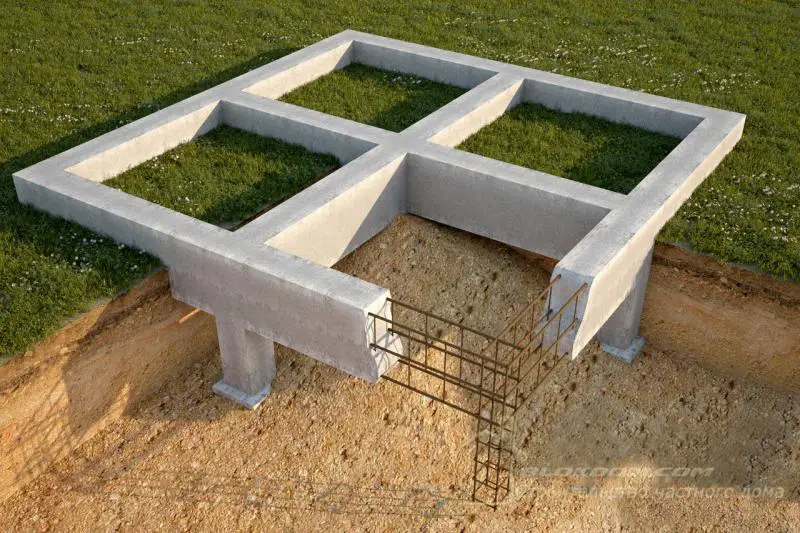
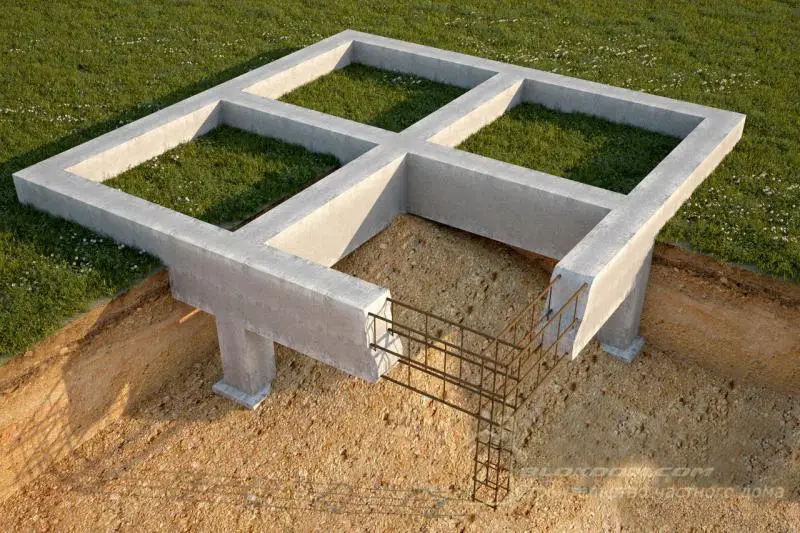
Pile foundations for moorland soil can be reinforced concrete or composite. The main components are piles.
A pile is a rod placed vertically or slightly inclined into the ground. Its purpose is to transfer structural loads from the superstructure to the soil. A pile foundation consists of multiple piles connected by a raft.
Today, bored-in-place and driven reinforced concrete piles are commonly used. Typical lengths are up to 12 meters, but for boggy soils, they often reach 25 meters. For moorland areas, the following are used:
- piles with steel casings, driven into the ground;
- complex piles placed inside casing pipes, removed after driving and concrete pouring.
Piles can be driven into boggy soil by pressing or vibration, but must fully penetrate the water-saturated layer and rest on stable ground. When installed professionally, a pile foundation on boggy soil will be durable and reliable, even if the soil is unstable.
Slab Foundation on Moorland Soil
Those living in northern regions agree: only a monolithic reinforced slab. Most houses and roads in northern areas are built on this type of foundation. Yes, it’s expensive, but it’s extremely reliable.
Before laying the foundation, remove a topsoil layer of about one meter. Then, create a special cushion made of sand, stone, and gravel—must be thoroughly compacted. This raises the construction site level. A well-laid cushion reduces frost heave, evenly distributes pressure on the soil, and allows groundwater to flow freely beneath the foundation.
The cushion doesn’t retain moisture, and the shallow structure prevents soil from freezing in winter, adding to the house’s stability.
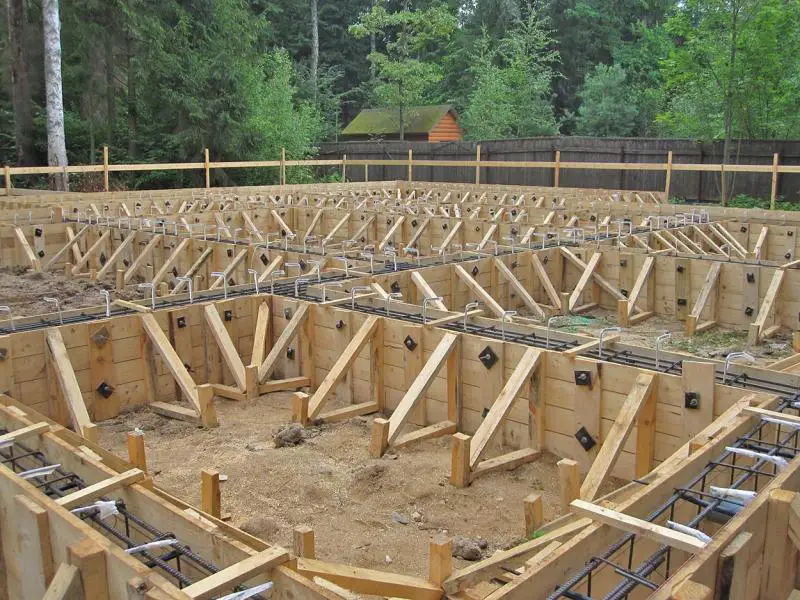
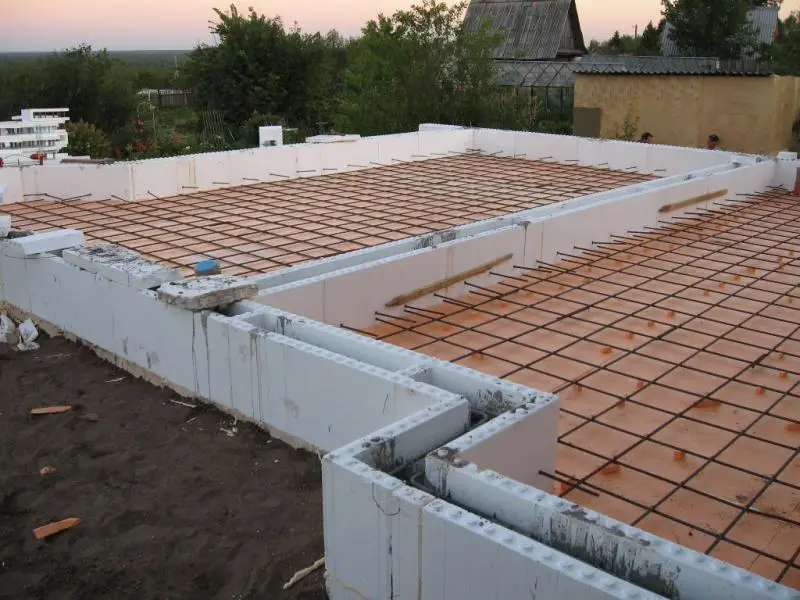
The base is ready—begin construction of the slab foundation. Before reinforcing the monolithic slab, cover the cushion with two or three layers of roofing felt. This prevents groundwater from entering the concrete and stops cement milk from leaking.
Next, reinforce the slab from both top and bottom, pour concrete with mandatory vibration to increase strength. The slab’s size and shape must match the building’s dimensions. At the base, along the entire perimeter, include stiffening ribs. Similar reinforcements, but with lower height, are placed across the structure in both longitudinal and transverse directions, spaced up to 1.5 meters apart.
Shallow Foundation on Moorland Soil
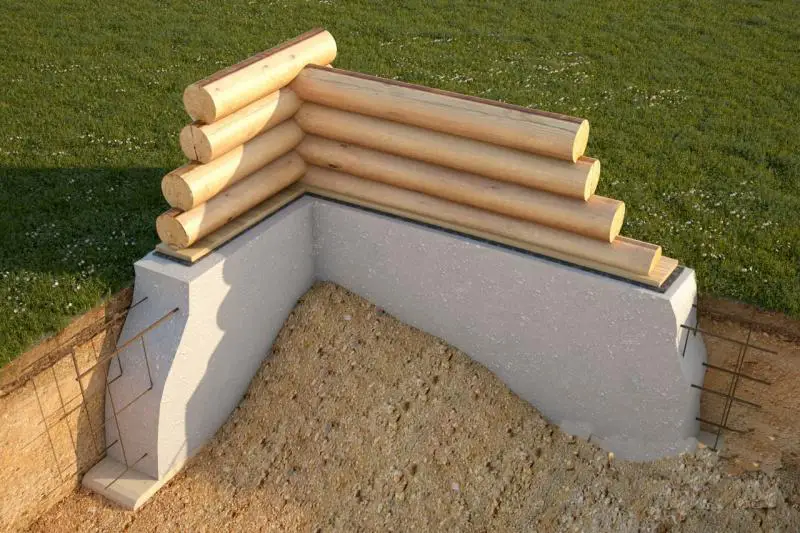
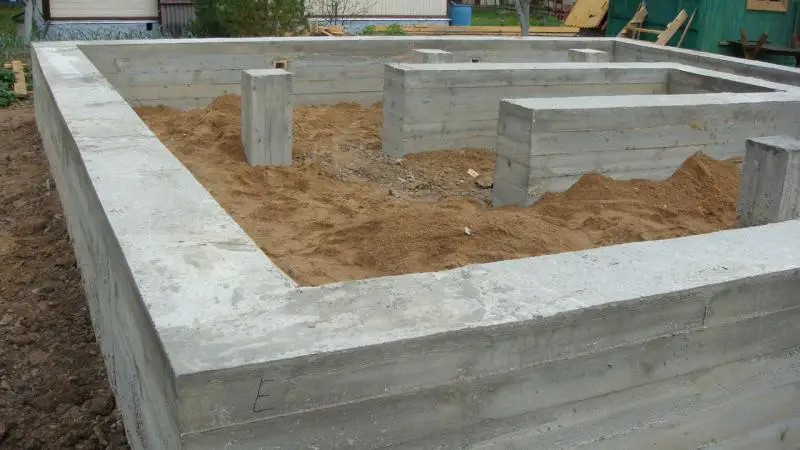
This type suits lightweight structures—wooden frame houses and metal-frame buildings. Its depth exceeds the frost penetration depth. To ensure structural reliability, proper construction techniques are crucial.
The shallow foundation is only monolithic. Located above the frost line, it experiences soil heaving but, due to its rigidity, rises or lowers uniformly with the soil, preserving shape and resisting cracking. This is the most cost-effective foundation type for moorland soil.
A critical element is the sand cushion, which minimizes heaving effects. Additionally, to reduce issues from soil freezing, insulate the foundation’s base and install drainage.
No terrain is too challenging for house construction. Building a foundation on moorland soil is manageable when proper techniques are followed. The key is determination and accurate calculation—after all, the master’s skill is what matters. You’ll succeed. Good luck.