How to Apply Glass Fiber Wallpapers
Despite their image as an office finishing material, glass fiber wallpapers are gaining popularity among private home and apartment owners. For example, in Scandinavia they are already among the most popular materials used as a base for painting walls in residential spaces. Therefore, the question of "how to correctly install glass fiber wallpapers" is now faced not only by professional builders but also by amateur DIY enthusiasts.
Material Description
The raw materials for producing glass fiber wallpapers are sand or recycled broken glass. At temperatures exceeding 1000°C, the glass mixture melts into a homogeneous mass and enters a spinner – a high-speed rotating drum, where centrifugal force stretches the molten material into filaments that form the glass fiber wallpaper sheet.
Key characteristics of this material include fire resistance, resistance to mold and mildew, chemical neutrality, and moisture resistance. Glass fiber wallpapers are quite heavy but also extremely durable, capable of covering even small cracks in plaster.
They serve as an additional reinforcing layer in any structure where they are used: paint and filler coatings adhere better to them, and they help distribute point loads on partitions made from relatively fragile materials such as gypsum board or polystyrene foam.
These wallpapers are sold in rolls, 50 meters long and 1 meter wide. Depending on customer preference and room design, various textures and weaving methods are available. Designers follow the principle that the thickness and texture of the wallpaper should correspond to the room's area – the smaller the space, the thinner and simpler the wallpaper should be.
Installation Technology
The key to successful wallpaper application lies in proper surface preparation. The wall must be cleaned of old, loose coatings and other elements that could negatively affect adhesion.
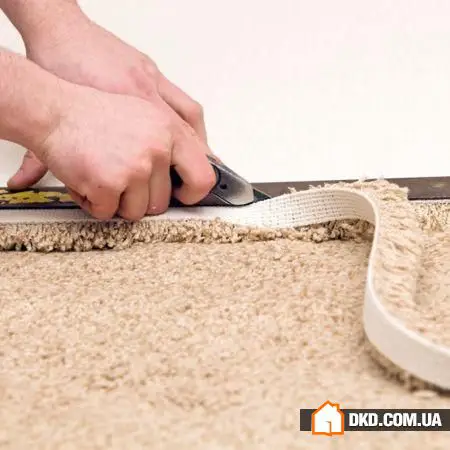
Before applying adhesive, the surface must be thoroughly primed. Glass fiber wallpapers can be easily and evenly cut with scissors or a utility knife. When measuring, always allow for a 7–10 cm extra margin. It's better to trim excess later than to cover a wall area that lacks enough wallpaper.
A special adhesive is required for glass fiber wallpapers. The packaging must clearly state that it is suitable for glass fiber. Due to their high density, these wallpapers are more demanding in terms of adhesive quality and adhesion strength.
Adhesive can be applied directly to the wall using a brush or roller, not to the wallpaper itself as with standard wallpapers. If the wall is made of porous, highly absorbent material (e.g., cement-porcelain panels), the adhesive may be diluted with water. Apply adhesive only to the area that will be covered by one wallpaper strip at a time.
Immediately after applying adhesive, place the wallpaper onto the wall, smoothing and flattening it with a special roller. Pay special attention to edge adhesion, as improper handling may cause tearing that spreads rapidly toward the center. If damage occurs, cut out the damaged section straight along a ruler to prevent further spreading.
Wallpaper strips are joined edge-to-edge – no overlaps, as with traditional wallpapers, are needed. After application, the surface is coated with diluted adhesive to improve and simplify subsequent paint application.
Once the adhesive has dried, the wall is ready for any type of paint coating. Glass fiber wallpapers are compatible with both acrylic and water-dispersed paints. In some cases, latex paints and polyurethane coatings, known for their high wear resistance, may also be used. The most convenient method for applying paint is using a roller.
It's common for living spaces to change owners, often requiring a design update and thus repainting. A major advantage of glass fiber wallpapers is their ability to withstand repeated repainting. However, on wallpapers with fine textures, the pattern may gradually flatten with each additional paint layer.
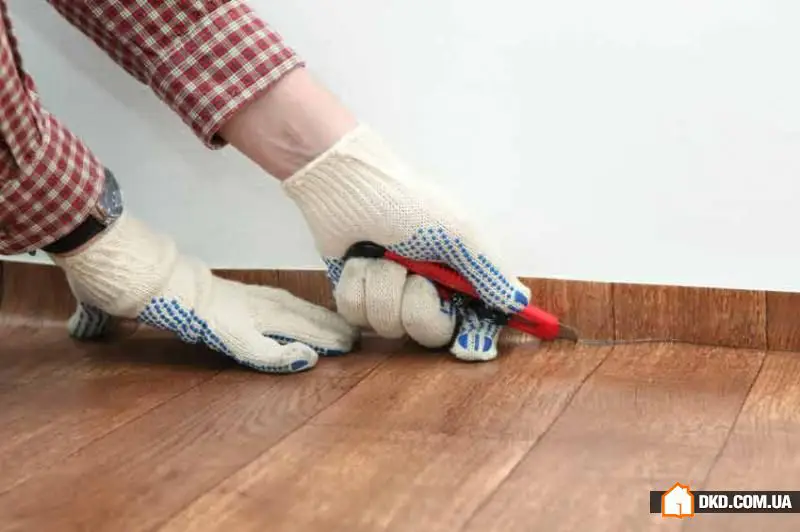
It should be noted that working with glass fiber wallpapers presents some challenges, primarily related to cutting. Even high-quality fibers break into fine particles during cutting, which can be harmful if inhaled or cause skin irritation. Therefore, basic safety rules must be followed:
- Work in clothing that fully covers the hands, and wear a respirator when cutting.
- After finishing, clean the air using a water filter to remove fine glass particles, as simple ventilation may not be sufficient.