Shinto in Glyfada: Rhythmic Architecture Meets Everyday Life
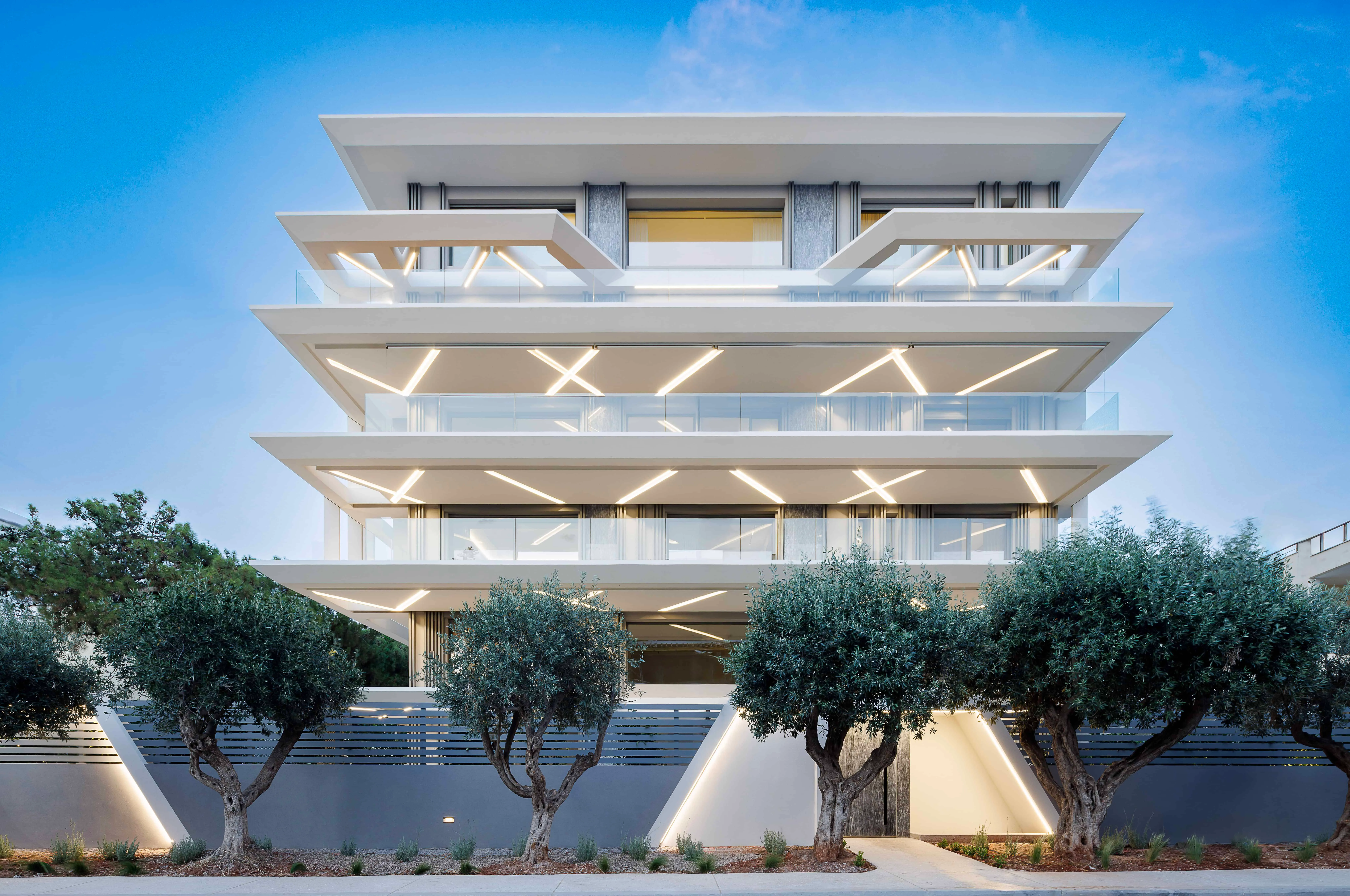
Residential Building Shinto, located in Glyfada, was designed by KKMK Architecture Studio. It reinterprets the traditional Athens multi-family building for modern living. Situated at the intersection of Oinois and Eleftherias streets, it combines double-height interiors, green zones on the first floor, panoramic city views and materials that reflect both craftsmanship and elegance.
Philosophy and Conceptual Foundation
“Shinto” is not just a name but a worldview shaping the building's architecture. Inspired by Japanese tradition, the concept respects natural forces: light, seasons, materials and thresholds. Instead of imposing obvious symbols, it creates spatial rhythm and “invisible” connections — between interior and exterior spaces, volumes and voids.
Spatial Layout and Experience
-
Corner Site and Linear Volume: The building uses its corner plot as an opportunity, transforming what could have been a rigid mass into a volume with internal rhythm. Each floor responds to views, orientation and height in subtle, precise ways.
-
First Floor and Green Thresholds: The street facade includes planting that softens the transition from public to private. First-floor residences feature double-height interiors, drawing in sky and light while enhancing a sense of openness.
-
Intermediate Apartments: Upper floors include apartments with spacious balconies and semi-open filters, creating intermediate zones between private rooms and the outside world. Elements such as prismatic panels, slanted balconies and angular forms serve both aesthetic and functional purposes — framing views, regulating light, ensuring privacy and forming shadows.
-
Upper Floors and Vertical Development: The two upper levels differ — one a “attic” level, the other main roof. As you ascend, views gradually expand; the building becomes lighter, less constrained and more celestial in perception.
Materials and Facade Rhythm
The facade is not just decoration but a tool through which architecture expresses rhythm and tension. Materials like marble, aluminum, glass and exposed concrete (in balconies and angular prisms) are arranged to create a unified visual rhythm. Mechanical and structural elements (filtered surfaces, balconies, metal structures) are integrated to maintain rhythmic consistency.
Elements reminiscent of torii, traditional Japanese Shinto gates, appear: transitional gates, thresholds, gradations from solid to void, from privacy to openness. This is not literal representation but metaphorical — creating passages, framing moments and encouraging movement.
Sensitivity to Environment and Urban Context
-
Landscaping at ground level improves the microclimate (planted areas, foyer).
-
The project considers orientation, privacy, natural lighting and views — especially relevant in southern Glyfada suburbs where environmental factors (sun, wind, sight) matter.
-
Structural elements like balconies and facade filters help reduce direct solar impact while maintaining airiness.
Overall Impact and Urban Dialectic
Shinto does more than just house people: it offers a way of life. Its architecture is a sequence of atmospheres — thresholds, transitions, gradations. It transforms the traditional multi-family home into something more intimate, permeable and alive in sculptural form. It raises questions: how dense can a building be while still allowing light, air and privacy? How heavy can material presence be while remaining open?