RB House by Marcos Bertoldi Arquitetos in Curitiba, Brazil
Project: RB House
Architects: Marcos Bertoldi Arquitetos
Location: Curitiba, Brazil
Area: 18,836 sq ft
Photography: Alan Weintraub
RB House by Marcos Bertoldi Arquitetos in Curitiba, Brazil
RB House is an ultra-luxury modern home designed by architects Marcos Bertoldi Arquitetos in Curitiba, Brazil. It is located right next to the Grasiosa Country Club - a privileged club zone with a golf course. 19,000 square feet of living space was designed as the perfect place for parties and to ensure private and comfortable life.
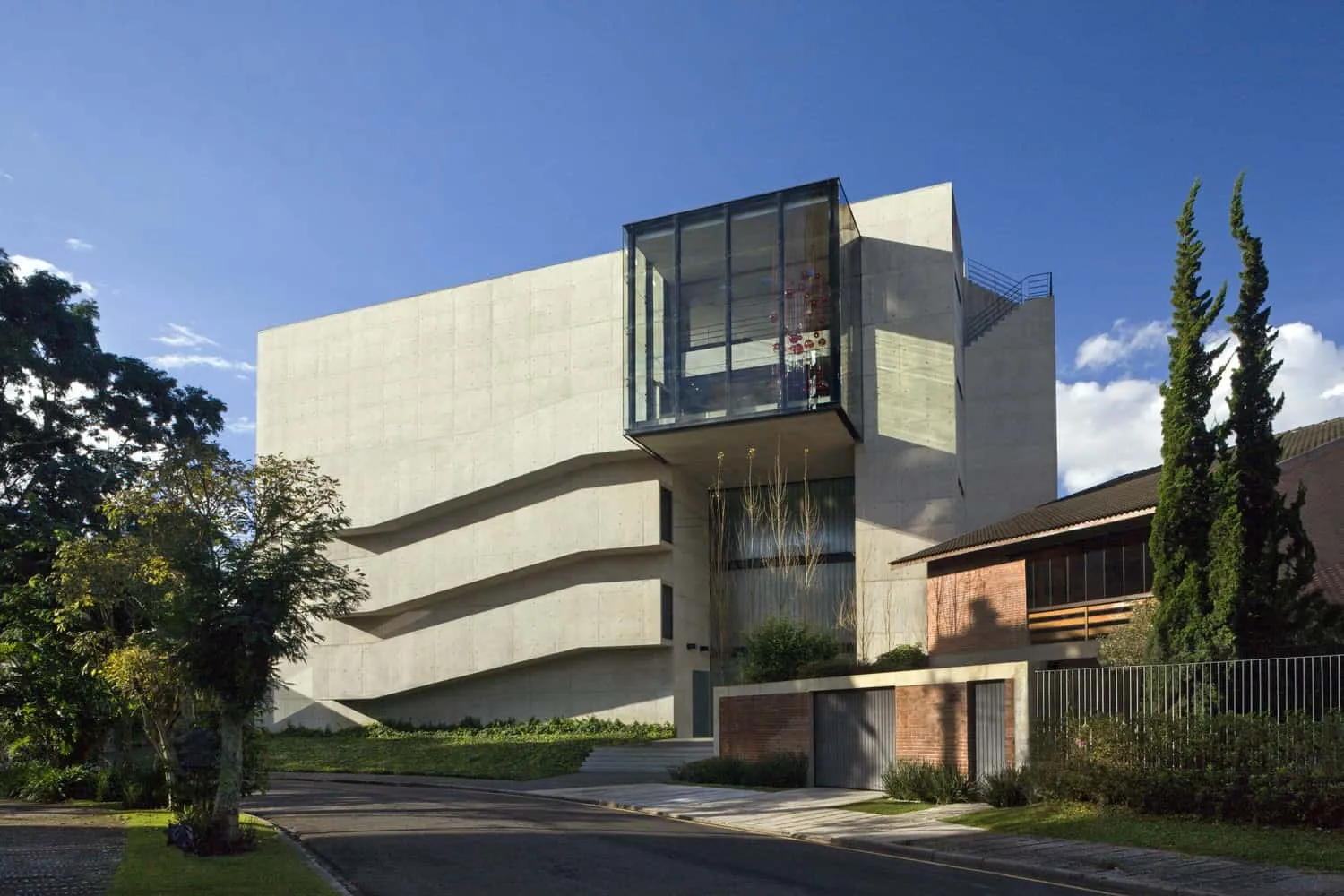
This house meets the ambitions and life project of a young heir and collector. The site, carefully studied, is located next to the Grasiosa Country Club - the most privileged golf club in the city center. Its features: size, shape, legislation and surroundings influenced several design decisions.
The idea of a house for large parties and gatherings was also central to the project development.
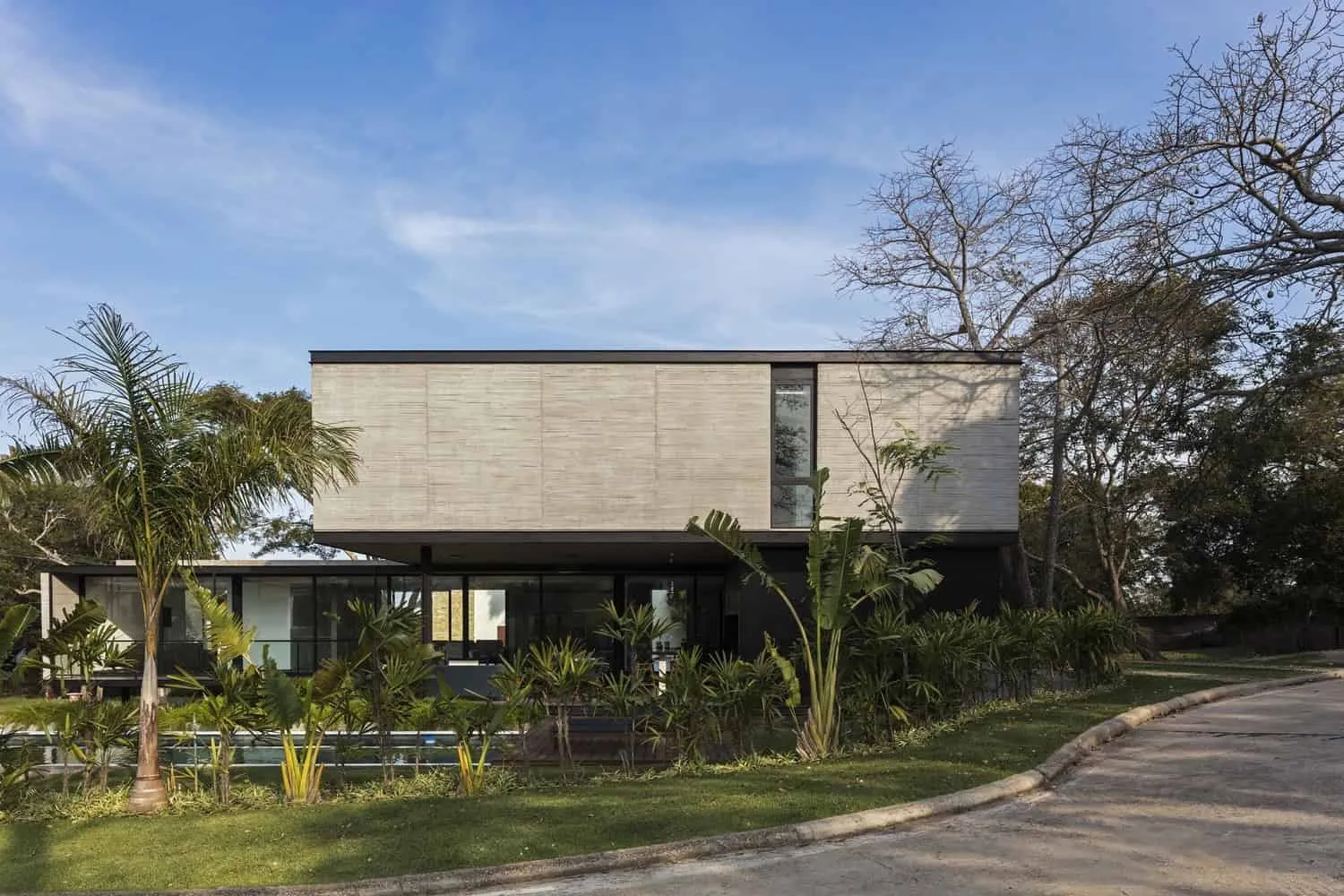
The house, entirely built from reinforced concrete, was an offering of this studio which saw in this project an alternative to powerful architecture for its volume and without usual stylistic compromises.
The 1200 m² site was relatively small for such a large program that had to be set up. The triangular shape with one side as an arc did not make building design easier. The narrow strip of technical spaces for the golf club along a high wall allowed obtaining needed views from the second floor of the house. The vertical axis of the project emerged from the relationships between the difficulties presented by the site, together with the most important client requirement: to get maximum views of the golf course.
Therefore, main functions occur only on the second floor of the building.
The house consists of five levels - first floor and four more. The first and second floors are intended for: access, terrace and garage, service rooms, staff apartments and amenities, as well as an independent entrance from the same square as access to the house, gallery of private collection.
The gallery space was not included in the initial project volume. The main idea was to place works of art among various living spaces. However, due to the excess area on the first floors and inclusion of large-scale artworks in the collection, we decided to propose creating a gallery, an idea that was quickly accepted by the client. Thus, exhibition space was installed in a 'T' plan with double height, one side of the 'T' is reserved for a garden between walls designed for sculpture exhibitions, water mirror and lawn zone. The roof of this gallery, a covered garden, reproduces the site two levels above ground level, providing grassy territory accessible from floor rooms and main hall installed in a glass box.
The modern art collection began forming twenty years ago when the owner asked us to design his first apartment. We started with a series of local artists from the 80s. In subsequent years, the collection included works by artists with national and international scope, becoming a reference for local museums and important Brazilian artists and dealers.

The house of about 1750 m² was designed for a couple and two daughters.
On the first floor, in addition to car access, a large area is partially covered by a glass box without walls and monumental size - this is the entrance to the main hall (also accessible for those arriving by car from the back of the house) and private art gallery. The four upper floors can be accessed through three ways: elevator or ramps to main areas, and stairs to service rooms.
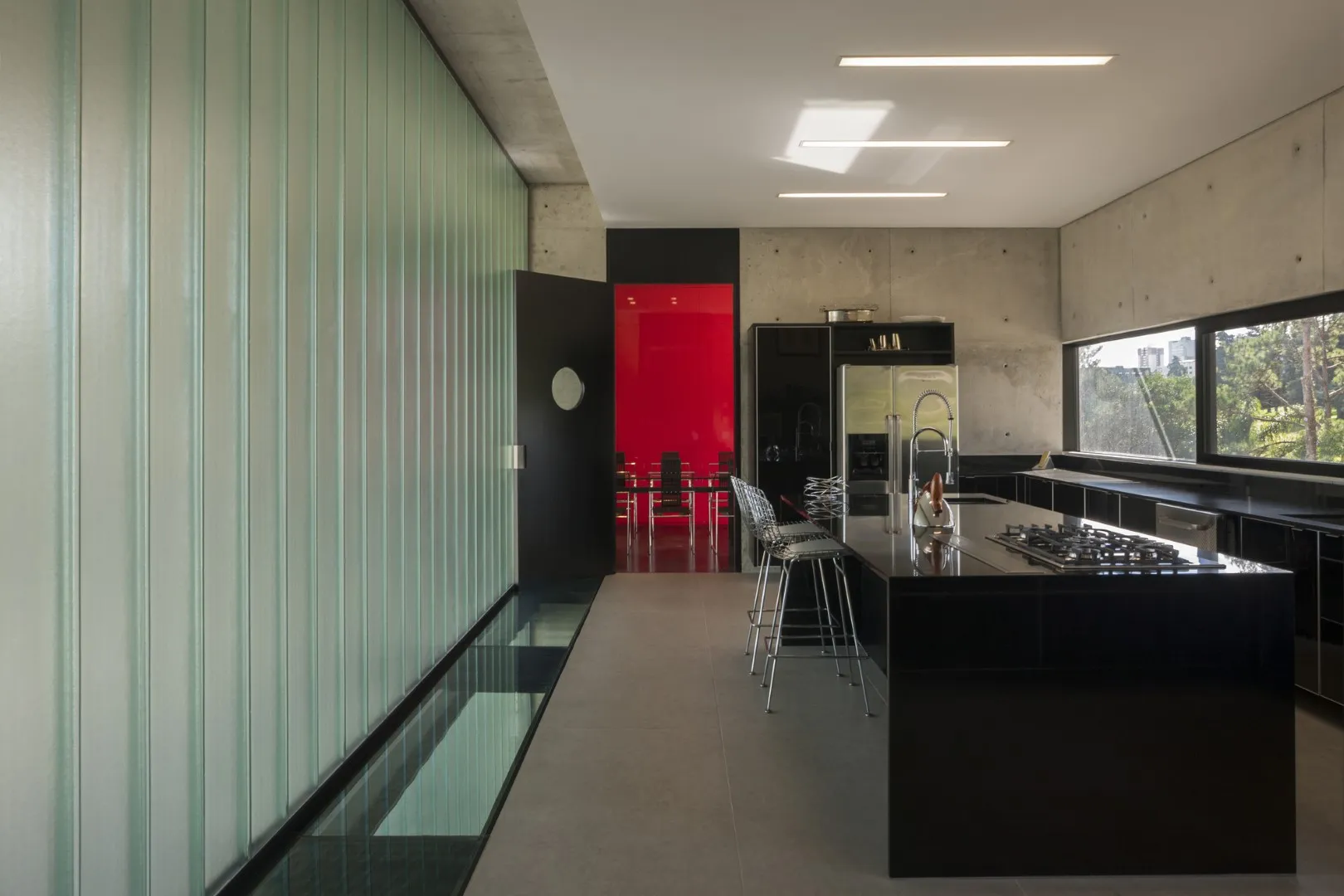
From the first floor main hall we ascend two levels to reach the floor with rooms separated by magenta cladding, broken by a 26-meter-long ribbon window offering first views of the golf course and access to the secret garden. It contains 3 types of pau-ferro (Caesalpinia Ferrea), native tree from the Brazilian Atlantic forest. This floor is dedicated to daughters' rooms, guest room and everyday use rooms such as the main kitchen of the house which connects to the other two kitchens via a freight elevator. There is also a fourth kitchen for staff use.

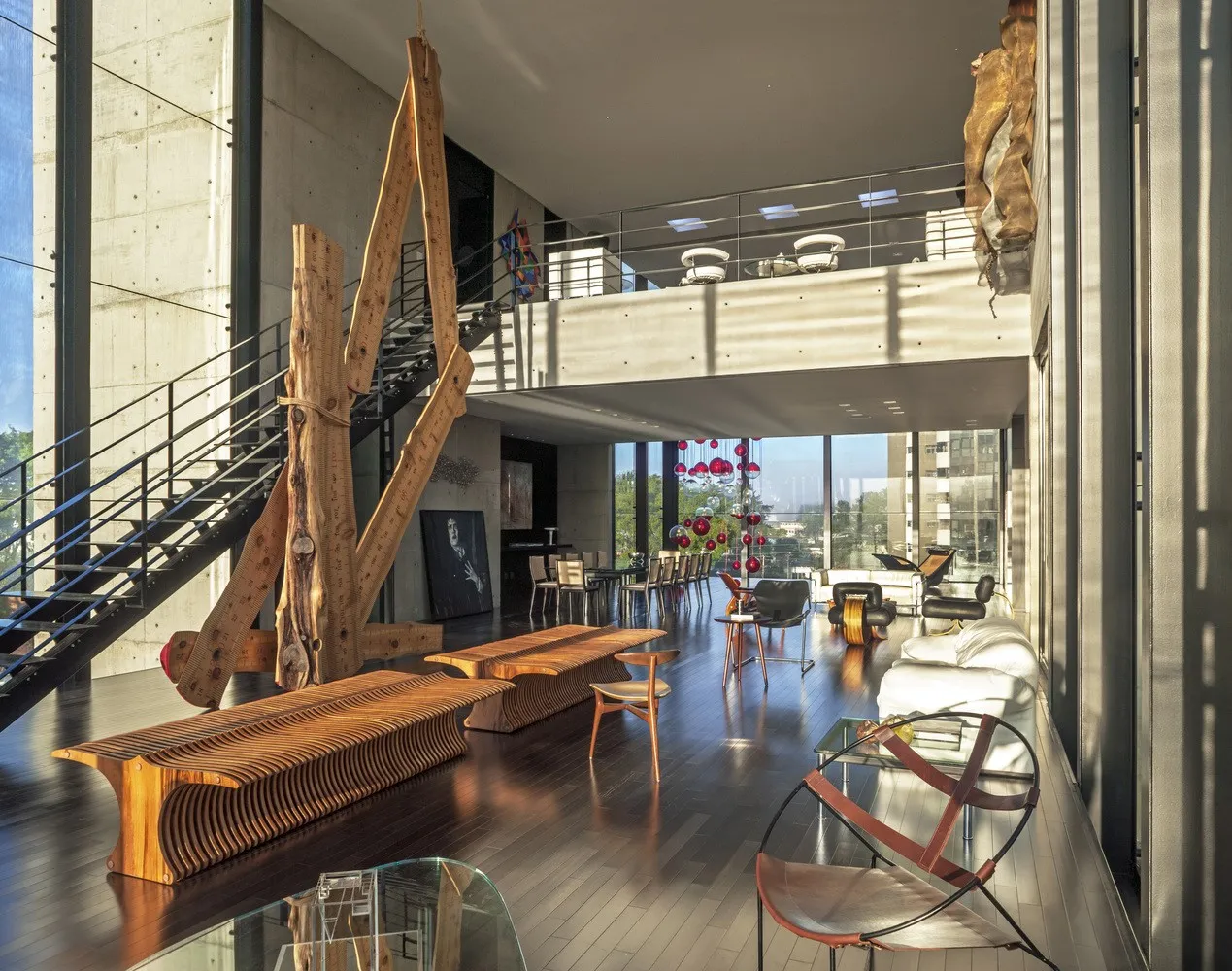
The third floor contains larger spaces and is the floor dedicated to large family interactions and many parties. It is a double-height glass box floor that runs across the large concrete block, hanging over the golf course from one end and facing the urban horizon from the other. This floor also contains the main bedroom of the house, with access to a secret garden containing an external staircase to a covered pool and access to a side terrace with views of the golf course.
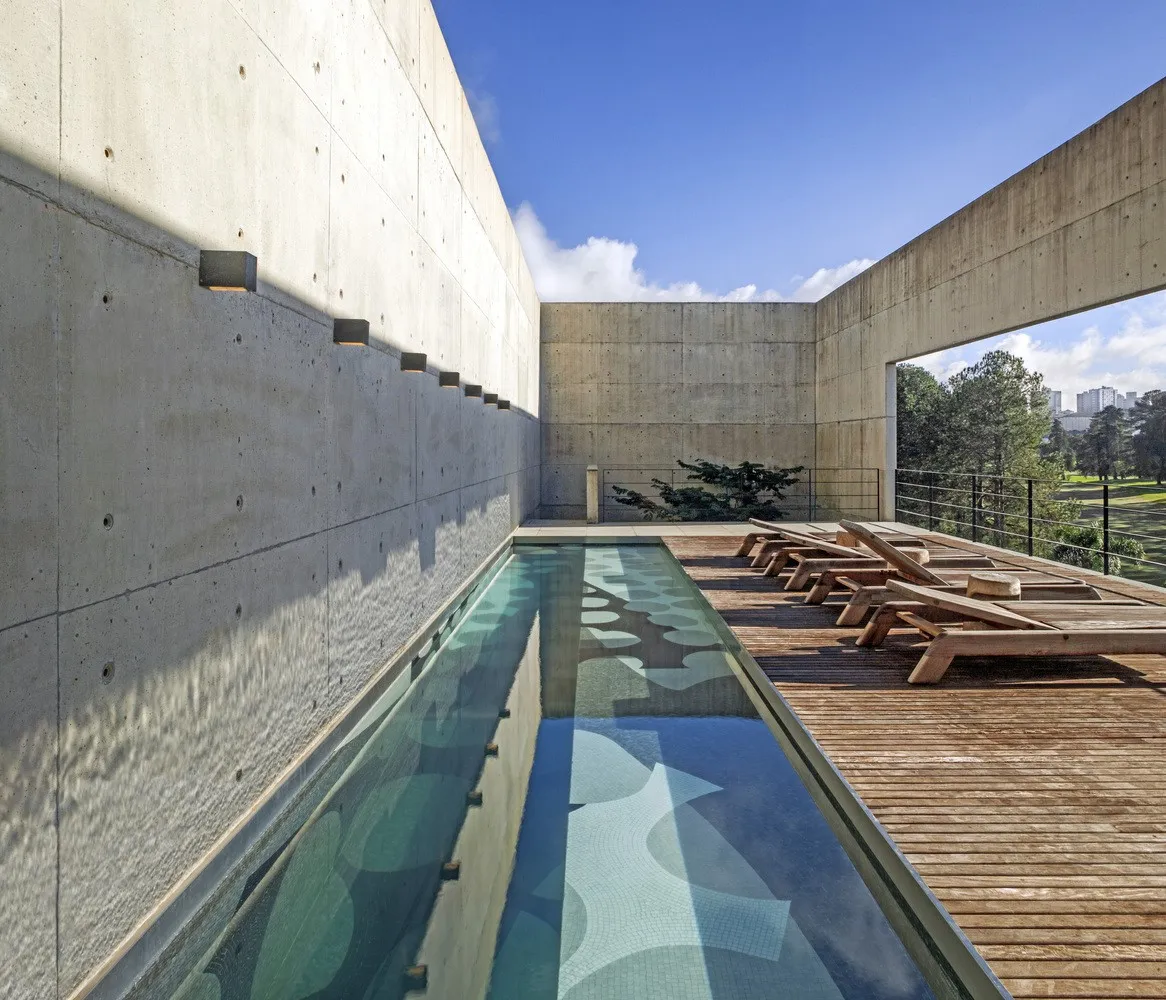
The fourth floor is intended for daytime social and family activities such as terrace and pool, lounge area and bar, all with wide views of the golf course, plus sauna and kitchen with grill for lunch. The pool is covered with glass mosaic from the original design of artist Paolo Ridolfi. It was made, disassembled and packed in São Paulo, then shipped to Curitiba for final installation. The internal space within the mezzanine between two voids of the glass box contains a DJ table and dance floor.
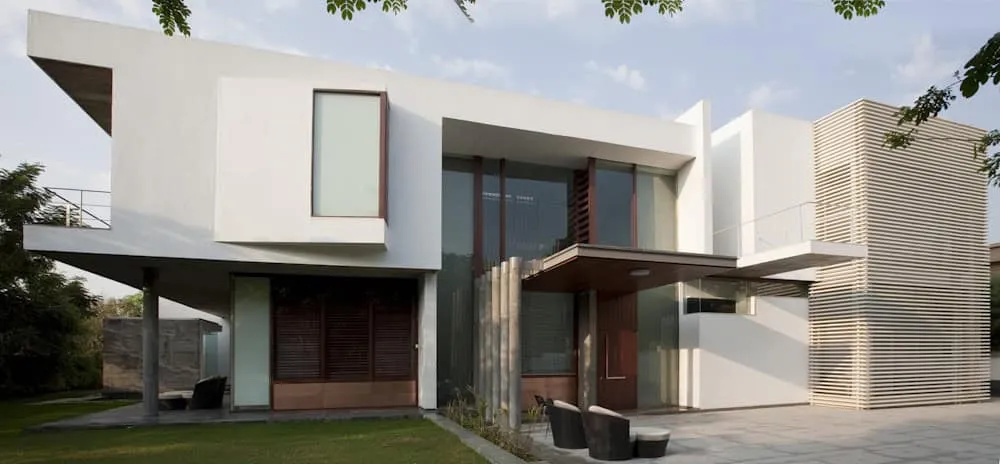
The adopted plastic language prioritized volumetricity of solid blocks from reinforced concrete in the work of mass addition and subtraction, where circulation tunnels of ramps and vertical volumes of stairs break the main body of the building, causing facade reflections through circulations passing inside the building.
The front facade is more volumetric and sculptural with few openings compared to the glass box, airy and transparent, covering triple height of the entrance square. Here are two stainless steel doors - one for access to the house and another for access to the private gallery - with a background of 12-meter-high U-glass.
The back facade is more extroverted and permeable, volumetrically more variable, shaped by the site's form and size as well as urban legislation. It includes several openings and terraces providing better integration with the landscape.
The proposed furniture, also understood as a collection, represents a mix of international furniture from previous owner homes and Brazilian contemporary furniture created by leading architects and designers of the 20th century and modern era.
– Marcos Bertoldi Arquitetos