Installation Guide for Heating Radiators
Installing a heating radiator
Before starting the work, consider some details: Before replacing the radiator, the water should only be shut off in the customer's apartment, not throughout the entire building.
Water should only be shut off by staff of the housing management company (ЖЭК) who have the appropriate qualifications for this task.
Installing a Heating Radiator
Before starting the work, consider some details:
- Before replacing the radiator, the water should only be shut off in the customer's apartment, not throughout the entire building.
- Water should only be shut off by staff of the housing management company (ЖЭК) who have the appropriate qualifications for this task. Even when replacing the radiator yourself, it is recommended to leave this task to specialists. Otherwise, you risk leaving all residents in the building without water supply, whose apartments are located on the same riser.
- Replacing the radiator should ideally also be done by ЖЭК staff or specially hired workers. If the removal and installation were performed independently by the customer, all responsibility for the system's functionality lies with him.
- Installation and replacement of the radiator using the pipe bending method or gas welding, instead of the standard installation method, should also be done by workers with appropriate qualifications for high-level safety operations.
Choosing and Installing Different Types of Radiators
Today, the market offers radiators made from cast iron, aluminum, steel, and bimetallic radiators. How to choose the right one?
Cast Iron Radiators
Modern cast iron radiators are no longer the bulky accordion-like units we're used to seeing in "Khrushchyovka" buildings and most Soviet apartments. Today, they look like flat panels with smooth edges and an attractive appearance. Due to their physical properties, cast iron retains heat for a long time when heated, gradually releasing it into the room.
Advantages: improved heat exchange, service life of about 25-50 years. Disadvantages: high weight (one section of a cast iron radiator weighs about 8 kg), which makes installation in certain rooms impossible, particularly those with wooden or gypsum board walls. The only mounting option in such buildings is through the wall. In addition, due to the rough surface and small gaps between sections, such radiators are difficult to clean.
Disadvantages: high weight (one section of a cast iron radiator weighs about 8 kg), which makes installation in certain rooms impossible, particularly those with wooden or gypsum board walls. The only mounting option in such buildings is through the wall. In addition, due to the rough surface and small gaps between sections, such radiators are difficult to clean.
Manufacturers: Model MS-140 or the so-called "accordion" - an eternal classic, well known to all of us. Modern cast iron radiators can be found in the catalogs of VIADRUS (Czech Republic), ROCA (Spain), and FERROLI (Italy), as well as domestic manufacturers such as CHAZ (Cheboksary Aggregat Plant) or MZOO (Belarus). Price: from $8 per section.
Aluminum Radiators
In terms of construction, modern aluminum radiators differ little from cast iron ones. However, the significant difference between them is the weight of the radiator sections.
Advantages: excellent heat transfer, ventilation windows that evenly distribute warm air throughout the room, lightweight sections (only 1 kg!), smooth surface that can be mounted on any surface.
Disadvantages: sensitivity to the chemical composition of water, pressure fluctuations in the pipeline.
Manufacturers: Due to their small size, a small radiator can heat a relatively large area, so on the market, you can find models with a depth of 80-100 mm and center-to-center distances from 300 to 800 mm, with 4-16 sections. More common are models from Italian production: radiators from companies FONDITAL, DECORAL, RAGALL, FARAL, as well as some models from domestic manufacturers such as SMK (Stupino) and MMZiK (Miass). Price: from $12 per section.
Bimetallic Radiators
It can be said that this type of radiator is a compromise between cast iron and aluminum. Visually, bimetallic radiators are hard to distinguish from aluminum ones, but these units are not sensitive to the chemical composition of water or pressure fluctuations. The universal design of such heating radiators delivers hot water through steel pipes to aluminum panels, which then heat the air in the room. Installing such a radiator is the best option both in terms of price and physical properties of the product.
Advantages: weight, improved radiator design, excellent heat transfer performance.
Disadvantages: none found so far.
Manufacturers: On the market, you can find products mainly from Italian (SIRA, GLOBAL) and Czech (ARMATHERMAL) manufacturers. Among domestic ones, the best by rights are radiators from RIFAR (Gai, Orenburg Oblast), TSVELIT-R (Ryazan), and SANTEKHPRIM (Moscow). Price: from $15 per section.
Steel Radiators
Steel panel radiators often have a ribbed surface. This type of radiator is the result of point welding between channels. However, some manufacturers produce steel radiators with a smooth front panel.
Advantages: high heat transfer, flexible connection options.
Disadvantages: no significant drawbacks identified.
Manufacturers: INSOLO (Turkey) offers a wide range of economical radiators with bottom or side connection types. The manufacturer's production lines are almost fully automated, minimizing human resources involvement and thus reducing the risk of purchasing defective products. These radiators are made from carbon steel with a zinc-phosphate coating. The manufacturer's product range includes radiators 300-900 mm in height and 400-3,000 mm in length. INSOLO radiators come with equipped thermostatic valves and heads.
Price: from $25. KERMI THERM X2 - German-made steel panel radiators. The design of KERMI PROFI K, V, and VM radiators is fundamentally different from other models of this type - KERMI production uses a unique technology developed by the brand itself, THERM X2 (patented in 2007). The panels in these models are connected to the supply line not in parallel but sequentially, i.e., the heat carrier - front panel - other panels. Due to this system, the front panel of the radiator heats up 25% faster, and less heat reaches the rear panel, thus avoiding overheating. Each model of such a radiator has its own type of connection: K - side, V and VM - bottom. Price: from $35.
Rules for Installing Radiators
When replacing radiators throughout the building or apartment, it is important to keep and agree upon with relevant specialists the installation scheme for heating radiators. It serves not only as a guide during installation work but also, if prepared correctly, allows more efficient room heating, helping the customer save. Proper radiator installation: sequence of actions
Shut off water in the apartment, then at the specific location.
Drain water from the section to be replaced.
Blow out pipes and flush remaining water.
Remove the old radiator.
Install the new radiator, following the installation instructions and recommendations from the manufacturer (installation instructions for a specific type of radiator should come with the certified product).
After completing installation and pressure testing, check the system for leaks and proper operation of radiator sections.
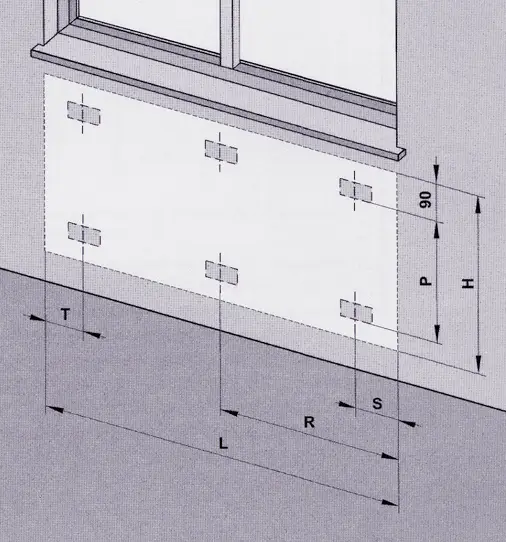
Photo 1 — Marking for Bracket Installation
IMPORTANT! When choosing a radiator, consider: maximum heating temperature;
- maximum area that can be heated using a specific number of radiator sections;
- working pressure of the heat carrier; system pressure testing value.
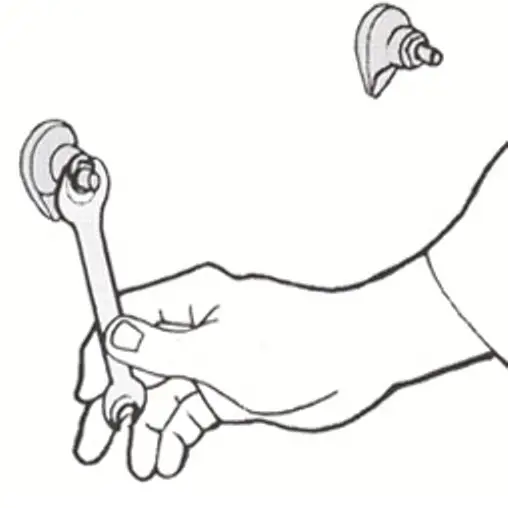
Photo 2 — Securing Mounting Hardware
Radiator Installation: SNiP
Heating radiator installation for room heating must be performed in accordance with SNiP 3.05.01-85.
General Rules for Installing Heating Radiators According to SNiP
- The installation norms for heating radiators require mounting the radiator relative to the center of the window: so that it aligns with the center of the radiator (the tolerance should not exceed 2 cm).
- The rules also state that the radiator width should be 50-75% of the window sill width.
- The height of radiator mounting above the floor should not exceed 12 cm from the finished floor level to the bottom edge of the radiator. The distance between the top panel of the radiator and the window sill should not be less than 5 cm.
- The distance from the wall to the radiator should be 2-5 cm. In certain cases, the wall surface before radiator installation should be covered with special heat-reflective material.
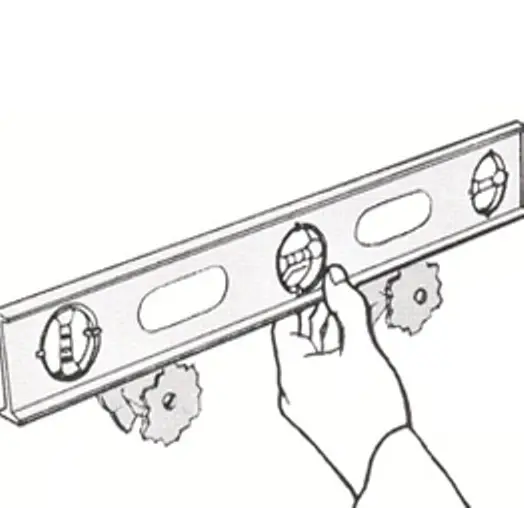
Photo 3 — Level Check of Mounting Hardware
IMPORTANT! Do not place the radiator too low or right against the wall - this will significantly affect heat transfer efficiency and make cleaning under and behind the radiator more difficult.
IMPORTANT! In single-pipe heating systems, using more sections than previously installed is prohibited. When installing radiators in systems with artificial water circulation, if the number of sections is 24 or more, it is recommended to use a differential connection method for heating devices.
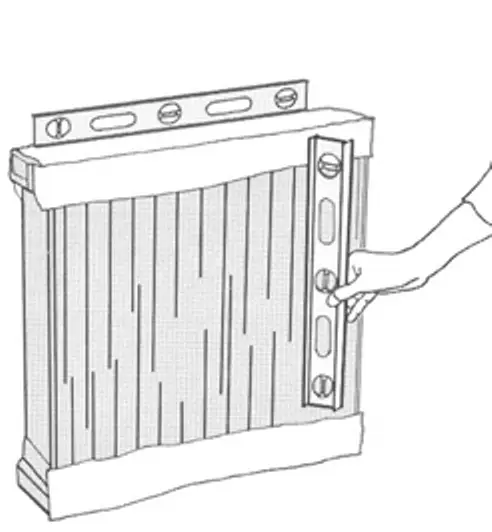
Photo 4 — Level Check of Radiator Hung on Mounting Hardware
Installing Aluminum Radiators
Steps to install aluminum radiators by yourself:
Assemble the radiator, threading in radiator plugs, caps with gaskets, and installing thermostatic control valves, Maevsky valves, and shut-off valves.
Following the above general rules for radiator placement relative to the window, mark the mounting point locations.
If necessary, coat the wall surface with heat-reflective material and secure brackets to the wall (always use a level to determine horizontal alignment and a tape measure to determine the insertion length of the bracket into the wall).
Mount the radiator on the brackets, placing their hooks between the sections of the radiator. Connect the radiator to the centralized or autonomous heating system in the room according to the selected connection scheme.
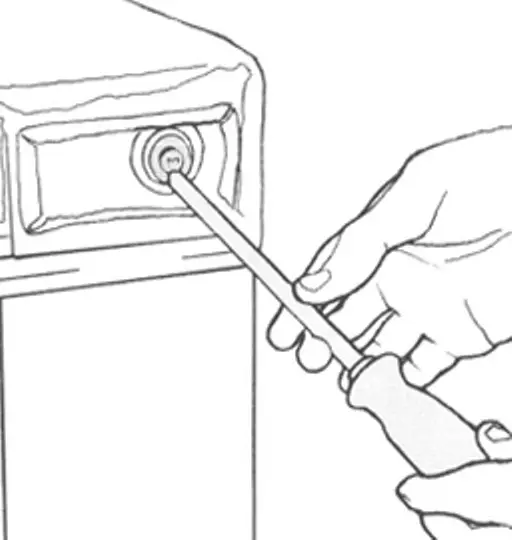
Photo 5 — Removing Transport Plastics
Aluminum radiator installation can be performed in single- and dual-pipe heating systems with horizontal or vertical piping. These radiators can also be used for heating rooms with natural and forced hot water circulation. Today, the market offers two types of aluminum radiators:
- Reinforced radiators with a working pressure up to 16 atm. These radiators are used for heating high-rise residential and non-residential buildings. Using such radiators in private homes is not justified due to the high cost of sections.
- European-type aluminum radiators designed for room heating in autonomous heating systems. The maximum working pressure in such radiators does not exceed 6 atm.
The kit for installing aluminum radiators includes:
- automatic or manual air release valve (also known as the Maevsky valve);
- caps (right or left thread);
- gaskets for sealing;
- studs or brackets;
- shut-off or thermostatic control valves.
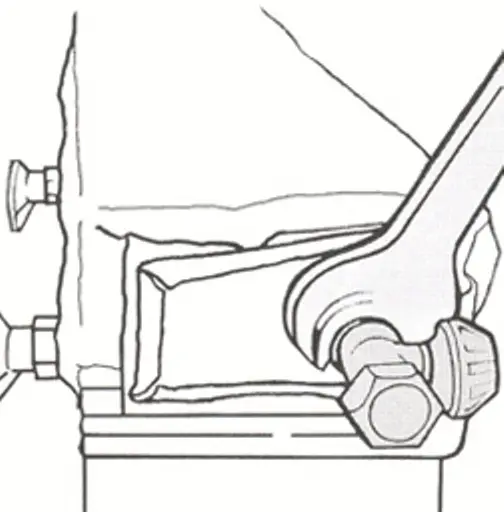
Photo 6 — Connecting Radiator to the Heating System
Installing Cast Iron Radiators
The procedure for installing cast iron radiators is mostly not different from installing aluminum heating appliances. However, with cast iron units, it's important not to overload the wall and pay more attention to torque values. Cast iron radiators should be installed with a slight incline to prevent hot air from accumulating inside the radiator (which can reduce heat transfer efficiency of the device).
Cast iron radiators also have a different assembly system compared to other systems: such a radiator needs to be disassembled, the nipples tightened, and then reassembled. For mounting cast iron radiators in wooden buildings or walls with a relatively weak structure, mounting options without brackets but on floor stands are provided. In such cases, wall mounting is also performed but only for supporting purposes.
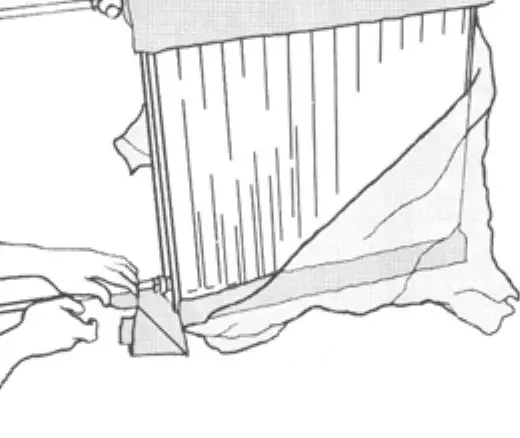
Photo 7 — Removing Protective Packaging Film
Installing Bimetallic Radiators
The advantages of installing bimetallic radiators rather than cast iron or aluminum ones lie in their relatively low weight and their ability to operate continuously even at high system pressure, provided they match the heat transfer performance of aluminum radiators. The installation method and general recommendations for installing such heating appliances are specified in the product manual.
IMPORTANT! Pay attention to the manufacturer's recommendations regarding the use of pipes made from specific materials in combination with bimetallic radiators. For example, most homes should only use metal pipes for installation, while metal-plastic pipes are suitable only in private homes with high-pressure heating systems.
Cost of Installing Heating Radiators
The cost of installing a radiator will directly depend on the material of the unit, the number of installed sections for one heating point, and the total number of heating points installed in the apartment. The overall cost will also be influenced by the connection scheme and the cost of the components needed to perform the work. While it's possible to do these works yourself, this will place all responsibility for system functionality and any negative consequences related to its failure on you. So, how much does radiator installation cost? On average, all works related to setting up one heating point in an apartment can take between $40-50.
Radiator Installation:
- Kiev - 250-350 UAH per point;
- Moscow - 2,650-3,000 RUB per point.
- The cost of pipe installation or replacement is calculated separately.