Small Entryway Won't Be a Problem Anymore: Designer Tips for 3 sq. m
This is not a verdict, but a challenge to your creativity
Three square meters of an entryway is the reality of millions of apartments. It seems that on such a small area it's impossible to fit everything you need: outerwear, shoes, umbrellas, bags, and you also want a mirror and a place for keys. But professional designers have long learned to create miracles even in the tiniest spaces. The key is knowing the right tricks.
Main points from the article:
- Vertical storage increases useful space in an entryway by 2-3 times;
- Light colors and mirrors visually expand the space by 30-40%;
- Multi-functional furniture replaces 3-4 separate items;
- Proper lighting makes the entryway look more spacious and cozy;
- Hidden storage systems help avoid visual clutter.
Use every centimeter vertically
A small entryway is not about floor area, but about thinking in three dimensions. While you're arranging furniture only at the bottom, you lose 70% of useful space.
Forget about standard 180 cm tall hangers. Raise the clothing rod to the ceiling — up to 220-240 cm high. Hang frequently used jackets and coats at the bottom, and seasonal items on top. Keep a small folding step ladder at home for access to the upper tier.
Use walls fully: from floor to ceiling. Narrow wardrobes 35-40 cm deep fit even in the tightest entryway and hold as much as a regular closet. Upper shelves are perfect for storing suitcases, seasonal shoes, and rarely used items.
Hooks and rail systems instead of bulky hangers
A traditional floor-standing hanger in a small entryway is a disaster. It takes up precious space and creates visual clutter. Much more effective is to use wall-mounted hooks and rail systems.
Modern hooks can hold up to 15 kg each — they can easily accommodate a winter coat with a scarf. Position them in two rows: the lower one at 120-130 cm height for everyday clothes, and the upper one at 180-200 cm for seasonal items.
Rail systems are even more convenient: adjustable hooks can be moved depending on needs. In winter, more space is needed for bulky clothes; in summer — for light jackets and bags.
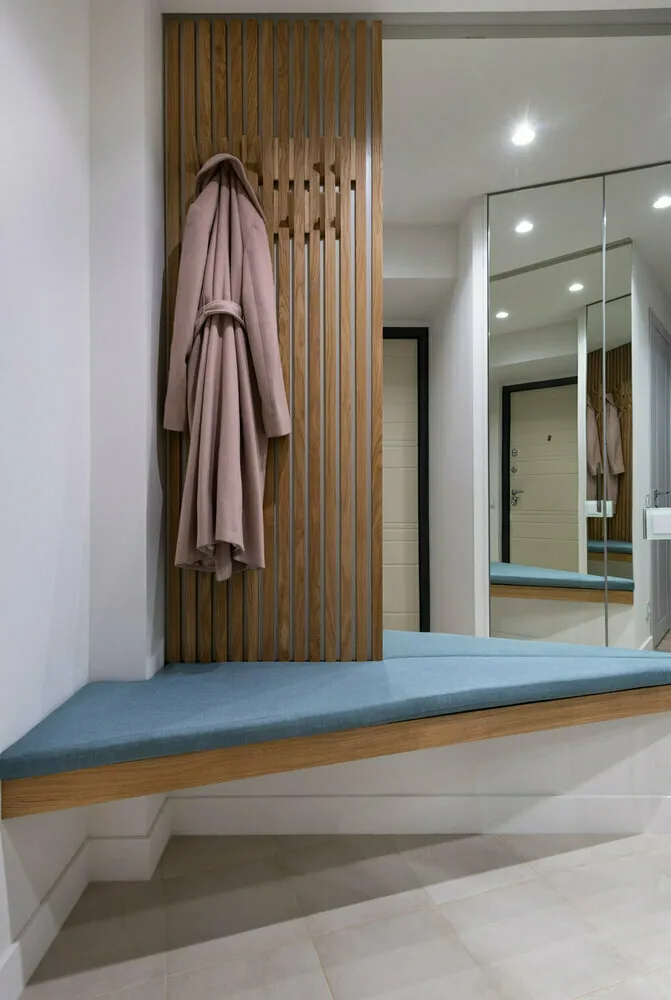
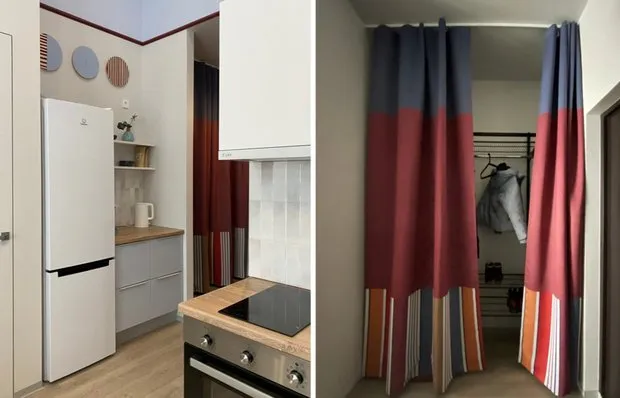
Design: Maria Rozhkova
Mirrors — Your Best Allies
A mirror in a small entryway is not a luxury but a necessity. It allows you to check your appearance before leaving, and visually expands the space.
A large mirror covering the entire wall can double the visual area of an entryway. If walls are occupied by storage systems, use a mirror on the inside of the entrance door or a mirrored cabinet door.
Designer trick: place the mirror opposite a light source or window (if there is one in the entryway). Reflected light makes the space not only larger but also brighter.
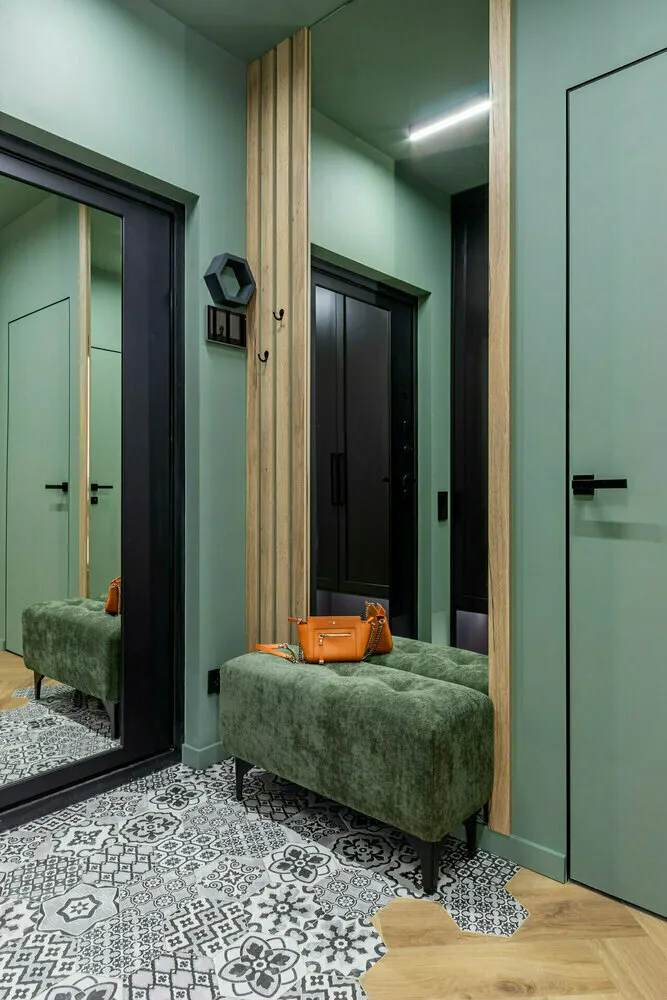
Design: Daria Yermak
Shoe Storage That Doesn't Take Up Space
Shoes in a small entryway are a headache for most homeowners. Standard shoe racks are too deep and take up too much space. The solution is narrow turntable modules or built-in solutions.
A shoe rack 17-20 cm deep fits perfectly along the wall and holds up to 20 pairs of shoes. Models with flip-down sections allow storing shoes at an angle, saving even more space.
Alternative option — open shelves above floor level. Shoes are visible but don’t block the passage. For aesthetics, use identical boxes or containers.
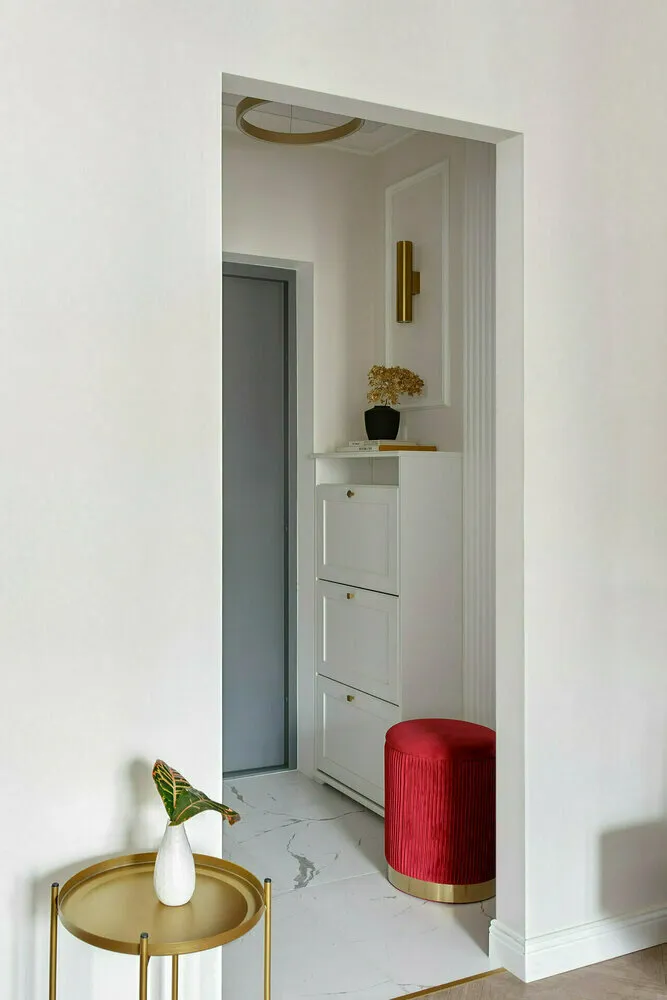
Design: Alena Matiseva
Multi-functional Furniture
In a small entryway, every piece should serve multiple functions. A pouf with internal compartments replaces both seating and storage space. A console table with sliding drawers can hold shoe accessories, umbrellas, and gloves.
A console with a mirror combines a vanity table, a shelf for keys and small items, and a decorative element. Choose models with thin legs — they look lighter and don’t clutter the space.
Smart Lighting
Proper lighting can visually expand even the smallest entryway. Forget about a single chandelier in the center of the ceiling — it creates shadows and makes the space feel gloomy.
The best solution is layered lighting. General light from ceiling fixtures, local lighting for mirrors, and decorative wall sconces. LED strips under shelves or in niches create the effect of floating furniture.
Use light colors for walls and ceiling — they reflect light and make the entryway look more spacious. Save dark tones for accents: one wall, cabinet doors, or accessories.
Hidden Storage Systems
The most effective way to maintain a feeling of spaciousness is to hide everything unnecessary. Built-in wardrobes take up less space than sliding doors and look like an extension of the wall.
Wall niches are great for placing small shelves and hooks. If there are no niches, create them artificially using gypsum board. Depths of 10-15 cm are enough to store keys, documents, and small accessories.
Under the stairs (if present) can be transformed into a wardrobe area. Even a triangular niche 150 cm high can hold many items.

Design: Irina Naumchik
Color Solutions
A light color palette is a classic trick for visually expanding the space. White, milk, light gray, beige — these tones reflect light and create a feeling of airiness.
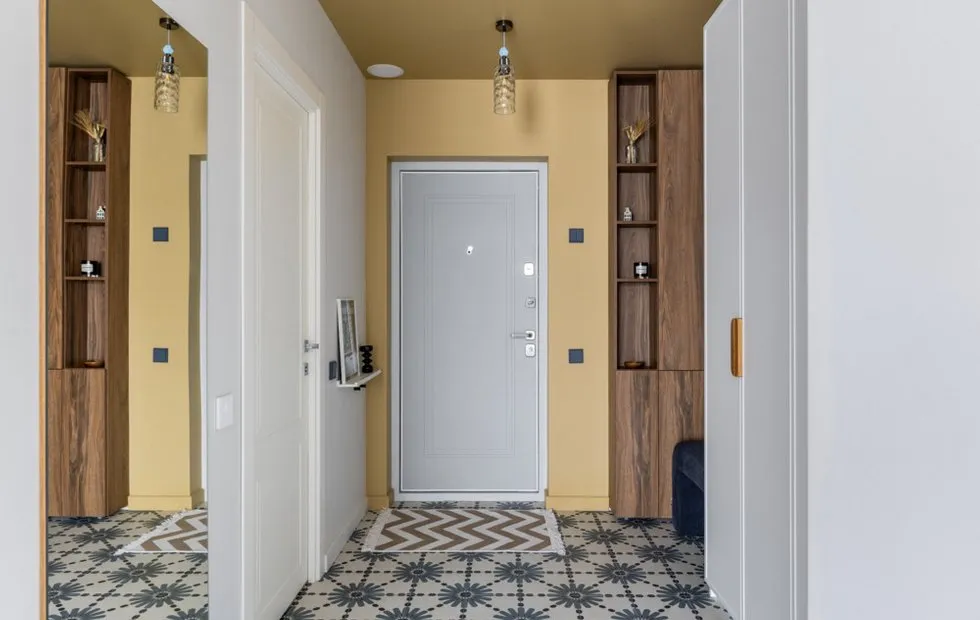
But that doesn’t mean the entryway has to be boring. Add a bold accent: a colored door, stylish mirror, or unusual hanger. One eye-catching element draws attention and takes focus away from the small size of the room.
Horizontal stripes visually widen a narrow entryway, while vertical lines lift the ceiling. Use this technique in wall finishing, shelf placement, or direction of flooring.

Design: Julia Pozdnjak
Order as the Foundation of Spaciousness
The most beautiful and functional entryway will turn into chaos without a system of maintaining order. Establish a rule: every item must have its place.
A basket for dirty shoes, a hook for a bag, and a shelf for keys — all of this should be within reach but not visible. Use attractive boxes and containers to store small items.
Review once a season: remove outdated clothes and shoes into distant drawers or storage. In a small entryway, only items that are used regularly should be kept.
Remember: a small entryway is not a verdict but a challenge to your creativity. Proper space organization, smart storage, and thoughtful lighting can transform three square meters into a stylish and functional area that becomes a worthy business card for your home.
Cover: Design project by Darya Dubkova